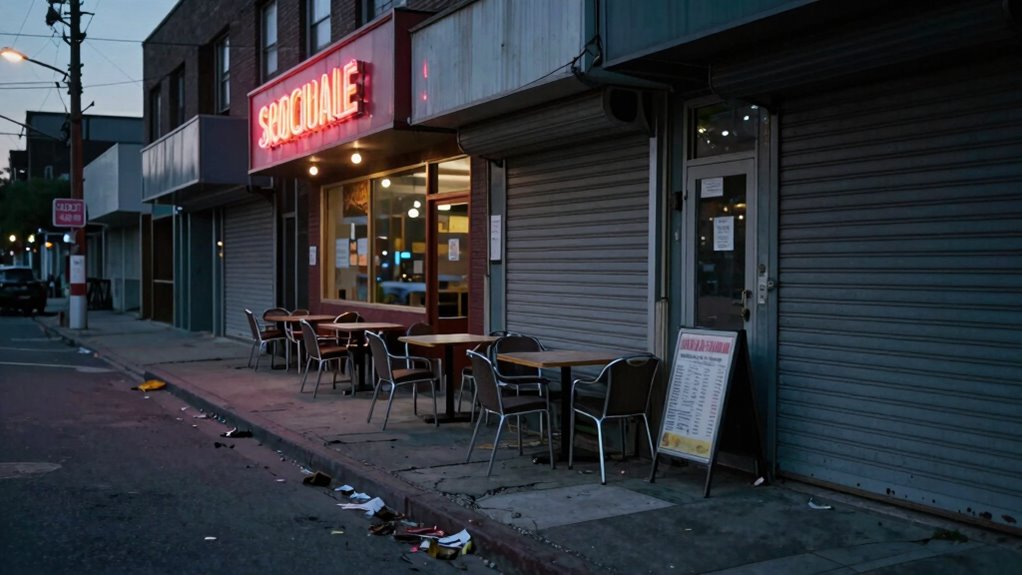

When restaurants close down, it often signals broader economic problems because fewer people are dining out, which reduces income for suppliers and workers. These closures also reflect drops in consumer confidence and financial instability, making them early warning signs of recession. As the industry struggles, job losses and supply chain issues spread, worsening the economic outlook. If you keep exploring, you’ll discover how these signs reveal deeper economic shifts affecting everyone.

Get everyday essentials delivered free with Prime
- Fast, free delivery on millions of items
- Prime Video, Amazon Music and more included
- Member-only deals all year
Key Takeaways
- Restaurant closures reflect declining consumer spending and confidence, indicating wider economic weakness.
- They cause job losses and supply chain disruptions, revealing broader labor market struggles.
- Closures serve as early warning signs of economic contraction and potential recessions.
- Reduced restaurant activity impacts local suppliers, amplifying economic stress across sectors.
- Industry struggles highlight underlying economic fragility and shifts in community financial health.
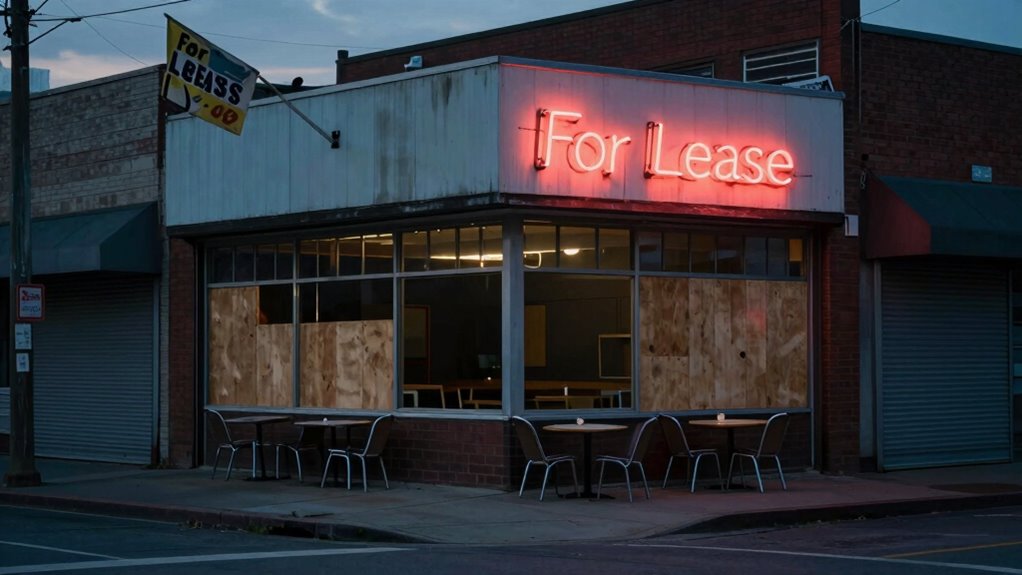
During times of economic stress, restaurants often bear the brunt of financial instability, leading to widespread closures that impact communities and local economies alike. When the economy slows down, you’ll notice fewer people dining out, and those who do tend to spend less. This decline in consumer spending directly affects the restaurant industry, which relies heavily on consumer confidence. If people feel uncertain about their financial future, they cut back on discretionary expenses like eating out. As a result, restaurants see declining revenues, and many can’t stay afloat. These closures aren’t just about individual businesses; they serve as signals of broader economic trouble.
Closures often reflect shifts in the labor market as well. When restaurants shutter, it’s usually accompanied by job losses—servers, cooks, managers, and suppliers all face layoffs or reduced hours. These job cuts ripple outward, indicating that the employment sector is struggling. A weak labor market means fewer people have steady income, which further diminishes consumer confidence. When consumers are unsure about their job security or income, they tighten their budgets, leading to even less spending at restaurants. This cycle feeds into a larger economic downturn, making restaurant closures a kind of canary in the coal mine. They signal that not only is the hospitality industry in trouble, but the overall economy is also faltering. Additionally, these closures can accelerate economic decline by reducing consumer spending and weakening local economies. Recognizing these patterns early can provide valuable insights into potential upcoming economic downturns.
Furthermore, the decline in restaurant activity can deepen economic stress because it affects local suppliers, farmers, and service providers. When restaurants close, their supply chains shrink or disappear, causing layoffs and financial strain across different sectors. This interconnectedness means that a spike in closures often precedes or coincides with broader economic contraction. As the labor market weakens and consumer confidence drops, these closures become a visible symptom of economic distress. Policymakers and economists view them as early warning signs, indicating that the economy might be heading toward recession. Labor market health is a crucial indicator of overall economic stability, and restaurant closures often reflect its decline.
In essence, restaurant closures serve as tangible evidence of underlying economic issues. They highlight how fragile consumer confidence is when faced with uncertainty, and how interconnected the labor market and consumer behavior are in shaping the economy’s health. When you see more restaurants shutting their doors, it’s not just the loss of a dining spot—it’s a reflection of deeper economic struggles that ripple through employment, consumer spending, and community stability. Recognizing these signals early can help you understand the broader economic landscape and the importance of monitoring these industry shifts. Understanding the economic indicators like restaurant closures can help you prepare for potential downturns and support resilience in your community.
restaurant industry economic stress indicator
As an affiliate, we earn on qualifying purchases.
As an affiliate, we earn on qualifying purchases.
Frequently Asked Questions
How Long Do Restaurant Closures Typically Last During Economic Downturns?
During economic downturns, restaurant closures can last from a few weeks to several months, influenced by seasonal fluctuations and regional disparities. You might notice closures are more prolonged in areas heavily impacted or with less economic resilience. Small businesses often struggle to recover quickly, so closures tend to extend if economic conditions remain tough. Staying aware of local economic trends helps you understand how long these closures might last in your region.
Are Certain Types of Restaurants More Vulnerable to Closures?
You might notice that small, quick-service spots are more vulnerable to closures, especially in areas with less resilience. Studies show that restaurants with limited menu diversity struggle more during economic downturns, making them less adaptable. Conversely, those with diverse menus and strong location resilience can weather downturns better. If your favorite local diner disappears, it’s often because it lacked flexibility and a broad appeal, highlighting their vulnerability in tough times.
How Do Government Policies Impact Restaurant Closure Rates?
Government policies substantially impact restaurant closure rates through regulatory impacts and tax policies. Stricter regulations can increase operational costs, making it harder for restaurants to survive. Conversely, tax policies like increased taxes or reduced relief can strain finances, especially for small establishments. When governments implement supportive policies, such as easing regulations or providing tax relief, they help restaurants stay afloat. Conversely, adverse policies tend to accelerate closures, signaling broader economic stress.
What Role Does Consumer Confidence Play in Restaurant Closures?
Did you know that a 15% drop in consumer optimism often leads to increased restaurant closures? When your confidence in the economy wanes, you tend to cut back on dining out, affecting restaurants’ revenues. Your changing spending habits directly influence these closures, as fewer visits mean less income for restaurant owners. Ultimately, your outlook shapes the local economy, signaling broader financial stress and prompting more closures.
Can Restaurant Closures Predict Future Employment Trends?
Yes, restaurant closures can predict future employment trends. When closures increase, it signals trouble in the labor market, often due to declining consumer behavior and spending. As consumer confidence drops, people eat out less, leading restaurants to cut jobs or shut down. Monitoring these closures helps you gauge upcoming shifts in employment, as they reflect broader economic health and changes in how consumers are behaving financially.
restaurant supply chain disruption products
As an affiliate, we earn on qualifying purchases.
As an affiliate, we earn on qualifying purchases.
Conclusion
Imagine walking past a once-bustling restaurant now shuttered—each closed door whispering secrets of economic strain. Just like these silent spaces, the broader economy feels the weight of unseen pressures, warning us that trouble isn’t just confined to one corner. When restaurants close, it’s a sign that financial storms are brewing, affecting more than just the food on your plate. Stay alert; these closures are the canaries in our economic coal mine.
restaurant job loss recovery tools
As an affiliate, we earn on qualifying purchases.
As an affiliate, we earn on qualifying purchases.
consumer confidence monitoring tools
As an affiliate, we earn on qualifying purchases.
As an affiliate, we earn on qualifying purchases.
Halloween Picks
halloween
As an affiliate, we earn on qualifying purchases.