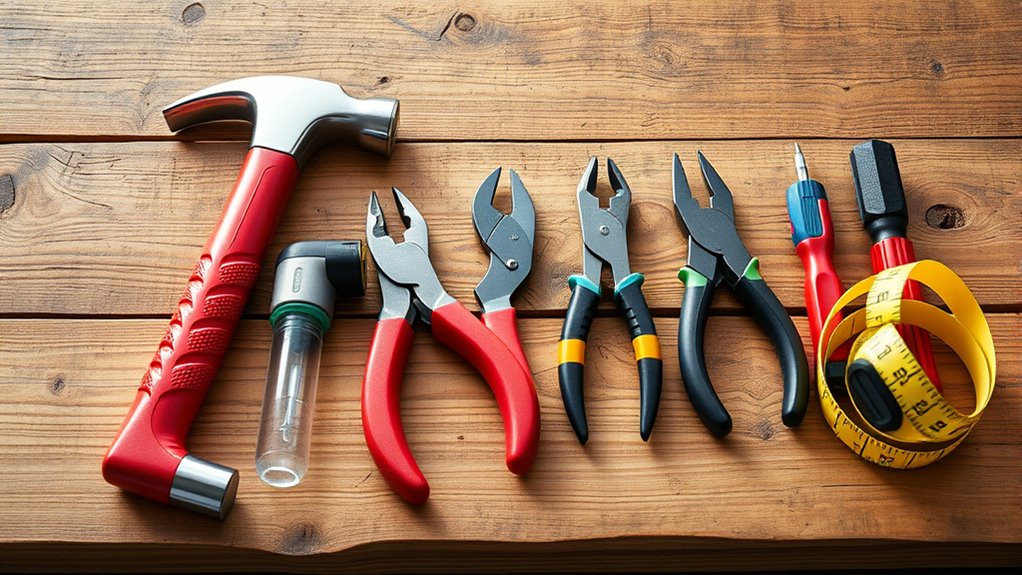

In 2025, your essential home toolkit should include a sturdy hammer, screwdrivers, pliers, a tape measure, and a utility knife for basic repairs. Add a cordless drill, level, stud finder, and small saw for more complex tasks. Don’t forget plumbing tools like pliers and wire cutters, along with safety gear. Blending traditional tools with modern tech enhances efficiency and safety. Keep your toolkit up-to-date to handle anything that comes your way. Explore further for the full list!
Key Takeaways
- A comprehensive toolkit should include traditional hand tools and modern tech for versatile home repairs.
- Power tools like cordless drills and laser levels enhance efficiency and precision in DIY projects.
- Plumbing-specific tools such as pipe wrenches and wire cutters are essential for maintenance and repairs.
- Safety equipment like goggles and gloves protect homeowners during repair tasks.
- Upgrading with AI-powered and smart tools prepares homeowners for evolving homeownership demands in 2025.
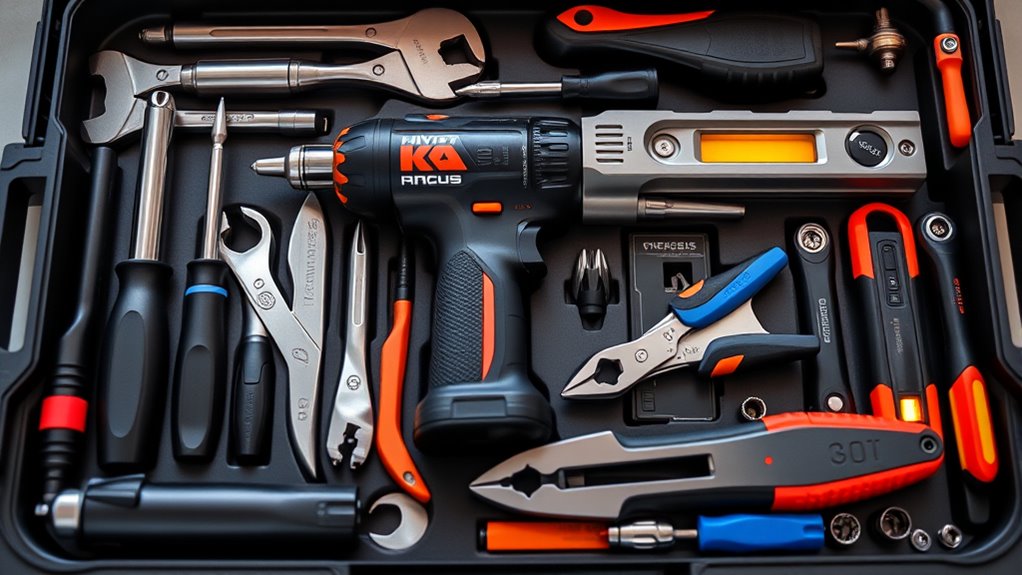
Are you ready to discover the future of productivity tools? As a homeowner, having a reliable tool kit is essential for tackling everyday tasks and unexpected repairs. Whether you’re fixing a leaky faucet or upgrading your space, your toolkit should be equipped to handle various projects efficiently. In today’s world, a well-rounded set of tools doesn’t just make DIY repairs easier; it empowers you to confidently approach home improvement projects, saving you time and money. As homes become smarter and more complex, your toolkit needs to evolve accordingly, blending traditional tools with modern essentials.
Start with the basics: a sturdy hammer, screwdrivers with different heads, pliers, and a tape measure. These core tools are your foundation for most repairs and adjustments around the house. A good utility knife is also invaluable, especially for precision cuts during home improvement projects like trimming drywall or opening packages. Don’t overlook a cordless drill—this versatile power tool speeds up tasks like assembling furniture or installing shelves, making your projects more manageable and less time-consuming. A set of Allen wrenches, often included in modern toolkits, is handy for assembling furniture and working with appliances.
In the sphere of DIY repairs, having a versatile toolkit allows you to address issues immediately, rather than waiting for professional help. For example, fixing a loose cabinet door or replacing a broken tile becomes straightforward when you have the right tools at hand. Home improvement projects often require measuring, cutting, drilling, and fastening, so your toolkit should include a level to ensure everything is aligned perfectly, along with a stud finder for secure wall mounting. A cordless screwdriver can make quick work of repetitive screwing tasks, and a small saw can come in handy for minor cutting jobs.
As you build your toolkit, consider adding specialized tools that increase your DIY repair capabilities. Pliers, wire cutters, and a small pipe wrench enable you to handle plumbing issues without calling in a professional. Safety gear, such as goggles and gloves, should also be part of your essential kit, protecting you during more involved projects. Additionally, integrating AI-powered tools can enhance your efficiency and accuracy, making complex tasks easier and safer by leveraging AI technology. With the right tools in place, you’ll find home improvement projects more rewarding and less intimidating, giving you the confidence to handle tasks that once seemed formidable.
Ultimately, a well-equipped toolkit is your secret weapon for maintaining and improving your home. It streamlines repairs, empowers you to take on DIY challenges, and guarantees you’re prepared for whatever comes your way. As we look ahead to 2025, investing in quality tools now means you’ll be ready to handle the evolving demands of homeownership, making every project smoother and more enjoyable.
Frequently Asked Questions
How Often Should I Replace My Basic Tools?
You should replace your basic tools when their lifespan ends or they become unsafe to use, typically every few years. Frequent use, rust, or damage can shorten their lifespan, so regularly inspect tools for wear. For safety and efficiency, plan to replace or refurbish essential tools like screwdrivers, hammers, and pliers every 3-5 years, or sooner if they show signs of deterioration. Staying vigilant guarantees your tools remain reliable.
Are There Eco-Friendly Tool Options Available?
Are eco-friendly tools really out there? Absolutely! You can find tools made from eco-friendly materials like bamboo, recycled plastics, and sustainably sourced wood. These options are designed to reduce environmental impact and are often produced by reputable sustainable brands. By choosing these tools, you not only get high-quality equipment but also contribute to a healthier planet. Don’t wait—start exploring sustainable brands today and make your home projects greener!
Can I Use Household Items as Makeshift Tools?
Yes, you can use household items as makeshift tools for quick fixes. DIY hacks often involve household alternatives like using a butter knife as a screwdriver or a butter knife as a scraper. Just guarantee safety first—use the right item for the task, and don’t force anything. These DIY hacks save time and money but always consider whether a proper tool might be safer and more effective for bigger jobs.
What’s the Safest Way to Store Power Tools?
To guarantee safety, store power tools in a dry, secure place away from children and pets. Use designated safety storage tips like hanging tools on wall mounts or keeping them in labeled, sturdy containers. Always disconnect power tools from the outlet before storage, and avoid clutter that could cause accidents. Proper power tool storage not only protects your tools but also reduces the risk of injury, making your workspace safer.
Do I Need Special Tools for Smart Home Installations?
You don’t need a spaceship’s arsenal for smart home installations, but having the right tools makes it way easier. For smart home compatibility, a basic multimeter and some wireless installation tools are essential to troubleshoot and connect devices seamlessly. While you can get by with standard tools, investing in specialized gadgets speeds up setup and guarantees everything works perfectly. Trust me, a few smart tools transform a challenging task into a breeze!
Conclusion
By 2025, your toolkit becomes your trusty sidekick for all home challenges. With these essential tools, you’re prepared to fix, build, and maintain like a pro—no need for a DeLorean or time machine. Remember, having the right tools today guarantees you’re ready for whatever tomorrow throws your way. Stay equipped, stay confident, and keep your home in top shape—because sometimes, the smallest wrench can change your entire day.

Elena’s passion for the arts and culture shines through in her vivid reporting. From film festivals to gallery openings, her coverage is an essential source for anyone interested in the latest cultural trends and artistic movements.