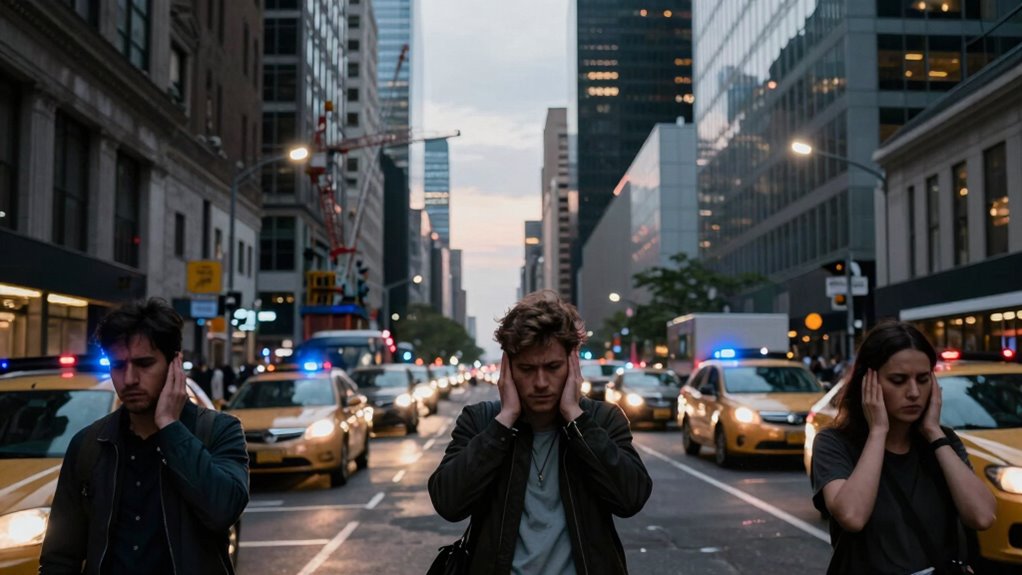

Noise pollution in urban areas can raise your stress levels and disturb your sleep, leading to irritability, anxiety, and even depression over time. It hampers your ability to relax, impacts your communication, and reduces your enjoyment of outdoor activities. Persistent noise also weakens your immune system and increases your risk of health problems like hypertension. These effects create a cycle that harms both your mental and physical well-being. Keep exploring to discover ways to protect yourself from urban noise challenges.

Get everyday essentials delivered free with Prime
- Fast, free delivery on millions of items
- Prime Video, Amazon Music and more included
- Member-only deals all year
Key Takeaways
- Noise pollution increases mental stress, irritability, anxiety, and depression, weakening overall mental health.
- Disrupted sleep due to noise leads to fatigue, cognitive decline, and increased risk of cardiovascular issues.
- Chronic noise exposure triggers a feedback loop of stress and poor sleep, worsening physical and emotional well-being.
- Excessive urban noise hampers social interactions and outdoor activities, reducing community cohesion and mental resilience.
- Lack of effective noise mitigation in cities exacerbates health problems, impacting long-term urban livability.
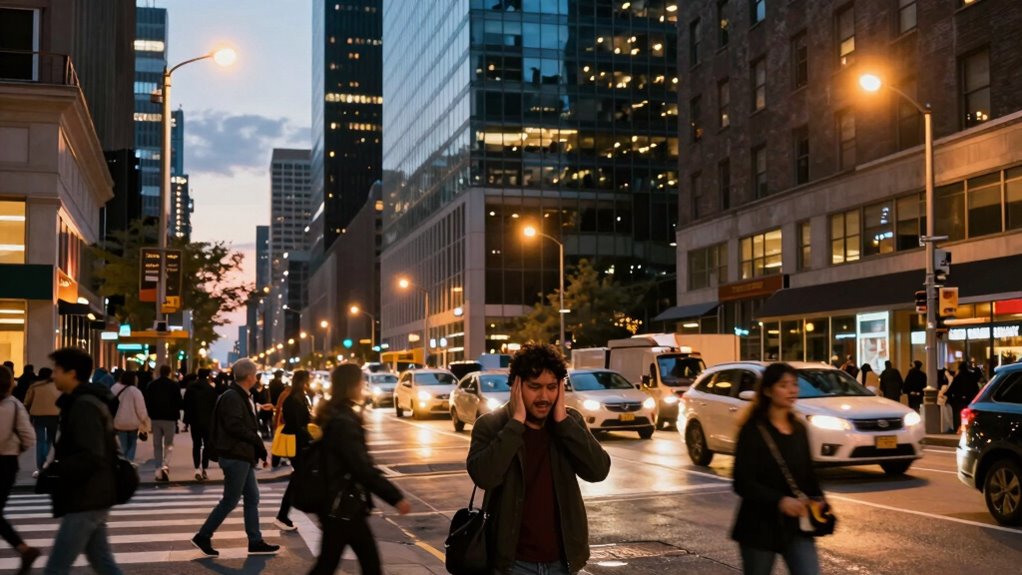
Noise pollution has become a pervasive issue in urban areas, directly impacting residents’ health and well-being. When you’re exposed to constant loud sounds—from traffic, construction, or busy streets—your mental stress levels tend to rise. The persistent noise makes it harder for your mind to find moments of calm, leading to feelings of irritability, anxiety, and even depression over time. As your brain constantly processes these disruptions, it becomes more difficult to focus or relax, which can diminish your overall mental resilience. The ongoing stress can also weaken your immune system, making you more vulnerable to illnesses.
One of the most immediate effects of noise pollution is sleep disturbance. If you live near a noisy street or a construction site, you might notice difficulty falling asleep or waking up frequently during the night. These interruptions prevent you from entering deep, restorative sleep stages, leaving you feeling exhausted during the day. Poor sleep quality doesn’t just cause fatigue; it impairs cognitive function, reduces your concentration, and hampers your productivity. Over time, chronic sleep disturbances can lead to serious health issues, including hypertension and cardiovascular problems, as your body remains in a state of heightened alertness due to noise stress. Moreover, sleep quality is closely linked to overall physical health and emotional stability, emphasizing the importance of a quiet environment for well-being.
You might also find yourself developing habits to cope with noise, like constantly turning up the volume on your music or TV, which can further contribute to your stress levels. The inability to find peace and quiet during your downtime can make relaxation seem out of reach, compounding feelings of frustration and mental exhaustion. This cycle of ongoing stress and sleep disruption creates a feedback loop, where your mental state deteriorates, and your sleep quality worsens, affecting your overall health. Additionally, noise mitigation measures in urban environments are often insufficient, which can intensify the health problems associated with noise exposure. Furthermore, the lack of effective urban planning can allow noise pollution to become even more pervasive, worsening health outcomes for residents. A more comprehensive approach to urban design could significantly reduce the health impacts caused by noise pollution.
Additionally, noise pollution impacts your social interactions and quality of life. It can make conversations more difficult, increasing misunderstandings and reducing your sense of community. The constant background noise can also diminish your enjoyment of outdoor spaces, discouraging you from engaging in physical activity or leisure activities that are essential for mental health. As a result, noise pollution doesn’t just affect your immediate comfort; it influences your emotional stability, physical health, and ability to function at your best. Furthermore, urban environments often lack sufficient noise mitigation measures, which exacerbates these health issues for residents. Recognizing and addressing these environmental health challenges is crucial for fostering healthier, more livable cities.
In essence, living amidst high noise levels forces your body and mind into a state of constant alertness. You may not realize it at first, but over time, this relentless exposure can take a serious toll on your mental health and sleep, undermining your overall well-being and quality of life.
noise cancelling headphones for sleep
As an affiliate, we earn on qualifying purchases.
As an affiliate, we earn on qualifying purchases.
Frequently Asked Questions
How Does Noise Pollution Impact Mental Health?
Noise pollution can harm your mental health by increasing stress levels and disrupting sleep, making it harder to manage emotional resilience. It may also reinforce mental health stigma, as constant noise can lead to feelings of frustration or isolation. Over time, exposure to loud environments can elevate anxiety or depression risks. To protect your mental well-being, try to find quieter spaces and develop coping strategies to manage noise-related stress effectively.
Are Children More Vulnerable to Noise Pollution?
You should know children are more vulnerable to noise pollution, especially since their developing child development makes them more sensitive. Studies show that over 20% of children exposed to loud environments risk hearing damage. Noise pollution can impede concentration and language skills, impacting their growth. Since their ears and brains are still developing, prolonged exposure could lead to lasting harm, making it essential to protect children from excessive noise.
What Noise Levels Are Considered Harmful?
Harmful noise levels are generally those exceeding 70 decibels, according to noise measurement standards. Prolonged exposure to sounds above these harmful thresholds can cause stress, hearing loss, and sleep disturbances. You should be cautious near busy roads or loud venues, and use ear protection if needed. Regularly monitoring noise levels helps you stay within safe limits, protecting your health and improving your overall well-being.
How Can Residents Reduce Exposure to Noise Pollution?
You can reduce exposure to noise pollution by installing personal noise barriers like double-glazed windows or heavy curtains to block out sound. Additionally, participate in community noise monitoring programs to stay informed about local noise levels and advocate for quieter neighborhoods. Using earplugs during noisy times also helps. These steps empower you to create a quieter, healthier environment, improving your overall well-being amidst urban noise.
What Policies Exist to Control Urban Noise?
Are you aware of policies that help control urban noise? Cities implement measures like noise barriers along busy roads and strict zoning regulations to limit loud activities near residential areas. These policies aim to reduce noise pollution and protect public health. By enforcing such regulations, urban environments become quieter and healthier, making it easier for residents to enjoy their surroundings without the constant stress of excessive noise.
white noise machine for urban noise
As an affiliate, we earn on qualifying purchases.
As an affiliate, we earn on qualifying purchases.
Conclusion
Remember, a quiet life is a happy life—you’ve heard it before, and it’s true. Noise pollution doesn’t just disturb your peace; it impacts your health and overall well-being in profound ways. By understanding and addressing noise in urban environments, you can help create healthier, more livable cities. Don’t wait for silence to become a luxury—take action now, because as the saying goes, “Silence is golden,” and your health is worth it.
As an affiliate, we earn on qualifying purchases.
As an affiliate, we earn on qualifying purchases.
Fall Picks
fall essentials
As an affiliate, we earn on qualifying purchases.