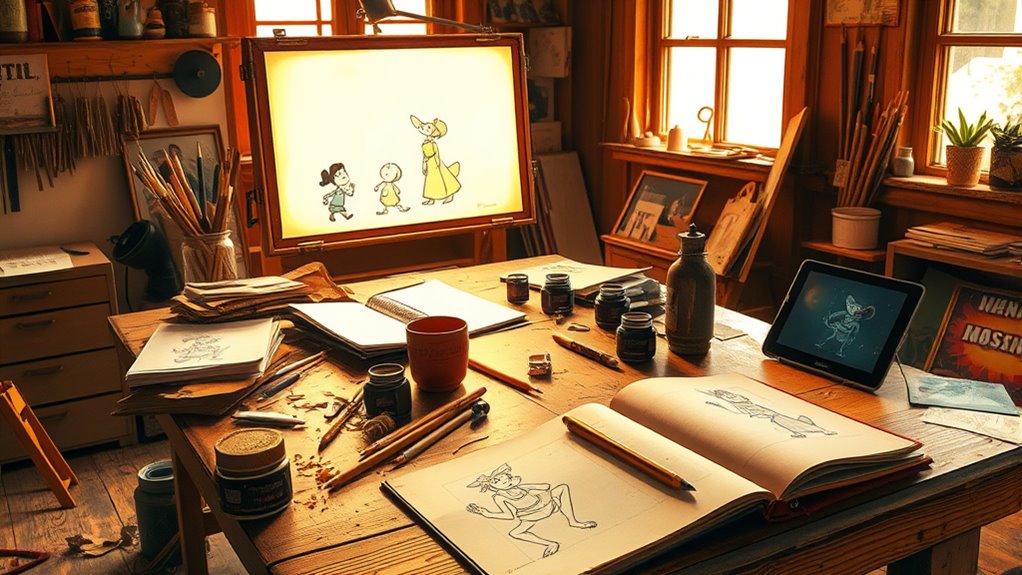

You’ll notice that hand-drawn animation is making a comeback because its craftsmanship and emotional connection remain powerful despite digital trends. Artists and studios combine traditional techniques with digital tools to improve efficiency while preserving its organic charm. This blend brings unique, heartfelt stories that resonate deeply and evoke nostalgia. If you stay curious, you’ll discover how this timeless art form continues to inspire innovation and maintain its relevance in today’s creative world.
Key Takeaways
- A renewed appreciation for craftsmanship and authenticity is driving interest in traditional hand-drawn animation.
- Hybrid workflows combining digital tools with hand-drawn techniques preserve artistic qualities while increasing efficiency.
- Independent studios and artists invest in mastering traditional methods to create unique, emotionally resonant content.
- Digital enhancements like coloring and compositing complement, not replace, the core hand-drawn artistry.
- The emotional and nostalgic appeal of hand-drawn animation sustains its relevance and inspires innovation in modern storytelling.

Despite the rise of computer-generated imagery, hand-drawn animation remains a mesmerizing and skilled art form that many believe is fading away. Yet, it’s experiencing a subtle resurgence, driven by a renewed appreciation for its unique charm and craftsmanship. You might wonder how traditional animation still holds relevance today, especially in a world dominated by digital techniques. The answer lies in its storytelling mastery—the way artists breathe life into characters and worlds through meticulous drawing and timing. Hand-drawn animation demands a deep understanding of motion, emotion, and timing, which digital techniques sometimes overlook or simplify. This mastery allows creators to craft stories that feel more organic, emotive, and timeless. When you watch a hand-drawn animation, you notice the subtle nuances—the slight imperfections, the fluidity of motion—that convey sincerity and artistic intent. These qualities resonate deeply, forging a connection between viewer and story that’s tough to replicate digitally.
What makes this art form stand out today is its ability to evoke nostalgia while also inspiring innovation. Artists today blend traditional techniques with modern tools, using digital technology to assist with coloring, compositing, and even inking. This hybrid approach preserves the aesthetic beauty of hand-drawn art while making the process more efficient. You might think digital techniques threaten to replace the physical skill involved, but many creators see them as tools that enhance storytelling mastery. They allow for more experimentation, faster iterations, and a broader scope of expression—all while keeping the essence of hand-drawn animation alive. Moreover, the technical mastery required for hand-drawn animation continues to influence digital animation workflows, enriching the overall craft.
Furthermore, the resurgence is fueled by a desire for authenticity and uniqueness that digital animation can’t always replicate. Audiences crave the tangible feel of hand-crafted art, which can evoke feelings of warmth and wonder. Independent animators and studios are increasingly investing in traditional methods, often combining them with digital techniques to produce work that’s both innovative and rooted in craftsmanship. This fusion not only revitalizes the art form but also educates new generations of artists who want to master the foundational skills of drawing and storytelling. Emphasizing craftsmanship and skill development helps preserve the core values of the art form amid technological advancements.
In essence, the revival of hand-drawn animation is a testament to its enduring power. It reminds you that technical mastery and heartfelt storytelling go hand in hand, creating works that are both visually captivating and emotionally compelling. As long as artists continue to value traditional skills and adapt with digital techniques, this timeless craft will keep enchanting audiences for years to come.
Frequently Asked Questions
What Are the Main Tools Used in Traditional Hand-Drawn Animation?
You mainly use traditional tools like pencils, paper, and erasers for hand-drawn animation. But now, digital pens and animation tablets are also popular, allowing you to draw directly onto a digital surface. These tools give you more precision, easier editing, and a smoother workflow. Whether working with paper or digital devices, the core of traditional animation still relies on skilled drawing and frame-by-frame illustration.
How Does Hand-Drawn Animation Compare to Digital Techniques?
Think of hand-drawn animation as a delicate brushstroke in a vast digital canvas. It offers a unique charm, with a rich color palette and a tactile feel that digital techniques often lack. While digital animation provides smoother animation fluidity and faster production, hand-drawn work captures a warmth and authenticity that makes each frame feel alive. You get to experience a more personal, artistic touch that digital sometimes can’t replicate.
What Are the Biggest Challenges Facing Contemporary Hand-Drawn Animators?
You face challenges like tight budget constraints and technological limitations that make hand-drawn animation tough today. With higher costs for materials and labor, it’s hard to compete with digital methods that are faster and cheaper. Technological limitations, such as outdated tools, can also hinder your creativity. Despite these hurdles, your dedication keeps the art alive, blending traditional skills with modern innovation to create unique, heartfelt animations.
How Can Aspiring Artists Start Learning Hand-Drawn Animation?
Like planting a seed, learning hand-drawn animation starts with mastering drawing fundamentals and understanding animation principles. You should begin by practicing basic sketches, focusing on shapes and motion, then study classic tutorials or enroll in online courses. Keep a sketchbook, experiment daily, and be patient. Remember, every great animator started with simple lines—consistency and passion will turn those lines into lively, expressive animations over time.
What Are Some Iconic Films That Showcase Classic Hand-Drawn Animation?
If you’re exploring classic hand-drawn animation, you should check out cartoon classics like Disney’s “Beauty and the Beast” and “The Little Mermaid,” which showcase stunning craftsmanship. You’ll also appreciate works from animation pioneers like Walt Disney and Chuck Jones, whose innovative techniques set the stage for future films. These masterpieces highlight the timeless charm of traditional animation and serve as inspiration for aspiring artists like you.
Conclusion
As hand-drawn animation makes a comeback, you might think it’s a step backward in technology. Yet, it’s actually a leap forward into authenticity and artistry. While digital tools can be quick, they often lack the soul and imperfections of hand-crafted work. So, you’re not just watching a revival; you’re witnessing a beautiful reminder that sometimes, the most timeless art is created by human hands, not pixels.

Amina brings over a decade of journalism experience to her role as Editor-in-Chief. Under her leadership, Exquisite Post has flourished, maintaining the highest standards of integrity and excellence. Amina’s commitment to truth and her visionary approach guide the editorial team in producing impactful news stories that resonate with our audience.