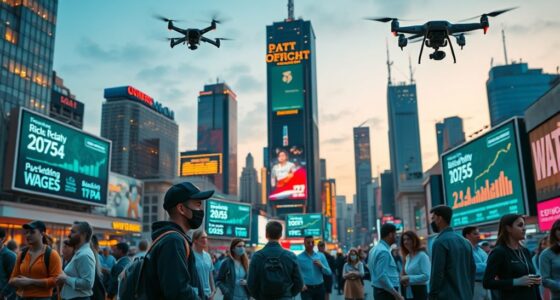

By 2025, remote work will be a key part of how your business operates, making flexible schedules and digital collaboration essential. You’ll need reliable technology and strong cybersecurity measures to keep everything running smoothly and securely. As organizations adapt, fostering a culture of trust and continuous security awareness will be vital. If you want to explore how to balance productivity with protection in this new landscape, there’s more you should consider.
Key Takeaways
- Remote work will be fully integrated into organizational operations, replacing traditional office routines by 2025.
- Digital tools and secure environments will be essential for maintaining productivity and collaboration remotely.
- Organizations must prioritize cybersecurity measures to address increased attack surfaces and protect assets.
- Balancing productivity and security requires ongoing policies, employee training, and advanced security tools.
- Building organizational resilience involves fostering a security-conscious culture and ensuring continuous adaptation to evolving work demands.

By 2025, remote work has become an integral part of how we operate, transforming traditional office routines into more flexible and dynamic arrangements. As you adapt to this new landscape, you’ll notice that employee productivity has generally improved, with many workers appreciating the autonomy to structure their day. However, this shift also introduces a set of cybersecurity challenges that you must address to safeguard your organization’s sensitive information. The increase in remote work means more devices, networks, and endpoints are involved, expanding the attack surface and making it harder to control data security.
You’ll find that maintaining high employee productivity in a remote environment relies heavily on providing the right tools and fostering a culture of accountability. Digital collaboration platforms, project management software, and instant messaging apps have become essential for keeping teams aligned and ensuring tasks are completed efficiently. When you empower your employees with reliable technology and clear expectations, you’ll see their engagement and output improve. Yet, it’s not just about tools—creating a work environment that encourages discipline, minimal distractions, and regular communication helps sustain productivity levels. As a result, your team can stay focused and motivated, even without the physical presence of an office.
At the same time, cybersecurity challenges become more complex in a remote setting. You need to implement robust security protocols, such as multi-factor authentication, VPNs, and encryption, to protect company data. Educating your employees about common cyber threats, like phishing scams and insecure Wi-Fi networks, is crucial to prevent breaches. You’ll also have to stay vigilant about updating software, monitoring network activity, and managing access controls. The reality is that remote work increases the risk of cyberattacks, so proactive measures aren’t optional—they’re indispensable for safeguarding your assets. Additionally, understanding home furnishings can help create a more comfortable and productive workspace at home, which indirectly supports cybersecurity by reducing distractions and encouraging better focus on security practices.
Balancing employee productivity with cybersecurity is a continuous process. You’ll need to regularly assess your security policies and adapt them as new threats emerge. Providing ongoing training ensures your employees remain aware of best practices and emerging risks. Additionally, investing in security tools that integrate seamlessly with your workflow can help streamline compliance without hampering productivity. As you navigate these challenges, remember that a well-informed, security-conscious team is your best defense.
Ultimately, by 2025, the success of remote work hinges on your ability to foster an environment where employees can thrive while maintaining rigorous cybersecurity standards. Emphasizing clear communication, reliable technology, and ongoing security awareness will help you create a resilient, flexible organization ready to meet the demands of this evolving work landscape.

Kayle 120" Motorized Projector Screen Electric Diagonal Automatic Projection 16:9 HD Movies Screen for Home Theater Presentation Education Outdoor Indoor W/Wireless Remote, Wall/Ceiling Mount (White)
【Widescreen Aspect Ratio】The projector screen features a 16:9 viewing format, same aspect ratio as an HD TV and...
As an affiliate, we earn on qualifying purchases.
Frequently Asked Questions
How Will Remote Work Impact Global Economic Inequality?
You might find that remote work could either widen or bridge global economic inequality. If you have access to reliable internet and digital tools, you gain more economic mobility, but those on the other side of the digital divide could fall further behind. As remote work becomes widespread, closing the digital divide becomes essential so everyone can benefit equally from new opportunities and prevent economic disparities from growing wider.
What New Technologies Will Dominate Remote Collaboration in 2025?
In 2025, immersive technologies, virtual collaboration tools, and AI-driven platforms will dominate remote work. You’ll use virtual reality to attend meetings, augmented reality to visualize projects, and AI assistants to streamline tasks. These innovations will make remote collaboration more engaging, seamless, and efficient. You’ll experience a new level of connectivity, interaction, and productivity, transforming how you work, communicate, and innovate from anywhere in the world.
How Will Remote Work Influence Urban and Rural Development?
Remote work in 2025 will reshape urban and rural development by reducing urban sprawl as more people live outside city centers. You’ll see increased rural revitalization, with remote workers investing in local communities and infrastructure. This shift promotes balanced growth, easing congestion and pollution in cities while fostering economic opportunities in rural areas. As a result, you’ll notice more sustainable, vibrant neighborhoods both urban and rural, driven by flexible work arrangements.
Will Remote Work Lead to Increased Employee Surveillance?
Remote work might turn into a double-edged sword, where you feel like you’re under a microscope rather than trusted. As companies explore new ways to monitor productivity, employee privacy becomes a concern, raising questions about surveillance ethics. While some data tracking is inevitable, it’s essential for you to advocate for transparent policies that respect your rights, ensuring surveillance doesn’t cross the line into invasion of privacy.
How Will Remote Work Policies Adapt to Different Cultural Contexts?
You’ll find remote work policies adapting to diverse cultural contexts by emphasizing cross-cultural communication and regional policy adaptation. You’ll need to understand local norms, language differences, and work expectations, tailoring guidelines accordingly. By fostering inclusive communication strategies and respecting regional policies, you guarantee smooth collaboration across borders. This approach helps build trust, boosts productivity, and creates a respectful, flexible remote work environment that aligns with each culture’s unique needs.

Silver Ticket Products STR Series 6 Piece White 1.1 Gain 120" Diagonal 16:9 Format Projection Screen, Aluminum Frame, Wall Mounted, 109.25x63.625 inches STR-169120
Wall Mounted Fixed Frame Projection Screen (Overall Size 63.625" Tall x 109.25" Wide) (Viewing Area 120" Diagonal x...
As an affiliate, we earn on qualifying purchases.
Conclusion
By 2025, remote work is expected to become the norm for many businesses, with over 70% of employees working remotely at least part of the time. This shift offers flexibility and boosts productivity, proving it’s here to stay. Embrace these changes now, as adapting early can give you a competitive edge. The future of work isn’t just about location; it’s about smarter, more efficient ways to collaborate and succeed in a digital world.

PANSEBA 1080P Mini Projector with Screen, Portable Home Theater Movie Projector with Two-Way Bluetooth, HDMI/USB Input for Smartphone/TV Stick, Ideal for Indoor & Outdoor Use
【Upgraded Two-way Bluetooth 5.2 & HIFI Speaker】Built-in powerful speakers, this portable bluetooth projector provides HIFI sound effect while...
As an affiliate, we earn on qualifying purchases.

TOWOND Projector Screen and Stand, 150 inch Indoor Outdoor Projection Screen, Portable 16:9 4K HD Rear Front Movie Screen with Carry Bag Wrinkle-Free Design for Home Theater Backyard Cinema
Projector Screen with Stand. 150-inch diagonal, 160°wide viewing angle, aspect ratio 1:1 and 16:9 4k HD portable projector...
As an affiliate, we earn on qualifying purchases.

Elena’s passion for the arts and culture shines through in her vivid reporting. From film festivals to gallery openings, her coverage is an essential source for anyone interested in the latest cultural trends and artistic movements.