TL;DR

Get everyday essentials delivered free — and shop member deals
- Fast, free delivery on millions of items
- Access to Prime Big Deal Days deals on October 6–7
- Prime Video, Amazon Music and more included
Donald Trump and Xi Jinping ended their Washington summit with a two-month extension of the tariff truce and a stated willingness to discuss cooperation on AI. They announced no major trade agreement, and the summit left sensitive issues including Iran and Taiwan largely untouched.
US President Donald Trump and Chinese President Xi Jinping ended their Washington summit with a two-month extension of the tariff truce and a proposal to discuss alerts about AI-related events, but no major trade deal. The extra time moves the truce deadline from November 10 to January 10, while leaving the two countries’ broader trade framework unresolved.
The extension gives Washington and Beijing until January 10 to pursue a more stable trade arrangement. The truce had been reached nearly a year earlier, and the summit’s outcome does not settle the underlying disputes. Negotiations leading to the extension were conducted by US Treasury Secretary Scott Bessent and Chinese Vice Premier He Lifeng, who held parallel talks in New York.
Trump said the teams had worked to foster a more balanced trade relationship, but did not announce a completed framework. Xi said the two countries benefit from cooperation and lose from confrontation, adding that competition should be healthy and kept within limits. Those statements describe the leaders’ positions; the summit produced no detailed agreement on how to achieve that balance.
On artificial intelligence, the United States proposed a common system for alerts about AI-related events. The source account said details were not yet available. Trump also praised Xi’s apparent reaction to his suggestion of renaming AI “Superintelligence,” but the comment did not amount to a confirmed bilateral policy or agreement.
US–China Relations · Summit Brief
Trump-Xi Summit Extends Tariff Truce, Yields Few Deals
A two-month pause creates room for more negotiations. The Washington meeting produced no major trade agreement, while a proposed AI alert system remains short on detail.
What the summit delivered
A pause, a proposal, and open questions
The leaders voiced support for cooperation, but the meeting left the terms and next steps largely undefined.
01 · Trade
More time to negotiate
The tariff truce moves from November 10 to January 10. The broader trade framework remains unresolved.
02 · Technology
AI alerts proposed
The United States proposed a shared system for alerts about AI-related events. No operating details were provided.
03 · Diplomacy
Sensitive topics sidelined
The account says Iran and Taiwan were largely untouched, with no new positions or commitments reported.
A defined negotiating window
The truce deadline moves two months
The extension delays a potential return to direct tariff confrontation while negotiators pursue a more stable arrangement.
Washington and Beijing have until January 10 to work toward a broader trade arrangement. The summit account does not specify which tariffs or conditions might change, or identify agreed substantive terms.
Cooperation and competition
Signals of dialogue, with little detail
Public statements pointed toward managed competition. The practical steps remain unclear.
An alert proposal without a blueprint
The United States proposed a common system for alerts about AI-related events. The account does not explain how it would operate, which events it would cover, or whether both sides accepted a plan.
Trump also praised Xi’s apparent reaction to his suggestion of renaming AI “Superintelligence.” That comment was not a confirmed bilateral policy or agreement.
Negotiations continue
US Treasury Secretary Scott Bessent and Chinese Vice Premier He Lifeng held parallel talks in New York before the announcement.
Trump described efforts toward a more balanced trade relationship. Xi said both countries benefit from cooperation and lose from confrontation, and that competition should remain healthy and limited.
Diplomacy and next steps
High ceremony, limited announcements
The visit projected public warmth while leaving major questions to future talks.
Washington welcome
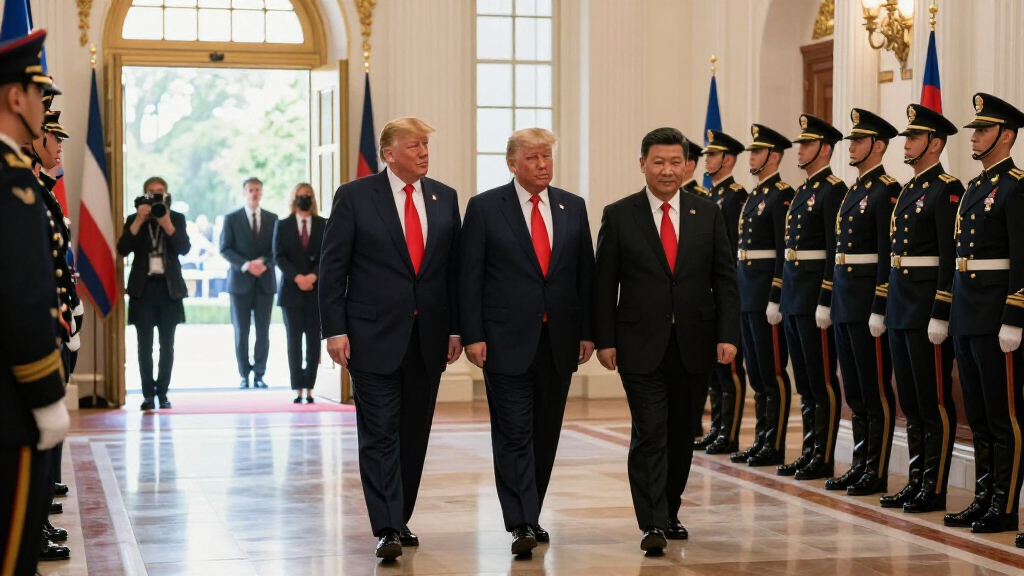
Trump greeted Xi at Andrews Air Force Base. The visit featured military displays, a White House state dinner, and a fighter jet flyover.
Gesture of friendship
Xi announced that two pandas, Ping Ping and Fu Shuang, would go to Atlanta Zoo.
APEC in Shenzhen
Trump said the leaders planned to meet at the APEC forum in November.
G20 in Miami
A further meeting was announced for December. No outcomes have been set out in advance.
Key questions
What remains to be clarified?
What was the main outcome?
The tariff truce was extended by two months, moving its deadline from November 10 to January 10. No major trade deal was announced.
Did the countries agree on AI cooperation?
The United States proposed a common alert system. Details and the proposal’s status remain unclear.
Which issues stayed unresolved?
The broader trade framework remains incomplete. The account says the leaders skirted Iran and Taiwan and reports no new commitments on either.
When could the leaders meet again?
Trump announced plans for meetings at the APEC forum in Shenzhen in November and the G20 summit in Miami in December.
More Time for Trade Talks
The truce extension delays a potential return to direct tariff confrontation and gives negotiators two additional months to work on a broader arrangement. That matters to businesses and governments exposed to trade between the world’s two largest economies, although the summit offered no details on which tariffs or other conditions might change.
The AI proposal signals that the leaders are willing to discuss at least one area of technology risk even as the countries compete in the field. Without a published plan, shared standards or a timeline, its practical effect remains uncertain. The summit’s limited outcomes leave the relationship dependent on further negotiations and the leaders’ next meetings.
Top picks for "trump summit extend"
As an affiliate, we earn on qualifying purchases.
A Truce Near Its Deadline
The tariff truce was due to expire on November 10. Extending it to January 10 creates a defined window for further talks but does not resolve the wider trade relationship. The reported negotiations between Bessent and He in New York preceded the leaders’ public announcement of the extension.
The Washington visit was marked by elaborate diplomatic ceremony, including Trump greeting Xi at Andrews Air Force Base, military displays, a White House state dinner and a fighter jet flyover. Xi announced that two pandas, Ping Ping and Fu Shuang, would go to Atlanta Zoo as a gesture of friendship. These events underscored the public warmth of the visit, while the substantive announcements remained limited.
The account says the leaders skirted the sensitive subjects of Iran and Taiwan. It does not report a new position or agreement on either issue. Trump said the leaders planned to meet again at the APEC forum in Shenzhen in November and the G20 summit in Miami in December.
Terms Still to Be Negotiated
The summit account does not specify the terms of the tariff extension, what a more stable trade framework would include or whether negotiators have agreed on any substantive elements. The January 10 deadline is clear, but the prospects for a deal are not.
Details of the proposed AI alert system, including how it would operate and what events it would cover, were not provided. The account also gives no new commitments on Iran or Taiwan. It remains unclear whether those issues will feature in later talks or at the leaders’ scheduled meetings.
Two Summits Before Year-End
Trade negotiators have until January 10 to work toward a more stable framework under the extended truce. Trump said he and Xi would meet again at the APEC forum in Shenzhen in November and the G20 summit in Miami in December. Those gatherings provide further opportunities for discussion, but no outcomes have been announced in advance.
Further details on the AI alert proposal and the trade talks would clarify whether the summit’s announcements lead to concrete cooperation. Until then, the truce extension is the clearest practical result reported from the meeting.
Key Questions
What was the main outcome of the Trump-Xi summit?
The leaders extended the tariff truce by two months, moving its deadline from November 10 to January 10. They did not announce a major trade deal.
Did the United States and China agree on AI cooperation?
The United States proposed a common system for alerts about AI-related events. Details were not provided, so the scope and status of any agreement remain unclear.
What issues were left unresolved?
The account reports no completed broader trade framework and says the leaders skirted discussion of Iran and Taiwan. It does not describe new commitments on those issues.
When are Trump and Xi expected to meet again?
Trump announced plans for meetings at the APEC forum in Shenzhen in November and the G20 summit in Miami in December. No specific outcomes from those meetings have been set out.
Source: rss
Fall Picks
fall essentials
As an affiliate, we earn on qualifying purchases.