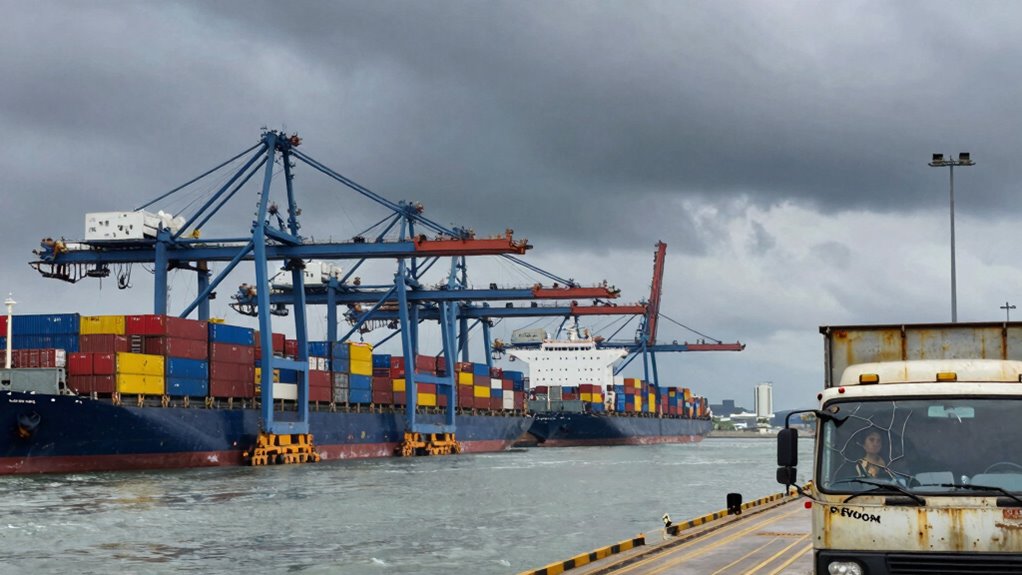

Regional conflicts can profoundly disrupt global supply chains, causing prices for fuel, food, and freight to spike. You’ll notice increased transportation costs and shortages due to unsafe shipping routes and blockages of agricultural exports. Sanctions and border closures further complicate trade, leading to higher consumer prices worldwide. These issues threaten economic stability, and understanding how conflicts ripple through markets can help you stay prepared for potential changes ahead. Keep exploring to learn how these disruptions unfold in detail.

Get everyday essentials delivered free with Prime
- Fast, free delivery on millions of items
- Prime Video, Amazon Music and more included
- Member-only deals all year
Key Takeaways
- Regional conflicts disrupt supply chains, causing delays and increased costs for fuel, food, and freight transportation globally.
- Sanctions aimed at conflict regions can restrict oil exports, leading to spikes in global fuel prices.
- Fighting and border closures hinder humanitarian aid and agricultural exports, causing food shortages and higher prices worldwide.
- Unsafe or inaccessible shipping routes result in rerouting, delays, and elevated freight costs globally.
- Conflicts destabilize markets, increasing volatility and impacting the affordability and availability of essential goods.

Have you ever wondered how regional conflicts ripple through the global economy? When tensions escalate or wars break out, the effects aren’t confined to the immediate area. Instead, they spread out, impacting fuel prices, food availability, and freight movements worldwide. One of the key ways conflicts influence the economy is through economic sanctions. Governments often impose these restrictions to pressure conflicting parties, but they also disrupt global trade flows. For instance, sanctions against a major oil-producing country can cause fuel prices to spike globally, since markets react to perceived shortages or risks in supply. When supply chains are interrupted, fuel becomes more expensive, affecting transportation costs and the prices consumers pay at the pump. This ripple effect extends to industries that rely heavily on fuel, like airlines, shipping, and manufacturing, which see increased operational costs.
At the same time, conflicts often hinder the delivery of humanitarian aid. When borders are closed or fighting intensifies, aid organizations struggle to get essential supplies—like food, medicine, and fuel—to those in need. These disruptions can lead to shortages of basic necessities, further destabilizing economies, particularly in vulnerable regions. Food supplies are especially sensitive to regional conflicts, as agricultural exports are often blocked or destroyed during warfare. This not only causes local shortages but also affects global markets, especially when the affected countries are significant exporters of staple crops. As supply diminishes, prices rise on international markets, making food less affordable for many people worldwide. Additionally, the increased reliance on advanced logistical planning often necessitates more complex routing, which can be hampered by ongoing conflicts and complicate supply chain management. Moreover, the unpredictable nature of regional conflicts makes risk assessment and contingency planning more critical for businesses involved in international trade.
Freight and logistics are also deeply impacted during conflicts. Shipping routes may become unsafe or impossible to traverse, forcing companies to reroute shipments or delay deliveries. These delays increase costs and cause shortages in retail shelves, manufacturing inputs, and raw materials. The uncertainty leads to higher freight prices and supply chain disruptions that ripple across industries. Governments and international organizations often try to mitigate these effects through humanitarian aid, but conflicts complicate these efforts, especially when economic sanctions restrict transactions or block funds. Humanitarian aid is vital for survival, yet it can be hampered by political disagreements or logistical hurdles, prolonging suffering and economic instability. The interconnectedness of supply chains means that even localized conflicts can have widespread economic repercussions, affecting markets far beyond the conflict zone.
Ultimately, regional conflicts don’t stay isolated; they threaten the stability of global supply chains. They push up costs for fuel, food, and freight, which consumers and businesses worldwide feel directly. While economic sanctions are meant to pressure conflicting parties, they sometimes have unintended consequences, such as worsening shortages or prolonging crises. Navigating these complexities requires careful international cooperation, balancing sanctions, aid, and economic stability to prevent conflicts from spiraling into deeper economic turmoil. Recognizing the importance of supply chain resilience is crucial for countries to better withstand such disruptions in the future.
As an affiliate, we earn on qualifying purchases.
Frequently Asked Questions
How Do Regional Conflicts Impact Local Economies Differently?
Regional conflicts shape local economies differently by causing various levels of disruption. You might see significant local economic shifts, like job losses or rising prices, especially in sectors directly affected. Market resilience varies; some regions adapt quickly, while others struggle longer. Your community’s ability to bounce back depends on local resources, policies, and how integrated the economy is with broader markets. Understanding these differences helps you grasp the broader economic impacts of conflicts.
What Role Do Sanctions Play in Regional Conflict-Related Disruptions?
Economic sanctions and trade restrictions are key tools during regional conflicts, aiming to pressure governments or groups. They disrupt supply chains, making it harder for you to access fuel, food, and freight services. These sanctions can cause prices to spike and create shortages, affecting global markets. While intended to deter conflict, they often escalate disruptions, impacting not just the involved regions but also worldwide economies and your day-to-day life.
How Quickly Can Global Supply Chains Recover From Regional Conflicts?
Global supply chains can take months or even years to recover from regional conflicts, especially if conflict escalation continues. Your supply chain resilience depends on diversifying suppliers and establishing flexible logistics. When conflicts escalate, disruptions worsen, prolonging recovery. You need proactive planning, strong communication, and adaptable strategies to minimize delays. The quicker you respond and adjust to conflict escalation, the faster your supply chain can regain stability and resilience.
Are Alternative Routes Effective During Regional Conflict Disruptions?
Absolutely, alternative routes can be quite effective during regional conflict disruptions. They bolster your supply chain resilience by bypassing blockades or damaged pathways, ensuring your goods keep flowing. While these routes might sometimes be longer or less direct, they help maintain momentum and minimize delays. By diversifying your options, you can adapt quickly, reduce risks, and keep your supply chain strong, even when conflicts threaten to derail your usual logistics.
What Long-Term Strategies Can Mitigate Conflict-Related Supply Chain Risks?
To mitigate conflict-related supply chain risks long-term, you should focus on building supply chain resilience through diversified sourcing and flexible logistics. Risk diversification helps you avoid over-reliance on a single route or supplier, reducing vulnerability during regional conflicts. Investing in robust planning, technology, and alternative transportation options guarantees your supply chain adapts quickly, maintaining steady fuel, food, and freight flows despite disruptions.
food storage containers for emergencies
As an affiliate, we earn on qualifying purchases.
As an affiliate, we earn on qualifying purchases.
Conclusion
Regional conflicts ripple through global supply chains, impacting fuel, food, and freight worldwide. As you see disruptions unfold, ask yourself—can we afford to ignore the interconnectedness of these conflicts and their far-reaching consequences? Staying aware and adaptable becomes essential in steering through these turbulent times. The stability of your supply chain depends on understanding these conflicts’ effects. Are you prepared to face a world where regional struggles shape your everyday essentials?
As an affiliate, we earn on qualifying purchases.
portable fuel canisters for travel
As an affiliate, we earn on qualifying purchases.
As an affiliate, we earn on qualifying purchases.
Fall Picks
fall essentials
As an affiliate, we earn on qualifying purchases.