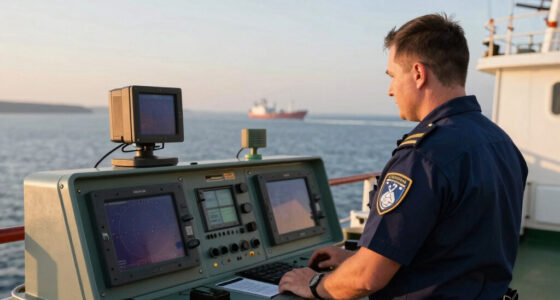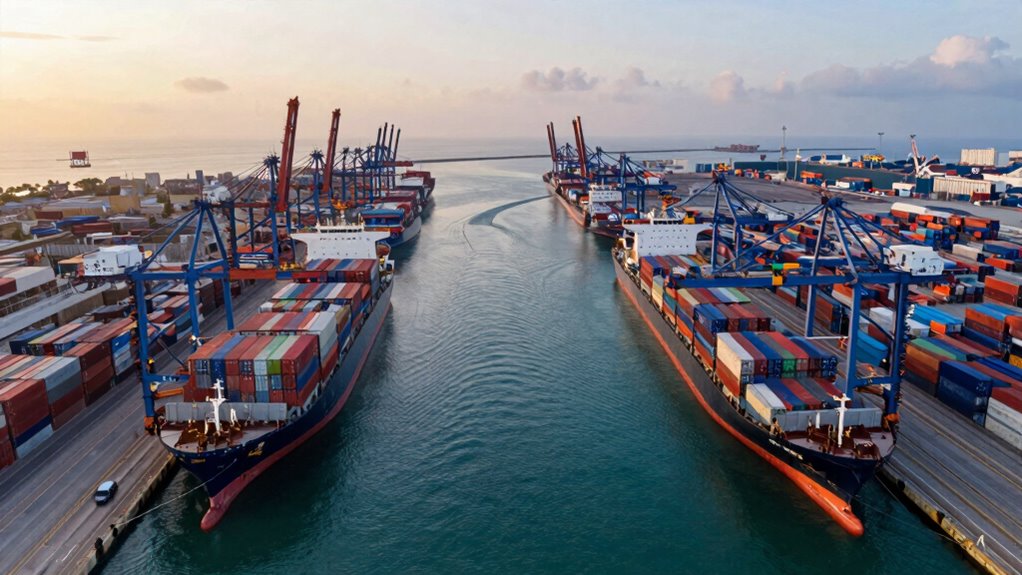

You can see that controlling shipping lanes and ports gives countries significant political leverage, as it influences global trade, energy flow, and raw materials. By securing key chokepoints like the Strait of Malacca, nations can impose economic pressures or gain strategic advantages. This control enhances their power on the world stage, shaping international relations and alliances. If you want to understand how these routes impact global influence further, there’s more to uncover below.
Key Takeaways
- Control over major shipping lanes grants nations strategic dominance over global trade and energy flows.
- Strategic ports serve as economic gateways, enhancing national influence and attracting international investment.
- Dominance of chokepoints allows countries to impose blockades or restrict access, impacting rivals’ economies.
- Maritime security efforts and infrastructure control extend a nation’s geopolitical power and diplomatic leverage.
- Securing shipping routes and ports enables influence over international politics and global economic stability.
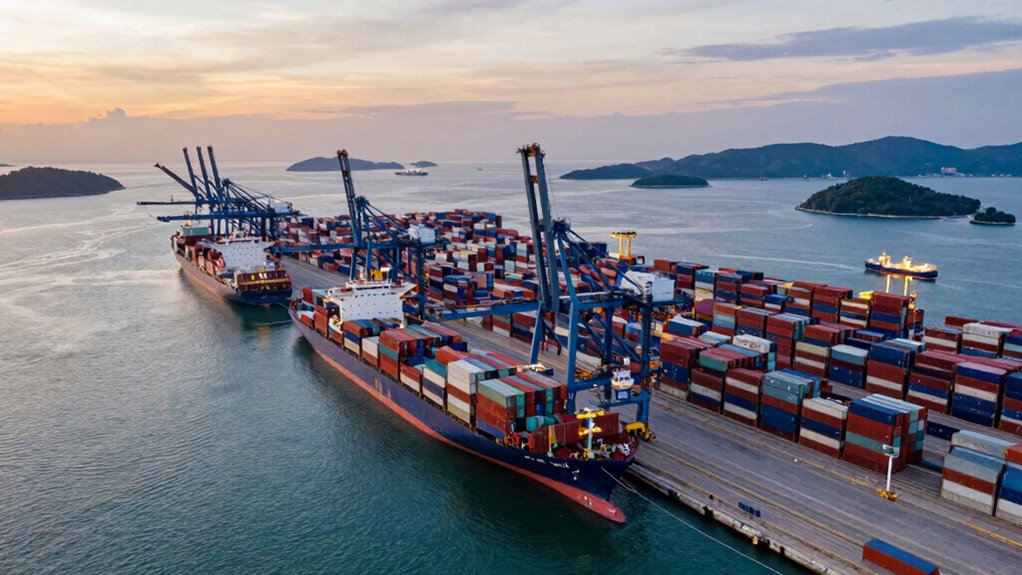
Shipping lanes and ports are the arteries of global commerce, shaping international relations and economic stability. You recognize that these routes are more than just pathways for cargo; they’re strategic assets that influence power dynamics among nations. Securing these routes isn’t just about reducing piracy or accidents—it’s about safeguarding maritime security, which directly impacts a country’s ability to maintain its economic dependency. When you think of a country controlling critical shipping lanes, you see how it gains leverage over others by controlling the flow of goods, energy supplies, and raw materials. This control can translate into political influence, especially when crucial trade routes pass through contested waters or choke points like the Strait of Malacca or the Suez Canal.
Shipping lanes and ports are vital strategic assets that shape global power and economic stability.
You understand that nations invest heavily in their ports and maritime infrastructure because they serve as gateways to global markets. Ports are not isolated facilities but strategic nodes that boost a country’s economic standing, allowing it to attract investment, create jobs, and facilitate international trade. When a nation’s ports are secure, efficient, and well-connected, it enhances its economic reliance on global supply chains, making it an essential partner in international commerce. Vulnerabilities in these ports or shipping lanes threaten economic stability, prompting countries to prioritize maritime security measures like naval patrols, intelligence sharing, and infrastructure upgrades. Such efforts serve as tools of influence, enabling nations to project power and protect their interests. Additionally, investments in maritime security are crucial for maintaining control and stability over these vital trade routes. Recognizing the importance of maritime infrastructure, many countries develop comprehensive strategies to enhance their port capabilities and maritime presence.
You also see how maritime security operations extend beyond immediate threats like piracy or terrorism—they’re part of a broader strategy to control maritime space. Countries that dominate shipping lanes can impose blockades or restrict access, wielding economic influence to pressure rivals or secure advantageous trade terms. This control often translates into diplomatic leverage, especially when global powers compete for dominance over strategic chokepoints. The importance of these routes makes them a focal point in international diplomacy, where nations negotiate access rights, military alliances, and security commitments to maintain their economic dependencies and political interests.
Furthermore, the control over maritime chokepoints often becomes a central aspect of geopolitical rivalry, as nations seek to secure their economic and strategic interests. Ultimately, you realize that shipping lanes and ports aren’t just conduits for commerce—they’re critical battlegrounds for influence on the global stage. Ensuring maritime security and safeguarding these crucial arteries give nations the leverage needed to shape international politics, protect their economic interests, and project power far beyond their borders.
maritime security patrol drone
As an affiliate, we earn on qualifying purchases.
As an affiliate, we earn on qualifying purchases.
Frequently Asked Questions
How Do Piracy Issues Affect Shipping Lane Security?
Piracy issues directly threaten shipping lane security by increasing risks for vessels, which can lead to delays and higher costs. You need to prioritize maritime security and piracy prevention measures, such as armed patrols and surveillance, to protect your shipments. Addressing piracy not only safeguards your cargo but also maintains the stability of essential trade routes, ensuring that shipping lanes remain open and secure for global commerce.
What Are the Environmental Impacts of Major Shipping Ports?
You should know that major shipping ports considerably impact the environment through marine pollution and habitat disruption. As ships operate, they often release pollutants like oil, chemicals, and sewage into the water, harming marine life. Additionally, port development can destroy local habitats, threatening biodiversity. These environmental effects highlight the need for sustainable practices in port operations to protect ecosystems while supporting global trade.
How Do Shipping Lanes Influence Regional Economic Development?
You see shipping lanes act as arteries of maritime trade, directly fueling regional economic zones. While bustling ports attract investments and create jobs, they also intensify competition among neighboring regions. This juxtaposition highlights how strategic control over shipping routes enhances a region’s economic development, making them essential for regional prosperity. As trade flows increase, regions with well-developed ports and secure lanes gain leverage, shaping their economic and political influence globally.
What Role Do Private Companies Play in Port Infrastructure?
Private companies play a vital role in port infrastructure through private investment and port privatization. You’ll find that these companies often fund upgrades, expand facilities, and improve efficiency, making ports more competitive. By privatizing ports, governments can reduce costs and boost operational performance. This shift allows private investors to influence port development, increasing capacity and technological advancements, ultimately strengthening a country’s trade capabilities and global economic influence.
How Does Climate Change Threaten Global Shipping Routes?
Climate change is like a ticking time bomb for global shipping routes. As melting ice opens Arctic passages, new opportunities emerge, but climate vulnerabilities threaten established routes with unpredictable weather, rising sea levels, and intensified storms. These changes disrupt schedules, increase costs, and threaten global trade. You must understand that melting ice isn’t just a visual change; it reshapes the entire geopolitical landscape, forcing nations to adapt or face economic chaos.
port security surveillance system
As an affiliate, we earn on qualifying purchases.
As an affiliate, we earn on qualifying purchases.
Conclusion
Understanding shipping lanes and ports is like holding the keys to a global treasure chest—controlling these routes gives you significant leverage in international politics. As you navigate this intricate web, remember that these maritime pathways are the arteries of global trade, pumping economic energy into nations. By grasping their importance, you can see how they shape power dynamics and influence international relations, turning the vast ocean into a game board where every move counts.
cargo port container scanner
As an affiliate, we earn on qualifying purchases.
As an affiliate, we earn on qualifying purchases.
ship tracking GPS device
As an affiliate, we earn on qualifying purchases.
As an affiliate, we earn on qualifying purchases.