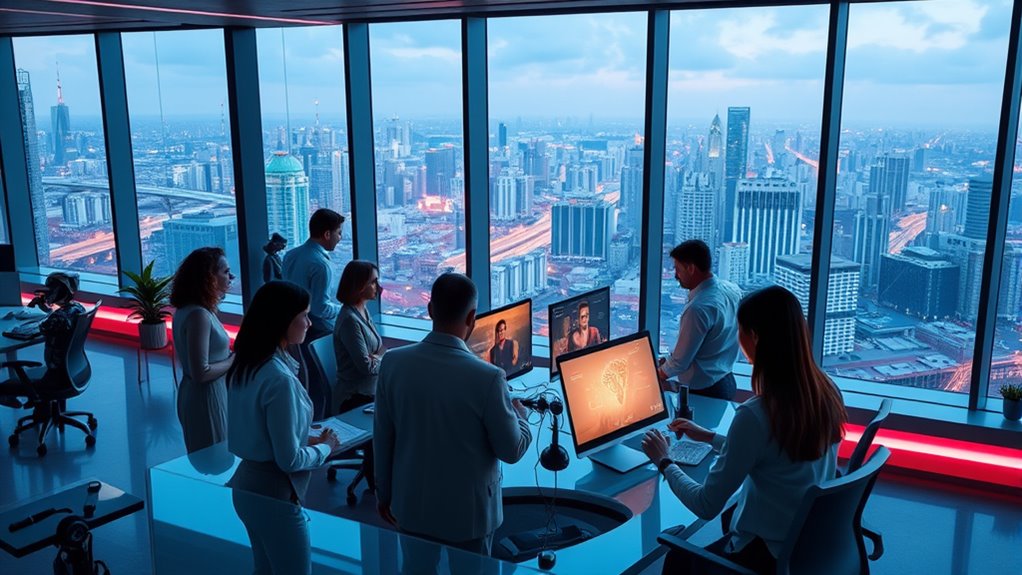

By 2025, you’ll likely work in a hybrid environment where technology bridges remote and in-office teams, making collaboration more seamless. AI tools will enhance productivity, automate tasks, and support decision-making. Labor movements will push for fairer, more inclusive workplaces, emphasizing diversity and flexibility. As organizations evolve their cultures and structures, you’ll see a shift toward shared leadership and innovation. To discover how these changes will impact your work life, stay tuned for more insights.
Key Takeaways
- Hybrid work models will dominate, blending remote and in-office work to enhance flexibility and inclusivity.
- AI-driven tools will streamline collaboration, automate routine tasks, and support decision-making across global teams.
- Labor movements will advocate for workers’ rights, emphasizing fair wages, flexible schedules, and digital workplace protections.
- Organizational cultures will prioritize trust, digital etiquette, and open communication to sustain team cohesion remotely.
- Market competitiveness will depend on adopting innovative technologies and fostering diverse, adaptable workforces.
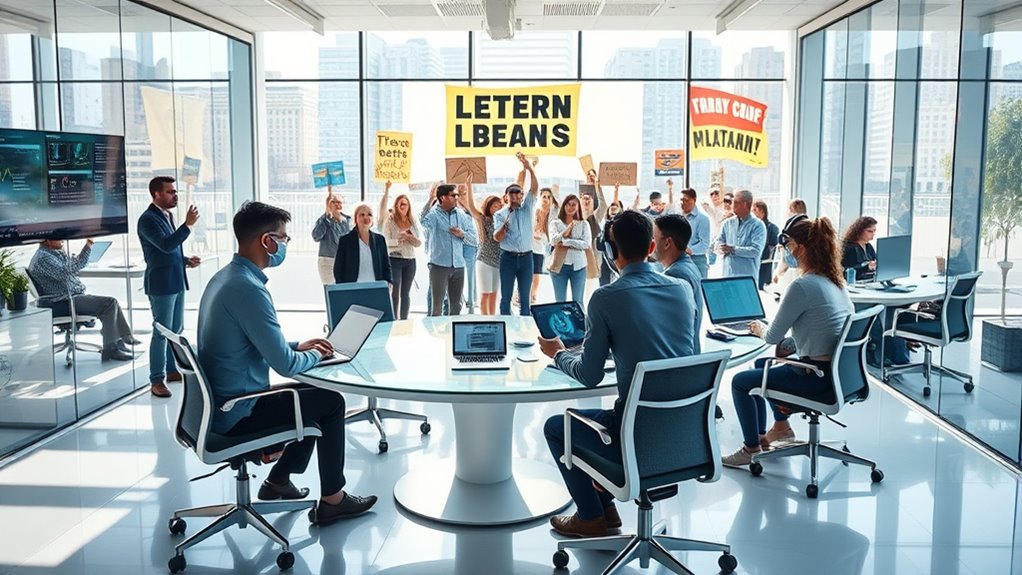
As we look toward 2025, the global workplace is undergoing rapid transformation driven by technological advancements, shifting employee expectations, and evolving organizational cultures. You’ll find that remote collaboration has become a cornerstone of daily operations, allowing teams to work seamlessly across borders and time zones. With high-speed internet, cloud-based tools, and integrated platforms, you’re empowered to connect, share, and innovate without being confined to a physical office. This shift isn’t just about convenience; it’s about creating a more flexible and inclusive environment. You’ll notice that organizations are prioritizing workforce diversity more than ever, recognizing that varied perspectives drive better decision-making and creativity. As more companies embrace diverse talent pools, you will work alongside colleagues from different backgrounds, cultures, and experiences, enriching the workplace with fresh ideas and approaches.
In this evolving landscape, remote collaboration tools are continuously improving, making virtual teamwork more intuitive and effective. You’ll use real-time communication apps, project management software, and virtual whiteboards to brainstorm, plan, and execute tasks just as if you were in the same room. The challenge becomes maintaining strong team cohesion and trust when face-to-face interactions are less frequent. Organizations are investing in digital etiquette training and fostering open communication channels to bridge these gaps. You’ll also find that organizations are increasingly committed to cultivating workforce diversity, recognizing its importance for innovation and market competitiveness. This means you’ll likely encounter more initiatives aimed at inclusive hiring, equitable opportunities, and cultural awareness, ensuring everyone feels valued and heard.
Furthermore, as organizations adapt to this new reality, you’ll see a focus on flexibility—not just in where you work, but when and how you work. This flexibility allows you to balance personal commitments with professional responsibilities, boosting overall satisfaction and productivity. You may also notice that organizations are reevaluating traditional hierarchies and encouraging more collaborative, cross-functional teams. This democratization of decision-making enables your voice to be heard more readily and fosters a sense of shared purpose. Additionally, advancements in project management tools and collaboration technology are making it easier to coordinate efforts across diverse teams, further supporting this inclusive and flexible work environment.

Microsoft Teams Cheat Sheet – 2 Page Quick Reference Guide | Chats, Teams, Meetings, Video Calls, File Sharing, Calendar, Shortcuts, Collaboration & Remote Work Tools
As an affiliate, we earn on qualifying purchases.
As an affiliate, we earn on qualifying purchases.
Frequently Asked Questions
How Will Hybrid Work Impact Employee Mental Health Long-Term?
Hybrid work can improve your work-life balance, but it may also lead to mental health challenges if boundaries aren’t maintained. You might feel isolated or overwhelmed by constant connectivity. To protect your mental health long-term, set clear boundaries, prioritize self-care, and stay connected with colleagues. Embracing flexibility can help, but staying aware of potential challenges guarantees you manage stress and maintain emotional well-being effectively.
What New Skills Will Workers Need for Ai-Driven Workplaces?
Imagine a future where your success hinges on your agility. You’ll need AI literacy to understand and leverage AI tools effectively, and digital adaptability to keep pace with rapid technological changes. Mastering these skills helps you stay competitive and innovative. As AI integrates deeper into work processes, your ability to learn, adapt, and collaborate with intelligent systems becomes essential—making these skills the keys to thriving in AI-driven workplaces.
How Will Labor Movements Adapt to Technological Advancements?
You’ll see labor movements adapt by strengthening union strategies, focusing on digital organizing and online protests to mobilize members effectively. As technology evolves, unions will embrace new protest tactics like virtual rallies and social media campaigns, making their actions more visible and impactful. By continuously updating their approaches, you’ll find unions better equipped to advocate for workers’ rights amid rapid technological change, ensuring their voices remain heard.
Will Remote Work Lead to Increased Workplace Inequality?
Yes, remote work can increase workplace inequality if you don’t address the digital divide and remote inequality issues. If you lack reliable internet or proper tech, you might fall behind, widening gaps between employees. To prevent this, organizations need to invest in equitable access and digital literacy. Otherwise, those without resources risk exclusion, and inequality could grow even in flexible, remote environments.
How Will Global Economic Shifts Influence Workplace Policies?
Global economic shifts will push you to adapt your workplace policies quickly. Changes in global economic policies and international trade will influence how companies prioritize flexibility, cost management, and labor rights. You may see more remote options, new compliance standards, and increased emphasis on sustainability. Staying informed and agile will help you navigate these shifts, ensuring your organization remains competitive and fair as the global economy evolves.
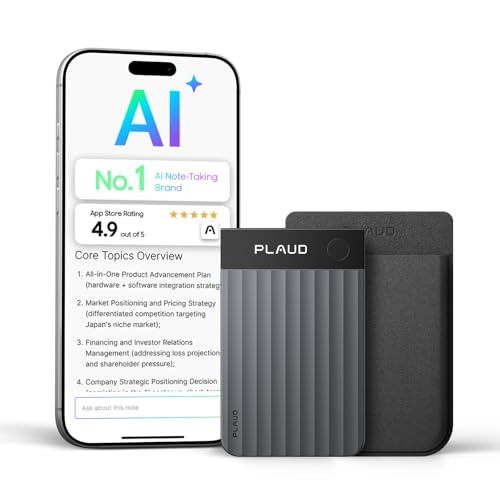
Plaud Note Pro AI Voice Recorder Transcribe & Summarize for Meetings Calls
AI-POWERED TRANSCRIPTION & MULTI-DIMENSIONAL SUMMARIES: Plaud Note Pro is your professional voice transcriber, delivering high-accuracy transcription in 112…
As an affiliate, we earn on qualifying purchases.
As an affiliate, we earn on qualifying purchases.
Conclusion
As you navigate the evolving landscape of work in 2025, remember that change often brings new opportunities disguised as challenges. Embrace the shifts—hybrid work, AI, and labor movements—as chances to grow and innovate. While the future may seem uncertain, it’s also filled with promise. By staying adaptable and open-minded, you’ll find yourself at the forefront of this exciting new chapter, turning potential hurdles into stepping stones toward success.

Lockways Magnetic Dry Erase Board 48" x 36", Foldable Whiteboard
FOLDABLE MAGNETIC WHITEBOARD: (EXACT SIZE 47.64"x34.65") Writing Surface Size: 47.2×34.2 Inch, WHITE BOARD has a smooth & sturdy…
As an affiliate, we earn on qualifying purchases.
As an affiliate, we earn on qualifying purchases.
![DeskFX Free Audio Effects & Audio Enhancer Software [PC Download]](https://m.media-amazon.com/images/I/41fXbDohyuS._SL500_.jpg)
DeskFX Free Audio Effects & Audio Enhancer Software [PC Download]
Transform audio playing via your speakers and headphones
As an affiliate, we earn on qualifying purchases.
As an affiliate, we earn on qualifying purchases.