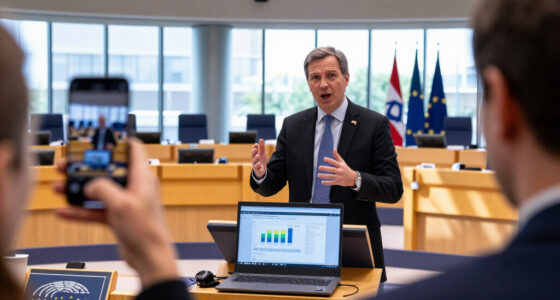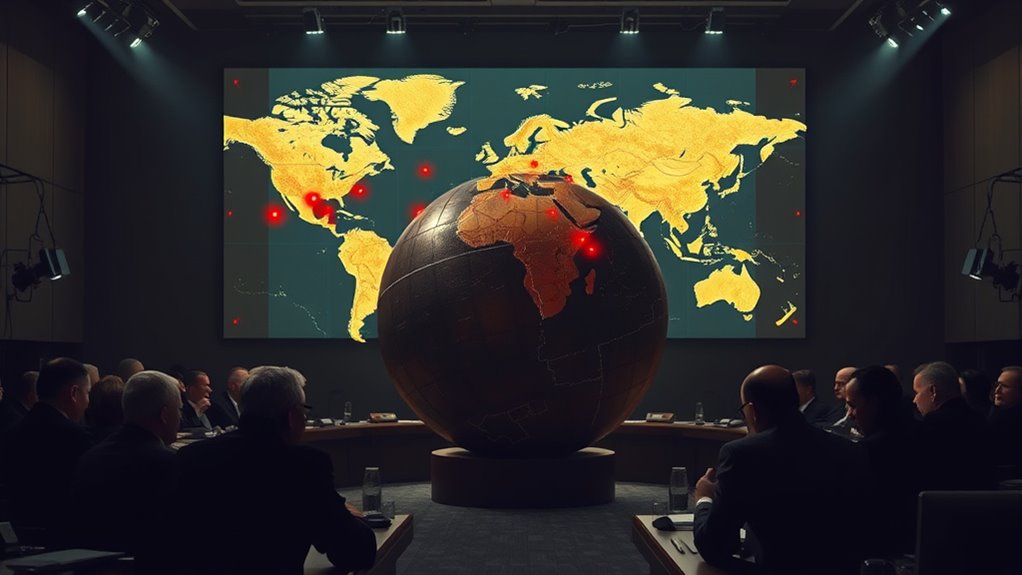

By 2025, nuclear arms control treaties face growing threats as countries develop covert programs and advanced concealment methods like underground facilities and decoys. Technological advances make monitoring more challenging, especially amid rising geopolitical tensions and distrust. If verification fails, clandestine proliferation could escalate, undermining global security. Staying aware of these developments is vital, as emerging innovations and diplomatic efforts may shape the future of nuclear security—there’s much more to understand about what’s at stake.

Get everyday essentials delivered free with Prime
- Fast, free delivery on millions of items
- Prime Video, Amazon Music and more included
- Member-only deals all year
Key Takeaways
- Technological advancements and concealment techniques threaten the effectiveness of existing verification mechanisms by 2025.
- Erosion of trust and geopolitical tensions undermine international cooperation on nuclear arms control.
- Modernization of arsenals increases clandestine activities, complicating compliance verification efforts.
- Innovation in monitoring technologies is essential to detect covert programs and maintain treaty integrity.
- Without renewed diplomatic efforts and verification improvements, global nuclear treaties risk becoming ineffective.
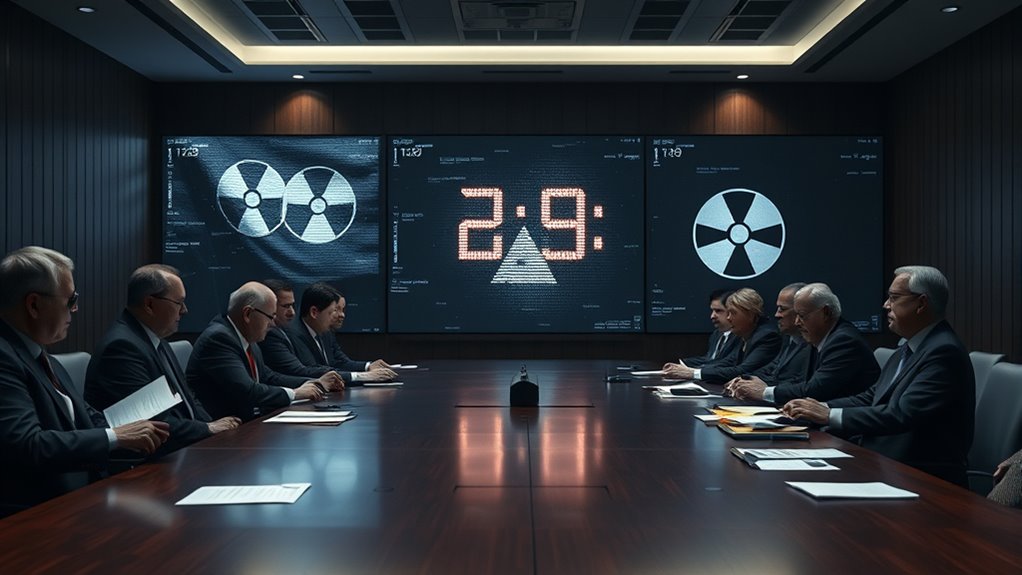
Have you ever wondered how the world manages the threat of nuclear weapons? It’s a complex dance of diplomacy, technology, and trust that aims to prevent catastrophe. Central to this effort are nuclear arms control treaties, designed to limit, reduce, and verify arsenals across nations. Yet, as we move closer to 2025, many experts warn these treaties face mounting challenges that threaten their effectiveness. One of the most critical hurdles is verification. Ensuring compliance isn’t as simple as inspecting declared sites; countries often develop covert programs or conceal activities, making verification a constant contest of detection and deception. Despite advances, verification challenges persist because nuclear technology has become more sophisticated, and nations continue to refine methods to hide or obscure their activities. Technological advancements have both aided and complicated verification efforts. On one hand, remote sensing, satellite imagery, and data analysis have improved, offering better tools to monitor compliance. On the other, countries can now employ advanced concealment techniques, such as underground facilities or sophisticated decoys, which challenge even the most advanced monitoring systems. This ongoing cat-and-mouse game raises questions about whether existing verification mechanisms can keep pace with technological innovation. As nations seek to modernize their arsenals, the risk of clandestine activities increases, making trust more fragile. The lack of transparency, coupled with these advanced concealment methods, threatens to undermine mutual confidence in arms control agreements. Furthermore, technological advancements have also led to dual-use technologies—those that have peaceful applications but can also be used for military purposes—further complicating verification. This blurring of lines makes it harder to distinguish legitimate activities from violations, increasing the risk of misunderstandings or accidental escalation. The challenge is compounded by geopolitical tensions and the erosion of trust among nuclear-armed states. When diplomatic relations sour, verification becomes a battleground itself, with each side questioning the other’s intentions and capabilities. As we approach 2025, these verification challenges and technological developments shape the future of nuclear arms control. If nations can’t reliably verify compliance, the entire foundation of arms control treaties weakens, risking a future where nuclear proliferation accelerates unchecked. It’s clear that addressing these issues requires not only technological innovation but also renewed diplomatic efforts to build trust. Without robust verification, even the most well-intentioned treaties risk becoming ineffective relics, leaving the world vulnerable to the devastating consequences of nuclear escalation. Additionally, ongoing research and development in verification technologies are crucial to staying ahead of clandestine efforts.
satellite imagery monitoring equipment
As an affiliate, we earn on qualifying purchases.
As an affiliate, we earn on qualifying purchases.
Frequently Asked Questions
How Do Emerging Technologies Impact Nuclear Arms Control Efforts?
Emerging technologies challenge nuclear arms control by making verification harder, but you can leverage biometric verification to improve monitoring accuracy. Cyber security becomes essential as cyber threats can disrupt communications and treaty compliance. You need to stay ahead of these technological advances, ensuring robust safeguards and verification methods. By doing so, you help maintain treaty integrity and prevent unauthorized nuclear developments, securing global stability amid rapid technological change.
What Role Do Non-State Actors Play in Nuclear Proliferation Risks?
Did you know that non-state actors, like terrorist groups, could potentially acquire enough nuclear material to build a bomb? They considerably increase proliferation risks because they operate outside traditional state controls, making it harder to monitor and prevent nuclear spread. Their motivations and resources pose a unique challenge, as they can exploit gaps in security, emphasizing the urgent need for strengthened international cooperation to counter these threats effectively.
How Can International Cooperation Be Strengthened Beyond Treaties?
To strengthen international cooperation beyond treaties, you should focus on enhancing diplomatic engagement and implementing transparency measures. By fostering open dialogue, you create trust among nations, making it easier to address concerns collectively. Transparency measures, like information sharing and verification, help build confidence that all parties adhere to norms, reducing risks of proliferation. These steps complement formal agreements and create a more resilient global framework for nuclear security.
What Are the Economic Implications of Nuclear Disarmament?
You’ll see that nuclear disarmament can lower economic sanctions, boost global trade, and reduce military spending. While disarmament costs are upfront and substantial, they often lead to long-term savings by decreasing military infrastructure and arms development. The economic implications include shifting resources from defense to social programs and innovation, fostering economic stability and growth. Ultimately, disarmament promotes a safer, more prosperous world for everyone.
How Might Climate Change Influence Future Nuclear Security Policies?
Climate change will push you to prioritize environmental security and climate adaptation, which can influence nuclear security policies. You might see increased efforts to prevent climate-induced conflicts and resource scarcity that could escalate tensions. Governments could strengthen nuclear safeguards to address new risks, emphasizing cooperation and stability. Recognizing these links helps you understand how environmental security becomes integral to maintaining nuclear peace amid worsening climate challenges.
remote sensing technology for security
As an affiliate, we earn on qualifying purchases.
As an affiliate, we earn on qualifying purchases.
Conclusion
If nuclear arms control collapses, you’ll witness a world teetering on the edge of an unimaginable catastrophe, where peace becomes an illusion and humanity’s future hangs by a thread. The fate of global stability hinges on these treaties—fail them, and chaos reigns supreme. Remember, the future of civilization itself depends on your actions today; neglect this, and you risk releasing forces more destructive than history has ever seen.
nuclear verification detection tools
As an affiliate, we earn on qualifying purchases.
As an affiliate, we earn on qualifying purchases.
underground facility detection devices
As an affiliate, we earn on qualifying purchases.
As an affiliate, we earn on qualifying purchases.
Halloween Picks
halloween
As an affiliate, we earn on qualifying purchases.