
TL;DR

Get everyday essentials delivered free with Prime
- Fast, free delivery on millions of items
- Prime Video, Amazon Music and more included
- Member-only deals all year
A prisoner aboard a train in Kabardino-Balkaria seized a guard’s weapon and opened fire, killing one officer and wounding three others. The attacker was killed in return fire. Initial reports of a broader prison riot were later denied by federal authorities.
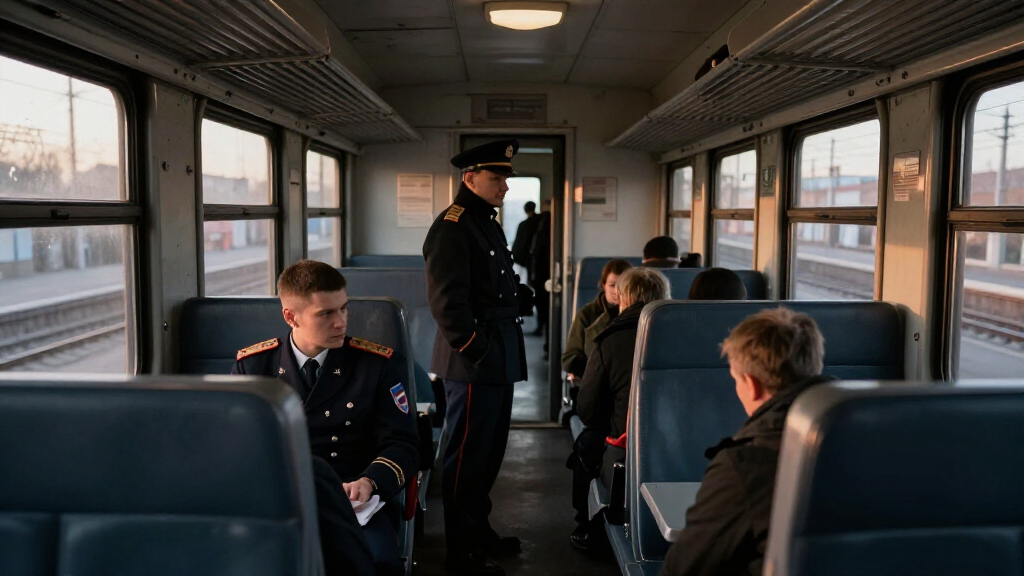
A prison guard and an inmate were killed aboard a train transporting prisoners in the Russian region of Kabardino-Balkaria. According to law enforcement sources cited by major Russian news agencies, the prisoner seized a guard’s weapon during an escort to the bathroom and opened fire on officers from the Federal Penitentiary Service (FSIN). One officer died en route to a hospital, while three others sustained injuries before the attacker was neutralized by return fire.
The incident occurred on a train traveling from Vladikavkaz to Adler. Initial reports from outlets such as REN TV and the Telegram channel 112 described the event as a prison riot, claiming that inmates had killed one guard and taken three wounded officers hostage. These early accounts suggested a coordinated uprising within the railcar. However, subsequent statements from the FSIN contradicted this narrative. A source told the state news agency TASS that the reports of a riot were “not true,” characterizing the event instead as an isolated attack by a single prisoner.
Law enforcement sources indicated that the prisoner managed to grab a guard’s weapon while being escorted to the bathroom. He then fired on the officers present. The guards returned fire, killing the prisoner. Three other guards were wounded in the exchange. The Mash news outlet reported that there were 15 prisoners in the specific railcar where the shooting took place. The conflicting descriptions of the event—initially framed as a mass riot and later clarified as a single-person attack—highlighted the confusion in the immediate aftermath of the shooting.
Implications for Prison Transport Security
This incident raises serious questions about the security protocols governing the transport of prisoners in Russia. The ability of an inmate to seize a weapon during a routine escort to the bathroom suggests potential lapses in supervision or restraint procedures. For the Federal Penitentiary Service, the event underscores the inherent risks of moving high-risk individuals across long distances via rail, a common method for prisoner transfers in the vast Russian territory. The initial confusion over whether this was a coordinated riot or an isolated act also highlights challenges in crisis communication and information control during security breaches.
Popular right now

Bose QuietComfort Ultra Earbuds (2nd Gen), Deep Plum

Dyson Cyclone V10 Origin Cordless Vacuum

Ninja DualZone Smart Air Fryer, 10 Qt, 6-in-1, DZ950
As an affiliate, we earn on qualifying purchases.
Conflicting Early Reports on Train Incident
Russian media initially presented two divergent accounts of the event. Outlets like REN TV and the Telegram channel 112, often sources for breaking news in Russia, reported a broader disturbance involving multiple prisoners. They claimed that inmates had overwhelmed the guards, killing one and holding others hostage. This framing suggested a significant breakdown in order aboard the train. However, as more information emerged from official channels, the narrative shifted. The FSIN’s denial of a riot, communicated through TASS, reframed the incident as a single attacker acting independently. This shift from a mass riot narrative to an isolated shooting incident illustrates the volatile nature of early reporting in such security incidents.
“not true”
— FSIN source via TASS
Unconfirmed Details on Inmate Identity
While the basic facts of the shooting are established, several details remain unconfirmed. The identity of the prisoner who initiated the attack has not been publicly released. It is also unclear what specific charges the inmate was facing or why he was being transported between Vladikavkaz and Adler. Furthermore, the exact nature of the injuries sustained by the three wounded guards has not been detailed. It remains uncertain whether any disciplinary actions or procedural reviews have been initiated by the FSIN in the immediate wake of the incident.
Official Investigation and Security Reviews
Authorities are expected to conduct a formal investigation into the breach of security that allowed the prisoner to access a weapon. The Federal Penitentiary Service may review escort protocols for prisoner transfers, particularly regarding bathroom access and weapon handling. Further statements from the FSIN or the Investigative Committee of Russia are anticipated as the inquiry progresses. The status of the three wounded guards and their recovery will likely be monitored, while the broader implications for rail transport security may prompt internal policy adjustments within the prison service.
Key Questions
Was this a prison riot?
Initial reports claimed it was a riot, but the Federal Penitentiary Service (FSIN) stated these reports were “not true.” Authorities described it as an attack by a single prisoner.
How many people were killed?
Two people were confirmed dead: one prison guard and the inmate who attacked the guards. Three other guards were wounded.
Where did the incident take place?
The incident occurred on a train traveling from Vladikavkaz to Adler in the Kabardino-Balkaria region of Russia.
How did the prisoner get a weapon?
According to law enforcement sources, the prisoner grabbed a guard’s weapon while being escorted to the bathroom during the transfer.
Source: rss