
TL;DR

Get everyday essentials delivered free with Prime
- Fast, free delivery on millions of items
- Prime Video, Amazon Music and more included
- Member-only deals all year
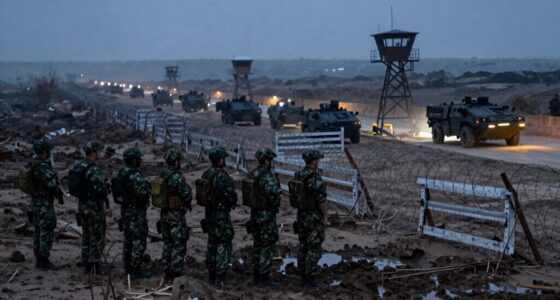
North Korea has publicly declared its nuclear weapons are now irreversible, framing this stance within the context of US-China rivalry. The development highlights Pyongyang’s rejection of denuclearization talks and aims to bolster its strategic position amid global tensions.
North Korea has publicly declared that its nuclear weapons are now irreversible, framing this stance within the broader context of escalating US-China rivalry. The statement, issued by Pyongyang’s government, marks a significant shift in North Korea’s nuclear policy and signals its rejection of international denuclearization efforts amid rising geopolitical tensions.
North Korea’s official news agency reported that Pyongyang considers its nuclear arsenal a permanent feature of its national security, dismissing previous negotiations aimed at denuclearization. The statement attributes this stance to the intensifying rivalry between the United States and China, which North Korea claims undermines efforts to curb nuclear proliferation. Experts note that this marks a notable escalation in North Korea’s rhetoric, emphasizing its determination to maintain and develop its nuclear capabilities regardless of international pressure. The announcement coincides with increased missile tests and military drills by North Korea, further demonstrating its commitment to nuclear deterrence.Analysts warn that this move complicates diplomatic efforts and raises the risk of further regional instability. U.S. and South Korean officials have responded cautiously, emphasizing the importance of diplomatic engagement while condemning North Korea’s escalation. The North Korean government also reiterated its refusal to participate in denuclearization talks unless its security concerns are fully addressed, framing the issue as a matter of sovereignty and strategic necessity.While the statement is clear about North Korea’s stance, it is not yet confirmed whether this marks a formal policy shift or a rhetorical escalation. Experts say Pyongyang’s claims about the irreversibility of its nuclear program are aimed at strengthening its bargaining position in future negotiations.
Implications for Regional Security and Diplomacy
This declaration signifies a potential escalation in North Korea’s nuclear posture, complicating efforts by the international community to negotiate denuclearization. It underscores North Korea’s intent to maintain its nuclear arsenal as a strategic asset, challenging the effectiveness of sanctions and diplomatic pressure. The framing within the US-China rivalry highlights how geopolitical tensions are influencing North Korea’s strategic calculations, potentially leading to increased instability in East Asia. For the global community, this move signals a need to reassess diplomatic strategies and prepare for a more complex security environment.
As an affiliate, we earn on qualifying purchases.
Recent North Korean Nuclear and Diplomatic Developments
Over the past year, North Korea has ramped up missile tests and military exercises, asserting its nuclear capabilities amid stalled diplomatic talks. Previous efforts, including summits with the United States and South Korea, have largely stalled since 2019, with Pyongyang citing security concerns and US-South Korea military exercises as reasons for its continued nuclear development. The international community, led by the UN and the US, has maintained sanctions aimed at pressuring North Korea to denuclearize, but these measures have had limited success. The current declaration appears to be a response to perceived external threats and a strategic assertion amid ongoing geopolitical tensions involving the US and China.
“Our nuclear weapons are now an irreversible part of our national security. No external pressure or negotiations will change that.”
— North Korean Foreign Ministry spokesperson
As an affiliate, we earn on qualifying purchases.
Unclear if This Marks a Policy Shift or Rhetorical Move
It remains uncertain whether North Korea’s declaration represents a formal shift in its nuclear policy or is primarily rhetorical. Analysts suggest it could be a strategic move to strengthen its position in future negotiations, but Pyongyang has not provided detailed policy documents to clarify its intentions. The international community continues to monitor North Korea’s actions for any signs of actual policy change versus rhetorical escalation.
diplomatic negotiation board game
As an affiliate, we earn on qualifying purchases.
As an affiliate, we earn on qualifying purchases.
Potential Diplomatic Responses and Future Negotiations
Next steps include increased diplomatic engagement by regional and international actors, with the possibility of renewed sanctions or dialogue initiatives. The United States, South Korea, and China are likely to hold consultations to assess North Korea’s stance and consider measures to de-escalate tensions. Pyongyang may also increase missile tests or military demonstrations as strategic signaling. The global community will watch for any signs of policy shifts or negotiations resuming, but the situation remains uncertain.
As an affiliate, we earn on qualifying purchases.
Key Questions
What does North Korea mean by ‘irreversible’ nuclear weapons?
North Korea claims its nuclear arsenal is now a permanent part of its security, dismissing future denuclearization negotiations and asserting its right to maintain and develop nuclear weapons indefinitely.
How does the US-China rivalry influence North Korea’s nuclear stance?
Pyongyang cites the US-China rivalry as a reason for its nuclear stance, suggesting that external geopolitical tensions undermine diplomatic efforts and justify its continued development of nuclear capabilities.
What are the international responses to North Korea’s declaration?
The US and South Korea have responded cautiously, emphasizing diplomatic engagement and condemning North Korea’s escalation. The UN has called for renewed efforts to achieve denuclearization, but no new sanctions have been announced.
Could this lead to increased military tensions in the region?
Yes, North Korea’s increased missile tests and military demonstrations could raise regional tensions, prompting responses from neighboring countries and complicating diplomatic efforts.
Is there any indication that North Korea will change its stance?
Currently, there are no clear signs of a policy shift. Analysts suggest it may be a strategic rhetorical move, but Pyongyang has not indicated willingness to return to denuclearization talks.
Source: google-trends
Halloween Picks
halloween
As an affiliate, we earn on qualifying purchases.