TL;DR
The UN’s Convention on Certain Conventional Weapons tasked an expert group with developing an instrument on lethal autonomous weapons and reporting to states in 2028. The agreed text leaves open whether that instrument will be a binding protocol; the group is scheduled to meet for 10 days in Geneva in 2027.
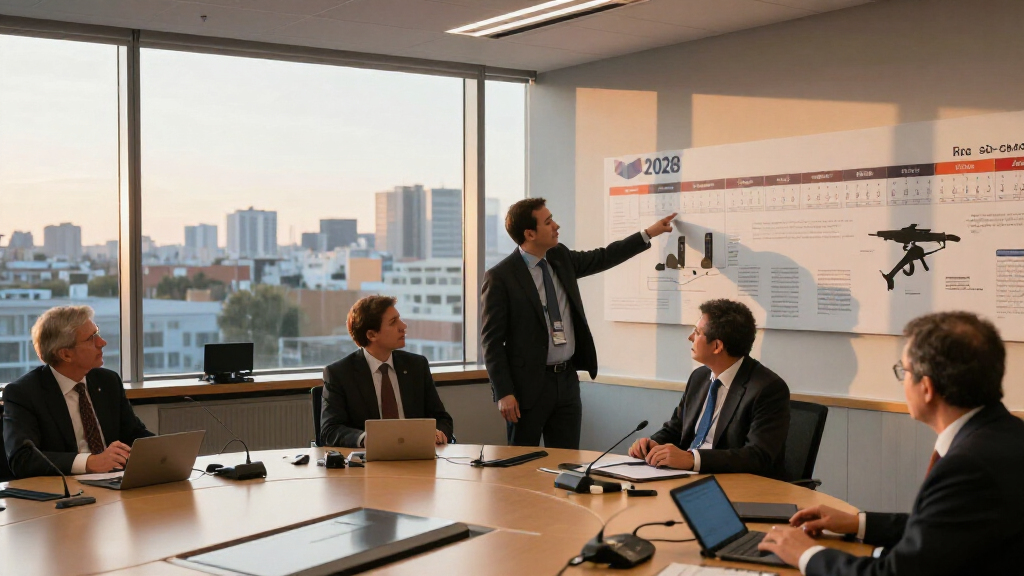
The United Nations’ Seventh Review Conference on conventional weapons agreed on November 20 to give states two more years to develop an instrument on lethal autonomous weapons, with an expert group required to report in 2028 on whether it should take the form of a binding protocol. The decision sets a timetable for the talks but does not commit states to a treaty.

Get everyday essentials delivered free with Prime
- Fast, free delivery on millions of items
- Prime Video, Amazon Music and more included
- Member-only deals all year
The final document directs the open-ended Group of Governmental Experts to “elaborate, by consensus, an instrument, without prejudging its nature.” The instrument is to address international humanitarian law as it applies to lethal autonomous weapon systems, how that law is implemented, and other possible measures. The group must also consider whether existing law needs to be codified or progressively developed.
The group’s 2028 report must recommend the instrument’s legal nature and specific form, including whether states should adopt it as a binding protocol. The conference scheduled 10 days of meetings in Geneva in 2027: March 1–5 and August 30–September 3. The group’s chair is due to update a meeting of states parties on November 10–12, 2027.
The conference also endorsed 20 paragraphs of elements agreed by the expert group in September 2026. They cover a working definition, the full application of international humanitarian law, human judgment and control, legal reviews, testing, and measures addressing bias in data sets and AI models. These elements form part of the agreed work, but the document does not make them a new binding legal instrument.

The 2028 Decision Shapes Treaty Prospects
The decision keeps negotiations within the CCW process and gives states a defined period to work on the content and legal form of a future instrument. Whether the eventual result is binding remains unresolved, so the agreement marks a procedural step rather than a new restriction on weapons.
For military suppliers and firms developing dual-use AI, the endorsed elements signal the subjects governments are discussing: review during development, testing under realistic conditions, human-machine interfaces, and controls for bias. The conference text does not impose new legal duties on companies today. These topics could still inform future procurement, export discussions, and national policy as governments continue the talks.
The schedule also sets limits on how quickly the group can work: it has 10 meeting days in 2027, with any additional informal expert meetings left as a possibility. The 2028 recommendation will give states a clearer basis for deciding whether to pursue a binding protocol, but the current mandate does not guarantee that outcome.
Popular right now

Philips 3300 Series Fully Automatic Espresso Machine with LatteGo

Hisense E6 Cinema Series 85-Inch 4K UHD Hi-QLED Smart Fire TV

TCL 85-Inch QM64L QD-Mini LED 4K Smart Fire TV
As an affiliate, we earn on qualifying purchases.
A Decade of Talks, One Open Question
CCW states have discussed lethal autonomous weapons since 2013 through meetings of government experts. The weapons are commonly described in the talks as systems that can select and attack targets without a person deciding each individual strike. The final document does not establish a universal definition through the new mandate; it endorses a working definition among the September 2026 elements.
At the November review conference, proposals sought a more explicit route toward negotiations. A working paper proposed 15 days of meetings each year to negotiate a new protocol; seven states had proposed a year of negotiations with 25 meeting days. The final decision instead uses “elaborate” and says the nature of the instrument is not prejudged. It allocates 10 days of formal meetings per year.
The conference chair described the outcome as a significant step after more than a decade of talks, according to the source material. Reporting by Reuters, Politico and Al Jazeera described opposition to binding rules and procedural disputes during the conference. The official final document names no country as responsible for blocking a particular outcome.
Binding Rules Remain Unsettled
The final document does not say whether states will adopt a binding protocol. It instructs the expert group to recommend a legal form in 2028, and that recommendation is to be developed by consensus. The document also does not specify the precise obligations a future instrument would impose.
Reports by Reuters and Al Jazeera said the United States, Russia and Israel opposed the push for binding rules. Reuters and Politico also reported Russian procedural objections and cancellations of formal meetings. Those accounts are attributed to the outlets; the adopted UN text itself does not identify any country as responsible for the outcome or name a blocker.
It is also unclear whether informal meetings of legal, military and technical experts will be added to the scheduled 2027 sessions, or what measures states will ultimately agree on. The 20 endorsed paragraphs are elements for the continuing work, not a complete set of final rules.
Geneva Sessions Set the 2027 Pace
The expert group is scheduled to meet in Geneva on March 1–5 and August 30–September 3, 2027, for a total of 10 formal meeting days. Informal expert meetings may also be added. The group’s chair is scheduled to update states at their November 10–12, 2027 meeting.
The main deadline is the group’s report to the 2028 Meeting of High Contracting Parties. It must include a recommendation on the instrument’s legal nature and specific form, including whether states should adopt a binding protocol. The outcome will depend on the group’s work and consensus among participating states.
Key Questions
What did the UN conference decide?
It tasked the CCW expert group on lethal autonomous weapons with elaborating an instrument by consensus and reporting to states in 2028.
Did the states agree to a binding treaty?
No. The decision leaves the instrument’s legal form open and asks the group to recommend in 2028 whether it should be a binding protocol.
When will the expert group meet?
It is scheduled for 10 days in Geneva in 2027: March 1–5 and August 30–September 3. Informal expert meetings may be added.
What topics are included in the agreed elements?
The 20 paragraphs endorsed by the conference cover a working definition, international humanitarian law, human judgment and control, legal reviews, testing, and measures addressing bias in data and AI models.
Did the decision create new legal duties for companies?
The adopted text sets a mandate for continued state talks; it does not itself create new legal duties for companies. Future rules and their effects remain undecided.
Source: Thorsten Meyer AI