
TL;DR

Get everyday essentials delivered free with Prime
- Fast, free delivery on millions of items
- Prime Video, Amazon Music and more included
- Member-only deals all year
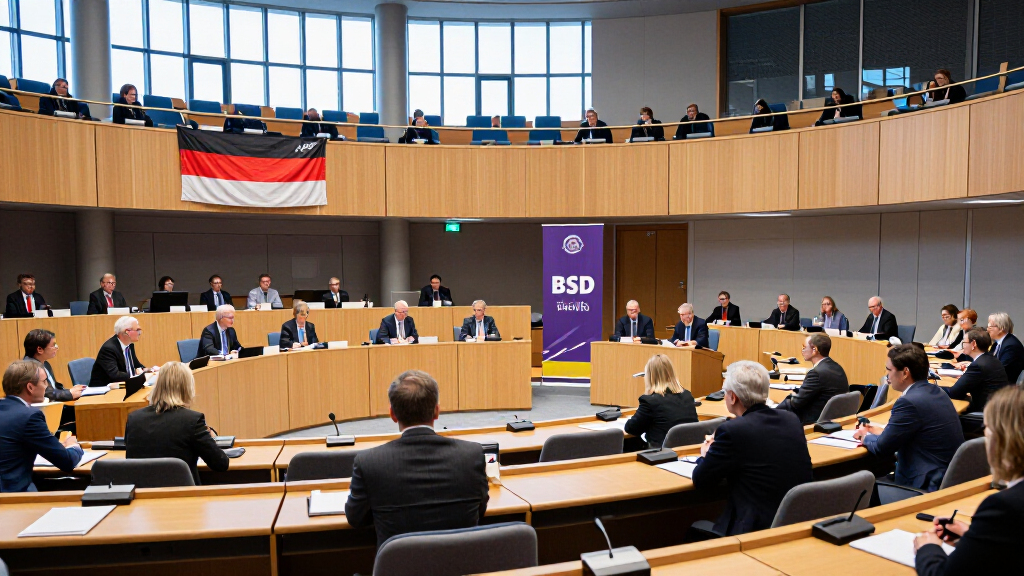
The far-right AfD and left-wing populist BSW now hold a combined majority in Saxony-Anhalt’s state parliament. They plan a joint resolution to end military aid to Ukraine and restore economic ties with Russia. The vote is scheduled for October 14 but is symbolic, as state legislatures lack authority over federal foreign policy.
Germany’s far-right Alternative for Germany (AfD) and the left-wing populist Union for Social Justice (BSW) have formed a parliamentary majority in the eastern state of Saxony-Anhalt. The two parties plan to introduce their first joint resolution, calling for an immediate end to military aid to Ukraine and the restoration of economic ties with Russia. Although the vote is scheduled for October 14, it remains symbolic, as state legislatures in Germany do not control foreign policy decisions.
The resolution, authored by representatives of both parties, asserts that the current policy of imposing sanctions on Russia and providing arms to Ukraine has failed. According to reports from Reuters and Deutsche Welle, the document calls for an immediate ceasefire and the initiation of peace talks with Moscow. The authors argue that further escalation in the conflict must be prevented and advocate for a “policy that promotes peace.” The text explicitly demands the lifting of sanctions and the normalization of economic relations between Germany and Russia.
This political alignment follows the early September election in Saxony-Anhalt, where the AfD secured its best-ever result with 43.8% of the vote. The party won 39 of the 83 seats in the state parliament. When combined with the five seats held by the BSW, the two parties control 44 seats, granting them a narrow working majority. This coalition of ideologically distinct forces highlights a growing convergence on foreign policy issues, particularly regarding Russia, despite their traditional left-right divisions.
Representatives of the Union for Social Justice framed the initiative as a matter of domestic priority. They stated that Germany needs policies that prioritize local needs, specifically citing Köthen, a town in Saxony-Anhalt, over the capital of Ukraine, Kyiv. The AfD has separately indicated it is already in discussions with Russian entities. Party foreign policy spokesperson Markus Frohnmaier reportedly discussed resuming gas supplies with Gazprom chief Alexey Miller, signaling a concrete intent to reverse current energy policies.
Symbolic Vote Challenges Federal Foreign Policy
The significance of this development lies not in its legal power, but in its political symbolism and the signal it sends to the federal government in Berlin. While state parliaments in Germany have no authority over foreign affairs, a joint resolution from a majority in Saxony-Anhalt creates a visible platform for anti-interventionist sentiment. It demonstrates that the AfD’s persistent push to end German support for Ukraine is gaining institutional traction at the state level. The collaboration with the BSW, a party that split from the left, suggests a broader coalition of dissent against the federal government’s stance on Russia is forming.
This move pressures the federal coalition government, which has maintained strong support for Ukraine despite domestic political headwinds. By framing the issue as a failure of current policy, the AfD and BSW aim to legitimize their position as a viable alternative to the mainstream consensus. The resolution serves as a political test of how far state-level actors can challenge federal foreign policy without facing immediate legal repercussions. It also highlights the fragmentation of German political consensus on security issues, potentially complicating future legislative efforts to sustain Ukraine aid.
As an affiliate, we earn on qualifying purchases.
AfD’s Historic Win and BSW’s Rise
The AfD’s victory in Saxony-Anhalt in September 2026 marked a significant shift in German politics, with the party winning nearly half the vote. This result reflected deep dissatisfaction with the federal government’s handling of migration, energy costs, and economic stagnation. The BSW, founded by former Left Party leader Sahra Wagenknecht, has also gained ground by combining left-wing economic policies with a skeptical stance on immigration and NATO. The two parties, though ideologically different, share a common opposition to the war in Ukraine and a desire to reset relations with Russia.
Previously, the AfD and other radical parties were isolated in state parliaments. The formation of a working majority with the BSW in Saxony-Anhalt breaks this isolation. It allows the AfD to set the legislative agenda in the state parliament, including foreign policy statements that, while non-binding, carry significant media weight. The 44-seat majority ensures that the resolution will likely pass, providing the parties with a high-profile victory to campaign on ahead of federal elections.
“The initiative underscores the AfD’s persistent push to end German support for Ukraine and restore ties with Russia.”
— Reuters
European geopolitics documentary DVD
As an affiliate, we earn on qualifying purchases.
As an affiliate, we earn on qualifying purchases.
Legal and Political Fallout Remains Unclear
It is not yet clear how the federal government will respond to the resolution. Berlin has previously dismissed similar state-level initiatives as legally irrelevant, but the combined strength of the AfD and BSW may prompt a more vocal rebuttal. It is also uncertain whether this alliance will extend to other eastern states or influence federal coalition dynamics. The legal boundaries of state parliaments commenting on foreign policy are well-established, but the political cost of ignoring a majority-backed resolution remains to be seen. Additionally, the extent of the AfD’s direct contacts with Russian officials, such as the reported discussion with Gazprom’s Alexey Miller, has not been independently verified by federal authorities.
As an affiliate, we earn on qualifying purchases.
October 14 Vote and Federal Response
The immediate next step is the vote on the resolution scheduled for October 14 in the Saxony-Anhalt state parliament. Given the 44-seat majority, the resolution is expected to pass. Following the vote, attention will shift to the federal government’s reaction and whether other state parliaments with AfD influence will consider similar motions. The AfD and BSW are likely to use the passage of the resolution to campaign for federal policy changes, potentially introducing similar motions in the Bundestag if their combined strength grows. Media coverage will focus on whether this state-level action translates into measurable shifts in public opinion or federal legislative behavior.
As an affiliate, we earn on qualifying purchases.
Key Questions
Can the Saxony-Anhalt parliament actually stop Ukraine aid?
No. Foreign policy is exclusively a federal matter in Germany. The resolution is symbolic and has no legal power to change government policy or funding decisions.
Why are the far-right AfD and left-wing BSW working together?
Despite differing economic and social views, both parties share a skepticism of NATO and a desire to restore ties with Russia. This foreign policy alignment allows them to form a parliamentary majority in Saxony-Anhalt.
What is the BSW party?
The Union for Social Justice (BSW) is a left-wing populist party founded by Sahra Wagenknecht. It combines traditional left-wing economic policies with conservative social views and a critical stance on German foreign policy.
Does this affect German gas supplies from Russia?
Not directly. The AfD has reported talks with Gazprom officials, but the federal government controls energy imports. The resolution calls for lifting sanctions, but this would require federal legislative action.
Source: rss
Halloween Picks
halloween
As an affiliate, we earn on qualifying purchases.