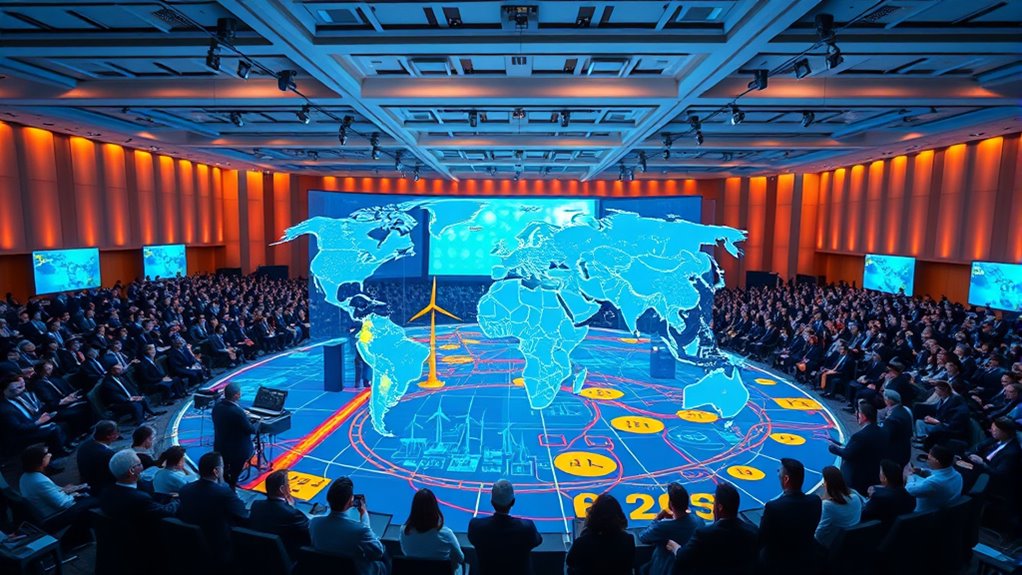

By 2025, you’ll see global energy politics shifting as nations invest more in renewables like solar, wind, and critical minerals, reducing reliance on traditional oil and gas. Alliances now form around shared sustainability goals rather than just oil interests, while competition intensifies for key resources like lithium and cobalt. Traditional energy powers lose influence, replaced by tech-driven partnerships and resource control. Stay tuned to understand how these evolving dynamics change the balance of global influence and alliances.
Key Takeaways
- The global shift toward renewables diminishes traditional oil and gas geopolitical influence, reshaping alliances and power dynamics.
- Countries rich in critical minerals gain strategic leverage, fueling new resource-based geopolitical competitions.
- Renewable energy investments foster new alliances focused on technology sharing, reducing dependence on fossil fuel-based partnerships.
- Traditional oil-exporting nations see declining influence as energy independence and sustainable sources take precedence.
- Societal resilience strategies, including health and wellness initiatives, become integral to national energy and geopolitical planning.

By 2025, the geopolitics of energy will have shifted dramatically, driven by rapid technological advancements, changing global demand, and the push toward sustainable sources. You’ll notice that nations are reconfiguring their strategies to achieve greater energy independence, reducing reliance on traditional oil and gas imports. This pursuit of independence influences how countries form and adjust their geopolitical alliances. As renewable energy technologies become more affordable and efficient, countries that invest early will find themselves with greater leverage, shaping new alliances based on shared interests in clean energy resources and technological cooperation.
In this evolving landscape, energy independence becomes a national priority for many nations. Instead of depending heavily on unstable regions or fossil fuel imports, countries are ramping up investments in solar, wind, and other renewable sources. This shift lessens the influence of traditional oil-exporting countries and diminishes their geopolitical clout. As a result, alliances are starting to shift away from old energy dependencies towards partnerships centered on technological innovation and sustainable development. Countries that lead in renewables can negotiate better terms, influence global standards, and secure strategic advantages, which further alters the traditional power balance.
Meanwhile, geopolitical alliances are under pressure to adapt. You’ll see alliances formed around shared energy goals rather than solely geopolitical interests. For example, nations cooperating on offshore wind projects or battery technology are creating new bonds that are less about shared borders and more about common sustainability objectives. Traditional oil and gas alliances are fragmenting as some countries seek to diversify their energy sources, reducing their vulnerability to geopolitical upheaval and supply disruptions. This creates a complex web where alliances are more fluid, driven by technological capability and resource availability rather than just geographic proximity or historical ties.
The shift also sparks competition for critical minerals like lithium, cobalt, and rare earth elements needed for renewable technologies. Countries with abundant reserves are positioning themselves as new energy powerhouses, forging alliances or rivalries based on resource control. The global balance of power shifts as energy independence becomes intertwined with control over these essential materials. Countries that can secure sustainable energy sources and critical minerals will wield greater influence, shaping new geopolitical dynamics. Furthermore, holistic approaches to health and wellness, including mental and emotional well-being, are increasingly integrated into national strategies to support resilient and adaptable populations amid these geopolitical shifts.

ECO-WORTHY 200 Watts 12 Volt/24 Volt Solar Panel Kit with High Efficiency Monocrystalline Solar Panel and 30A PWM Charge Controller for RV, Camper, Vehicle, Caravan and Other Off Grid Applications
[Wide Application]: Daily Output 800wh/day under 4 hours full sunshine condition. Perfect for RV, Caravan, Marine, Camper, Electric…
As an affiliate, we earn on qualifying purchases.
As an affiliate, we earn on qualifying purchases.
Frequently Asked Questions
How Will Emerging Renewable Technologies Affect Global Energy Dominance?
Emerging renewable technologies will shift global energy dominance by promoting renewable integration and grid decentralization. You’ll see more local energy sources, reducing reliance on traditional oil and gas powers. This decentralization empowers regions to produce and manage their energy, fostering competition and innovation. As renewables become more affordable and widespread, they’ll challenge established energy leaders, ultimately reshaping geopolitical influence and encouraging a more sustainable, resilient global energy landscape.
What Role Will Blockchain Play in Future Energy Markets?
Did you know that over 60% of energy companies are exploring blockchain applications? Blockchain will play a key role by enhancing transparency in energy transactions and enabling energy tokenization, which makes trading and tracking renewable assets more efficient. You’ll see these innovations reduce fraud, streamline settlements, and promote decentralized energy markets, empowering consumers and producers alike to participate more actively in the future energy landscape.
How Might Climate Policies Reshape Geopolitical Alliances?
Climate policies will markedly reshape your geopolitical alliances through climate diplomacy, encouraging nations to collaborate on sustainable solutions. You might see alliance realignment as countries prioritize renewable energy and carbon reduction commitments, shifting power dynamics. Some nations could strengthen partnerships for clean technology, while others may face tension over fossil fuel dependencies. Ultimately, these policies push you to adapt your strategies, fostering new alliances focused on climate resilience and sustainable development.
Will Energy Storage Advancements Influence Global Supply Chains?
Energy storage advancements will considerably influence your supply chains by making renewable energy more reliable and accessible. As storage technology improves, you’ll see increased resilience and flexibility in sourcing energy, reducing dependence on traditional fossil fuels. This shift allows your supply chains to adapt swiftly to disruptions, lower costs, and embrace cleaner energy solutions, ultimately boosting efficiency and sustainability across your operations.
How Will Cyber Threats Impact Critical Energy Infrastructure Security?
Cyber threats will markedly challenge your critical energy infrastructure security. Cyber espionage aims to steal sensitive data, potentially disrupting operations or causing damage. To counter this, you need to strengthen infrastructure resilience through robust cybersecurity measures, regular updates, and staff training. Staying vigilant against evolving cyber threats helps protect your energy systems, ensuring stability and preventing costly outages or sabotage that could threaten national security and economic stability.

FLTXNY POWER Wind Turbine 2000W AC 48V Home Use Horizontal Wind Generator Kits 3 Blades with Digital MPPT Controller to Charge Batteries Off Grid System for Home, Boat, Marine, Garden
1.Low start up speed, 3 Nylon blades at length of 105cm, high wind energy utilization
As an affiliate, we earn on qualifying purchases.
As an affiliate, we earn on qualifying purchases.
Conclusion
As you watch the energy world in 2025, it’s clear that oil, gas, and renewables are intertwined in a delicate dance. Just as nations shift their focus, a surprising surge in renewable investments coincides with fluctuating fossil fuel demands. This unexpected convergence hints that the future of energy might be shaped by moments you least expect—where old and new sources unexpectedly meet, reshaping global power in ways no one predicted.

Maxfree Rechargeable AA Batteries Lithium with Charger, 8-Pack 1.5V 3600mWh Long Lasting Double A Batteries with LED Display, Cycle Times Up to 2500 – Fast Charging for Blink Outdoor Cameras & Toys
HIGH-CAPACITY POWER: This rechargeable aa batteries with charger set includes 8 lithium batteries aa, each 1.5V 3600mWh aa…
As an affiliate, we earn on qualifying purchases.
As an affiliate, we earn on qualifying purchases.

wall26 – 3 Piece Canvas Wall Art – Offshore Wind Farm at Dusk in The East China sea. – Modern Home Art Stretched and Framed Ready to Hang – 16"x24"x3 Panels
High quality printed artwork stretched to fit on durable and shrink-resistant canvas. 3 pieces of set and each…
As an affiliate, we earn on qualifying purchases.
As an affiliate, we earn on qualifying purchases.

Elena’s passion for the arts and culture shines through in her vivid reporting. From film festivals to gallery openings, her coverage is an essential source for anyone interested in the latest cultural trends and artistic movements.