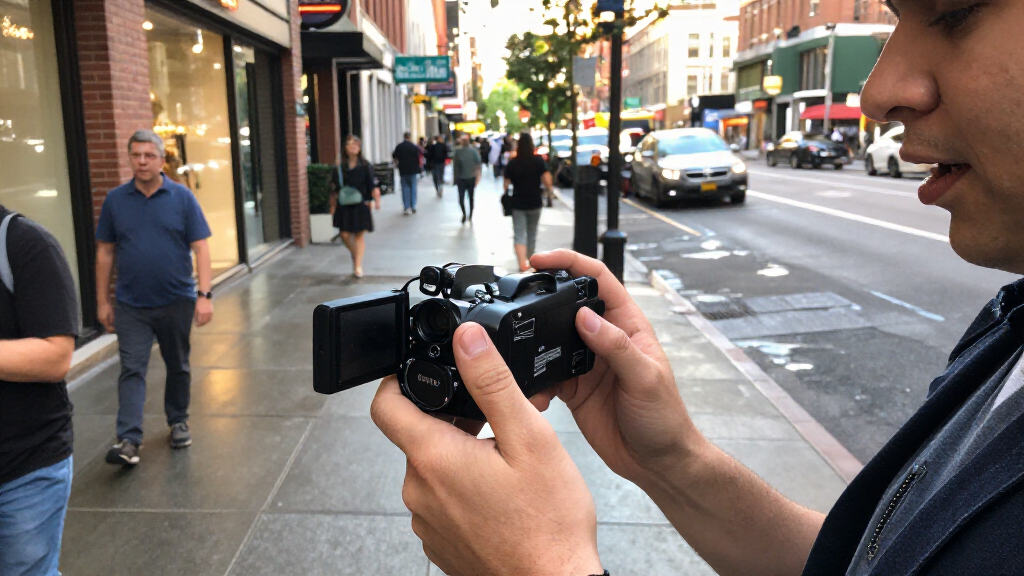

Choosing the right portable video camera for journalism means balancing image quality with the ability to remain unobtrusive in the field. My top pick, the Uytya X70 5K Camcorder, offers the best blend of resolution and versatility for solo reporters who need high-quality footage without carrying heavy gear. For those needing extreme discretion or body-mounted shots, the BOBLOV D7 provides a rugged, hands-free alternative that fits in a pocket. The main tradeoff you will face is between audio quality and size; smaller cameras often sacrifice microphone inputs. Keep reading to see which of these six models fits your specific reporting style and budget constraints.

Get everyday essentials delivered free with Prime
- Fast, free delivery on millions of items
- Prime Video, Amazon Music and more included
- Member-only deals all year
Key Takeaways
- The Uytya X70 stands out for its 5K resolution and flip screen, making it ideal for solo journalists who need to monitor their own framing.
- Body cameras like the BOBLOV D7 excel in durability and discretion but lack the optical zoom capabilities needed for distant interviews.
- Most budget-friendly options, such as the ZYDIIE 4K, rely on digital zoom, which degrades image quality significantly compared to optical zoom.
- The Panasonic V900 remains the only choice in this lineup with established brand reliability and superior native audio processing.
- Battery life is the most common failure point in low-cost camcorders; always carry dual batteries for field assignments.
| Uytya X70 5K Video Camera Camcorder |  | Best Overall for Versatility | Video Resolution: 5K (20fps) | Photo Resolution: 64MP | Display: 3″ 270° Flip Touchscreen | VIEW LATEST PRICE | See Our Full Breakdown |
| BOBLOV D7 4K Body Camera |  | Best for Body-Worn Reporting | Video Resolution: 4K (2160p) | Storage: 128GB Internal | Durability: IP68, 2.5m Drop Proof | VIEW LATEST PRICE | See Our Full Breakdown |
| ORDRO M3 Pocket Camera |  | Best Compact High-Res Option | Video Resolution: 5K (30fps), 4K (60fps) | Display: 3.5″ Flip Touchscreen | Battery: 3250mAh Li-ion | VIEW LATEST PRICE | See Our Full Breakdown |
| ZYDIIE 4K UHD Camcorder |  | Best Value for General Use | Video Resolution: 4K UHD | Photo Resolution: 64MP | Zoom: 18x Digital | VIEW LATEST PRICE | See Our Full Breakdown |
| Kimire Video Camera Camcorder |  | Best Budget Entry-Level | Video Resolution: 1080p (15fps) | Photo Resolution: 24MP | Display: 3″ Rotating LCD | VIEW LATEST PRICE | See Our Full Breakdown |
| Panasonic V900 Full HD Camcorder (HC-V900KJ) |  | Best for Run-and-Gun Field Reporting | Resolution: Full HD 1080p | Sensor: 1/2.5-inch BSI MOS | Zoom: 24x Optical | VIEW LATEST PRICE | See Our Full Breakdown |
| portable video cameras for journalism | Display | Video Resolution | Zoom | Photo Resolution |
|---|---|---|---|---|
| Uytya X70 5K Video Camera Camc | 3" 270° Flip Touchscreen | 5K (20fps) | 16x Optical | 64MP |
| BOBLOV D7 4K Body Camera | 2-inch Screen | 4K (2160p) | — | — |
| ORDRO M3 Pocket Camera | 3.5" Flip Touchscreen | 5K (30fps), 4K (60fps) | — | — |
| ZYDIIE 4K UHD Camcorder | 3" 270° Touchscreen | 4K UHD | 18x Digital | 64MP |
| Kimire Video Camera Camcorder | 3" Rotating LCD | 1080p (15fps) | 16x Digital | 24MP |
| Panasonic V900 Full HD Camcord | 3-inch touchscreen LCD | — | 24x Optical | — |
More Details on Our Top Picks
Uytya X70 5K Video Camera Camcorder
The Uytya X70 earns the top spot because it balances high-resolution output with a genuinely useful accessory kit. While the ORDRO M3 offers higher frame rates at 4K, the X70’s 5K resolution provides more cropping flexibility for news editors who need to reframe shots in post. The 270° flip screen is critical for journalists who need to verify their own framing during self-shot interviews, a feature the Kimire lacks in terms of resolution fidelity. However, the 20fps limit at 5K means motion may appear slightly less smooth than the ORDRO’s 30fps. It is heavier than pocket camcorders, making it better for tripod-based reporting or steady handheld work rather than run-and-gun street interviews.Pros:- 5K video and 64MP stills provide ample resolution for cropping in post.
- Comprehensive bundle includes a microphone, tripod, and remote, reducing extra gear costs.
- 270° flip screen allows for easy self-framing during solo interviews.
- Built-in IR night vision enables reporting in low-light environments without additional lighting.
Cons:- 5K recording is limited to 20fps, which may look choppy for fast action.
- At 2.5 pounds, it is too heavy for comfortable long-term handheld use.
- Uses AAA batteries, which are less efficient and harder to recharge than standard lithium packs.
Best for: Field reporters who need high-resolution masters for post-production cropping and value a complete kit with mic and tripod.
Not ideal for: Journalists needing smooth motion at high resolutions, as 5K is capped at 20fps, or those requiring water resistance for outdoor weather events.
- Video Resolution:5K (20fps)
- Photo Resolution:64MP
- Display:3″ 270° Flip Touchscreen
- Zoom:16x Optical
- Storage:32GB Card Included
- Power:2x AAA Batteries
- Weight:2.5 lbs
Our verdict“This pick makes the most sense for journalists who prioritize image quality and a ready-to-shoot kit over compact portability.”
BOBLOV D7 4K Body Camera
Unlike the handheld Uytya X70, the BOBLOV D7 is designed to be forgotten on your chest until you need the footage. Its IP68 waterproofing and 2.5-meter drop protection make it far more durable than the consumer-focused camcorders in this list, such as the ORDRO M3, which lacks any water resistance. The 170° wide-angle lens captures context and environment rather than just a tight interview frame, ideal for documenting events or protests. However, the 10-hour battery life claim requires turning off GPS and night vision, which are often essential for field work. This is not a primary camera for polished stories but a reliable evidence-gathering tool for hostile or unpredictable environments.Pros:- IP68 rating and drop resistance withstand harsh field conditions.
- 128GB internal storage eliminates the risk of losing or corrupting removable SD cards.
- 170° wide-angle lens captures environmental context often missed by zoom lenses.
- Includes a charging dock and multiple mounting clips for easy deployment.
Cons:- Battery life drops significantly if GPS or IR are left on.
- The 2-inch screen is small and difficult to review footage on quickly.
- Fixed focus and wide angle make it unsuitable for tight interview shots.
Best for: Investigative journalists and field reporters working in dangerous or wet environments who need hands-free, durable documentation.
Not ideal for: Storytellers who need shallow depth of field or telephoto reach, as the fixed wide-angle lens limits compositional control.
- Video Resolution:4K (2160p)
- Storage:128GB Internal
- Durability:IP68, 2.5m Drop Proof
- Lens:170° Wide Angle
- Battery Life:Up to 10 Hours (IR/GPS Off)
- Display:2-inch Screen
Our verdict“This model is better suited to reporters who need a rugged, hands-free backup camera for high-risk assignments.”
ORDRO M3 Pocket Camera
The ORDRO M3 stands out for delivering 4K at 60fps, a feature that significantly outperforms the Uytya X70’s 20fps at 5K and the ZYDIIE’s 4K capabilities. This high frame rate is essential for journalists covering sports, protests, or any fast-moving subject where smooth motion matters more than maximum pixel count. Its 3.5-inch flip screen is larger than the BOBLOV D7’s, making framing easier for solo operators. However, the file splitting issue on long recordings requires careful management; you must restart recording to continue, which risks missing a moment. It is also not water-resistant, unlike the body cam, so it needs protection in rain. This is the best choice for mobile journalists who need smooth 4K motion in a pocketable form factor.Pros:- Records 4K at 60fps, offering smoother motion than most rivals.
- 3.5-inch flip-up touchscreen provides excellent visibility for framing.
- Compact pocketable size allows for discreet reporting.
- Includes USB-C charging, allowing power banks to extend session time.
Cons:- Automatically splits video files, which can interrupt continuous events.
- No water resistance limits use in rain or wet environments.
- Marketing claims 48MP photos, but effective resolution is closer to 36MP.
Best for: Mobile journalists and vloggers who need smooth 4K motion and a large touchscreen for solo framing.
Not ideal for: Users who need uninterrupted long-form recording, as the camera splits files automatically, or those working in wet conditions.
- Video Resolution:5K (30fps), 4K (60fps)
- Display:3.5″ Flip Touchscreen
- Battery:3250mAh Li-ion
- Sensor:1/2.5″ CMOS
- Connectivity:Wi-Fi, USB-C
- Dimensions:5.3″ x 1.5″ x 1.5″
Our verdict“This option stands out for its superior frame rates and compact size, making it ideal for dynamic, on-the-go storytelling.”
ZYDIIE 4K UHD Camcorder
The ZYDIIE offers a middle ground between the premium specs of the Uytya X70 and the basic functionality of the Kimire. It provides 4K resolution and a 270° rotating screen, which is sufficient for standard news packages and online content. Compared to the BOBLOV D7, it is a traditional camcorder rather than a body cam, offering better zoom control for interviews. However, it relies on 18x digital zoom, which degrades image quality significantly compared to the optical zoom found on the Uytya. The f/3.2 aperture is also relatively slow, meaning it struggles more in low light than cameras with larger sensors. This is a solid entry-level choice for freelancers who need decent resolution without the bulk or cost of professional gear.Pros:- Records 4K video and captures 64MP stills.
- 18x digital zoom allows for reaching distant subjects.
- 270° touchscreen facilitates flexible framing angles.
- Includes two batteries and a remote control in the box.
Cons:- Digital zoom results in noticeable image degradation at longer distances.
- f/3.2 aperture limits performance in dimly lit environments.
- Night vision produces black-and-white footage, which may not match daytime clips.
Best for: Freelance journalists and students who need a versatile 4K camera with a good zoom range for general assignments.
Not ideal for: Professionals working in low-light conditions or those who need lossless zoom, as the digital zoom and small aperture limit image quality.
- Video Resolution:4K UHD
- Photo Resolution:64MP
- Zoom:18x Digital
- Display:3″ 270° Touchscreen
- Aperture:f/3.2
- Included Accessories:32GB Card, Remote, 2 Batteries
Our verdict“This pick makes the most sense for budget-conscious reporters who need 4K resolution and basic zoom capabilities for general field work.”
Kimire Video Camera Camcorder
The Kimire is the most affordable option here, but it comes with significant compromises. It records at 1080p and 15fps, which is noticeably choppy compared to the ORDRO M3’s 60fps or even the ZYDIIE’s standard 4K modes. This low frame rate makes it unsuitable for sports or fast action, limiting it to static interviews or slow-paced B-roll. It is extremely lightweight at 0.54 kg, making it easy to carry, but the 90-minute battery life requires frequent swapping. Unlike the Uytya, it does not include an SD card or tripod, so you must budget for those separately. This is strictly a backup camera or a tool for journalists who prioritize extreme portability and low cost over image smoothness and resolution.Pros:- Extremely lightweight and compact for easy transport.
- Functions as a webcam for remote interviews.
- Allows recording while charging, extending session length.
- Very affordable entry price.
Cons:- 15fps frame rate results in choppy, unprofessional motion.
- Only 90 minutes of battery life per charge.
- No SD card or tripod included, increasing total cost.
Best for: Students or hobbyists on a tight budget who need a lightweight backup camera for static interviews.
Not ideal for: Anyone covering fast-moving events or needing high-quality motion, as 15fps footage is unwatchable for action sequences.
- Video Resolution:1080p (15fps)
- Photo Resolution:24MP
- Display:3″ Rotating LCD
- Weight:0.54 kg
- Battery Life:~90 Minutes
- Zoom:16x Digital
Our verdict“This model is better suited to those who need a basic, ultra-portable recording device for static situations rather than dynamic field reporting.”
Panasonic V900 Full HD Camcorder (HC-V900KJ)
For journalists who prioritize optical reach and stabilization over resolution, the Panasonic V900 stands out. Unlike the Kimire Video Camera, which relies on digital zoom that degrades image quality, this camcorder offers a genuine 24x optical zoom. This allows you to capture distant subjects with clarity, a critical advantage when covering events from a distance. The F1.8 aperture and 5-axis stabilization work together to keep footage sharp in low-light conditions or while walking, reducing the need for a tripod. However, it is limited to 1080p resolution, falling short of the 4K or 5K options found in competitors like the ZYDIIE 4K UHD Camcorder. The 55-minute battery life also requires careful management during long shifts. This model makes the most sense for reporters who value reliable glass and steady shots over maximum pixel count.
Pros:- 24x optical zoom provides true telephoto reach without quality loss
- 5-axis HYBRID O.I.S+ ensures smooth footage while moving
- F1.8 lens aperture allows for usable video in dimly lit indoor settings
- Lightweight 1.9-pound body supports handheld shooting for extended periods
Cons:- Limited to Full HD 1080p, lacking the detail of 4K alternatives
- 55-minute battery life necessitates carrying multiple spare batteries for long assignments
- No weather sealing restricts use in rain or harsh outdoor conditions
Best for: Field reporters and news crews who need strong zoom capabilities and stable footage without carrying heavy equipment.
Not ideal for: Journalists needing 4K resolution for detailed close-ups or those working in wet environments, as it lacks weather sealing.
- Resolution:Full HD 1080p
- Sensor:1/2.5-inch BSI MOS
- Zoom:24x Optical
- Aperture:F1.8
- Stabilization:5-Axis HYBRID O.I.S+
- Weight:1.9 pounds
- Battery Life:55 minutes
- Display:3-inch touchscreen LCD
Our verdict“Choose this camcorder if you need reliable optical zoom and stabilization for handheld news gathering, and 1080p resolution is sufficient for your distribution channels.”
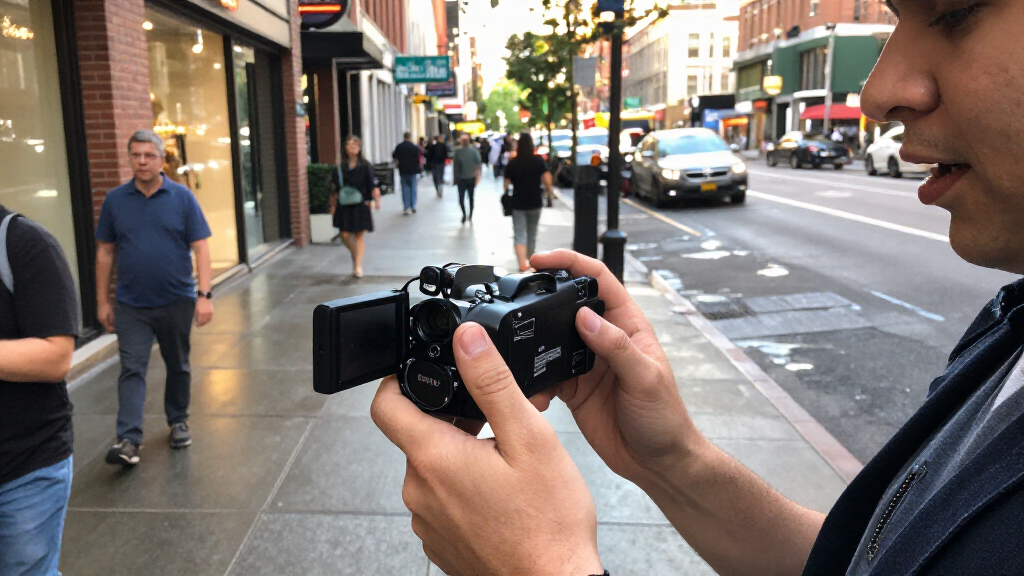
How We Picked
I evaluated these cameras based on three core pillars relevant to modern field journalism: portability, image stability, and workflow efficiency. Portability was judged not just by weight, but by form factor—whether the camera can be held steadily in one hand while walking or operated discreetly in a crowd. Image stability was assessed by looking for built-in stabilization features, as shaky footage is often unusable in news contexts without post-production stabilization tools that drain time and resources.
Workflow efficiency focused on file management, battery accessibility, and connectivity. I prioritized models with hot-swappable batteries or simple USB-C charging, as journalists rarely have time to wait for a camera to charge fully before a deadline. Cameras that required proprietary cables or had limited internal storage without easy expansion were ranked lower, as these friction points add unnecessary stress during breaking news scenarios.
Factors to Consider When Choosing Portable Video Cameras For Journalism
Selecting a camera for journalism is less about chasing the highest megapixel count and more about reliability and ease of use in unpredictable environments. This guide breaks down the technical and practical factors that separate a toy from a tool.
Audio Input Capabilities
Viewers will forgive soft focus, but they will never forgive unintelligible audio. Many compact camcorders include a 3.5mm microphone jack, but the quality of the preamp varies wildly between brands. I recommend checking if the camera supports external lavalier microphones or shotgun mics, as built-in microphones often capture excessive wind noise and ambient street sounds. If a camera lacks a mic input entirely, it is almost unusable for professional interviews unless you plan to record audio separately on a dedicated recorder, which adds sync work in post-production.
Low-Light Performance
News happens at night, in dimly lit alleyways, and indoors without professional lighting rigs. Look for cameras with larger sensors (1-inch or larger) rather than just high ISO numbers, as larger sensors capture more light with less noise. Models advertising “night vision” often use infrared filters that produce monochrome, grainy footage suitable only for surveillance, not broadcast journalism. True low-light capability means maintaining color accuracy and detail in dark environments, which is a key differentiator between consumer toy cameras and professional tools.
Discretion and Form Factor
Sometimes, the best camera is the one no one notices. Large, black professional camcorders can alter the behavior of subjects in sensitive situations. Smaller, pocket-sized cameras like the ORDRO M3 allow for a more intimate, observational style of reporting. However, discretion comes at a cost: smaller bodies often have smaller batteries and fewer controls, making them harder to adjust quickly. You must decide if your story requires the authority of a professional rig or the invisibility of a pocket device.
File Format and Codecs
Not all 4K footage is created equal. Some budget cameras record in H.264 or H.265, which are highly compressed and can introduce artifacts during heavy editing or color grading. Professional workflows prefer less compressed formats like ProRes or All-I codecs, but these require more storage and processing power. For most digital journalism, H.264 is acceptable, but be wary of cameras that claim 4K resolution but record at low bitrates, resulting in blocky shadows and muddy details. Check the bitrate specifications if available, as this directly impacts image integrity.
Ergonomics and One-Handed Operation
Journalists are often multitasking—holding a microphone, a notebook, or a smartphone while filming. A camera that requires two hands to operate effectively is a liability in the field. Look for models with intuitive touchscreen interfaces or well-placed physical dials that can be adjusted with a thumb. The Panasonic V900, for example, offers a traditional grip that feels secure, whereas flat pocket cameras can feel slippery and awkward when held for extended periods. Test the weight distribution; a back-heavy camera causes fatigue quickly.
Frequently Asked Questions
Do I really need 4K resolution for online news articles?
For most online journalism, 1080p (Full HD) is often sufficient and preferred due to smaller file sizes and faster upload times. 4K provides more detail and allows for cropping in post-production, which can be useful if you cannot reframe a shot. However, 4K requires more storage, faster computers for editing, and higher bandwidth for uploading. If your workflow is tight and you are publishing directly to social media, a high-quality 1080p camera like the Panasonic V900 may be more practical than a 4K model with slower write speeds.
Can I use a smartphone instead of these portable cameras?
Smartphones are incredibly capable but lack the continuous optical zoom and dedicated physical controls of camcorders. While a phone can shoot 4K, it often overheats during long takes and lacks the dedicated zoom lever that allows for smooth, cinematic zooms during an interview. Camcorders also typically have better battery life for video-specific tasks and physical ND filters for controlling exposure in bright sunlight. If you need to maintain a steady shot for ten minutes while zooming, a dedicated camcorder remains the superior tool.
Is image stabilization necessary for handheld journalism?
Yes, image stabilization is critical for handheld work. Without it, every step you take translates to shake in the final footage, which can make viewers feel uneasy or nauseous. Look for cameras with OIS (Optical Image Stabilization) rather than just digital stabilization, as OIS physically corrects the lens movement and preserves image quality. Digital stabilization often crops the image and introduces a “jello effect” in fast movements. For solo reporters walking while filming, OIS is a non-negotiable feature.
How important is the flip-out screen for journalism?
A 270-degree flip screen is highly valuable for self-recording or verifying your framing when the camera is held at arm’s length. It allows you to check focus and exposure in real-time, reducing the risk of unusable footage. While you can shoot without it, you lose the ability to confirm that your subject is in frame or that your exposure is correct. For solo journalists or those doing stand-ups, this feature saves time and prevents the need for reshoots.
What is the biggest mistake beginners make with portable camcorders?
The most common mistake is relying on automatic white balance in mixed lighting environments. Automatic systems often struggle with the combination of indoor fluorescent lights and outdoor daylight, resulting in footage that shifts color mid-shot. Beginners should learn to manually set white balance using a gray card or by pointing the camera at a white surface. Another frequent error is neglecting to clean the lens; a smudge can ruin a shot that looks fine on the small camera screen but becomes obvious on a large monitor.
Conclusion
Choosing the right portable video camera for journalism depends on your specific reporting environment. For the best overall balance of resolution and usability, the Uytya X70 is the clear winner for solo reporters who need flexibility. If your priority is discretion and durability, the BOBLOV D7 serves as a rugged, hands-free option that fits seamlessly into a tactical or undercover workflow. For those who value brand reliability and audio quality above all else, the Panasonic V900 remains a trustworthy staple that minimizes technical headaches. Beginners might find the ORDRO M3 a gentle entry point, but be aware of its limitations in low light. Ultimately, match the camera’s strengths to your story’s demands: choose zoom for events, size for intimacy, and audio quality for interviews.
Halloween Picks

Gemmy 6-Foot Leatherface Animatronic Halloween Decoration

JOYIN 5-Foot Halloween Animatronic Drinking Skeleton

Star Wars Yoda and R2-D2 Inflatable Halloween Decor, 6 ft with LEDs, Indoor/Outdoor
As an affiliate, we earn on qualifying purchases.