
For most working journalists, I’d start with the Canon EOS R6 Mark II: its full-frame system and available 24–105mm kit lens make a flexible choice for varied assignments. The Sony a6700 is a strong smaller-format alternative, while the Sony a7 IV suits reporters who want a full-frame body and broad lens options. The main tradeoffs are carrying weight, autofocus and video needs, and whether a bundled lens can handle the assignment. I compare all 15 options by field usefulness, kit flexibility, and the compromises that matter on deadline; read on for the full breakdown.

Get everyday essentials delivered free with Prime
- Fast, free delivery on millions of items
- Prime Video, Amazon Music and more included
- Member-only deals all year
Key Takeaways
- The Canon EOS R6 Mark II leads as an all-around reporting choice: the body-only and 24–105mm bundle versions suit different lens budgets and assignment needs.
- The Sony a6700 offers a compact APS-C route into capable field coverage: the body and kit variants share a camera platform, so choose based on existing lenses and included accessories.
- Full-frame bundles can reduce lens-planning friction: the Sony a7 IV with 24–105mm F4 G OSS offers a more versatile working range than the body-only version, but adds carrying weight.
- Entry-level bundles trade advanced controls for a ready-to-shoot kit: the R100 and R50 packages include lenses, while their simpler positioning may be limiting for demanding assignments.
- Several listings are near-duplicates rather than separate camera classes: compare the included lens, battery, and accessories before treating the a6700, a7 IV, R6 Mark II, or R100 variants as different camera choices.
| Sony Alpha a6700 APS-C Mirrorless Camera Body |  | Best for Fast-Moving News | Sensor: 26 MP APS-C Exmor R back-illuminated CMOS | Processor: BIONZ XR | Lens mount: Sony E | VIEW LATEST PRICE | See Our Full Breakdown |
| Sony Alpha 7 IV Full-Frame Mirrorless Camera with FE 24–105mm F4 G OSS Zoom Lens |  | Best Ready-to-Work Kit | Sensor: 33 MP full-frame Exmor R CMOS | Processor: BIONZ XR | Included lens: FE 24–105mm F4 G OSS | VIEW LATEST PRICE | See Our Full Breakdown |
| Canon EOS R100 Mirrorless Camera with RF-S18-45mm F4.5-6.3 IS STM Lens | 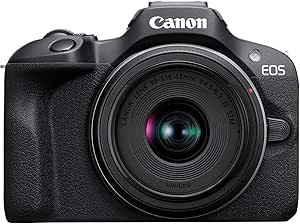 | Best for Entry-Level Reporting | Sensor: 24.1 MP APS-C CMOS | Image processor: DIGIC 8 | Mount: Canon RF | VIEW LATEST PRICE | See Our Full Breakdown |
| Sony Alpha 7 V Full-Frame Mirrorless Camera Body |  | Best for High-Speed Assignments | Sensor: 33 MP partially stacked full-frame Exmor RS CMOS | Processor: BIONZ XR2 | Lens mount: Sony E / Sony FE | VIEW LATEST PRICE | See Our Full Breakdown |
| Panasonic LUMIX S9 Full-Frame Mirrorless Camera |  | Best Compact Video Companion | Sensor: 24.2 MP full-frame CMOS | Mount: Leica L | Video: 6K MOV | VIEW LATEST PRICE | See Our Full Breakdown |
| Sony Alpha a6400 APS-C Mirrorless Camera with 16–50mm Lens | 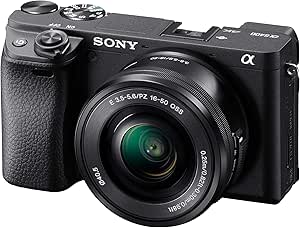 | Best for Fast, Lightweight Assignments | Sensor: APS-C CMOS | Still resolution: 24.2 MP | Included lens: 16–50mm | VIEW LATEST PRICE | See Our Full Breakdown |
| Nikon Z50 II Mirrorless Camera Two-Lens Kit |  | Best Two-Lens Starter Kit | Sensor: 20.9 MP APS-C CMOS | Included lenses: NIKKOR Z DX 16–50mm f/3.5–6.3 VR and 50–250mm f/4.5–6.3 VR | Video: 4K UHD up to 60p | VIEW LATEST PRICE | See Our Full Breakdown |
| Canon EOS R50 Mirrorless Camera Bundle with 18–45mm and 55–210mm Lenses |  | Best Canon APS-C Bundle for Mixed Assignments | Sensor: 24.2 MP APS-C CMOS | Included lenses: RF-S 18–45mm f/4.5–6.3 IS STM and RF-S 55–210mm f/5–7.1 IS STM | Video: 4K (2160p) | VIEW LATEST PRICE | See Our Full Breakdown |
| Canon EOS RP Mirrorless Camera with RF24-105mm F4-7.1 IS STM Lens |  | Best Full-Frame Carry Kit | Sensor: Full-frame, 26.2 MP | Lens: RF24–105mm F4–7.1 IS STM | Image stabilization: Up to 5 stops of shake correction | VIEW LATEST PRICE | See Our Full Breakdown |
| Canon EOS R100 Mirrorless Camera with RF-S 18-45mm Lens Bundle |  | Best for First-Time Camera Buyers | Sensor: 24.1 MP APS-C CMOS | Image processor: DIGIC 8 | Lens: RF-S 18–45mm f/4.5–6.3 IS STM | VIEW LATEST PRICE | See Our Full Breakdown |
| Sony Alpha 7 IV Full-Frame Mirrorless Camera |  | Best Overall for Photo and Video | Sensor: 33MP full-frame Exmor R CMOS | Lens mount: Sony E | Video: Up to 4K 60p | VIEW LATEST PRICE | See Our Full Breakdown |
| Canon EOS R6 Mark II Full-Frame Mirrorless Camera (Body Only) |  | Best for Fast-Moving Assignments | Sensor: 24.2MP full-frame CMOS | Processor: DIGIC X | Electronic burst: Up to 40 fps at 20MP | VIEW LATEST PRICE | See Our Full Breakdown |
| Canon EOS R6 Mark II Mirrorless Camera with RF 24-105mm Lens Bundle |  | Best Ready-to-Report Kit | Sensor: 24.2MP full-frame CMOS | Processor: DIGIC X | Included lens: Canon RF 24-105mm f/4-7.1 IS STM | VIEW LATEST PRICE | See Our Full Breakdown |
| Sony Alpha a6700 APS-C Mirrorless Camera with 16–50mm OSS II Lens, Extra Battery, Bag and Charger |  | Best Compact Multimedia Kit | Sensor: 26MP APS-C Exmor R back-illuminated CMOS | Processor: BIONZ XR | Included lens: E PZ 16–50mm f/3.5–5.6 OSS II | VIEW LATEST PRICE | See Our Full Breakdown |
| Sony ZV-E10 APS-C Mirrorless Camera with 16-50mm Lens Black |  | Best for Video-First Beginners | Sensor: 24.2MP APS-C Exmor CMOS | Processor: BIONZ X | Included lens: 16–50mm OSS kit lens | VIEW LATEST PRICE | See Our Full Breakdown |
| mirrorless cameras for journalism | Sensor | Video | Continuous shooting | Connectivity |
|---|---|---|---|---|
| Sony Alpha a6700 APS-C Mirrorl | 26 MP APS-C Exmor R back-illuminated CMOS | 4K up to 120p; 10-bit 4:2:2 | 11 fps | — |
| Sony Alpha 7 IV Full-Frame Mir | 33 MP full-frame Exmor R CMOS | 4K 60p, 10-bit 4:2:2 | Up to 10 fps | — |
| Canon EOS R100 Mirrorless Came | 24.1 MP APS-C CMOS | 4K up to 24 fps | Up to 6.5 fps | — |
| Sony Alpha 7 V Full-Frame Mirr | 33 MP partially stacked full-frame Exmor RS CMOS | Up to 4K 120p | Up to 30 fps with AF/AE tracking | — |
| Panasonic LUMIX S9 Full-Frame | 24.2 MP full-frame CMOS | 6K MOV | — | Wi-Fi, Bluetooth |
| Sony Alpha a6400 APS-C Mirrorl | APS-C CMOS | 4K UHD (3840 × 2160) | Up to 11 fps | Wi-Fi, USB, Micro-HDMI |
| Nikon Z50 II Mirrorless Camera | 20.9 MP APS-C CMOS | 4K UHD up to 60p | — | Bluetooth, Wi-Fi, HDMI, USB |
| Canon EOS R50 Mirrorless Camer | 24.2 MP APS-C CMOS | 4K (2160p) | — | Wi-Fi |
| Canon EOS RP Mirrorless Camera | Full-frame, 26.2 MP | 4K UHD 2160p | — | Bluetooth, Wi-Fi |
| Canon EOS R100 Mirrorless Came | 24.1 MP APS-C CMOS | 4K 24p with crop; Full HD 60p | 6.5 fps | Wi-Fi and Bluetooth |
| Sony Alpha 7 IV Full-Frame Mir | 33MP full-frame Exmor R CMOS | Up to 4K 60p | Up to 10 fps | — |
| Canon EOS R6 Mark II Full-Fram | 24.2MP full-frame CMOS | Uncropped 4K up to 60 fps | — | 5GHz Wi-Fi, Bluetooth 5, and USB Type-C |
| Canon EOS R6 Mark II Mirrorles | 24.2MP full-frame CMOS | 4K 60p | Up to 40 fps with electronic shutter | — |
| Sony Alpha a6700 APS-C Mirrorl | 26MP APS-C Exmor R back-illuminated CMOS | UHD 4K up to 120p; 10-bit 4:2:2 | Up to 11 fps | — |
| Sony ZV-E10 APS-C Mirrorless C | 24.2MP APS-C Exmor CMOS | Oversampled 4K up to 30p; 1080p | — | Bluetooth, Wi-Fi, USB-C, and Micro HDMI |
More Details on Our Top Picks
Sony Alpha a6700 APS-C Mirrorless Camera Body
The a6700 pairs a compact APS-C body with AI subject recognition and tracking, a useful combination when a journalist needs to follow a moving subject without carrying a larger kit. Its 26 MP sensor offers room to crop, while sensor-shift stabilization can help steady handheld frames. Compared with the Sony Alpha 7 IV, it gives up a full-frame sensor and arrives without a lens, but it adds 4K 120p recording and weighs less. That video flexibility is more valuable to hybrid reporters than to photographers who mainly need long-lens reach or a ready-to-shoot package. The lack of a built-in flash also limits quick fill light in some indoor situations. I’d choose it for mobile assignments where tracking, portability, and video matter more than full-frame image quality.
Pros:- AI subject recognition and tracking can help keep moving people in focus.
- 26 MP APS-C sensor supports detailed stills and cropping.
- 4K recording up to 120p with 10-bit options suits hybrid reporting.
- Compact 14.5-ounce body is easier to carry on long assignments.
Cons:- No lens is included, adding a separate lens choice to the setup.
- APS-C sensor is smaller than the full-frame sensors in the Alpha 7 IV and Alpha 7 V.
- No built-in flash for quick fill light.
Best for: Reporters covering events who need a light body with dependable subject tracking and substantial video options.
Not ideal for: Journalists who need a complete kit immediately or prioritize full-frame low-light performance; the body is sold without a lens.
- Sensor:26 MP APS-C Exmor R back-illuminated CMOS
- Processor:BIONZ XR
- Lens mount:Sony E
- Video:4K up to 120p; 10-bit 4:2:2
- Image stabilization:Sensor-shift
- Continuous shooting:11 fps
- Weight:14.5 ounces
Our verdict“Choose the a6700 for mobile reporting that mixes action stills and high-frame-rate video, provided you already have or plan to buy an E-mount lens.”
Sony Alpha 7 IV Full-Frame Mirrorless Camera with FE 24–105mm F4 G OSS Zoom Lens
For a journalist who needs a versatile kit in hand, the included 24–105mm F4 lens is the Alpha 7 IV’s clearest advantage: its range covers wide scene-setting frames through tighter portraits without a lens change. The 33 MP full-frame sensor and two card slots make it a more balanced assignment camera than the entry-level Canon EOS R100, especially when stills and video both matter. It records 4K 60p in 10-bit 4:2:2, though the lens’s F4 maximum aperture gives less light and background separation than a faster prime. The Alpha 7 V offers faster shooting and 4K 120p, but this package includes a lens and remains a capable choice for general reporting. I’d favor it for varied assignments where carrying one flexible zoom matters more than peak speed.
Pros:- 33 MP full-frame sensor provides resolution for cropping and detailed publication images.
- Included 24–105mm zoom covers a broad range of common reporting situations.
- Two memory card slots support a more flexible assignment workflow.
- 4K 60p 10-bit 4:2:2 recording supports video work alongside stills.
Cons:- F4 maximum aperture gathers less light than a faster lens in dim venues.
- The camera is not water resistant according to the supplied product data.
- Up to 10 fps is slower than the Alpha 7 V’s stated 30 fps.
Best for: General assignment reporters who want a full-frame body and a broad-range stabilized zoom in one kit.
Not ideal for: Action specialists who need the Alpha 7 V’s faster bursts, or low-light shooters who rely on a brighter-than-F4 lens.
- Sensor:33 MP full-frame Exmor R CMOS
- Processor:BIONZ XR
- Included lens:FE 24–105mm F4 G OSS
- Video:4K 60p, 10-bit 4:2:2
- Continuous shooting:Up to 10 fps
- Memory card slots:2
- Mount:Sony E
Our verdict“Pick this Alpha 7 IV package when you need a versatile full-frame reporting kit with a useful zoom included.”
Canon EOS R100 Mirrorless Camera with RF-S18-45mm F4.5-6.3 IS STM Lens
The EOS R100 makes a straightforward starting point for a new reporter: it includes an image-stabilized 18–45mm lens, and face and eye detection can help keep interview subjects sharp. Its 24.1 MP APS-C sensor offers ample resolution for everyday editorial stills, while its compact build is less burdensome than a full-frame kit such as the Sony Alpha 7 IV. The tradeoff is a more limited toolset. The R100 tops out at 6.5 fps, and its 4K video is limited to 24 fps with a crop, narrowing its usefulness for fast action or broad environmental footage. A fixed rear screen also makes low-angle framing and self-recorded standups less convenient than on the a6700. I’d consider it for learning and basic local coverage, not demanding daily assignments.
Pros:- Included stabilized RF-S 18–45mm lens provides a usable starting range.
- Face and eye detection support focused interview portraits.
- 24.1 MP APS-C sensor delivers resolution suited to routine still assignments.
- Compact package is less cumbersome than full-frame kits such as the Alpha 7 IV.
Cons:- 4K is limited to 24 fps and uses the central area of the sensor.
- Fixed LCD makes awkward angles and self-recording harder.
- 6.5 fps burst rate is modest for fast-moving news.
Best for: Student journalists and occasional local reporters who want an affordable-to-operate starter kit with a lens included.
Not ideal for: Full-time reporters who need fast burst shooting, uncropped 4K framing, or a screen that flips for standups.
- Sensor:24.1 MP APS-C CMOS
- Image processor:DIGIC 8
- Mount:Canon RF
- Included lens:RF-S 18–45mm F4.5–6.3 IS STM
- Autofocus points:143
- Continuous shooting:Up to 6.5 fps
- Video:4K up to 24 fps
Our verdict“The R100 suits beginners covering routine stills and interviews, but its cropped 4K and slower bursts limit growth into demanding assignments.”
Sony Alpha 7 V Full-Frame Mirrorless Camera Body
The Alpha 7 V is the specialist pick here for assignments where a decisive moment can pass quickly. Its 30 fps shooting with AF/AE tracking and AI-based subject recognition are aimed at keeping fast action in focus and correctly exposed. The 33 MP full-frame sensor and in-body stabilization also give it a strong foundation for handheld stills. Compared with the Alpha 7 IV, it offers much faster bursts and 4K 120p video, while the Alpha 7 IV package includes a practical zoom that this body-only listing lacks. That difference matters on deadline: the V requires a compatible lens before it can work, and its advanced capabilities may call for suitable accessories. I’d rank it above the general-purpose Alpha 7 IV for speed, but it is a heavier, more specialized starting point.
Pros:- Up to 30 fps with AF/AE tracking targets fleeting action.
- AI-based subject recognition supports tracking across busy scenes.
- 33 MP full-frame sensor pairs resolution with up to 16 stops of stated dynamic range.
- In-body stabilization can steady handheld shooting.
Cons:- Body-only listing requires a separate compatible lens.
- At 1.4 pounds, it is heavier than the compact a6700 body.
- Its advanced burst and video capabilities may require compatible lenses or accessories.
Best for: Sports, breaking-news, and event photographers who need high burst rates, subject tracking, and full-frame image quality.
Not ideal for: New reporters seeking a ready-to-shoot kit or anyone who does not need fast action capture; no lens is specified as included.
- Sensor:33 MP partially stacked full-frame Exmor RS CMOS
- Processor:BIONZ XR2
- Lens mount:Sony E / Sony FE
- Continuous shooting:Up to 30 fps with AF/AE tracking
- Video:Up to 4K 120p
- Image stabilization:Up to 7.5-step central, 6.5-step peripheral
- Memory slots:2
- Weight:1.4 lbs
Our verdict“Choose the Alpha 7 V for fast-moving assignments where burst speed and full-frame capture justify buying a lens separately.”
Panasonic LUMIX S9 Full-Frame Mirrorless Camera
The LUMIX S9 emphasizes portability and video: its compact full-frame body, 24.2 MP sensor, and 6K recording make it a fit for reporters who need high-resolution footage for flexible framing or social clips. Wi-Fi and Bluetooth support smartphone transfers, which can shorten the path from field capture to publication. Against the Sony a6700, the S9 brings a full-frame sensor and 6K recording, while the a6700 offers specified subject tracking, 4K 120p, and a stated electronic viewfinder. The S9’s supplied data lists a viewfinder as electronic, and that may be less comfortable for reporters who prefer optical viewing; it also has no built-in flash. Its L-mount system and SD storage shape the kit choices. I’d choose it for a video-forward mobile workflow rather than fast stills coverage.
Pros:- Compact body makes a full-frame camera easier to carry on travel assignments.
- 6K recording gives flexibility for reframing footage.
- Wi-Fi and Bluetooth support smartphone transfer workflows.
- 24.2 MP full-frame sensor supports detailed stills and low-light shooting.
Cons:- No built-in flash for quick fill light.
- SD card storage is the listed memory option.
- The supplied data does not specify burst rate or subject-tracking capabilities.
Best for: Mobile video journalists and social-first reporters who want a compact full-frame camera with 6K capture and wireless transfers.
Not ideal for: Still photographers who prioritize rapid action tracking or need a built-in flash and the most explicit viewfinder details before choosing.
- Sensor:24.2 MP full-frame CMOS
- Mount:Leica L
- Video:6K MOV
- Connectivity:Wi-Fi, Bluetooth
- Display:3-inch LCD
- Stabilization:Sensor-shift and optical
- Memory card:SD
Our verdict“The S9 is a strong fit for compact, video-led reporting, while stills-focused journalists may prefer the a6700’s specified tracking and burst features.”
Sony Alpha a6400 APS-C Mirrorless Camera with 16–50mm Lens
The Sony a6400 is a compact kit for reporters who need to react quickly to movement. Its 11 fps burst rate and extensive phase- and contrast-detection autofocus coverage can help capture a brief expression or a fast-moving scene. The included 16–50mm lens makes it ready for general assignment work, while 4K recording adds video flexibility. Compared with the Canon EOS R50, this Sony lists a faster continuous shooting rate, though the Canon bundle includes a second telephoto lens for distant subjects. The a6400’s tradeoffs are its APS-C sensor and limited reach with the kit zoom; its tilting screen is also less flexible for awkward angles than an articulating display. Product data conflict on sensor and screen details, so I would verify those before buying.
Pros:- Up to 11 fps continuous shooting for fleeting action
- 425 phase-detection and 425 contrast-detection autofocus points
- Includes a 16–50mm lens for general reporting
- Records 4K UHD video
Cons:- The supplied specifications conflict on sensor and resolution details
- The 16–50mm kit lens offers limited reach for distant events
- Tilting LCD has less positioning flexibility than an articulating screen
Best for: Reporters who prioritize a compact everyday kit, responsive autofocus, and bursts for unpredictable action
Not ideal for: Photographers who need a telephoto lens in the box, a fully articulating screen, or unambiguous specification details
- Sensor:APS-C CMOS
- Still resolution:24.2 MP
- Included lens:16–50mm
- Autofocus:425 phase-detection and 425 contrast-detection points
- Continuous shooting:Up to 11 fps
- Video:4K UHD (3840 × 2160)
- Screen:3-inch tilting LCD
- Connectivity:Wi-Fi, USB, Micro-HDMI
Our verdict“Choose the a6400 for quick-moving assignments in a compact kit, provided you confirm the disputed specifications and can work within the kit lens’s reach.”
Nikon Z50 II Mirrorless Camera Two-Lens Kit
The Nikon Z50 II two-lens kit gives a new photojournalist standard-to-telephoto coverage without needing to assemble a lens kit separately. The stabilized 16–50mm and 50–250mm zooms let you move from interviews and street scenes to distant action, while subject detection and 4K UHD video add versatility. Compared with the Sony a6400, Nikon provides much more reach in the box, but the listed 5 fps burst rate is modest for fast sports or breaking action. Its 20.9 MP APS-C sensor is also lower resolution than the Canon EOS R50’s 24.2 MP sensor. This makes the Nikon a practical field kit for varied assignments, but its listed 2.4 lb weight and slow maximum apertures may be drawbacks for long days or dim venues.
Pros:- Two stabilized zoom lenses cover standard and telephoto ranges
- Subject detection autofocus supports nine subject types
- 4K UHD video supports video assignments
- Wireless sharing through Nikon SnapBridge
Cons:- Listed continuous shooting rate is 5 fps
- The kit is listed at 2.4 lb, which adds weight for all-day reporting
- The included lenses have slow maximum apertures
Best for: Early-career reporters covering varied scenes who want stabilized standard and telephoto lenses in one kit
Not ideal for: Sports and breaking-news photographers who need a high listed burst rate, or low-light shooters relying on the kit zooms
- Sensor:20.9 MP APS-C CMOS
- Included lenses:NIKKOR Z DX 16–50mm f/3.5–6.3 VR and 50–250mm f/4.5–6.3 VR
- Video:4K UHD up to 60p
- Autofocus:Subject detection for nine subject types
- Display:3.2-inch tilting LCD
- Connectivity:Bluetooth, Wi-Fi, HDMI, USB
- Memory card:SDHC or SDXC
- Weight:2.4 lb
Our verdict“Pick the Z50 II kit when flexible focal-length coverage matters more than fast bursts or a lightweight carry.”
Canon EOS R50 Mirrorless Camera Bundle with 18–45mm and 55–210mm Lenses
The Canon EOS R50 bundle suits reporters who want broad focal-length coverage and a modest starter set of accessories in one package. Its 24.2 MP APS-C sensor and 4K video cover stills and video work, while image-stabilized 18–45mm and 55–210mm lenses span everyday scenes and distant subjects. The 64 GB card and shoulder bag mean less setup before an assignment. Compared with the Nikon Z50 II kit, the Canon offers a higher listed still resolution, while both provide two zooms with telephoto reach. The supplied data do not specify burst rate or autofocus performance, making this harder to judge for fast action than the Sony a6400. The bundle is also listed at 4.5 lb, and the camera is not water resistant.
Pros:- Two image-stabilized lenses cover standard and telephoto needs
- 24.2 MP APS-C sensor captures detailed still images
- Records 4K video
- Includes a 64 GB SD card and shoulder bag
Cons:- Not water resistant for work in rain or dusty conditions
- The listed 4.5 lb bundle weight may feel heavy for mobile reporting
- Supplied product data do not specify burst rate or autofocus details
Best for: Canon users and newer reporters who want stabilized standard and telephoto zooms plus basic carry accessories
Not ideal for: Photographers who need a weather-resistant body, a lightweight kit, or documented fast-action performance
- Sensor:24.2 MP APS-C CMOS
- Included lenses:RF-S 18–45mm f/4.5–6.3 IS STM and RF-S 55–210mm f/5–7.1 IS STM
- Video:4K (2160p)
- Image stabilization:Optical stabilization in the included lenses
- Exposure:Automatic and manual modes
- Connectivity:Wi-Fi
- Memory card:64 GB SD
- Included accessories:Battery, charger, camera cover, neck strap, lens caps, shoulder bag
Our verdict“Choose this R50 bundle for broad stabilized lens coverage and included accessories, but look elsewhere for a weather-ready or well-documented action kit.”
Canon EOS RP Mirrorless Camera with RF24-105mm F4-7.1 IS STM Lens
The Canon EOS RP kit is the full-frame option here for reporters who value a compact body and a single zoom that moves from wide scenes to short telephoto framing. Its 24–105mm lens can simplify coverage when there is little time to change lenses, and listed stabilization of up to five stops can help with handheld stills. The articulating touchscreen also offers more framing flexibility than the tilting screens on the Sony a6400 and Nikon Z50 II. The tradeoff is the lens’s variable f/4–7.1 aperture: it gets slow at the long end, which can constrain shutter speed in dim venues. Its 4K video and 1/4000-second listed maximum shutter speed also make it less compelling for demanding video or bright, fast action than more capable bodies in the wider roundup.
Pros:- Full-frame 26.2 MP sensor
- 24–105mm zoom spans wide to short telephoto framing
- Listed stabilization provides up to five stops of shake correction
- Articulating touchscreen supports flexible framing
Cons:- The lens aperture narrows to f/7.1 at the long end
- Listed maximum shutter speed is 1/4000 second
- 4K UHD video may be limiting for video-focused assignments
Best for: Reporters who want a compact full-frame body and a single stabilized zoom for general assignments
Not ideal for: Low-light specialists and video-first journalists who need a faster lens or stronger 4K video flexibility
- Sensor:Full-frame, 26.2 MP
- Lens:RF24–105mm F4–7.1 IS STM
- Image stabilization:Up to 5 stops of shake correction
- Video:4K UHD 2160p
- Autofocus:Dual Pixel CMOS AF, phase detection
- Screen:3-inch articulating LCD touchscreen
- Connectivity:Bluetooth, Wi-Fi
- Mount:Canon RF
Our verdict“Choose the EOS RP for a compact full-frame stills kit with a versatile zoom, and skip it if low-light or video demands dominate your work.”
Canon EOS R100 Mirrorless Camera with RF-S 18-45mm Lens Bundle
The Canon EOS R100 bundle is aimed at new reporters who want a viewfinder, guided controls, and a stabilized starter zoom without building a kit from scratch. Its 24.1 MP APS-C sensor and Dual Pixel autofocus provide a straightforward base for still assignments, and the included card and bag help get a beginner started. Compared with the Canon EOS R50 bundle, this R100 package has only one lens and its 4K recording is explicitly cropped, so it is less flexible for video and distant subjects. The listed 6.5 fps burst rate is serviceable for everyday scenes but less suited to rapid action than the Sony a6400’s 11 fps. The variable f/4.5–6.3 lens also limits light gathering, which can matter indoors.
Pros:- 24.1 MP APS-C sensor
- Dual Pixel autofocus with 143 AF zones
- Stabilized RF-S 18–45mm lens included
- OLED electronic viewfinder and beginner-friendly auto modes
Cons:- 4K video is cropped
- 6.5 fps burst rate is less suited to fast action than the Sony a6400
- The included lens has a variable f/4.5–6.3 maximum aperture
Best for: First-time camera buyers learning still photography and covering routine assignments in decent light
Not ideal for: Video reporters who need uncropped 4K, sports photographers, or journalists who need telephoto reach in the box
- Sensor:24.1 MP APS-C CMOS
- Image processor:DIGIC 8
- Lens:RF-S 18–45mm f/4.5–6.3 IS STM
- Autofocus:Dual Pixel CMOS AF with 143 AF zones
- Video:4K 24p with crop; Full HD 60p
- Continuous shooting:6.5 fps
- Viewfinder:2.36-million-dot OLED electronic viewfinder
- Connectivity:Wi-Fi and Bluetooth
Our verdict“Choose the R100 bundle as a simple first stills kit for routine reporting, but move up if you need uncropped 4K, fast bursts, or telephoto coverage.”
Sony Alpha 7 IV Full-Frame Mirrorless Camera
The Sony Alpha 7 IV is my most balanced pick for reporters who need one full-frame body for stills and video. Its 33MP sensor gives more room to crop a distant interview or file a detailed image than the Canon EOS R6 Mark II’s 24.2MP sensor, while in-body stabilization helps when a monopod or tripod is impractical. For assignments with moving subjects, its hybrid autofocus and Eye AF can help maintain focus as a scene changes. It also records 10-bit 4:2:2 4K up to 60p, making it more flexible for video work than the ZV-E10’s 4K 30p ceiling. The tradeoff is a complex feature set and a substantial 0.99 kg body; reporters who prize speed above resolution may prefer the R6 Mark II’s faster burst shooting.
Pros:- 33MP full-frame sensor gives useful detail and cropping latitude
- 5-axis in-body stabilization supports handheld reporting
- 10-bit 4:2:2 4K recording up to 60p
- Hybrid autofocus with real-time Eye AF
Cons:- At 0.99 kg, the body adds weight to a long reporting kit
- The extensive professional controls can be difficult for beginners
- No built-in flash
Best for: Working multimedia reporters who need detailed full-frame stills, reliable subject tracking, and capable 4K video in one body.
Not ideal for: First-time camera buyers who want simple controls, or reporters who need a lighter carry and the R6 Mark II’s higher burst rate.
- Sensor:33MP full-frame Exmor R CMOS
- Lens mount:Sony E
- Video:Up to 4K 60p
- Image stabilization:5-axis sensor-shift
- Autofocus:693-point hybrid autofocus with real-time Eye AF
- Continuous shooting:Up to 10 fps
- Display:3-inch tilting LCD
- Weight:0.99 kg
Our verdict“Choose the Alpha 7 IV if your reporting mixes high-resolution stills and serious video work in a full-frame body.”
Canon EOS R6 Mark II Full-Frame Mirrorless Camera (Body Only)
For breaking news, demonstrations, and fast-moving sports, the Canon EOS R6 Mark II puts subject acquisition and burst speed ahead of maximum still resolution. Its 40 fps electronic burst can capture brief expressions and action that the Sony Alpha 7 IV’s 10 fps rate may miss, while detection for people, animals, vehicles, trains, and aircraft suits varied field assignments. Uncropped 4K up to 60 fps also makes it a strong video body. Against the Alpha 7 IV, the Canon’s 24.2MP sensor leaves less room for heavy cropping, and this listing is body only, so a working kit requires a compatible lens. The fast modes also involve setting choices around resolution and frame rate, so reporters should learn their preferred setup before a deadline.
Pros:- Electronic burst shooting up to 40 fps
- Subject, face, and eye detection across several subject types
- Uncropped 4K recording up to 60 fps
- Vari-angle touchscreen and 120 fps OLED viewfinder
Cons:- 24.2MP resolution provides less crop latitude than the Sony Alpha 7 IV
- Body-only package requires a separate lens
- Some burst and video modes require choosing different resolution or frame-rate settings
Best for: News and sports photographers who frequently cover unpredictable action and already own, or plan to buy, a Canon RF lens.
Not ideal for: Reporters who need maximum crop flexibility from stills or want a ready-to-shoot kit with a lens included.
- Sensor:24.2MP full-frame CMOS
- Processor:DIGIC X
- Electronic burst:Up to 40 fps at 20MP
- Video:Uncropped 4K up to 60 fps
- Autofocus:Subject, face, and eye detection
- Display:3-inch, 1.62-million-dot vari-angle touchscreen
- Viewfinder:0.5-inch OLED, 3.69 million dots, 120 fps refresh rate
- Connectivity:5GHz Wi-Fi, Bluetooth 5, and USB Type-C
Our verdict“Pick the R6 Mark II for action-heavy reporting when burst speed and subject tracking matter more than extra still resolution.”
Canon EOS R6 Mark II Mirrorless Camera with RF 24-105mm Lens Bundle
This EOS R6 Mark II bundle suits a reporter who needs a usable camera kit in one purchase: the included RF 24-105mm zoom covers broad scene-setting frames through tighter portraits, and the memory card and bag help with basic field setup. Its 40 fps electronic burst, subject tracking, and 4K 60p recording share the same capable camera platform as the body-only R6 Mark II, so action coverage remains a strength. Compared with the Sony Alpha 7 IV, it offers less still resolution for cropping, but its bundled lens makes it easier to start working without separately assembling a kit. That convenience has limits: the lens aperture narrows from f/4 to f/7.1 as you zoom, which can constrain low-light work, and the listed 6.2-pound kit weight is substantial for all-day carry.
Pros:- RF 24-105mm zoom provides a useful range for varied assignments
- Electronic burst shooting up to 40 fps with subject tracking
- 4K 60p video with Canon Log 3 and HDR PQ
- Includes a memory card, camera bag, battery, and charger
Cons:- The lens’s f/4-7.1 variable aperture limits light gathering at longer focal lengths
- Listed kit weight of 6.2 pounds is heavy for mobile reporting
- 24.2MP sensor offers less cropping room than the Sony Alpha 7 IV
Best for: Reporters entering the Canon RF system who need a full-frame camera, general-purpose zoom, and basic field accessories together.
Not ideal for: Journalists who work mainly in dim venues or prioritize a lightweight kit and a brighter zoom lens.
- Sensor:24.2MP full-frame CMOS
- Processor:DIGIC X
- Included lens:Canon RF 24-105mm f/4-7.1 IS STM
- Lens stabilization:Optical, up to 5 stops of shake correction
- Video:4K 60p
- Continuous shooting:Up to 40 fps with electronic shutter
- Memory card slots:Dual UHS-II SD
- Included accessories:64GB memory card, shoulder bag, battery, and charger
Our verdict“Choose this bundle if you want the R6 Mark II’s action performance with a versatile zoom and field accessories already included.”
Sony Alpha a6700 APS-C Mirrorless Camera with 16–50mm OSS II Lens, Extra Battery, Bag and Charger
The Sony a6700 bundle is the compact choice for journalists who move quickly and need both stills and high-spec video. Its 26MP APS-C sensor, AI-assisted subject tracking, and 5-axis stabilization give it a strong reporting toolkit in a smaller format than the full-frame Sony Alpha 7 IV. It also records 10-bit 4:2:2 4K up to 120p, a more advanced slow-motion option than the Alpha 7 IV’s 4K 60p ceiling. The included 16–50mm zoom, extra battery, charger, and bag make this a more complete starting kit than the body-only Canon R6 Mark II. Its limitations are the kit lens’s f/3.5–5.6 aperture, which is less suited to dim interiors, and a smaller APS-C sensor for situations where full-frame depth-of-field control or low-light flexibility matters.
Pros:- 26MP APS-C sensor and AI subject tracking in a compact system
- 5-axis in-body stabilization plus optical stabilization in the kit lens
- 10-bit 4:2:2 4K recording up to 120p
- Bundle includes a zoom lens, extra battery, charger, and shoulder bag
Cons:- The kit lens’s f/3.5–5.6 aperture can limit low-light shooting
- APS-C sensor gives less full-frame depth-of-field control than the Alpha 7 IV
- 11 fps burst rate is slower than the Canon R6 Mark II’s electronic burst
Best for: Mobile multimedia reporters who want a compact APS-C kit for daylight assignments, interviews, and high-frame-rate video.
Not ideal for: Journalists who often work in dim venues or need the full-frame rendering and lens options of the Alpha 7 IV.
- Sensor:26MP APS-C Exmor R back-illuminated CMOS
- Processor:BIONZ XR
- Included lens:E PZ 16–50mm f/3.5–5.6 OSS II
- Equivalent focal length:24–75mm
- Video:UHD 4K up to 120p; 10-bit 4:2:2
- Autofocus:759 phase-detection points with AI subject recognition and tracking
- Image stabilization:5-axis in-body stabilization and lens Optical SteadyShot
- Continuous shooting:Up to 11 fps
Our verdict“Choose the a6700 bundle when compact carry and advanced video options matter more than full-frame low-light flexibility.”
Sony ZV-E10 APS-C Mirrorless Camera with 16-50mm Lens Black
The Sony ZV-E10 is the entry point here for reporters whose work centers on stand-ups, social clips, and short interviews. Its vari-angle screen and built-in directional microphone with windscreen help with self-recording, while the included 16–50mm lens covers a practical range for everyday scenes. Compared with the more capable Sony a6700, the ZV-E10 is lighter at 16 ounces and simpler in its creator-focused setup, but it tops out at 4K 30p and lacks the a6700’s in-body stabilization and AI subject recognition. Its lack of an electronic viewfinder also makes eye-level still photography less convenient in bright outdoor light. I would treat it as a video-first starter body rather than a general-purpose newsroom camera.
Pros:- Light 16-ounce body is easy to carry for mobile reporting
- Vari-angle touchscreen supports self-recorded stand-ups
- Built-in directional microphone and windscreen simplify basic audio capture
- Oversampled 4K up to 30p from 6K
Cons:- No electronic viewfinder for eye-level composition in bright conditions
- 4K recording tops out at 30p, below the a6700’s 4K 120p capability
- No in-body stabilization
Best for: New reporters and independent journalists who mainly record self-presented 4K clips and want a light camera with a kit lens.
Not ideal for: Photojournalists covering fast action or bright outdoor scenes who need an electronic viewfinder, in-body stabilization, or higher-frame-rate 4K.
- Sensor:24.2MP APS-C Exmor CMOS
- Processor:BIONZ X
- Included lens:16–50mm OSS kit lens
- Video:Oversampled 4K up to 30p; 1080p
- Display:3-inch vari-angle LCD
- Weight:16 ounces
- Autofocus:425-point Fast Hybrid AF with Real-Time Eye AF
- Connectivity:Bluetooth, Wi-Fi, USB-C, and Micro HDMI
Our verdict“Pick the ZV-E10 for lightweight, self-recorded reporting clips if viewfinder shooting and advanced action coverage are not priorities.”
How We Picked
I ranked these cameras for the demands of journalism: quick response to changing scenes, dependable focusing, practical handling, and the ability to cover stills and video assignments. I gave more weight to flexible systems and useful lens pairings than to headline specifications alone, since a camera body cannot cover a story without suitable glass. Kit contents matter here: a general-purpose zoom can be more useful on assignment than a bare body, while a two-lens bundle can add reach at the cost of more gear to carry.
The order favors cameras that can serve across varied reporting situations, then distinguishes compact and entry-level choices by their specific strengths and limitations. I treated repeated camera models as separate purchase configurations only where the bundle changes the working setup. Lower-ranked options can still be the better fit for a beginner, a lighter kit, or a reporter already invested in a compatible lens system; the ranking reflects breadth for journalism rather than a claim that one camera suits every newsroom.
Factors to Consider When Choosing Mirrorless Cameras For Journalism
Choosing a journalism camera means planning for the assignment as much as the camera body. These broader questions can help you avoid paying for capability you will not use or arriving with a kit that cannot cover the story.
Build the Kit Around the Assignment
Before choosing a sensor format, list the scenes you cover most: interviews, courtrooms, demonstrations, sports, or quick portraits in available light. A standard zoom is useful for mixed reporting, but distant action may call for a longer lens and tight indoor spaces may favor a wider one. Bundle lenses can get a reporter working quickly, though they may not cover every assignment well. A body-only purchase makes sense when you already own compatible glass or need to choose a lens for a specific beat. Check lens mount compatibility and stabilization as part of the camera decision. A camera that fits your assignment with one lens may be more practical than a broader system you rarely carry.
Balance Carry Weight Against Low-Light Needs
Full-frame cameras can be attractive for work in dim venues, but the body is only part of the load: lenses, batteries, and audio gear also add weight. APS-C systems can make a more compact kit, especially when paired with small lenses, which matters during long days on foot. Do not assume that the lightest listed bundle will remain light once you add a telephoto zoom, flash, or microphone. Consider how often your assignments involve dark interiors and whether a lighter camera will help you stay ready to shoot. If you regularly work in low light, assess the full system you can carry rather than the sensor label alone. The right compromise is the kit you can keep with you throughout a shift.
Prioritize Fast, Reliable Focusing
News scenes can change before there is time to repeat a frame, so responsive autofocus and subject tracking matter more than a long menu of modes. Think about the people and movement you photograph: a seated interview has different focusing demands from a rally or a sideline. A beginner should also check whether focus controls are easy to reach and whether the camera gives clear confirmation in a hurry. Specs can suggest capability, but they do not describe every real-world setting or workflow. When possible, handle the camera and try selecting a focus point without taking your eye from the scene. A familiar, direct control layout can be more useful than a feature you must search for.
Treat Video as Part of the Reporting Workflow
Many reporters need short clips, live updates, or interview footage alongside still images. Check recording limits, stabilization, microphone connections, and how easily the camera switches between stills and video before buying. A camera marketed for creator video may offer a handy compact setup, yet its body or controls may not suit a reporter who prioritizes a viewfinder and rapid still shooting. Plan for audio separately: a camera with strong video features still needs a microphone suited to the interview or location. If video is occasional, avoid building the entire purchase around it. If it is a regular deliverable, include sound, batteries, and file transfer in the budget and bag plan.
Plan for Power, Storage, and File Delivery
A camera can be capable and still become a liability if batteries run down or cards fill during a long assignment. Carrying a spare battery and more than one memory card helps keep the kit working when charging or file offload is not available. Bundle accessories may include an extra battery or charger, but check that each item suits your actual workflow. Also consider how quickly you need to transmit images and whether your newsroom relies on a particular connection or card format. Build a routine for backing up files before formatting cards; the camera choice does not replace that step. These small logistics can matter more to deadline reliability than a minor difference in image specifications.
Compare the Whole System, Not Just the Body
Camera bodies are replaced more often than a carefully chosen set of lenses, so think about the system you want to build over several assignments. A body with an included zoom can be a sensible start, while a body-only listing may leave room to choose stronger glass if you already have a plan. Check the cost and availability of lenses for the mount, along with batteries, chargers, and service options where you work. Avoid buying a second bundle that duplicates equipment you already own. For newsroom use, shared lenses and batteries across a team can make a system more convenient than a small body advantage on paper. Choose the setup that supports your reporting routine, not just the one with the most impressive spec sheet.
Frequently Asked Questions
Should I buy a body-only camera or a bundle with a lens?
Choose a bundle if you need a working camera kit now and its lens covers the assignments you expect to receive. A body-only option is more sensible if you already own compatible lenses or know which focal range your beat requires. Compare the bundled lens carefully: a general zoom can be convenient, but it may not reach distant subjects or suit every low-light scene. Also check whether the bundle adds useful items such as a spare battery rather than accessories you will leave in a drawer. The best choice depends on the complete kit you will carry, not the body listing alone.
Is an APS-C camera enough for professional journalism?
Yes, an APS-C camera can cover professional assignments when its focusing, handling, lens options, and file workflow match the work. The a6700, a6400, and several beginner-oriented kits in this roundup show how the format spans different levels of capability and convenience. APS-C can also help keep a camera and lens kit smaller, a real advantage for reporters moving between locations. Full-frame may be preferable for some low-light work or when a newsroom already uses that lens system, but it is not a requirement for credible reporting. Choose around the demands of your beat and the kit you can carry consistently.
Which matters more for breaking news: autofocus or lens reach?
Neither matters in isolation: the scene determines which limitation will cost you more usable frames. For unpredictable people moving nearby, dependable tracking and accessible focus controls can matter most. For action across a street, field, or crowded room, lens reach may be the constraint even when autofocus is capable. Think through the distance and movement typical of your assignments, then select a lens and body as a pair. If your work varies widely, a general zoom plus a plan for adding a longer lens can be more practical than expecting one bundled lens to do everything.
Do I need a full-frame camera for indoor or evening assignments?
Not automatically. Full-frame bodies such as the a7 IV and R6 Mark II are strong candidates for a broad reporting kit, but results also depend on the lens, exposure choices, and how much weight you are willing to carry. A brighter lens may improve an indoor setup more than changing camera format while keeping a slow kit zoom. Consider whether you can work close to the subject, use available light, or add permitted lighting. If low-light work is frequent, compare complete body-and-lens combinations and check that the system remains manageable for a full shift.
Are two-lens kits a good choice for a new reporter?
A two-lens kit can give a new reporter useful coverage across nearby interviews and more distant subjects without having to select every lens separately. It also means carrying extra gear and changing lenses, which can slow you down or expose the sensor to dust in a hurried setting. Before choosing one, identify whether the second lens fills a real gap in your assignments. A single versatile zoom may be easier to manage while learning camera controls and newsroom workflow. If you do choose two lenses, practice changing them and keep a reliable way to protect the unused lens on location.
Conclusion
For the broadest mix of assignments, I’d choose the Canon EOS R6 Mark II, with the body-only version for reporters who have compatible lenses and the 24–105mm bundle for those building a general-purpose kit. The Sony a6700 is my pick for a capable, more compact APS-C setup, while the Sony a7 IV with 24–105mm F4 G OSS is the best premium fit here for reporters who want a full-frame body and a flexible zoom in one package. New reporters can start with the Nikon Z50 II two-lens kit or the Canon R50 bundle, depending on which lens coverage better matches their beat. For a basic entry setup, the Canon R100 kits keep the choice straightforward, though they are less suited to demanding, varied assignments. Match the body and lens package to your reporting routine, then reserve room for batteries, storage, and audio gear.