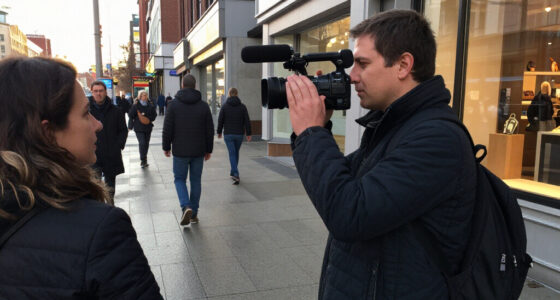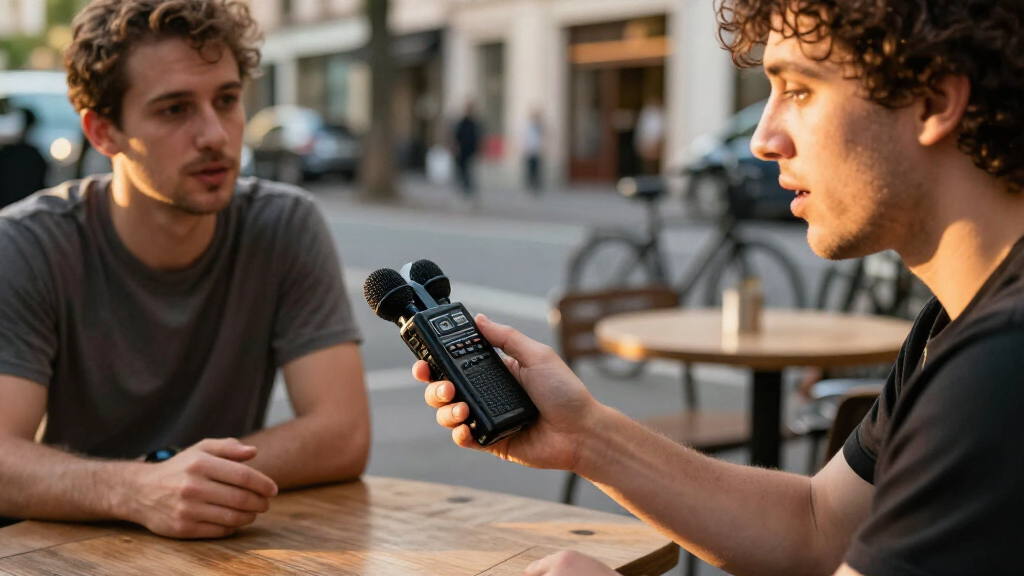

For most interviewers, the Zoom H1essential is the strongest overall choice in this roundup because its dedicated stereo recorder format is built for capturing sound, while the EVISTR L359 and HoTiyan 8GB offer simpler, feature-led alternatives. The main tradeoff is between a recorder designed around audio control and compact voice recorders that emphasize storage, voice activation, or transcription features. Those extras can suit notes and casual conversations, but they do not replace good microphone placement or clear recording controls. I compared all 15 options with interview use in mind, including usability, portability, storage, and practical limitations. Read on for the full breakdown and help matching a recorder to your interview setup.

Get everyday essentials delivered free with Prime
- Fast, free delivery on millions of items
- Prime Video, Amazon Music and more included
- Member-only deals all year
Key Takeaways
- Zoom H1essential stands apart as the dedicated stereo recording pick; most other models are compact voice recorders with simpler interview controls.
- EVISTR L359 pairs large stated storage with AI transcription features, but buyers should check how transcription works and whether it fits their workflow.
- Voice activation appears across several models, including the L810 and EVIDA 128GB; it can save space, though pauses in natural speech may affect a recording.
- The lineup includes multiple similarly positioned high-capacity recorders, so stated storage alone does little to separate them for interview use.
- Small models such as the Vandlion V15 favor discreet portability, while limited capacity models such as the HoTiyan 8GB make more sense for shorter, managed sessions.
| L810 64GB Magnetic Voice-Activated Recorder |  | Best for Flexible Placement | Storage: 64 GB | Recording format: MP3 | Battery life: Up to 28 hours | VIEW LATEST PRICE | See Our Full Breakdown |
| EVISTR L359 Digital Voice Recorder with 128GB Storage and AI Transcription |  | Best for Post-Interview Transcription | Storage capacity: 128 GB | Audio formats: MP3, WAV | Recording time: Up to 33 hours | VIEW LATEST PRICE | See Our Full Breakdown |
| Lymorvex 72GB Magnetic Voice Activated Recorder with AI Noise Reduction |  | Best for Long Recording Days | Memory storage: 72 GB | Maximum recording time: 9,800 hours at 192 kbps | Battery life: Up to 72 hours continuous recording | VIEW LATEST PRICE | See Our Full Breakdown |
| EVISTR L357 64GB Digital Voice Recorder with Playback |  | Best for Manual Audio Control | Storage: 64 GB | Recording formats: WAV, MP3 | Microphone: Built-in stereo | VIEW LATEST PRICE | See Our Full Breakdown |
| Tonfarb Digital Voice Recorder, 136 GB |  | Best for High-Capacity Archiving | Total storage: 136 GB (8 GB built-in and 128 GB TF card) | Recording formats: MP3, WAV | Maximum PCM bitrate: Up to 1536 kbps | VIEW LATEST PRICE | See Our Full Breakdown |
| HoTiyan 8GB Digital Voice Recorder with Voice Activation and MP3 Playback |  | Best for Simple Interview Notes | Storage: 8 GB | Recording formats: MP3, WAV | Microphone: Built-in stereo | VIEW LATEST PRICE | See Our Full Breakdown |
| Zoom H1essential Portable Stereo Recorder |  | Best Overall for Interview Audio | Microphone: Built-in X/Y stereo microphones | Recording format: WAV | Recording mode: 32-bit float | VIEW LATEST PRICE | See Our Full Breakdown |
| 16GB Digital Voice Recorder with Voice Activation |  | Best Value for Routine Interviews | Storage: 16 GB | Recording formats: MP3, WAV | Microphone: Built-in stereo | VIEW LATEST PRICE | See Our Full Breakdown |
| Tonfarb 64GB Digital Voice Recorder |  | Best for Long Interview Days | Memory: 64 GB | Recording formats: WAV, MP3 | Microphone: Built-in stereo | VIEW LATEST PRICE | See Our Full Breakdown |
| Xelarvex 72GB Digital Voice Recorder with Voice Activation and AI Noise Reduction |  | Best for Compact, High-Capacity Carry | Storage capacity: 72 GB | Microphone: Built-in | Maximum listed continuous recording: Up to 48 hours | VIEW LATEST PRICE | See Our Full Breakdown |
| Cappsu Digital Voice Recorder with Playback, 32GB Built-In Memory |  | Best for Simple Setup | Storage: 32 GB built-in | Recording bitrate: Up to 1536 Kbps | Recording modes: Continuous and voice activated | VIEW LATEST PRICE | See Our Full Breakdown |
| Vandlion V15 Mini Metal Voice Recorder, 32GB |  | Best for Long Interview Days | Storage: 32 GB | Recording time: 35–40 hours | Audio formats: MP3, WAV | VIEW LATEST PRICE | See Our Full Breakdown |
| EVIDA 64GB USB Digital Voice Recorder |  | Best for Straightforward File Handling | Storage capacity: 64 GB | Maximum recording time: 15 hours | Battery life: Up to 15 hours of continuous recording | VIEW LATEST PRICE | See Our Full Breakdown |
| EVIDA 128GB Digital Voice Recorder with Voice Activation and Playback |  | Best for High-Capacity Archiving | Storage capacity: 128 GB | Recording formats: WAV, MP3 | Recording quality: Up to 1536 Kbps | VIEW LATEST PRICE | See Our Full Breakdown |
| Sunlan 16GB Digital Voice Recorder with Playback |  | Best for On-Device Listening | Storage capacity: 16 GB | Recording format: WAV | Microphone: Built-in, mono, noise cancellation | VIEW LATEST PRICE | See Our Full Breakdown |
| portable audio recorders for interview | Microphone | Weight | Connectivity |
|---|---|---|---|
| L810 64GB Magnetic Voice-Activ | — | — | USB Type-C; smartphone connection via OTG adapter |
| EVISTR L359 Digital Voice Reco | Built-in, mono | 2.24 oz (65 g) | USB Type-C, wired OTG |
| Lymorvex 72GB Magnetic Voice A | Built-in | 1 oz | — |
| EVISTR L357 64GB Digital Voice | Built-in stereo | 2.24 oz | USB Type-C |
| Tonfarb Digital Voice Recorder | — | 97 g in description; 100 g in specifications | USB-C |
| HoTiyan 8GB Digital Voice Reco | Built-in stereo | — | Micro USB 2.0 |
| Zoom H1essential Portable Ster | Built-in X/Y stereo microphones | 92 g | USB-C |
| 16GB Digital Voice Recorder wi | Built-in stereo | 1.6 ounces | — |
| Tonfarb 64GB Digital Voice Rec | Built-in stereo | — | USB 2.0 |
| Xelarvex 72GB Digital Voice Re | Built-in | 1 ounce | — |
| Cappsu Digital Voice Recorder | — | 1.6 ounces | — |
| Vandlion V15 Mini Metal Voice | Built-in stereo | 23.27 g | USB Type-C |
| EVIDA 64GB USB Digital Voice R | Built-in, high-sensitivity | 14.7 g | — |
| EVIDA 128GB Digital Voice Reco | Built-in, mono, noise cancellation | — | USB 2.0 |
| Sunlan 16GB Digital Voice Reco | Built-in, mono, noise cancellation | — | — |
More Details on Our Top Picks
L810 64GB Magnetic Voice-Activated Recorder
The L810 makes the most sense for interviewers who need a small recorder they can position quickly: its magnetic base can attach to a metal surface, and the compact body is easy to carry between conversations. Voice activation can cut down on silent stretches, though its 45 dB threshold may miss softer speech or a quiet opening. Compared with the EVISTR L357, which offers a stereo microphone and adjustable gain, the L810 is simpler to place but gives less control over how it captures a room. Its 64GB storage and up to 28 hours of recording suit regular interview days, while the Lymorvex claims longer runtime for people who record for extended periods. I would choose the L810 for convenient placement, not for fine-tuning difficult audio.
Pros:- Magnetic base allows hands-free placement on suitable metal surfaces.
- Voice activation can reduce long silent sections in recordings.
- OTG smartphone connection supports on-the-go file management.
- Compact body and 3.5 mm headphone jack support portable use and listening.
Cons:- Voice activation may not start until sound exceeds the stated 45 dB threshold.
- The listed runtime is up to 28 hours, below the title’s 40-hour claim.
- Built-in microphone provides less capture flexibility than the EVISTR L357’s stereo mic and adjustable gain.
Best for: Interviewers who often work near metal tables or equipment and want a compact recorder with voice activation.
Not ideal for: People interviewing soft-spoken guests or needing adjustable microphone gain, since the 45 dB activation threshold and built-in mic offer limited control.
- Storage:64 GB
- Recording format:MP3
- Battery life:Up to 28 hours
- Charging time:2 hours
- Voice activation threshold:45 dB
- Recording angle:60°
- Connectivity:USB Type-C; smartphone connection via OTG adapter
- Dimensions:2.16 × 1.37 × 0.39 in
Our verdict“Choose the L810 if magnetic placement and simple phone file access matter more than adjustable interview audio controls.”
EVISTR L359 Digital Voice Recorder with 128GB Storage and AI Transcription
The L359 is the lineup’s clearest fit for interviewers who want help turning recordings into working notes: its app offers transcription in 113 languages, summaries, speaker identification, and other AI tools. That workflow sets it apart from the EVISTR L357, whose stereo microphone and adjustable gain favor direct control of the recording itself. The L359 instead combines a mono built-in microphone with voice activation, noise reduction, and up to 33 hours of recording. Its 128GB capacity leaves room for a large archive, though the transcription features depend on the AI DVR Link app, and phone transfers use wired OTG. For interviewers who need stereo capture or app-independent editing, the L357 is the more straightforward choice; the L359 earns its role when faster text-based follow-up matters.
Pros:- AI app supports transcription across 113 languages and offers summaries and speaker identification.
- 128GB storage accommodates a substantial interview archive.
- Voice activation, noise reduction, and password protection support practical field use.
- Records MP3 and WAV, with bitrate up to 3072 Kbps.
Cons:- AI tools require the AI DVR Link app.
- Phone transfers use wired OTG rather than Bluetooth.
- Mono built-in microphone is less suited to capturing stereo room context than the EVISTR L357.
Best for: Researchers and journalists who record many interviews and want app-based transcripts, speaker identification, and summaries.
Not ideal for: Interviewers who need stereo room capture or want to move files wirelessly without relying on a companion app and wired OTG.
- Storage capacity:128 GB
- Audio formats:MP3, WAV
- Recording time:Up to 33 hours
- Maximum recording bitrate:Up to 3072 Kbps
- Transcription languages:113
- Weight:2.24 oz (65 g)
- Microphone:Built-in, mono
- Connectivity:USB Type-C, wired OTG
Our verdict“Pick the L359 if app-based transcription and interview organization are priorities and mono recording fits your workflow.”
Lymorvex 72GB Magnetic Voice Activated Recorder with AI Noise Reduction
The Lymorvex is aimed at interviewers who value long stretches of recording and a recorder that can be placed without taking up much space. It claims up to 72 hours of battery life and weighs one ounce, giving it a runtime advantage over the L810 and its stated 28 hours. Its built-in magnet also supports hands-free placement on metal surfaces, while voice activation and timer modes can reduce wasted recording time. The product description’s claim of thousands of hours refers to maximum capacity at a specified bitrate; it does not mean every interview can be recorded at that level of quality. Unlike the EVISTR L357, it offers no adjustable gain levels. I would shortlist it for unattended or back-to-back sessions, but verify the nonstandard battery situation before relying on it for fieldwork.
Pros:- Claims up to 72 hours of continuous recording on one charge.
- One-ounce body and built-in magnet support discreet, hands-free placement.
- Voice activation and timer modes can limit unnecessary recording.
- Supports MP3 and WAV with USB-C connectivity.
Cons:- Storage is built in, with no expandable memory slot.
- The included battery is described as nonstandard and may be difficult to replace.
- Lacks the EVISTR L357’s adjustable recording gain for adapting to different interview settings.
Best for: Interviewers covering long events or multiple sessions who want a lightweight recorder with a claimed extended runtime.
Not ideal for: Professionals who need adjustable gain, expandable storage, or a readily replaceable standard battery.
- Memory storage:72 GB
- Maximum recording time:9,800 hours at 192 kbps
- Battery life:Up to 72 hours continuous recording
- Charging interface:USB Type-C; 2-hour fast charge
- Weight:1 oz
- Audio formats:MP3, WAV
- Microphone:Built-in
- Headphone jack:3.5 mm
Our verdict“Choose the Lymorvex for lightweight placement and its claimed long runtime, provided its fixed storage and battery fit your recording plans.”
EVISTR L357 64GB Digital Voice Recorder with Playback
For interviewers who want to adjust capture to the room, the L357 brings more useful controls than the simpler L810: its stereo microphone and seven recording-gain levels offer more ways to handle changing distance and volume. Seven voice-activation sensitivity levels also make it easier to tailor when recording starts, rather than relying on a single threshold. It records WAV or MP3, includes playback controls, and supports up to 32 hours of recording. Those choices make it a practical all-rounder for sit-down interviews where room context and review on the device matter. The tradeoff is that its 64GB storage is less than the L359’s 128GB, and it lacks that model’s transcription app tools. I would favor the L357 for direct recording control, not automated note generation.
Pros:- Built-in stereo microphone captures more room context than the mono EVISTR L359.
- Seven adjustable gain levels help adapt to different speaker distances and volumes.
- Seven voice-activation sensitivity levels allow more control over recording starts.
- WAV and MP3 support, playback controls, and USB-C transfer suit interview workflows.
Cons:- 64GB storage is smaller than the EVISTR L359’s 128GB.
- Does not list the L359’s AI transcription and summary features.
- Product information gives varying battery-life figures.
Best for: Interviewers who want stereo capture, adjustable gain, and on-device playback for checking recordings between sessions.
Not ideal for: People who prioritize app-based transcription or need more than 64GB of onboard storage for a large archive.
- Storage:64 GB
- Recording formats:WAV, MP3
- Microphone:Built-in stereo
- Recording gain:7 adjustable levels
- Voice activation:7 sensitivity levels
- Continuous recording time:Up to 32 hours
- Weight:2.24 oz
- Connectivity:USB Type-C
Our verdict“Choose the L357 if adjustable stereo recording and playback matter more to you than transcription tools or larger storage.”
Tonfarb Digital Voice Recorder, 136 GB
The Tonfarb pairs a large total capacity with a screen and playback features that help interviewers manage recordings without opening a phone app. Its 136GB total storage includes an 8GB internal memory and a 128GB TF card, giving it more listed space than the EVISTR L359. The card-based setup is useful for keeping a substantial archive, while one-touch recording and voice activation help capture a conversation quickly. It also lists PCM recording up to 1536 kbps, A-B repeat, and password protection. The tradeoff is that the advertised maximum MP3 capacity applies to MP3 format, and the product information gives two different weights. Compared with the L357’s stereo microphone and adjustable gain, the Tonfarb’s strengths are capacity and playback tools rather than detailed microphone control.
Pros:- 136GB total storage includes an 8GB built-in memory and 128GB TF card.
- One-touch recording can start capture when the device is powered off.
- PCM recording supports bitrates up to 1536 kbps.
- LCD screen, A-B repeat, USB-C transfer, and password protection support file handling.
Cons:- The advertised 9,775-hour capacity applies to MP3 recording.
- Listed weight differs between the description and specifications.
- Does not list the EVISTR L357’s stereo microphone or adjustable recording gain.
Best for: Interviewers who keep a large local archive and want a screen, repeat playback, and a supplied memory card.
Not ideal for: Buyers who need a clearly stated weight or prioritize adjustable microphone controls and stereo capture.
- Total storage:136 GB (8 GB built-in and 128 GB TF card)
- Recording formats:MP3, WAV
- Maximum PCM bitrate:Up to 1536 kbps
- Maximum recording time per charge:Up to 68 hours
- Battery capacity:1100 mAh
- Screen:1.44 inches
- Weight:97 g in description; 100 g in specifications
- Connectivity:USB-C
Our verdict“Choose the Tonfarb if archive capacity and on-device playback tools matter more than stereo capture or precise weight information.”
HoTiyan 8GB Digital Voice Recorder with Voice Activation and MP3 Playback
The HoTiyan H-10001 is suited to short, straightforward interviews where easy file handling matters more than advanced recording controls. Its voice activation can limit long stretches of silence, while MP3 and WAV recording gives some choice between smaller files and a format suited to editing. Compared with the 16GB Digital Voice Recorder with Voice Activation, this model has half the stated storage, so it is a better fit for occasional sessions than a large archive of interviews. A-B repeat and variable-speed playback can help when reviewing a quote, and timestamped filenames make recordings easier to sort. The tradeoffs are its 8GB capacity and a maximum recording-time claim that depends on recording quality; playback is also listed at up to eight hours with earphones.
Pros:- Voice activation can reduce silent stretches in recordings
- Records in MP3 or WAV and transfers files over USB
- A-B repeat and variable playback speed support quote review
- Timestamped filenames help organize recordings
Cons:- 8GB storage is limited beside the 16GB voice-activation model
- Advertised maximum recording time varies with recording quality
- Playback is listed for up to eight hours with earphones
Best for: Students and occasional interviewers who want a compact recorder for short sessions and basic playback review
Not ideal for: Journalists archiving frequent or lengthy interviews who need more storage or dependable recording-time estimates
- Storage:8 GB
- Recording formats:MP3, WAV
- Microphone:Built-in stereo
- Maximum listed recording time:Up to 128 hours
- Continuous recording:Up to 20 hours
- Battery:Rechargeable 3.6V 300mAh lithium-ion
- Connectivity:Micro USB 2.0
- Headphone jack:3.5 mm
Our verdict“Choose the HoTiyan for occasional interviews and simple playback tools, but pick a higher-capacity recorder for a steady interview workload.”
Zoom H1essential Portable Stereo Recorder
For interviews where the recording itself matters most, I’d put the Zoom H1essential ahead of the pocket voice recorders in this group. Its X/Y stereo microphones are designed to capture a more spatial sound, while 32-bit float recording gives more headroom when a speaker suddenly gets louder. That makes it a stronger choice for variable interview settings than the HoTiyan H-10001, whose listed features focus more on voice activation and playback tools. The Zoom also works as a USB-C microphone with compatible computers and mobile devices, and spoken menu guidance can make its controls more accessible. The tradeoffs are practical: standalone recording needs an SD card, and power comes from two AAA batteries. Its stated recording time is up to 10 hours, shorter than some listed claims for simpler recorders.
Pros:- X/Y stereo microphones capture spatial detail
- 32-bit float recording helps accommodate changing speaker volume
- USB-C microphone mode works with compatible computers and mobile devices
- Spoken menu guidance supports an accessible workflow
Cons:- An SD card is required for standalone recording
- Requires two AAA batteries
- Listed recording time is up to 10 hours
Best for: Reporters and independent interviewers who want stereo WAV capture, level flexibility, and a recorder that can also serve as a USB microphone
Not ideal for: Buyers who want built-in storage, long unattended sessions, or a recorder that avoids replaceable batteries
- Microphone:Built-in X/Y stereo microphones
- Recording format:WAV
- Recording mode:32-bit float
- Storage:SD card; maximum memory capacity 1 TB
- Connectivity:USB-C
- Power:Two AAA batteries
- Maximum listed recording time:Up to 10 hours
- Weight:92 g
Our verdict“Choose the Zoom H1essential when stereo capture and handling changing voices matter more than built-in storage or long listed runtime.”
16GB Digital Voice Recorder with Voice Activation
The 16GB Digital Voice Recorder makes sense for interviewers who want a familiar, compact recorder with more room than the HoTiyan 8GB model. Its built-in stereo microphone records MP3 or WAV, and voice activation can cut down on silence between answers. That combination suits lectures, student interviews, and routine reporting where a simple file workflow is enough. The listed 1,120-hour capacity is tied to the lowest bitrate, so it should not be read as the expected length for higher-quality interview audio; the 192 kbps maximum bitrate is a meaningful limit for buyers who want more recording headroom. Noise reduction and variable-speed playback add useful review tools, but this recorder does not offer the Zoom H1essential’s 32-bit float capture or X/Y microphone positioning. Battery life is listed at up to 20 recording hours per charge.
Pros:- 16GB storage doubles the HoTiyan H-10001’s stated capacity
- Voice activation can reduce silence in recordings
- Records MP3 or WAV and includes noise reduction
- Compact 1.6-ounce body with rechargeable battery
Cons:- The 1,120-hour figure applies at the lowest listed bitrate
- Maximum listed bitrate is 192 kbps
- Recording battery life is listed at up to 20 hours per charge
Best for: Students, researchers, and frequent note-takers who want more storage than an 8GB recorder and straightforward voice activation
Not ideal for: Interviewers who need higher recording bitrates, stereo microphone positioning, or maximum flexibility for unpredictable volume
- Storage:16 GB
- Recording formats:MP3, WAV
- Microphone:Built-in stereo
- Maximum listed recording bitrate:192 kbps
- Maximum listed recording time:Up to 1,120 hours at the lowest listed bitrate
- Continuous recording battery life:Up to 20 hours
- Battery:Rechargeable 3.6V 300mAh lithium-ion
- Weight:1.6 ounces
Our verdict“Choose this model for routine interviews and extra capacity over the HoTiyan, but look to the Zoom H1essential for more demanding audio capture.”
Tonfarb 64GB Digital Voice Recorder
The Tonfarb 64GB Digital Voice Recorder is aimed at people who need to capture many sessions before transferring files. Its 64GB memory and one-click recording make it practical for a day of interviews, while WAV and MP3 support covers different file-size needs. The listing gives a maximum PCM bitrate of 1536 kbps, a useful option for higher-detail recordings, though its longest runtime claim is specifically tied to low-bitrate 32 kbps MP3. Compared with the 16GB Digital Voice Recorder with Voice Activation, Tonfarb offers much more stated storage and up to 48 hours of continuous use under that low-bitrate condition. The tradeoff is uncertainty around power: the product details mention both a built-in 600mAh battery and an included AAA battery. I’d treat runtime planning cautiously until that discrepancy is clarified.
Pros:- 64GB memory provides more room than the 16GB voice recorder
- One-click recording supports quick starts
- WAV and MP3 recording with a listed maximum PCM bitrate of 1536 kbps
- Voice activation, noise reduction, and playback tools are included
Cons:- Battery details conflict between a built-in 600mAh battery and an included AAA battery
- The 48-hour continuous-use claim is listed for 32 kbps MP3
- Longer recording duration depends on lower-bitrate settings
Best for: Interviewers covering multiple sessions who want substantial onboard storage and one-click recording
Not ideal for: People who need clearly specified battery arrangements or reliable long-session estimates at higher audio quality
- Memory:64 GB
- Recording formats:WAV, MP3
- Microphone:Built-in stereo
- Maximum PCM bitrate:1536 kbps
- Continuous use:Up to 48 hours at 32 kbps MP3
- Battery information:Listing states 600mAh built-in battery and one included AAA battery
- Screen:1.44 inches
- Connectivity:USB 2.0
Our verdict“Choose Tonfarb for high-capacity interview days if its unclear battery details are acceptable for your workflow.”
Xelarvex 72GB Digital Voice Recorder with Voice Activation and AI Noise Reduction
At a listed one ounce, the Xelarvex is the lightest-feeling choice on paper among these five, with 72GB storage for people who want a recorder that can stay in a bag or pocket between interviews. Voice activation is useful for reducing silent gaps, and USB-C offers a current transfer connection. Its AI noise reduction may appeal in less controlled settings, but the manufacturer’s 97% ambient-noise reduction claim is not enough by itself to predict how voices will sound in a real interview. Compared with the Tonfarb 64GB Digital Voice Recorder, Xelarvex lists slightly more storage and a lighter body, while Tonfarb provides more detail about formats and maximum PCM bitrate. Xelarvex’s duration claims also conflict, and recordings are saved in files of up to two hours, which may interrupt long sessions.
Pros:- Listed weight is just 1 ounce
- 72GB stated storage capacity
- Voice activation can limit silent gaps
- USB-C interface and 3.5 mm headphone jack
Cons:- Storage-duration claims conflict between the title and description
- Recordings are saved in files of up to two hours
- AI noise-reduction performance is presented as a manufacturer claim
Best for: Mobile interviewers who prioritize a very light recorder, USB-C, and ample stated storage for shorter sessions
Not ideal for: People recording uninterrupted interviews longer than two hours or buyers who need clear, consistent storage and runtime specifications
- Storage capacity:72 GB
- Microphone:Built-in
- Maximum listed continuous recording:Up to 48 hours
- Interface:USB Type-C
- Headphone jack:3.5 mm
- Weight:1 ounce
- Battery charge time:1.5 hours
- Recording file duration:Up to 2 hours per file
Our verdict“Choose Xelarvex for a very light, high-capacity recorder for shorter interviews, but favor Tonfarb when detailed format specifications matter more.”
Cappsu Digital Voice Recorder with Playback, 32GB Built-In Memory
The Cappsu V02 suits interviewers who want to start recording quickly without adding a memory card or sorting through menus. Its one-click recording and included external microphone offer a straightforward path to capturing a sit-down conversation, while voice activation can reduce empty stretches in quieter interviews. Compared with the Vandlion V15, Cappsu is lighter and includes an external mic, but its continuous recording limit is shorter and its listed specs do not mention a built-in stereo microphone. The 32GB capacity should cover routine interviews, though buyers recording long sessions back to back will need to manage charging and file transfers. For the clearest pickup, the recorder or supplied mic may need to sit close to the speaker.
Pros:- 32GB of built-in storage avoids a separate memory card
- One-click recording keeps setup simple
- Voice activation can reduce silence and conserve storage
- Includes an external microphone and earphones
Cons:- Continuous recording is limited to up to 20 hours
- Best results may require placing the recorder or mic close to the speaker
Best for: Interviewers who want a lightweight recorder with one-button operation and an included external microphone for close-mic conversations
Not ideal for: People recording long, uninterrupted interview days who need more than 20 hours of continuous operation per charge
- Storage:32 GB built-in
- Recording bitrate:Up to 1536 Kbps
- Recording modes:Continuous and voice activated
- Battery life:Up to 20 hours continuous; up to 50 hours voice activated
- Dimensions:4.16 × 1.46 × 0.47 inches
- Weight:1.6 ounces
- Interface:USB Type-C
- Included accessories:USB-C cable, earphones, external microphone, user manual
Our verdict“Choose the Cappsu V02 for uncomplicated, close-range interviews where quick operation and an included external mic matter more than extended continuous recording.”
Vandlion V15 Mini Metal Voice Recorder, 32GB
For interviewers who may leave a recorder running through several sessions, the Vandlion V15 stands out with a listed 35–40 hours of recording time per charge. Its built-in stereo microphone and aluminum body give it a more purpose-built feel than the simpler EVIDA 64GB USB recorder, though the EVIDA offers twice the storage. The V15’s compact size makes it easy to carry between interviews, and USB-C simplifies file transfer. Voice activation is available, but it is off by default, so there is a setup step before it can help trim quiet sections. Playback also requires a compatible device, which makes quick on-recorder listening less convenient. I’d favor it when recording endurance matters more than built-in playback or maximum storage.
Pros:- Listed 35–40 hours of recording time per charge
- Built-in stereo microphone
- Compact aluminum design weighs 23.27 g
- USB-C supports file transfer and playback
Cons:- Voice activation is off by default and needs setup
- Playback requires connection to a compatible device
- 32GB storage is less than the EVIDA 64GB USB recorder
Best for: Journalists and researchers recording multiple interviews between charging opportunities who value a compact stereo-mic recorder
Not ideal for: Interviewers who want to review recordings directly on the recorder or need voice activation to work without initial setup
- Storage:32 GB
- Recording time:35–40 hours
- Audio formats:MP3, WAV
- Microphone:Built-in stereo
- Connectivity:USB Type-C
- Headphone jack:3.5 mm
- Dimensions:0.23 × 1.25 × 2.1 inches
- Weight:23.27 g
Our verdict“Pick the Vandlion V15 if long recording stretches and a built-in stereo microphone matter more than onboard playback and larger storage.”
EVIDA 64GB USB Digital Voice Recorder
The EVIDA 64GB USB recorder is a practical fit for interviewers who want simple recording and a familiar way to move files to a computer. Its one-switch operation reduces setup friction, and the recorder doubles as a USB flash drive for transfers on Windows and Mac. That makes it easier to manage recordings than the Vandlion V15, whose playback requires connection to a compatible device. EVIDA also provides more storage than the 32GB Cappsu V02, but its battery lasts up to 15 hours, so it is less suited to long days of continuous interviews. The description lists a built-in microphone with noise reduction, but not a stereo setup or recording formats. Choose it for uncomplicated, computer-based workflows rather than extended field sessions.
Pros:- 64GB storage provides more room than the Cappsu V02
- One-switch operation simplifies starting and saving recordings
- USB flash drive function supports computer file transfers
- Compact 14.7 g design
Cons:- Continuous battery life is limited to up to 15 hours
- USB 2.0 interface is less convenient than the USB-C connection on the Vandlion V15
- Product data does not specify recording formats or stereo microphone support
Best for: Students, researchers, and interviewers who record shorter sessions and regularly transfer files to a Windows or Mac computer
Not ideal for: Field interviewers recording full days without access to charging, or buyers who specifically need a stated stereo microphone or audio format
- Storage capacity:64 GB
- Maximum recording time:15 hours
- Battery life:Up to 15 hours of continuous recording
- Charging time:About 2 hours
- Microphone:Built-in, high-sensitivity
- Hardware interface:USB 2.0
- Headphone jack:3.5 mm
- Weight:14.7 g
Our verdict“Choose the EVIDA 64GB if your interview workflow centers on simple recording and computer transfers, and your sessions fit within its battery life.”
EVIDA 128GB Digital Voice Recorder with Voice Activation and Playback
When interviews accumulate faster than they can be transferred, the EVIDA VR01’s 128GB storage gives it a clear role in this group. It offers a listed maximum recording time of 9,296 hours and supports WAV or MP3, giving buyers room to keep extensive audio on the device. Compared with the Sunlan 16GB recorder, it provides far more capacity and adjustable voice activation, but the Sunlan has a 3.5 mm headphone jack while the EVIDA does not. Its built-in mono microphone and noise cancellation are aimed at speech capture, and the screen, playback, folders, and password protection support file management. The tradeoffs are the missing headphone jack and a listed requirement for one C battery, which may complicate interview-day power planning.
Pros:- 128GB storage and up to 9,296 hours of listed recording time
- Records in WAV or MP3 at up to 1536 Kbps
- Six voice activation sensitivity levels
- Playback, folder organization, password protection, and a 1.5-inch screen
Cons:- No headphone jack for wired monitoring
- Listed specifications call for one C battery
- Built-in microphone is mono
Best for: Researchers and reporters who keep large interview archives on the recorder and want WAV/MP3 options, playback, and folder organization
Not ideal for: Interviewers who need headphone monitoring through a 3.5 mm jack or prefer a rechargeable recorder with clearly stated battery details
- Storage capacity:128 GB
- Recording formats:WAV, MP3
- Recording quality:Up to 1536 Kbps
- Battery life:Up to 54 hours
- Recording time:Up to 9,296 hours
- Microphone:Built-in, mono, noise cancellation
- Voice activation:6 sensitivity levels
- Connectivity:USB 2.0
- Screen size:1.5 inches
Our verdict“Choose the EVIDA VR01 for managing a large on-device interview archive, provided its battery requirement and lack of a headphone jack fit your workflow.”
Sunlan 16GB Digital Voice Recorder with Playback
The Sunlan 16GB recorder is the clearest choice here for interviewers who want to check a recording on the device itself. It has a built-in speaker and 3.5 mm headphone jack, giving it a playback advantage over the EVIDA VR01, which lacks a headphone jack. Voice-activated recording can also help avoid storing long quiet stretches, while the WAV format and listed 1536 kbps bitrate support detailed speech capture. Its 16GB capacity is modest beside the EVIDA’s 128GB, so it suits a smaller active batch of interviews rather than a long-term archive. The listed playback time is seven hours, and the microphone is mono. I’d choose it for quick field review and simple operation, not for stereo capture or extensive storage.
Pros:- Built-in speaker and 3.5 mm headphone jack support on-device review
- Voice activation can reduce recording of silence
- WAV recording with listed 1536 kbps bitrate
- USB file transfer and 16GB built-in storage
Cons:- 16GB storage is much smaller than the EVIDA VR01’s 128GB
- Mono microphone does not capture stereo
- Playback time is listed as seven hours
Best for: Interviewers who need to review clips in the field through a built-in speaker or wired headphones
Not ideal for: Researchers maintaining a large on-device archive or buyers who need stereo interview recording
- Storage capacity:16 GB
- Recording format:WAV
- Microphone:Built-in, mono, noise cancellation
- Recording bitrate:1536 kbps
- Recording time:More than 30 hours
- Playback time:7 hours
- Battery life:30 hours
- Headphone jack:3.5 mm
Our verdict“Pick the Sunlan if checking interviews directly through a speaker or headphones is more useful to you than large storage or stereo recording.”
How We Picked
I ranked these recorders by how well their stated features support real interview needs: capturing intelligible speech, starting and managing recordings without fuss, carrying the device between locations, and keeping enough audio on hand. I gave more weight to purpose-built recording controls and a clear role in an interview kit than to headline storage figures or feature claims that may matter more for general note-taking.
The Zoom H1essential leads because it is the clearest dedicated stereo recorder in this group. The EVISTR L359 follows for buyers drawn to a feature-rich voice recorder, while compact and simpler models earn places for specific needs such as discreet carry or straightforward operation. Similar high-capacity models rank lower when the product details provided do not establish a distinct interview advantage. Every pick has a tradeoff: buyers should confirm recording format, microphone arrangement, file transfer, and transcription requirements before relying on a feature for paid or important interviews.
| portable audio recorders for interview | Connectivity | Microphone |
|---|---|---|
| L810 64GB Magnetic Voice-Activ | USB Type-C; smartphone connection via OTG adapter | — |
| EVISTR L359 Digital Voice Reco | USB Type-C, wired OTG | Built-in, mono |
| Lymorvex 72GB Magnetic Voice A | — | Built-in |
| EVISTR L357 64GB Digital Voice | USB Type-C | Built-in stereo |
| Tonfarb Digital Voice Recorder | USB-C | — |
| HoTiyan 8GB Digital Voice Reco | Micro USB 2.0 | Built-in stereo |
| Zoom H1essential Portable Ster | USB-C | Built-in X/Y stereo microphones |
| 16GB Digital Voice Recorder wi | — | Built-in stereo |
| Tonfarb 64GB Digital Voice Rec | USB 2.0 | Built-in stereo |
| Xelarvex 72GB Digital Voice Re | — | Built-in |
| Cappsu Digital Voice Recorder | — | — |
| Vandlion V15 Mini Metal Voice | USB Type-C | Built-in stereo |
| EVIDA 64GB USB Digital Voice R | — | Built-in, high-sensitivity |
| EVIDA 128GB Digital Voice Reco | USB 2.0 | Built-in, mono, noise cancellation |
| Sunlan 16GB Digital Voice Reco | — | Built-in, mono, noise cancellation |
Factors to Consider When Choosing Portable Audio Recorders For Interviews
Choosing a portable interview recorder starts with the way you conduct conversations, not the largest number on a product listing. I would match the device to the interview setting, recording length, and how much control you need while someone is speaking.
Match the Microphone Setup to the Room
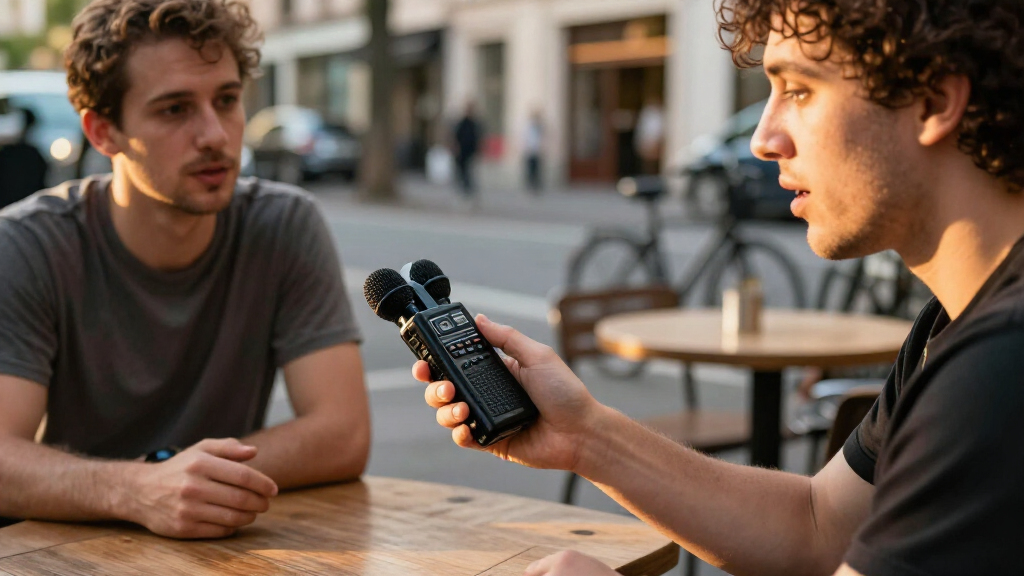
Room acoustics and microphone placement often shape interview quality more than storage capacity. For a quiet, close conversation, a compact recorder may capture clear speech if it can sit near both speakers. A wide table, noisy café, or two-person interview can call for a stereo setup and careful positioning. Check whether the product specifies its microphone arrangement and supported recording formats instead of inferring quality from its name. A recorder with simple controls can still produce poor results if it sits far from the speakers. If interviews matter, plan to monitor a short sample in the actual room before the conversation begins.
Treat Voice Activation as a Workflow Choice
Voice activation can reduce long stretches of silence and help conserve storage, but it may cut off quiet opening words or pauses if its threshold is not suited to the room. That risk matters in interviews, where a speaker may think before answering or lower their voice. Continuous recording is more dependable when every response must be preserved, though it creates longer files to review. Do not assume that a voice-activated feature automatically creates clean transcripts or separates speakers. If you choose activation, test it with the softest expected speaker and the room’s background noise. Keep a backup recording when a missed sentence would be costly.
Plan Storage Around Session Length and File Handling
Large stated capacities can be useful for multi-day reporting, but the required space depends on recording format, quality settings, and how often files are transferred. Listings may use storage figures without explaining the resulting recording time, so check the manual or product documentation before a long assignment. Build a file routine that includes naming recordings, copying them to another device, and confirming the copies open. A recorder that connects directly by USB may simplify transfers, but verify compatibility with the computer or phone you use. Avoid waiting until storage is nearly full to discover that recordings are difficult to sort or export.
Check the Controls You Need During an Interview
Interviewers benefit from a visible recording indicator, an accessible start and stop control, and a way to confirm that audio is being captured. Small buttons or buried menus can create uncertainty when you need to stay focused on the guest. Playback is useful for checking a test clip, though it does not replace monitoring during recording. Before buying, look for clear documentation about recording status, file formats, and how to resume after a pause. For beginners, a short setup routine is often more valuable than extra modes. Practice that routine until it works without taking attention away from the conversation.
Decide Whether Transcription Features Fit Your Process
Transcription claims can save time, but buyers should identify whether processing happens on the recorder, through an app, or in a separate service. Check language support, export options, connectivity requirements, and any limits on use before making transcription a deciding factor. Automated text can mishear names, accents, overlapping speech, and technical terms, so important quotes still need audio review. If you already use a transcription tool, a recorder with reliable file transfer may fit better than a model whose main appeal is bundled transcription. Keep the original audio as the authoritative record. This is especially useful when interviews support reporting, research, or archival work.
Choose Portability Without Losing Practical Access
A tiny recorder is easier to carry discreetly, but its size can make controls harder to operate and its placement less obvious to everyone in the conversation. Check how it is charged, how recordings are retrieved, and whether its body or attachment method suits the way you work. Metal construction may feel reassuring in a pocket, while a larger dedicated recorder can be easier to handle and position on a table. For travel interviews, consider the full kit: cables, headphones, spare power, and a way to store the device safely. The best portable option is the one you can set up consistently, not simply the smallest one.
Frequently Asked Questions
Is a dedicated stereo recorder better than a voice recorder for interviews?
It depends on whether you need more control over capturing a room or a simple device for spoken notes. The Zoom H1essential is the clearest dedicated stereo option in this roundup, while models such as the EVISTR L357 focus on straightforward voice recording and playback. A stereo recorder can suit conversations with multiple speakers or more ambient context, but it still needs good placement. For one-on-one interviews in a quiet room, a simpler recorder may be adequate. Compare recording formats and microphone details before deciding based on product category alone.
Can I rely on voice activation for a full interview?
I would be cautious when every word matters. Voice activation may miss quiet speech, the beginning of an answer, or low-volume pauses, depending on its threshold and the room. It can be useful for informal notes or situations where silence creates unwieldy files. Test it with the actual speakers and background noise before an important session. For an interview that cannot be repeated, continuous recording or a separate backup gives more confidence.
Is built-in AI transcription enough to choose the EVISTR L359?
It can be a deciding convenience if its workflow fits the way you handle interviews, but the feature name alone does not show what you will receive. Check whether transcription requires an app, internet access, an account, or a separate service, and confirm supported languages and file export. Automated text may misidentify names or overlapping speech, so keep and review the original recording. If you already have a transcription workflow, storage and simple file transfer may matter more. The L359 is most compelling when its transcription path is both accessible and compatible with your process.
How much storage do I need for interview recordings?
There is no useful capacity target without knowing the recording format, quality setting, session length, and how often you can offload files. The roundup ranges from 8GB on the HoTiyan model to larger stated capacities on models such as the EVISTR L359 and Tonfarb 136 GB. Those figures do not by themselves tell you how many hours fit. Check the maker’s recording-time guidance for your chosen settings, then leave room for more sessions than planned. Regularly copy recordings to a second location rather than treating the recorder as long-term storage.
What should I prioritize for interviews in noisy locations?
Prioritize microphone placement, a test recording, and the ability to check that speech is audible before the interview starts. A recorder’s noise-reduction label does not guarantee that it can separate voices from nearby traffic, music, or crowd noise. Sit close to the speakers, choose the quietest available location, and use headphones to review a sample if the setup allows. A dedicated stereo recorder such as the Zoom H1essential offers a different approach from the compact voice recorders in this list, but neither removes the need for good positioning. When the setting is unpredictable, make a backup recording if possible.
Conclusion
For the best overall fit, I would start with the Zoom H1essential, the lineup’s clearest dedicated stereo recorder. The EVISTR L359 is the feature-led choice for buyers who want to explore built-in transcription, while the best beginner fit is a simpler model such as the HoTiyan 8GB for short, straightforward sessions. If discreet carry is your priority, the Vandlion V15 has the compact role; for longer recording schedules, compare high-capacity choices such as the Tonfarb 136 GB and EVISTR L359 against their file-transfer details. The best value depends on which of those practical needs you actually have, since stated capacity alone does not separate the many similar voice recorders here. Choose the device whose controls, format, and file workflow you can confirm before the interview begins.
Halloween Picks

JOYIN 5-Foot Halloween Animatronic Drinking Skeleton

Star Wars Yoda and R2-D2 Inflatable Halloween Decor, 6 ft with LEDs, Indoor/Outdoor

Vexalify 11-Inch Halloween Pumpkin Fog Machine with 12-Color Lights
As an affiliate, we earn on qualifying purchases.