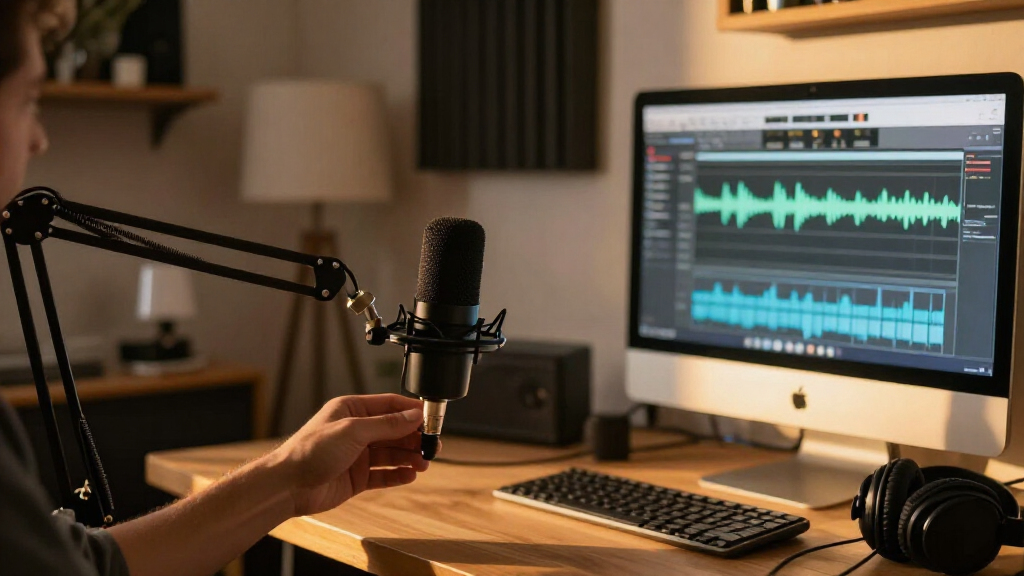
For most solo podcasters, the Shure MV7+ is the strongest all-around desktop microphone here, thanks to its dynamic design and USB-C and XLR connections. The FIFINE K688S is a more straightforward USB/XLR alternative with a desktop stand, while the Logitech Blue Yeti offers multiple pickup patterns for people recording more than one voice. The main choice is between dynamic mics, which can help limit room noise, and condenser mics, which can suit quieter rooms and flexible recording. You’ll also need to weigh plug-and-play convenience against upgrade options and decide whether a stand or boom arm fits your desk. Read on for the full breakdown and picks for different setups.

Get everyday essentials delivered free with Prime
- Fast, free delivery on millions of items
- Prime Video, Amazon Music and more included
- Member-only deals all year
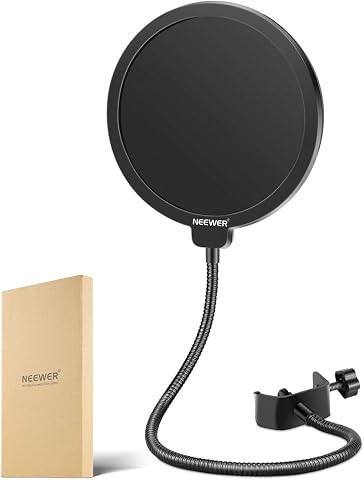
Complete the kit


Key Takeaways
- The Shure MV7+ leads for solo podcasting because it combines a dynamic design with both USB-C and XLR connections, giving buyers a simple starting setup and room to expand.
- FIFINE’s dynamic USB/XLR models fill different desk needs: the K688S includes a desktop stand, while the AM8 and K688CT listings pair the mic with a boom arm.
- The Blue Yeti models stand apart for pickup flexibility with four patterns, which can help with shared conversations but may be unnecessary for a single-speaker show.
- Several lower-complexity picks are USB condenser microphones, including the K669B and TC-777; they simplify connection but offer less of the dynamic-and-XLR upgrade path found in the podcast-focused options.
- The MAONO PD200W is the lineup’s wireless outlier, while the Shure MV6 Gen 2 focuses on USB-C use; choose these around your need for wireless freedom or a direct computer connection.
| Shure MV7+ USB-C & XLR Podcast Dynamic Mic with Stand – Black |  | Best Overall | Connectivity: USB-C, XLR | Microphone type: Dynamic | Polar pattern: Unidirectional | VIEW LATEST PRICE | See Our Full Breakdown |
| FIFINE AmpliGame AM8T Dynamic USB/XLR Gaming Microphone Kit with Boom Arm |  | Best Complete Desk Kit | Connectivity: USB, XLR | Microphone type: Dynamic | Polar pattern: Unidirectional (cardioid) | VIEW LATEST PRICE | See Our Full Breakdown |
| FIFINE K669B USB Condenser Microphone |  | Best Simple USB Starter | Connectivity: USB Type-A, USB Type-C | Cable: USB-B to USB-A/C, 6.5 ft | Polar pattern: Unidirectional | VIEW LATEST PRICE | See Our Full Breakdown |
| FIFINE AmpliTank K688CT USB/XLR Dynamic Podcast Microphone Kit with Boom Arm | 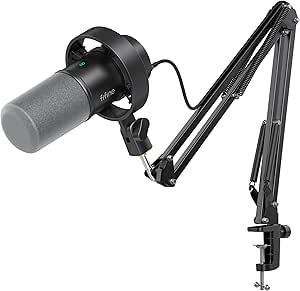 | Best for a Flexible Upgrade Path | Connectivity: USB, XLR | Microphone type: Dynamic | Polar pattern: Cardioid (unidirectional) | VIEW LATEST PRICE | See Our Full Breakdown |
| FIFINE AmpliGame A6V USB Gaming Microphone, Condenser RGB Mic for Streaming |  | Best for a Gaming and Podcast Desk | Connectivity: USB | Microphone type: Condenser | Polar pattern: Bidirectional in specs; cardioid in description | VIEW LATEST PRICE | See Our Full Breakdown |
| ZealSound K66 USB Condenser Microphone |  | Best for Multi-Device Flexibility | Microphone type: USB condenser | Pickup pattern: Cardioid | Frequency response: 40 Hz–18 kHz | VIEW LATEST PRICE | See Our Full Breakdown |
| LIANGSTAR K6 USB Computer Microphone |  | Best for Flexible Desk Positioning | Model: K6 | Connectivity: USB | Polar pattern: Omnidirectional | VIEW LATEST PRICE | See Our Full Breakdown |
| TONOR TC-777 USB Cardioid Condenser Microphone | 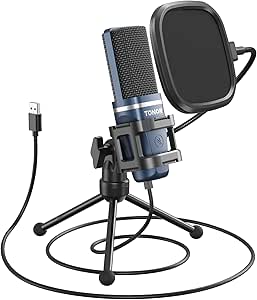 | Best Complete Starter Kit | Connectivity: USB Type-A | Polar pattern: Unidirectional (cardioid) | Compatible devices: PC, laptop, PS4, and PS5 | VIEW LATEST PRICE | See Our Full Breakdown |
| USB Condenser Gaming Microphone with RGB Lighting |  | Best for a Ready-to-Use Gaming Desk | Connectivity: USB | Polar pattern: Cardioid (unidirectional) | Frequency range: 20–2000 Hz (as listed) | VIEW LATEST PRICE | See Our Full Breakdown |
| FIFINE K688S Dynamic Podcast Microphone |  | Best for USB-to-XLR Upgrades | Microphone type: Dynamic | Connectivity: USB-C and XLR | Polar pattern: Unidirectional (cardioid) | VIEW LATEST PRICE | See Our Full Breakdown |
| FIFINE AmpliGame AM8 USB/XLR Dynamic Microphone |  | Best for a Flexible Starter Setup | Connectivity: USB, XLR | Microphone type: Dynamic | Polar pattern: Unidirectional cardioid | VIEW LATEST PRICE | See Our Full Breakdown |
| Shure MV6 Gen 2 USB-C Microphone for Gaming, Streaming, and Recording |  | Best for Speech Cleanup | Connectivity: USB | Connector: USB Type-C | Form factor: Desktop | VIEW LATEST PRICE | See Our Full Breakdown |
| Logitech Blue Yeti USB Microphone with Blue VO!CE, Four Pickup Patterns, Midnight Blue |  | Best for Multi-Format Recording | Connectivity: USB | Connector: USB Type-A | Pickup patterns: Cardioid, omnidirectional, bidirectional, stereo | VIEW LATEST PRICE | See Our Full Breakdown |
| MAONO PD200W Hybrid Wireless Dynamic Podcast Microphone |  | Best for Wireless Two-Person Shows | Connectivity: Wireless, USB, XLR | Microphone type: Dynamic | Polar pattern: Unidirectional cardioid | VIEW LATEST PRICE | See Our Full Breakdown |
| Logitech Blue Yeti USB Microphone with Blue VO!CE Effects, Four Pickup Patterns, and Desktop Stand |  | Best for On-Desk Monitoring | Connectivity: USB | Polar patterns: Cardioid, omnidirectional, bidirectional, stereo | Microphone form factor: Tri-capsule array | VIEW LATEST PRICE | See Our Full Breakdown |
| desktop podcast microphone | Connectivity | Polar pattern | Frequency response | Microphone type |
|---|---|---|---|---|
| Shure MV7+ USB-C & XLR Podcast | USB-C, XLR | Unidirectional | 50 Hz | Dynamic |
| FIFINE AmpliGame AM8T Dynamic | USB, XLR | Unidirectional (cardioid) | — | Dynamic |
| FIFINE K669B USB Condenser Mic | USB Type-A, USB Type-C | Unidirectional | 20 Hz–20 kHz | — |
| FIFINE AmpliTank K688CT USB/XL | USB, XLR | Cardioid (unidirectional) | 50 Hz–16 kHz | Dynamic |
| FIFINE AmpliGame A6V USB Gamin | USB | Bidirectional in specs; cardioid in description | — | Condenser |
| ZealSound K66 USB Condenser Mi | USB; USB-C and Lightning adapters included | — | 40 Hz–18 kHz | USB condenser |
| LIANGSTAR K6 USB Computer Micr | USB | Omnidirectional | — | — |
| TONOR TC-777 USB Cardioid Cond | USB Type-A | Unidirectional (cardioid) | 20 kHz | — |
| USB Condenser Gaming Microphon | USB | Cardioid (unidirectional) | — | — |
| FIFINE K688S Dynamic Podcast M | USB-C and XLR | Unidirectional (cardioid) | 16 kHz | Dynamic |
| FIFINE AmpliGame AM8 USB/XLR D | USB, XLR | Unidirectional cardioid | 50 Hz–16 kHz | Dynamic |
| Shure MV6 Gen 2 USB-C Micropho | USB | — | — | — |
| Logitech Blue Yeti USB Microph | USB | — | 20 Hz–20 kHz | — |
| MAONO PD200W Hybrid Wireless D | Wireless, USB, XLR | Unidirectional cardioid | — | Dynamic |
| Logitech Blue Yeti USB Microph | USB | — | 20 Hz–20 kHz | — |
More Details on Our Top Picks
Shure MV7+ USB-C & XLR Podcast Dynamic Mic with Stand – Black
The Shure MV7+ is the strongest fit here for a desktop podcaster who wants room-noise control and a path from USB to an XLR setup. Its Voice Isolation Technology, real-time denoiser, and Auto Level Mode are aimed at keeping speech steady when a home office is less than studio quiet. Compared with the FIFINE AmpliTank K688CT, it adds app-based DSP controls and a visual touch panel, while both offer USB and XLR connections. That added control suits frequent recording, but it also brings more features to configure than a simple plug-and-play mic. The included stand makes desktop placement possible, though the listed 3.6-pound weight and large footprint make it less convenient to move. I’d choose it for a dedicated podcast desk, especially if an XLR upgrade is part of the plan.
Pros:- USB-C and XLR connections support both direct computer recording and interface-based setups
- Voice Isolation and real-time denoising target fan noise and room echo
- Auto Level Mode adjusts gain as speaking distance or volume changes
- Touch panel combines mute control with a configurable level display
Cons:- Its 3.6-pound listed weight and dimensions take up substantial desk space
- The extra DSP and app options may be unnecessary for a basic one-person setup
Best for: Solo podcasters and livestreamers recording at a fixed desk who want USB convenience now and XLR flexibility later
Not ideal for: Traveling creators or buyers seeking a small, lightweight microphone with minimal controls and setup
- Connectivity:USB-C, XLR
- Microphone type:Dynamic
- Polar pattern:Unidirectional
- Frequency response:50 Hz
- Signal-to-noise ratio:65 dB
- Weight:3.6 lb
- Special features:LED touch panel, mute control, Auto Level Mode, real-time denoiser
Our verdict“Choose the MV7+ for a permanent podcast desk where noise control and a future XLR setup matter more than compact size.”
FIFINE AmpliGame AM8T Dynamic USB/XLR Gaming Microphone Kit with Boom Arm
The FIFINE AmpliGame AM8T makes sense for someone building a desktop podcast setup from scratch: the kit includes a boom arm, clamp, windscreen, and USB cable, so positioning the mic near the speaker doesn’t require a separate stand purchase. USB mode puts mute, gain, and headphone monitoring within reach, useful for solo recording without reaching for software controls. Compared with the FIFINE AmpliTank K688CT, the AM8T lists RGB lighting and a headphone volume control, while the K688CT includes a shock mount. Both offer USB and XLR, but the AM8T’s XLR cable is not included, and its onboard conveniences are most useful over USB. The clamp only fits desks up to two inches thick, which rules out some desk edges. I’d pick it for an adjustable, feature-rich desk rig, not a minimalist one.
Pros:- Included boom arm and clamp let users position the mic without a separate stand
- USB mode provides mute, gain, headphone monitoring, and headphone volume controls
- USB and XLR connections accommodate computer and audio-interface setups
- RGB lighting can be adjusted or turned off
Cons:- An XLR cable is not included for interface-based recording
- The desk clamp only fits desktops up to two inches thick
- Its gaming-oriented lighting may not suit a restrained recording setup
Best for: First-time podcasters with a compatible desk who want an included boom arm and onboard monitoring controls
Not ideal for: Creators with desks thicker than two inches or buyers who want an XLR-ready kit with cable included
- Connectivity:USB, XLR
- Microphone type:Dynamic
- Polar pattern:Unidirectional (cardioid)
- Frequency range:50 Hz–16 kHz
- Signal-to-noise ratio:80 dB
- Included accessories:Boom arm, desk clamp, windscreen, USB cable
- Desk clamp compatibility:Desktops up to 2 inches thick
Our verdict“Pick the AM8T if you want an adjustable desktop kit with convenient USB controls and your desk fits its clamp.”
FIFINE K669B USB Condenser Microphone
The FIFINE K669B is the straightforward choice for a beginner who wants a dedicated desktop mic without adding an interface or boom arm. Its USB connection, tripod stand, and onboard volume control cover the basics for spoken recording at a computer. Unlike the dynamic FIFINE AmpliGame AM8T, this is a condenser microphone, so its role is a simple fixed-desk setup rather than a kit built around an adjustable boom and XLR expansion. The unidirectional pattern focuses pickup toward the speaker, but the listing does not describe the room-noise processing offered by the Shure MV7+. That makes desk placement and a relatively quiet recording space more important. Its metal construction is a welcome step up from lightweight plastic, but the mic lacks headphone monitoring and is not compatible with phones or Xbox.
Pros:- USB plug-and-play connection keeps setup simple
- Included tripod provides a stable desktop position
- Metal enclosure offers a sturdy feel
- Onboard volume control allows quick level adjustment
Cons:- No XLR connection for an audio-interface upgrade
- No headphone jack for direct monitoring
- Not compatible with phones or Xbox, and computer volume settings can affect recording levels
Best for: New podcasters recording at a laptop or desktop in a quiet room who want a compact USB setup
Not ideal for: Creators who need XLR, headphone monitoring, phone or Xbox support, or stronger room-noise controls
- Connectivity:USB Type-A, USB Type-C
- Cable:USB-B to USB-A/C, 6.5 ft
- Polar pattern:Unidirectional
- Form factor:Desktop microphone
- Frequency response:20 Hz–20 kHz
- Enclosure material:Metal
- Included accessories:Tripod stand
Our verdict“Choose the K669B for basic computer podcasting in a quiet room when USB simplicity matters more than expansion or monitoring.”
FIFINE AmpliTank K688CT USB/XLR Dynamic Podcast Microphone Kit with Boom Arm
The FIFINE AmpliTank K688CT suits a desktop podcaster who wants to start over USB and move to an audio interface later. Its cardioid dynamic design is paired with a metal boom arm, windscreen, and shock mount, giving it a more complete recording position than the desktop tripod on the FIFINE K669B. USB mode adds mute, gain, and headphone controls, but those controls are unavailable over XLR. That distinction matters: switching connections changes the workflow, so interface users should expect to manage levels and muting through their other equipment. Compared with the Shure MV7+, the K688CT offers a more basic control set and no listed denoiser or Auto Level Mode, but still covers both connection types. Check desk thickness before buying; its clamp is specified for desks under two inches.
Pros:- USB and XLR connections allow a gradual move to an interface-based setup
- Dynamic cardioid pickup focuses on the speaker’s voice
- USB mode provides mute, gain, and headphone volume controls
- Includes a metal boom arm, windscreen, and shock mount
Cons:- Mute, gain, and headphone controls are unavailable in XLR mode
- Desk clamp is specified for desks under two inches thick
- Does not list the Shure MV7+’s denoiser or Auto Level features
Best for: Podcasters who want a boom-mounted dynamic mic for USB recording now and XLR use with an interface later
Not ideal for: Buyers who need microphone controls to remain available over XLR or have a desk two inches thick or more
- Connectivity:USB, XLR
- Microphone type:Dynamic
- Polar pattern:Cardioid (unidirectional)
- Frequency response:50 Hz–16 kHz
- Maximum SPL:120 dB
- Enclosure material:Metal
- Included accessories:Metal boom arm, windscreen, shock mount
Our verdict“Choose the K688CT if you want a boom-mounted dynamic mic with USB convenience and a practical XLR upgrade path.”
FIFINE AmpliGame A6V USB Gaming Microphone, Condenser RGB Mic for Streaming
The FIFINE AmpliGame A6V is aimed at a creator who shares one desktop setup between podcasting, game chat, and streaming. Its USB connection, tap-to-mute, gain knob, pop filter, and shock mount put common controls and accessories in the box. Compared with the simpler FIFINE K669B, it adds a mute control and vibration isolation, which can help when keyboard and mouse movement reaches the desk. It remains a condenser mic, though, and the supplied specs list a bidirectional pattern despite the product description also calling it cardioid. That inconsistency makes pickup behavior harder to judge from the listing alone. There’s no XLR connection or headphone monitoring listed, so it is less adaptable for a growing podcast chain than the AM8T. RGB lighting is optional, but the feature set is clearly built with gaming in mind.
Pros:- USB setup supports compatible computers and PS4/PS5
- Tap-to-mute and gain knob provide quick access to basic controls
- Included shock mount and pop filter address desk vibration and plosives
- Detachable USB cable and tripod support desktop placement
Cons:- No XLR connection or headphone monitoring is listed
- The supplied pattern information conflicts between bidirectional and cardioid
- Gaming-focused RGB and accessories may be unnecessary for audio-only podcasting
Best for: PC or PS4/PS5 creators who alternate between podcast segments, game chat, and streaming at one desk
Not ideal for: Podcasters seeking XLR expansion, direct headphone monitoring, or clearly specified pickup behavior
- Connectivity:USB
- Microphone type:Condenser
- Polar pattern:Bidirectional in specs; cardioid in description
- Frequency range:60 Hz–18 kHz
- Signal-to-noise ratio:70 dB
- Compatible devices:PC, PS4, PS5
- Included accessories:Shock mount, pop filter, tripod stand, USB cable
Our verdict“Pick the A6V for a shared gaming and podcast desk if USB controls and included vibration accessories outweigh XLR flexibility.”
ZealSound K66 USB Condenser Microphone
The K66 is the most adaptable plug-in pick here for someone who records at a desk but also wants to connect a phone or tablet. Its included USB-C and Lightning adapters, cardioid pickup, and selectable noise reduction give it more device flexibility than the PC-focused TONOR TC-777. Physical controls for mic level, headphone volume, and echo make quick adjustments easier during a call or recording, while zero-latency monitoring lets you hear your voice as you speak. The tradeoff is that the noise reduction mode takes a press-and-hold of the mute button to activate, and the supplied details don’t specify a stand or mount. Choose it for its connection options and hands-on controls; skip it if you need a complete desktop setup in the box.
Pros:- Includes USB-C and Lightning adapters for connecting to a range of computers and mobile devices
- Cardioid pickup focuses capture toward the speaker
- Physical mic, monitoring, and echo controls allow quick adjustments
- Zero-latency headphone monitoring and a one-press mute function
Cons:- Noise reduction requires pressing and holding the mute button
- The product details do not specify an included stand or mounting accessory
Best for: Podcast beginners who want one USB microphone for a computer, iPhone, or USB-C tablet
Not ideal for: Buyers who need an included desktop stand or want noise reduction to activate without a button hold
- Microphone type:USB condenser
- Pickup pattern:Cardioid
- Frequency response:40 Hz–18 kHz
- Sampling rate:46 kHz
- Monitoring:Zero-latency via 3.5 mm headphone jack
- Controls:Mic volume, monitoring volume, echo, and mute
- Connectivity:USB; USB-C and Lightning adapters included
- Compatibility:Windows PC, Mac, PS4, PS5, iPhone, iPad, USB-C phones, and tablets
Our verdict“Pick the K66 if you need a desktop mic that can also connect to your phone or tablet, and already have a way to position it.”
LIANGSTAR K6 USB Computer Microphone
The K6’s defining choice is its omnidirectional pickup: it can take in sound from around the mic, which suits a shared desk or a speaker who shifts position, but offers less directional focus than the cardioid ZealSound K66 or TONOR TC-777. A flexible 360-degree gooseneck makes it easier to bring the mic closer without rearranging the rest of the desk. USB plug-and-play operation and a one-button mute keep setup simple, and the built-in sound card avoids a separate audio interface. Those conveniences come with limits for solo podcasting: the supplied specs list one channel and don’t describe headphone monitoring or detailed audio controls. Its compact computer-and-console focus makes more sense for casual recording and calls than for a controlled voice setup.
Pros:- Flexible gooseneck can be repositioned around a crowded desk
- Omnidirectional pickup can accommodate speakers around the microphone
- USB plug-and-play connection with built-in sound card
- One-button mute
Cons:- Omnidirectional pickup provides less front-facing isolation than the cardioid K66 and TC-777
- Single-channel audio
- The listed features do not include headphone monitoring or dedicated level controls
Best for: People recording calls, casual streams, or shared-desk conversations who want an adjustable USB mic
Not ideal for: Solo podcasters who need directional voice pickup, headphone monitoring, or detailed recording controls
- Model:K6
- Connectivity:USB
- Polar pattern:Omnidirectional
- Form factor:Flexible gooseneck
- Audio sensitivity:52 dB
- Signal-to-noise ratio:78 dB
- Channels:1
- Compatible systems:Windows 7/8/10/11, Mac OS, PS4, and PS5
Our verdict“Choose the K6 for adjustable placement and shared-desk use, but pick a cardioid mic if your priority is isolating one podcast voice.”
TONOR TC-777 USB Cardioid Condenser Microphone
The TC-777 is the easiest of these picks to place on a desk and start recording: it includes a foldable tripod, shock mount, and pop filter, so a new podcaster doesn’t have to source those basics separately. Its cardioid pattern favors the voice in front of the mic, a better fit for solo recording than the omnidirectional LIANGSTAR K6. One-click mute, volume control, and an adjustable angle add useful desk-level convenience. The bundle is less flexible than the ZealSound K66, which includes adapters for phones and tablets; the TC-777 is listed for PC, laptop, PS4, and PS5, and it does not work with Xbox. Its single-channel design also keeps it aimed at one speaker at a time. I would choose it for a straightforward computer setup with accessories included.
Pros:- Includes a foldable tripod, mini shock mount, and pop filter
- Cardioid pickup favors voice in front of the microphone
- USB plug-and-play setup with no additional drivers required
- One-click mute, volume control, and adjustable microphone angle
Cons:- Not compatible with Xbox
- Single-channel microphone
- Listed compatibility is narrower than the mobile-ready ZealSound K66
Best for: First-time desktop podcasters who want a USB mic and basic positioning and plosive-control accessories together
Not ideal for: Xbox users, mobile-device podcasters, or people recording multiple speakers on separate channels
- Connectivity:USB Type-A
- Polar pattern:Unidirectional (cardioid)
- Compatible devices:PC, laptop, PS4, and PS5
- Frequency response:20 kHz
- Signal-to-noise ratio:80 dB
- Channels:1
- Cable length:180 cm (70 in)
- Included accessories:Foldable tripod, mini shock mount, pop filter, and manual
Our verdict“Choose the TC-777 if you want an entry-level computer mic with a stand and pop filter included and do not need Xbox or mobile support.”
USB Condenser Gaming Microphone with RGB Lighting
This model suits a gaming desk that doubles as a podcast setup: it arrives with a weighted base, shock mount, and detachable metal pop filter, and adds touch mute with an RGB status light. That gives it a more complete desktop presentation than the K66, whose listed details do not specify a stand, while its cardioid pattern is more suited to one speaker than the omnidirectional LIANGSTAR K6. A headphone jack and volume control help keep basic monitoring and adjustments close at hand. There is a serious spec caveat: the listed frequency range is 20–2000 Hz, an unusually limited range for a voice microphone, so I would verify the published specification before choosing it for regular podcast recording. It is also a corded USB mic, with compatibility listed for PC, laptops, and PlayStation consoles.
Pros:- Cardioid pickup focuses toward the speaker
- Weighted base and shock mount help stabilize the desk setup and limit vibration
- Detachable metal pop filter helps reduce plosive sounds
- Touch mute, volume control, headphone jack, and RGB status light are built in
Cons:- Listed frequency range of 20–2000 Hz is unusually limited for podcast voice capture and warrants verification
- Corded USB connection tethers the microphone to the recording device
- Compatibility list does not include Xbox or mobile devices
Best for: PC or PlayStation gamers who want a desktop mic with included positioning accessories, touch mute, and visible status lighting
Not ideal for: Podcasters who need clearly documented full voice-band response or want a portable, wireless microphone
- Connectivity:USB
- Polar pattern:Cardioid (unidirectional)
- Frequency range:20–2000 Hz (as listed)
- Sampling rate:Up to 192 kHz
- Headphone connector:3.5 mm jack
- Mute:Touch control with RGB light indicator
- Cable length:180 cm
- Compatible devices:PC, laptop, PS4, PS4 Pro, and PS5
Our verdict“Consider this mic for a gaming desk setup with included accessories, but verify its listed frequency range before relying on it for podcasts.”
FIFINE K688S Dynamic Podcast Microphone
The K688S is the clearest upgrade path in this group: it offers USB-C for direct desktop recording and XLR for connecting to an audio interface or mixer later. That makes it more adaptable as a podcast setup grows than the USB-only TONOR TC-777 or ZealSound K66. Its dynamic, cardioid design, included windscreen, and desktop stand with built-in shock mount are geared toward a close, single-speaker setup; tap-to-mute, gain control, and headphone monitoring keep common adjustments accessible. The tradeoff is a heavier, corded microphone, and the listed frequency response is just 16 kHz, so the supplied spec sheet gives less audio detail than a buyer might want. Choose it for connection flexibility and included desk hardware, not for a multi-speaker recording arrangement.
Pros:- USB-C and XLR connections support both direct computer use and interface-based setups
- Dynamic cardioid design focuses on a close, front-facing speaker
- Includes an adjustable desktop stand, built-in shock mount, and windscreen
- Tap-to-mute, headphone monitoring, and gain control are built in
Cons:- Corded connection limits placement compared with a wireless setup
- The listed frequency response is 16 kHz, with no fuller range provided
- Single-channel design is aimed at one speaker at a time
Best for: Solo podcasters who want USB-C now and the option to move to an XLR interface or mixer later
Not ideal for: Buyers seeking a wireless or multi-channel setup, or those who want a more fully specified frequency response
- Microphone type:Dynamic
- Connectivity:USB-C and XLR
- Polar pattern:Unidirectional (cardioid)
- Signal-to-noise ratio:80 dB
- Maximum SPL:120 dB
- Frequency response:16 kHz
- Channels:1
- Weight:1.18 kg
Our verdict“Choose the K688S if you want a dynamic desktop mic that can start on USB-C and later join an XLR recording chain.”
FIFINE AmpliGame AM8 USB/XLR Dynamic Microphone
The FIFINE AmpliGame AM8 suits a desktop podcaster who wants to start over USB and keep an XLR upgrade path open. In USB mode, its tap-to-mute, headphone monitoring, and onboard gain control make basic recording adjustments easy without extra gear. Its cardioid dynamic design is a practical fit for close-mic speech, though the recommended 2–6 inch distance means it works best when you stay close. Compared with the USB-only Shure MV6 Gen 2, the AM8 offers more connection flexibility but lacks the Shure’s listed voice isolation and denoising features. The tradeoff is that its RGB and USB controls are unavailable over XLR, and an XLR cable is not included. I’d choose it for adaptable home setups, not hands-off recording from farther away.
Pros:- USB and XLR connections support a simple setup with room to change recording gear
- Cardioid pickup is suited to focusing on a close speaker
- USB mode provides mute, headphone monitoring, gain, and volume controls
- Built-in 3/8-inch and 5/8-inch threads fit many mic stands
Cons:- XLR cable is not included
- RGB lighting and onboard function controls are unavailable in XLR mode
- Suggested 2–6 inch recording distance calls for close placement
Best for: First-time podcasters who want USB controls now and the option to connect through XLR gear later
Not ideal for: Speakers who need to sit far from the mic or want its mute and monitoring controls while using XLR
- Connectivity:USB, XLR
- Microphone type:Dynamic
- Polar pattern:Unidirectional cardioid
- Frequency response:50 Hz–16 kHz
- Signal-to-noise ratio:80 dB
- USB controls:Tap-to-mute, headphone monitoring, gain and volume control
- Stand threads:3/8 inch and 5/8 inch
- Included accessory:Windscreen
Our verdict“Choose the AM8 if you want a close-use desktop mic with USB convenience and an XLR path for a later setup change.”
Shure MV6 Gen 2 USB-C Microphone for Gaming, Streaming, and Recording
The Shure MV6 Gen 2 is the speech-focused desktop pick for creators who want help managing a less-than-ideal recording space. Voice Isolation, adjustable Auto Level Mode, real-time denoising, and a digital pop filter are aimed at keeping spoken audio steady and clear without requiring an XLR chain. That makes it a different proposition from the FIFINE AmpliGame AM8: the AM8 offers USB/XLR flexibility and direct controls, while the MV6 concentrates on USB-C recording and software-assisted voice processing. MOTIV apps add a 5-band EQ, but first-time firmware setup and optimization require an app. It is also a single-channel mic, so it is best suited to one speaker at a time. I’d pick it for a solo podcaster prioritizing voice tools over connection choices.
Pros:- Voice Isolation and real-time denoising target speech clarity
- Auto Level Mode can help keep voice levels consistent
- MOTIV apps offer sound controls and a 5-band EQ
- Desktop stand and USB cable are included
Cons:- USB-only connectivity offers no XLR upgrade path
- First-time firmware setup and optimization require an app
- Designed as a single-channel desktop microphone
Best for: Solo podcasters and streamers recording at a desk who want voice isolation and app-based sound controls
Not ideal for: Two-person shows needing separate mic channels or creators who want an XLR connection
- Connectivity:USB
- Connector:USB Type-C
- Form factor:Desktop
- Channels:1
- Voice features:Voice Isolation, Auto Level Mode, real-time denoiser, digital pop filter
- App controls:MOTIV apps with 5-band EQ
- Included items:Desktop stand, microphone, USB cable
- Model:MV6G2-K
Our verdict“Choose the MV6 Gen 2 for solo desktop recording when built-in speech processing matters more than XLR flexibility.”
Logitech Blue Yeti USB Microphone with Blue VO!CE, Four Pickup Patterns, Midnight Blue
The Blue Yeti earns its place for desktop creators who record more than one kind of session. Its four pickup patterns cover solo speech, a group around the mic, and stereo capture, giving it more placement flexibility than the cardioid-only FIFINE AmpliGame AM8. Onboard pattern, mute, gain, and headphone controls make those changes accessible at the desk, while the adjustable stand helps with positioning. This flexibility comes with a different room requirement: omnidirectional and bidirectional modes can capture more of the surroundings than a focused cardioid setup. Blue VO!CE effects add software options, but full functionality requires Logitech G HUB. I’d choose the Yeti for varied recording formats and skip it if a simple, close-voice-only dynamic mic is the priority.
Pros:- Four pickup patterns support several desktop recording arrangements
- Onboard controls include mute, gain, pattern selection, and headphone volume
- Adjustable desktop stand and compatibility with mic stands or boom arms
- Blue VO!CE software adds vocal effects
Cons:- Full functionality requires Logitech G HUB
- USB cable reach limits desktop placement
- Broader pickup modes can capture more room sound than a cardioid-only mic
Best for: Desktop creators who alternate between solo podcasts, interviews, group conversations, and stereo recording
Not ideal for: Podcasters in noisy rooms who want a single focused pickup pattern and minimal software setup
- Connectivity:USB
- Connector:USB Type-A
- Pickup patterns:Cardioid, omnidirectional, bidirectional, stereo
- Microphone array:Tri-capsule
- Channels:2
- Frequency response:20 Hz–20 kHz
- Signal-to-noise ratio:70 dB
- Software:Logitech G HUB required for full functionality
Our verdict“Choose the Blue Yeti if you need one desktop mic to handle varied recording formats and pickup arrangements.”
MAONO PD200W Hybrid Wireless Dynamic Podcast Microphone
The MAONO PD200W is the standout choice here for a desktop podcast that may need to move beyond a fixed USB setup. It combines wireless, USB, and XLR connectivity, and it can support two wireless microphones with separate tracks—useful when recording a co-host without collapsing both voices into one track. That gives it a broader production role than the single-channel Shure MV6 Gen 2, though the Shure adds listed voice isolation and real-time denoising tools. The PD200W’s cardioid pickup and three-stage noise cancellation aim to reduce unwanted room sound, while MaonoLink adds EQ and reverb controls. Its wireless range is listed up to 60 m, but the stated 60-hour battery life applies with RGB off. Camera and Lightning accessories are sold separately.
Pros:- Wireless, USB, and XLR connectivity suit changing recording setups
- Supports two wireless microphones with separate tracks
- Cardioid pickup and three-stage noise cancellation target room noise
- MaonoLink offers presets, EQ, and reverb controls
Cons:- Camera and Lightning accessories are sold separately
- Up to 60 hours of battery life is specified with RGB lighting off
- Wireless features add setup complexity compared with USB-only desktop microphones
Best for: Podcast hosts recording with a co-host who want separate wireless tracks and the option to use USB or XLR
Not ideal for: Buyers who need camera or Lightning connections ready from the box, or who prefer a simple wired desktop setup
- Connectivity:Wireless, USB, XLR
- Microphone type:Dynamic
- Polar pattern:Unidirectional cardioid
- Capsule size:30 mm
- Wireless range:Up to 60 m
- Battery life:Up to 60 hours with RGB off
- Maximum SPL:128 dB
- Included accessories:Desktop stand, USB-C to USB-A and USB-C cable, Type-C receiver, Type-C adapter cable
Our verdict“Choose the PD200W for a flexible two-person podcast setup where wireless tracks matter more than a basic plug-in workflow.”
Logitech Blue Yeti USB Microphone with Blue VO!CE Effects, Four Pickup Patterns, and Desktop Stand
This Blue Yeti version makes the most sense for a desktop podcaster who wants to hear a live feed while adjusting mic position and levels. Its zero-latency headphone monitoring supports real-time checks, and onboard mute, gain, headphone volume, and pattern controls keep common adjustments at hand. Like the other Blue Yeti in this roundup, it offers four pickup patterns, which can handle more than a solo cardioid session but may also pick up more room sound in wider patterns. Compared with the Shure MV6 Gen 2, this model emphasizes direct monitoring and multiple patterns rather than listed voice isolation and denoising. Logitech G HUB is required for full functionality, and the corded USB connection limits placement. Its distinctive fit is desk-level control and monitoring.
Pros:- Zero-latency headphone monitoring supports real-time audio checks
- Four pickup patterns handle different recording arrangements
- Onboard controls cover headphone volume, mute, gain, and pattern selection
- Adjustable desktop stand supports positioning
Cons:- Full functionality requires Logitech G HUB
- Corded USB connection limits placement to cable reach
- Wider pickup patterns can collect more surrounding room sound
Best for: Solo desktop podcasters who want headphone monitoring and physical controls while recording
Not ideal for: Creators seeking XLR connectivity, wireless placement, or voice cleanup features without app setup
- Connectivity:USB
- Polar patterns:Cardioid, omnidirectional, bidirectional, stereo
- Microphone form factor:Tri-capsule array
- Channels:2
- Frequency response:20 Hz–20 kHz
- Impedance:16 ohms
- Controls:Headphone volume, pattern selection, mute, microphone gain
- Monitoring:Zero-latency headphone monitoring
Our verdict“Choose this Blue Yeti if on-desk headphone monitoring and accessible controls are central to your recording routine.”
How We Picked
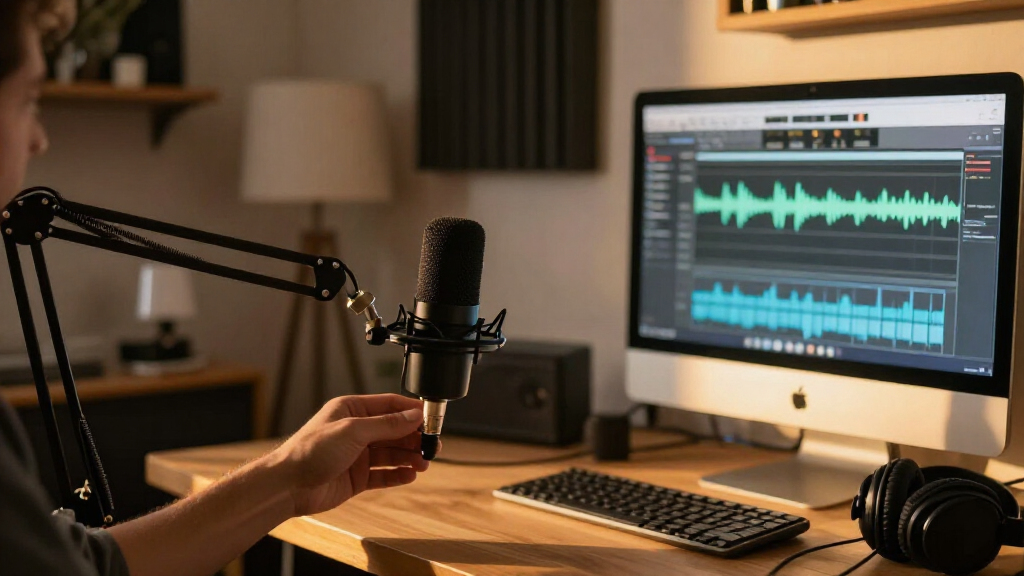
I ranked these microphones by how well their stated features serve desktop podcasting: clear solo speech capture, practical controls, a stable and usable desk setup, and a connection that suits the buyer’s workflow. I gave extra weight to dynamic USB/XLR options for podcasters who want a close-mic setup today and a path to audio equipment later. USB-only models remain useful where ease of setup matters more than expansion, and multi-pattern condensers earn consideration for shared recording or other desk tasks.
The order reflects those differences, not a claim that every buyer needs the same mic. Included stands and boom arms affect how easily each option fits a desk, while mute, gain, monitoring, and pickup-pattern controls affect day-to-day use. I also considered where a feature may add complexity without helping a solo speaker. Because the supplied product details vary, buyers should confirm the exact package contents and connection requirements before choosing.
| desktop podcast microphone | Microphone type | Polar pattern |
|---|---|---|
| Shure MV7+ USB-C & XLR Podcast | Dynamic | Unidirectional |
| FIFINE AmpliGame AM8T Dynamic | Dynamic | Unidirectional (cardioid) |
| FIFINE K669B USB Condenser Mic | — | Unidirectional |
| FIFINE AmpliTank K688CT USB/XL | Dynamic | Cardioid (unidirectional) |
| FIFINE AmpliGame A6V USB Gamin | Condenser | Bidirectional in specs; cardioid in description |
| ZealSound K66 USB Condenser Mi | USB condenser | — |
| LIANGSTAR K6 USB Computer Micr | — | Omnidirectional |
| TONOR TC-777 USB Cardioid Cond | — | Unidirectional (cardioid) |
| USB Condenser Gaming Microphon | — | Cardioid (unidirectional) |
| FIFINE K688S Dynamic Podcast M | Dynamic | Unidirectional (cardioid) |
| FIFINE AmpliGame AM8 USB/XLR D | Dynamic | Unidirectional cardioid |
| Shure MV6 Gen 2 USB-C Micropho | — | — |
| Logitech Blue Yeti USB Microph | — | — |
| MAONO PD200W Hybrid Wireless D | Dynamic | Unidirectional cardioid |
| Logitech Blue Yeti USB Microph | — | — |
Factors to Consider When Choosing Desktop Podcast Microphones
Choosing a desktop podcast microphone starts with the room, the number of voices, and how you plan to record. A feature that helps a roundtable can complicate a solo desk setup, and a connection that seems convenient now may shape future upgrades. These broader tradeoffs can help narrow the field before comparing individual models.
Match the mic type to your room
Room sound can matter as much as the microphone itself. A dynamic mic used close to your mouth can be a practical choice in a shared home or untreated room because it is designed around close speech recording. A condenser may suit a quieter space, but it can also capture more of the room’s sound, including keyboard clicks and reflections. Buyers sometimes choose a mic based on the word “podcast” alone without thinking about where it will sit. Before buying, record a short voice sample in the intended spot and listen for echo, computer fans, and traffic. If the room is noisy, improving mic distance and placement may help more than adding features.
Choose USB, XLR, or both around your recording path
USB connects directly to a computer and keeps a basic recording chain simple. XLR can fit a setup built around an audio interface or mixer, but it adds equipment and setup steps. A dual-connection mic gives you the option to begin with USB and move to XLR later, though that flexibility may not matter if you expect to keep a simple computer setup. A common mistake is paying for a future upgrade path without a likely need or a plan for the extra gear. Think about whether you record in one application on one computer, or expect to add multiple mics and external controls. Choose the connection that fits your actual workflow today and any realistic next step.
Decide whether you need one pickup pattern or several
A solo host speaking into one mic has different needs from two people sharing a table. Multiple pickup patterns can help adapt a microphone to different recording arrangements, but they also add settings to learn and may be unnecessary for a one-person show. Buyers can mistake a longer feature list for a better fit, even when they will use only one pattern. If several people will record together, check how the mic is meant to capture those voices and whether separate microphones would give you more control. For a solo show, put greater weight on convenient placement, mute access, and a dependable close speaking position. Let the number and arrangement of speakers guide this choice.
Plan the desk setup before choosing a stand
A microphone that sits on a tripod uses desk space and may pick up bumps transmitted through the surface. A boom arm can lift the mic out of the way and help position it close to your mouth, but it needs a suitable mounting point and room to move. A supplied stand or arm reduces the number of separate parts to source, yet it still needs to fit your desk and preferred posture. Check how much free space you have, where your keyboard and monitor sit, and whether the mic will block your screen. Also consider whether you need to move the microphone aside between recordings. Desk fit is part of everyday usability, not a finishing detail.
Pay for controls you will use regularly
Mute, gain, headphone monitoring, and volume controls can make a recording session easier to manage without reaching for software. Their value depends on where they sit and whether you can use them without changing your speaking position. A mute button is useful for brief interruptions, while headphone monitoring can help you catch connection or placement problems as you record. Buyers sometimes focus on control counts and overlook whether the controls match their routine. Decide which adjustments you expect to make during a session and which can be set once in your recording software. A simpler mic can be a better desk companion if you rarely need hands-on changes.
Treat wireless and lighting as workflow choices
Wireless capability can reduce cable clutter or make it easier to reposition a microphone, but it adds another part of the connection setup to understand. For a fixed desktop recording position, a wired USB or XLR connection may be easier to keep consistent. RGB lighting can suit a streaming desk where the mic is visible on camera, but it does not improve speech capture by itself. A common buying error is allowing visual features to outweigh microphone placement and connection needs. Consider whether the mic appears in your video frame and whether you need to move freely during recording. If those details do not affect your workflow, prioritize the features that shape the recorded voice and daily setup.
Frequently Asked Questions
Should I choose a dynamic mic or a condenser for podcasting at my desk?
Start with your room and speaking distance. A dynamic mic is often a sensible match for close solo speech in a typical home where fans, keyboards, or room reflections are present. A condenser can suit a quieter, better-controlled room or a setup where broader pickup is useful. Neither type fixes poor placement, so keep the mic near your mouth and test a sample recording. Choose based on the sound around your desk rather than the category name alone.
Is XLR worth having if I record directly to a computer?
If you expect to keep recording through a computer’s USB connection, XLR may add little to your current workflow. It becomes useful if you plan to add an audio interface, mixer, or more involved recording chain. Dual USB/XLR models let you begin with a direct connection and preserve that option, but XLR does not work as a standalone computer connection without compatible gear. Consider whether you have a concrete upgrade in mind. If not, prioritize ease of use and desk fit.
Do I need a microphone with multiple pickup patterns for a podcast?
Usually, a solo host can record with a single pattern suited to speaking into the microphone. Multiple patterns are more useful when the mic needs to support different arrangements, such as a shared table or other recording tasks. They do not automatically make a mic better for a one-person show, and extra settings can go unused. If you plan to record guests in person, compare a multi-pattern mic with using separate microphones. The best choice depends on how many voices you need to capture and how much control you want in editing.
Will a desktop stand work, or should I use a boom arm?
A desktop stand is a straightforward choice when you have free desk space and can position the mic close enough to speak comfortably. A boom arm can free that space and make it easier to bring the mic into position, but it needs a compatible mounting surface and room to swing. Either setup can transmit desk movement, so placement matters when typing or handling equipment. Check whether the package includes the mounting hardware you need. Choose around your desk layout and recording posture, not just the accessory name.
Is a wireless microphone a good choice for a fixed podcast desk?
It can be useful if you move around, want fewer visible cables, or record away from the computer desk as well. For a microphone that stays in one place, a wired connection may be simpler to connect and manage. Wireless adds a connection and power workflow that you should understand before recording. It also does not remove the need to check levels and mic placement. Pick wireless when freedom of movement solves a real problem in your sessions.
Conclusion
For most solo podcasters who want flexibility as their setup grows, I recommend the Shure MV7+ as the best overall pick. The FIFINE K688S is a strong value-oriented choice for buyers who want a dynamic USB/XLR mic with a desktop stand, while the Logitech Blue Yeti suits people who need multiple pickup patterns. Beginners who want a direct USB setup can look at the TONOR TC-777 or FIFINE K669B, with the understanding that these condenser models are less geared toward an XLR upgrade path. For a premium-leaning desktop setup, the Shure MV7+ pairs the strongest mix of connections with a podcast-focused design. Choose the MAONO PD200W if wireless operation addresses a real need, or a Blue Yeti if recording arrangements matter more than a simple solo setup.