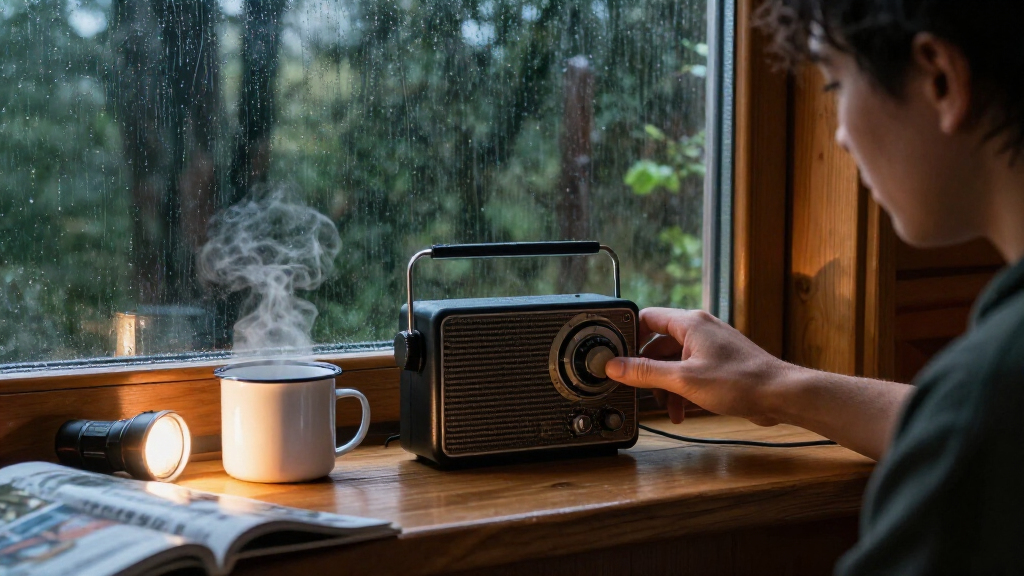
Among these portable shortwave radios, I’d put the Tecsun PL-880 in the best-overall position for listeners who want broad band coverage and single-sideband tuning in a capable portable. The TECSUN PL-330 is a smaller, less elaborate alternative for travel, while the C. Crane CC Skywave 2 stands out for compact multiband listening. The main tradeoff is between capable tuning and a simple, low-fuss radio: features such as SSB and extra bands can help serious listeners, but add controls to learn. Battery approach, antenna setup, and whether you need weather alerts or playback features also shape the right choice. Read on for the full comparison and guidance matched to different listening needs.

Get everyday essentials delivered free with Prime
- Fast, free delivery on millions of items
- Prime Video, Amazon Music and more included
- Member-only deals all year
Key Takeaways
- The PL-880 and PL-990 are the lineup’s feature-led choices: both target listeners who want shortwave plus SSB, while the PL-990 adds an MP3 player and sits in a more premium role.
- The PL-330 and CC Skywave 2 prioritize portability differently: the PL-330 brings SSB into a compact worldband format, while the CC Skywave 2 is a multiband option for travelers.
- SSB separates general listening from more specialized shortwave use: models such as the Tecsun PL-880, PL-330, XHDATA D-808, and Raddy RF919 list SSB, while simpler radios focus on accessible AM/FM/SW listening.
- Several radios add useful non-reception functions: weather alerts, Bluetooth, USB or SD playback, recording, and flashlights may suit specific routines, but those extras do not replace tuning features.
- The two XHDATA D-808 listings have overlapping names and feature sets: check the exact version and listing details before choosing between them, rather than assuming they are separate performance tiers.
| Tecsun PL880 Portable Digital AM/FM, Longwave and Shortwave Radio with SSB |  | Best for Serious Shortwave Listening | Radio bands: AM, FM, longwave, shortwave, SSB | Receiver type: PLL synthesized, dual conversion | Tuning step: 10 Hz for SSB | VIEW LATEST PRICE | See Our Full Breakdown |
| XHDATA D220 Portable AM/FM/SW Shortwave Radio |  | Best Budget-Friendly Pocket Pick | Radio bands: FM1, FM2, AM, shortwave | Frequency ranges: FM1: 87–108 MHz; FM2: 64–108 MHz; AM: 520–1730 kHz; SW: 5.6–22.0 MHz | Tuning: Simple tuning controls; non-digital display | VIEW LATEST PRICE | See Our Full Breakdown |
| ATS MINI V4 SI4732 Pocket Shortwave Radio with Loop and Telescopic Antennas |  | Best Compact SSB Receiver | Radio bands: AM, FM, LSB, USB | Listed frequency: 10 kHz–180 MHz with Donut WB loop antenna; 180 MHz also listed | Display: 1.9-inch digital display | VIEW LATEST PRICE | See Our Full Breakdown |
| Digital AM/FM Shortwave Radio with 4000mAh Rechargeable Battery and NOAA Weather Alerts |  | Best for Emergency Readiness | Radio bands: AM, FM, shortwave, weather band | Power: 4,000 mAh rechargeable lithium-ion battery; supports four D-cell batteries | Battery runtime: Up to 18 hours | VIEW LATEST PRICE | See Our Full Breakdown |
| Portable Bluetooth AM/FM/SW/NOAA Weather Radio with Rechargeable Battery, Flashlight, Speaker, and TF Card Playback |  | Best Feature-Packed Carry Radio | Radio bands: FM, AM, shortwave, NOAA weather | Frequency ranges: FM: 87–108 MHz; AM: 520–1710 kHz; shortwave: 4.75–21.85 MHz; weather: 162.400–162.550 MHz | Battery: 1,250 mAh rechargeable battery | VIEW LATEST PRICE | See Our Full Breakdown |
| TECSUN PL-330 Portable AM/FM/LW/SW Worldband Radio with Single Sideband Receiver |  | Best for Compact Shortwave Tuning | Radio bands: AM, FM, longwave, shortwave, single sideband | Shortwave range: 1711–2999 kHz | Frequency memories: 850 total | VIEW LATEST PRICE | See Our Full Breakdown |
| Retekess TR618 Portable AM/FM/SW Radio with USB and SD Playback, Black |  | Best for Simple Speaker Listening | Radio bands: AM, FM, shortwave | Speaker: 3.5 inches | Maximum output: 3 W | VIEW LATEST PRICE | See Our Full Breakdown |
| C. Crane CC Skywave 2 Portable Multiband Radio |  | Best for Travel and Emergency Monitoring | Radio bands: AM, FM, shortwave, NOAA Weather, VHF aviation | Shortwave range: 2300–26100 kHz | Memory presets: 400 total, including 10 aviation memories | VIEW LATEST PRICE | See Our Full Breakdown |
| Tecsun PL990 Digital Worldband Portable Radio with AM/FM, Longwave, Shortwave, SSB, and MP3 Player |  | Best Premium Feature Set | Radio bands: AM, FM, longwave, shortwave, single sideband | Tuner features: Digital signal processing and synchronized detection | Station memories: 3,150 | VIEW LATEST PRICE | See Our Full Breakdown |
| XHDATA D-808 Portable Multiband Digital Radio with SSB, LCD Display, Alarm Clock, and External Antenna |  | Best for Air-Band and SSB Coverage | Radio bands: FM, AM, shortwave, longwave, air band | Shortwave range: 1711–29999 kHz | Air-band range: 118–137 MHz | VIEW LATEST PRICE | See Our Full Breakdown |
| Retekess V115 Portable AM/FM/SW Shortwave Radio with MP3 Player and Recorder |  | Best for Recording and Simple Playback | Radio bands: AM, FM, shortwave | Tuning: Automatic search, presets, manual frequency entry | AM tuning step: Adjustable 9 or 10 kHz | VIEW LATEST PRICE | See Our Full Breakdown |
| XHDATA D-808 Portable Multiband Radio with SSB, RDS, LCD Display, Alarm Clock, and External Antenna |  | Best for Multiband and SSB Listening | Radio bands: FM, AM, shortwave, longwave, air band, SSB | FM range: 64–108 MHz | Shortwave range: 1711–29999 kHz | VIEW LATEST PRICE | See Our Full Breakdown |
| Raddy RF919 SSB Full-Band Shortwave Radio Receiver, Army Green |  | Best for All-Band Features and Loud Playback | Radio bands: FM, AM, shortwave, SSB, VHF, UHF, air, CB, NOAA weather | Channel storage: Up to 1,600 channels | Battery: 5000 mAh rechargeable lithium-ion | VIEW LATEST PRICE | See Our Full Breakdown |
| T.TAOMI Portable AM/FM/SW Radio with Bluetooth, USB Playback and Rechargeable Battery – Champagne Gold |  | Best for Casual Listening and Audio Streaming | Radio bands: AM, FM, shortwave | Frequency ranges: FM 87.5–108 MHz; AM 520–1700 kHz; SW 5.6–22 MHz | Audio connectivity: Bluetooth 5.0, USB, TF card | VIEW LATEST PRICE | See Our Full Breakdown |
| portable shortwave radio | Radio bands | Dimensions |
|---|---|---|
| Tecsun PL880 Portable Digital | AM, FM, longwave, shortwave, SSB | — |
| XHDATA D220 Portable AM/FM/SW | FM1, FM2, AM, shortwave | 125 × 74 × 30 mm |
| ATS MINI V4 SI4732 Pocket Shor | AM, FM, LSB, USB | — |
| Digital AM/FM Shortwave Radio | AM, FM, shortwave, weather band | — |
| Portable Bluetooth AM/FM/SW/NO | FM, AM, shortwave, NOAA weather | — |
| TECSUN PL-330 Portable AM/FM/L | AM, FM, longwave, shortwave, single sideband | 5.5 × 3.5 × 1 in |
| Retekess TR618 Portable AM/FM/ | AM, FM, shortwave | 9.64 × 3.34 × 6.69 in |
| C. Crane CC Skywave 2 Portable | AM, FM, shortwave, NOAA Weather, VHF aviation | 4.75 × 3 × 1.1 in |
| Tecsun PL990 Digital Worldband | AM, FM, longwave, shortwave, single sideband | 7.5 × 1.25 × 4.5 in |
| XHDATA D-808 Portable Multiban | FM, AM, shortwave, longwave, air band | 5.9 × 2 × 3.4 in |
| Retekess V115 Portable AM/FM/S | AM, FM, shortwave | — |
| XHDATA D-808 Portable Multiban | FM, AM, shortwave, longwave, air band, SSB | 5.9 × 2 × 3.4 in |
| Raddy RF919 SSB Full-Band Shor | FM, AM, shortwave, SSB, VHF, UHF, air, CB, NOAA weather | — |
| T.TAOMI Portable AM/FM/SW Radi | AM, FM, shortwave | — |
More Details on Our Top Picks
Tecsun PL880 Portable Digital AM/FM, Longwave and Shortwave Radio with SSB
The Tecsun PL880 is the strongest fit here for listeners who want fine control over shortwave reception, not just a compact radio for catching occasional broadcasts. Its SSB reception, 10 Hz tuning steps, and selectable bandwidth filters give more room to tune difficult or crowded signals than the simpler XHDATA D220. It also covers longwave and stores up to 3,050 stations, which suits listeners who build a broad listening schedule. The tradeoff is its size and setup: at 520 g, it is much less pocketable than the D220, and the supplied product data lists a separate AA battery requirement. Choose it for tuning flexibility and extensive memory, not for the lightest everyday carry. Its plastic enclosure and adapter-dependent connections also make it less self-contained than its feature set may suggest.
Pros:- Receives AM, FM, longwave, shortwave, and SSB broadcasts.
- 10 Hz SSB tuning steps and selectable filters offer control over signal tuning.
- Stores up to 3,050 stations across 25 memory pages.
- Includes an alarm, sleep timer, and 3 W full-range speaker.
Cons:- At 520 g, it is substantially heavier than the pocket-sized XHDATA D220.
- Requires a separate AA battery according to the listed product data.
- The 3.5 mm audio and USB connections may need adapters for some devices.
Best for: Shortwave listeners who want SSB tuning, longwave coverage, fine frequency adjustment, and space to save many stations.
Not ideal for: Pocket-radio buyers or listeners who want a ready-to-use package without sourcing the required battery or managing a larger receiver.
- Radio bands:AM, FM, longwave, shortwave, SSB
- Receiver type:PLL synthesized, dual conversion
- Tuning step:10 Hz for SSB
- Bandwidth filters:4 AM filters; 5 SSB filters
- Station storage:3,050 stations across 25 memory pages
- Power:Battery powered; listed requirement is 1 AA battery
- Speaker output:3 W maximum
- Dimensions and weight:7.5 × 1.25 × 4.5 in; 520 g
Our verdict“Choose the PL880 if tuning control and extensive station memory matter more than pocketability and a simple power setup.”
XHDATA D220 Portable AM/FM/SW Shortwave Radio
The XHDATA D220 makes the most sense when portability and straightforward operation matter more than advanced tuning. At 125 g without batteries, it is far easier to carry than the Tecsun PL880, and its simple band, tuning, and volume controls suit casual listening without a large digital feature set to learn. It receives AM, FM, and shortwave, with a built-in speaker and headphone jack for flexible listening. The compromise is a non-digital display and no listed SSB or longwave reception, so it cannot match the PL880 for fine shortwave work or the ATS MINI V4 for sideband listening. Two AA batteries are not included, and the radio is not water resistant. I’d pick it as a compact companion for general broadcasts, not as a specialist receiver.
Pros:- Lightweight 125 g body is easier to carry than the Tecsun PL880.
- Receives FM, AM, and shortwave across the listed frequency ranges.
- DSP chip is designed to improve reception.
- Built-in speaker and 3.5 mm headphone jack support speaker or private listening.
Cons:- Two AA batteries are required and are not included.
- Non-digital display offers less tuning information than the PL880 or ATS MINI V4.
- Not water resistant.
Best for: Travelers and casual listeners who want a lightweight radio for AM, FM, and shortwave with simple physical controls.
Not ideal for: Shortwave hobbyists seeking SSB, fine digital tuning, longwave coverage, or a water-resistant radio.
- Radio bands:FM1, FM2, AM, shortwave
- Frequency ranges:FM1: 87–108 MHz; FM2: 64–108 MHz; AM: 520–1730 kHz; SW: 5.6–22.0 MHz
- Tuning:Simple tuning controls; non-digital display
- Power:2 AA batteries, not included
- Audio:Built-in speaker; stereo output
- Headphone connection:3.5 mm jack
- Dimensions:125 × 74 × 30 mm
- Weight:125 g without batteries
Our verdict“Pick the D220 for uncomplicated, lightweight general listening, but skip it if you need SSB or more precise tuning.”
ATS MINI V4 SI4732 Pocket Shortwave Radio with Loop and Telescopic Antennas
The ATS MINI V4 stands apart from the simple XHDATA D220 by pairing a pocket-sized format with LSB and USB reception. That makes it a better match for listeners exploring sideband signals who want a compact receiver rather than a larger radio such as the Tecsun PL880. Its included loop and telescopic antennas, stand, and EVA case give buyers more flexibility for carrying and setting up the radio than the D220’s basic portable arrangement. The shielded SI4732 circuit and front-end Hi-Z circuitry are designed to reduce interference, while the rechargeable battery avoids routine AA replacement. The cost of that compact design is modest speaker output: at 0.5 W and mono, it is better suited to headphones or close listening than filling a room. Its listed frequency information also merits a careful check against the intended bands.
Pros:- Supports AM, FM, LSB, and USB reception, unlike the simpler XHDATA D220.
- Rechargeable 800 mAh battery is built in.
- Includes loop and telescopic antennas, a stand, and an EVA carry case.
- Metal shell, digital display, and built-in headphone amplifier add useful features in a compact receiver.
Cons:- Maximum speaker output is 0.5 W, limiting its usefulness for louder shared listening.
- Audio output is mono rather than stereo.
- Listed frequency details are not fully clear, so buyers should verify coverage for their target signals.
Best for: Compact-radio enthusiasts who want LSB and USB reception, included antenna options, and a rechargeable receiver for personal listening.
Not ideal for: Buyers who need loud room-filling audio, stereo speaker sound, or broad band coverage presented with unambiguous frequency specifications.
- Radio bands:AM, FM, LSB, USB
- Listed frequency:10 kHz–180 MHz with Donut WB loop antenna; 180 MHz also listed
- Display:1.9-inch digital display
- Battery:800 mAh rechargeable lithium-ion battery, 1 included
- Antennas:Donut WB loop antenna and telescopic whip antenna
- Audio:Mono; 0.5 W maximum speaker output
- Enclosure materials:Metal, ABS, and plastic
- Included accessories:Stand and EVA carry case
Our verdict“Choose the ATS MINI V4 if compact SSB listening and included antennas matter more than speaker volume or straightforward coverage specifications.”
Digital AM/FM Shortwave Radio with 4000mAh Rechargeable Battery and NOAA Weather Alerts
This radio is the lineup’s clearest choice for listeners who want shortwave as part of a broader weather and backup-power setup. Its NOAA weather reception, 40 presets, rechargeable 4,000 mAh battery, and option to use four D-cell batteries make it more adaptable for outages than the pocket-focused XHDATA D220. USB and microSD playback add another role when broadcast reception is not the main task. Against the Bluetooth/NOAA model in this roundup, it offers a larger listed rechargeable capacity and a D-cell fallback, while that model has a 5 W speaker and Bluetooth. The tradeoff is bulk: at 803 g and nearly 10 inches long, it is not a pocket radio. It is also not water resistant, and the listed restart delay after a depleted battery could frustrate someone expecting instant backup use.
Pros:- Receives AM, FM, shortwave, and NOAA weather broadcasts with seven NOAA stations listed.
- Rechargeable 4,000 mAh battery plus support for four D-cell batteries provides power flexibility.
- Stores 40 station presets.
- Plays MP3, WMA, and WAV files from USB devices or microSD cards.
Cons:- At 803 g and nearly 10 inches long, it is much bulkier than the D220 or ATS MINI V4.
- Four D-cell batteries are not included.
- Not water resistant, and the listed restart procedure requires at least 30 minutes of charging after the battery runs out.
Best for: Households and campers who want one portable radio for shortwave, NOAA weather broadcasts, local audio playback, and flexible battery options.
Not ideal for: Hikers seeking a pocketable receiver, or anyone who needs a water-resistant radio or immediate restart after the battery runs flat.
- Radio bands:AM, FM, shortwave, weather band
- Power:4,000 mAh rechargeable lithium-ion battery; supports four D-cell batteries
- Battery runtime:Up to 18 hours
- Station presets:40
- Weather reception:7 NOAA stations
- Audio playback:MP3, WMA, and WAV via USB or microSD; supports storage up to 256 GB
- Speaker output:Stereo; 2 W maximum
- Dimensions and weight:9.96 × 3.8 × 7.87 in; 803 g
Our verdict“Choose this model for a home or camp emergency kit that benefits from NOAA reception and alternate battery power, not for lightweight carry.”
Portable Bluetooth AM/FM/SW/NOAA Weather Radio with Rechargeable Battery, Flashlight, Speaker, and TF Card Playback
This model is less of a dedicated shortwave receiver than an all-purpose portable audio and weather unit. Alongside AM, FM, shortwave, and NOAA reception, it adds Bluetooth, TF card playback, a flashlight, and a 5 W speaker. That makes it more useful for casual listening and campsite audio than the ATS MINI V4, whose LSB/USB support is better aimed at sideband listening. Compared with the larger 4,000 mAh NOAA radio, this one is easier to carry and has a back clip and wrist strap, but its listed battery capacity and runtime are more modest. There is no SSB support listed, so shortwave hobbyists seeking sideband tuning should favor the Tecsun PL880 or ATS MINI V4. The extra playback features also depend on Bluetooth or a TF card rather than expanding its shortwave capabilities.
Pros:- Receives FM, AM, shortwave, and NOAA weather broadcasts.
- Bluetooth and TF card playback add audio options beyond radio reception.
- 5 W speaker, stereo output, and six EQ settings support flexible casual listening.
- USB-C charging, flashlight, back clip, and wrist strap suit portable use.
Cons:- The listed battery runtime is up to 10–12 hours per charge, less than the larger 4,000 mAh NOAA model’s stated runtime.
- No LSB or USB reception is listed, unlike the ATS MINI V4 and Tecsun PL880.
- Local card playback requires a TF card.
Best for: Casual listeners, campers, and outdoor users who want shortwave and NOAA reception alongside Bluetooth audio, a flashlight, and easy carry options.
Not ideal for: Shortwave hobbyists who need SSB, or users who need longer listed runtime and a radio built mainly around reception rather than extra playback features.
- Radio bands:FM, AM, shortwave, NOAA weather
- Frequency ranges:FM: 87–108 MHz; AM: 520–1710 kHz; shortwave: 4.75–21.85 MHz; weather: 162.400–162.550 MHz
- Battery:1,250 mAh rechargeable battery
- Battery runtime:Up to 10–12 hours
- Charging:USB Type-C
- Speaker and audio:5 W speaker; stereo output; six EQ sound effects
- Playback and connectivity:Bluetooth and TF card playback; 3.5 mm headphone jack
- Portable features:Built-in flashlight, back clip, and wrist strap
Our verdict“Pick this radio for portable audio, weather reception, and convenience features, but choose a sideband-capable model for more focused shortwave listening.”
TECSUN PL-330 Portable AM/FM/LW/SW Worldband Radio with Single Sideband Receiver
The TECSUN PL-330 packs shortwave, single-sideband, longwave, and mediumwave reception into a 7.4-ounce body, making it a stronger travel fit than the larger Retekess TR618. Its 850 memories, direct frequency entry, DSP demodulation, and synchronous AM detection give frequent listeners more ways to organize stations and refine reception than a basic dial radio. A rechargeable BL-5C battery also avoids relying on a bulky D cell. The tradeoff is listening comfort: its 0.25-watt speaker is modest, so headphones are a better match for extended listening or noisy surroundings. The external antenna input adds flexibility, but using it requires a separately obtained antenna. I’d choose this for a compact, feature-rich shortwave receiver, not as a room-filling radio.
Pros:- Receives shortwave, SSB, longwave, mediumwave, and FM.
- Compact 7.4-ounce design with a rechargeable lithium-ion battery.
- 850 station memories and direct frequency input support organized, precise tuning.
- DSP, synchronous AM detection, and a stereo headphone jack add listening flexibility.
Cons:- The 0.25-watt speaker is limited for group listening or noisy settings.
- The external antenna input requires a separate antenna.
Best for: Shortwave listeners who travel light and want SSB, direct tuning, and extensive station memories in a pocketable radio.
Not ideal for: Buyers who want loud, room-filling speaker audio or a complete external-antenna setup in the box.
- Radio bands:AM, FM, longwave, shortwave, single sideband
- Shortwave range:1711–2999 kHz
- Frequency memories:850 total
- Battery:One BL-5C rechargeable lithium-ion battery
- Audio:0.25 W speaker; 200 mW audio output
- Connections:Micro USB, 3.5 mm stereo headphone jack, external antenna input
- Dimensions:5.5 × 3.5 × 1 in
- Weight:7.4 oz
Our verdict“Choose the PL-330 if you want advanced shortwave and SSB features in a genuinely compact radio and are comfortable using headphones for better audio.”
Retekess TR618 Portable AM/FM/SW Radio with USB and SD Playback, Black
The Retekess TR618 takes a more straightforward approach than the digitally tuned TECSUN PL-330: its large dial and 3.5-inch speaker suit casual listening without leaning on memory banks or advanced SSB features. Shortwave reception sits alongside AM and FM, while USB and TF/SD playback let it serve as a speaker for stored audio when broadcasts are not the priority. That combination makes it more flexible as a household or campsite listening box than a pocket-focused receiver. The cost of that simplicity is portability: at 1.9 pounds and nearly ten inches long, it is far less convenient to carry than the PL-330 or CC Skywave 2. Battery use also calls for a D cell, and the supplied data lists 110 V AC. I’d skip it for serious, precise shortwave tuning.
Pros:- Receives AM, FM, and shortwave broadcasts.
- Large 3.5-inch speaker and 3-watt maximum output suit speaker listening.
- USB and TF/SD playback can handle stored audio.
- Large dial and straightforward controls are accessible for casual use.
Cons:- At 1.9 pounds, it is substantially less portable than compact options such as the CC Skywave 2.
- Battery-powered operation requires a D battery.
- No SSB reception or frequency-memory details are listed.
Best for: Listeners who want a simple, larger-speaker radio for casual shortwave broadcasts and playback from USB or SD media.
Not ideal for: Travelers and shortwave hobbyists who need a lightweight receiver, SSB, or detailed digital tuning features.
- Radio bands:AM, FM, shortwave
- Speaker:3.5 inches
- Maximum output:3 W
- Playback and connections:USB, TF/SD, headphones
- Battery requirement:One D battery
- Display:LCD
- Dimensions:9.64 × 3.34 × 6.69 in
- Weight:1.9 lb
Our verdict“Pick the TR618 for uncomplicated speaker listening and stored-audio playback, but choose a smaller digital model for travel or advanced shortwave tuning.”
C. Crane CC Skywave 2 Portable Multiband Radio
The C. Crane CC Skywave 2 earns its place by pairing a small, six-ounce body with bands that reach beyond ordinary shortwave listening: NOAA Weather and VHF aviation join AM and FM. NOAA alerts and included earphones and a carry case make it a more travel-ready information companion than the shortwave-focused TECSUN PL-330, while its 400 presets and direct frequency entry keep station access manageable. The tradeoff is that its shortwave role is less specialized: the listed range is 2300–26100 kHz, and the specifications do not list SSB, unlike the PL-330 or XHDATA D-808. It runs on two AA batteries, which are not included, and has no water resistance. I’d favor it for travelers who value weather and aviation coverage as much as shortwave.
Pros:- Combines shortwave with NOAA Weather and VHF aviation reception.
- Six-ounce body, carry case, and included earphones suit travel.
- 400 presets, direct frequency entry, and auto scan support quick station access.
- NOAA alerts, backlit LCD, clock, and alarm add practical travel and preparedness functions.
Cons:- Requires two AA batteries, which are not included.
- Not water resistant.
- SSB reception is not listed, limiting its appeal for advanced shortwave tuning.
Best for: Frequent travelers and emergency-minded listeners who want a lightweight radio covering shortwave, NOAA Weather, and aviation.
Not ideal for: Shortwave hobbyists who need SSB reception, water resistance, or a rechargeable battery included.
- Radio bands:AM, FM, shortwave, NOAA Weather, VHF aviation
- Shortwave range:2300–26100 kHz
- Memory presets:400 total, including 10 aviation memories
- Power:Two AA alkaline batteries, not included
- Approximate runtime:70 hours with earbuds; 60 hours using the built-in speaker
- Dimensions:4.75 × 3 × 1.1 in
- Weight:6 oz without batteries
- Included accessories:Earphones and carry case
Our verdict“Choose the CC Skywave 2 for a light travel radio with weather and aviation coverage, rather than for SSB-focused shortwave listening.”
Tecsun PL990 Digital Worldband Portable Radio with AM/FM, Longwave, Shortwave, SSB, and MP3 Player
The Tecsun PL990 is the most expansive feature pick here for listeners who want a capable shortwave receiver and a portable audio player in one unit. It combines SSB, synchronous detection, and 3,150 memories with a 3-watt speaker and microSD playback for FLAC, WAV, APE, WMA, and MP3 files. Compared with the smaller TECSUN PL-330, it offers stronger speaker output, far more presets, and bundled storage and earphones, but gives up some pocketability. The included 16GB card makes playback ready to use; the listed battery information, however, is unclear about whether a standalone lithium battery is included, so I would verify the power arrangement before buying. Its plastic enclosure may also feel less substantial than buyers seeking a premium-bodied radio expect. This suits feature-focused listeners more than minimal packers.
Pros:- Receives AM, FM, longwave, shortwave, and SSB with synchronous detection.
- 3,150 station memories offer substantially more storage than the PL-330.
- Plays FLAC, WAV, APE, WMA, and MP3 files from microSD.
- Includes a 16GB microSD card and stereo earphones; speaker output is rated at 3 W.
Cons:- Larger than compact models such as the PL-330 and CC Skywave 2.
- Plastic enclosure may not suit buyers who prefer a more substantial body.
- Battery inclusion is unclear in the supplied product data.
Best for: Shortwave enthusiasts who want SSB and extensive station storage alongside a higher-output speaker and broad-format microSD audio playback.
Not ideal for: Buyers prioritizing a pocket-sized radio, a metal enclosure, or clearly specified included battery hardware.
- Radio bands:AM, FM, longwave, shortwave, single sideband
- Tuner features:Digital signal processing and synchronized detection
- Station memories:3,150
- Audio formats:FLAC, WAV, APE, WMA, MP3
- Speaker:4 ohms, 3 W
- Connections:MicroSD, 3.5 mm audio, USB audio input, external antenna input
- Dimensions:7.5 × 1.25 × 4.5 in
- Included accessories:16GB microSD card and stereo earphones
Our verdict“Choose the PL990 if you want a feature-rich shortwave radio that also plays a wide range of stored audio formats, and do not need a pocket-size design.”
XHDATA D-808 Portable Multiband Digital Radio with SSB, LCD Display, Alarm Clock, and External Antenna
The XHDATA D-808 is the most versatile choice here for listeners who want shortwave alongside SSB and air-band reception. Its five-band lineup adds longwave and aviation to AM, FM, and shortwave, giving it broader monitoring range than the TECSUN PL-330, which does not list air band. The included rechargeable battery, USB-C power input, carrying bag, and external antenna also make its travel setup more complete than the PL-990’s listed accessories. With 500 station memories, it has less storage than either Tecsun model, and the supplied information does not specify speaker output or water resistance; it is explicitly not water resistant. I’d choose it for compact band coverage and included accessories, not for maximum preset capacity or use in wet conditions.
Pros:- Receives FM, AM, shortwave, longwave, and air band, with SSB support.
- Included rechargeable battery and USB-C input provide flexible power options.
- 500 station memories support organized listening.
- Supplied external antenna and carrying bag make it travel-ready.
Cons:- Not water resistant.
- Its 500 memories are fewer than the PL-330’s 850 and PL990’s 3,150.
- Speaker output is not specified in the supplied product data.
Best for: Travelers and aviation listeners who want SSB shortwave, air-band monitoring, a rechargeable battery, and an external antenna in one kit.
Not ideal for: Buyers who need water resistance, the largest possible station-memory bank, or a radio with a specified high-output speaker.
- Radio bands:FM, AM, shortwave, longwave, air band
- Shortwave range:1711–29999 kHz
- Air-band range:118–137 MHz
- Station memory:500 stations
- Power:Included rechargeable lithium-ion battery or USB-C DC 5 V input
- Dimensions:5.9 × 2 × 3.4 in
- Included accessories:Carrying bag, external antenna, USB charging cable, rechargeable battery, English manual
- Water resistance:Not water resistant
Our verdict“Pick the D-808 if air-band coverage and SSB matter alongside portable shortwave listening, but keep it away from wet conditions.”
Retekess V115 Portable AM/FM/SW Shortwave Radio with MP3 Player and Recorder
The Retekess V115 is the clearest fit here for listeners who want to save broadcasts or use one device for radio and stored audio. It tunes AM, FM, and shortwave, with presets and manual entry for returning to known frequencies. Its TF-card recording can capture radio or external audio, a capability the XHDATA D-808 does not list; the D-808 is the stronger choice for broader band coverage and SSB instead. The V115 also plays while charging, which helps when a listening session runs longer than its 6–8-hour battery estimate. The tradeoff is that recording and TF-card playback depend on a card, and its feature set is less reception-focused than the D-808’s. I’d choose it for practical audio capture, not specialist multiband listening.
Pros:- Receives AM, FM, and shortwave broadcasts
- Automatic search, presets, and manual frequency entry offer several ways to find stations
- Records radio or external audio to a TF card with three quality settings
- Can play while charging
Cons:- TF card is required for the described recording and stored-audio playback
- Estimated battery life is 6–8 hours at medium volume
- Does not offer the D-808’s SSB, air-band, or longwave reception
Best for: Shortwave listeners who want to record broadcasts to a TF card and also play their own stored audio
Not ideal for: Listeners seeking SSB, air-band reception, or the broadest range of bands; the XHDATA D-808 covers more listening territory
- Radio bands:AM, FM, shortwave
- Tuning:Automatic search, presets, manual frequency entry
- AM tuning step:Adjustable 9 or 10 kHz
- Audio playback:TF card and AUX
- Recording:Radio or external audio to TF card; three quality settings
- Battery:1000 mAh BL-5C rechargeable lithium battery
- Battery life:Approximately 6–8 hours at medium volume
- Speaker output:2 W
Our verdict“Choose the V115 if recording shortwave and playing TF-card audio matter more to you than advanced band coverage.”
XHDATA D-808 Portable Multiband Radio with SSB, RDS, LCD Display, Alarm Clock, and External Antenna
For a portable set that reaches well beyond ordinary shortwave, the XHDATA D-808 is the most capable receiver in this group. It covers AM, FM, shortwave, longwave, and air band, with SSB reception for listeners pursuing utility and amateur transmissions. That makes it a more reception-oriented pick than the Retekess V115, which adds recording but lacks the D-808’s listed SSB and air-band coverage. The D-808’s 500 station memories help organize a wide listening range, while USB-C power and the included external antenna support portable use. It is not a weather-ready outdoor radio: the plastic body is not water resistant, and its specific rechargeable battery may be less convenient to replace than a common battery format. I’d prioritize it for band variety, not recording or ruggedness.
Pros:- Receives FM, AM, shortwave, longwave, and air band, including SSB
- Stores up to 500 stations
- USB-C input and included rechargeable lithium-ion battery support portable listening
- Includes an external antenna and carry bag
Cons:- Not water resistant
- Uses a specific replaceable lithium-ion battery
- No TF-card recording feature like the Retekess V115
Best for: Radio hobbyists who want a portable receiver for shortwave SSB, air band, longwave, and other bands
Not ideal for: Campers and field users who need water resistance, or listeners who want built-in broadcast recording
- Radio bands:FM, AM, shortwave, longwave, air band, SSB
- FM range:64–108 MHz
- Shortwave range:1711–29999 kHz
- Air-band range:118–137 MHz
- Station memory:Up to 500 stations
- Power:Rechargeable lithium-ion battery or USB-C DC 5 V input
- Dimensions:5.9 × 2 × 3.4 in
- Water resistance:Not water resistant
Our verdict“Pick the D-808 if wide band coverage and SSB matter more than recording, water resistance, or simpler operation.”
Raddy RF919 SSB Full-Band Shortwave Radio Receiver, Army Green
The Raddy RF919 is the biggest-feature option here, combining shortwave and SSB with VHF, UHF, air band, CB, and NOAA weather reception. Its 1,600-channel memory and three antenna connections suit listeners who expect to organize many frequencies or connect external antennas. Compared with the XHDATA D-808, it adds Bluetooth and microSD playback, a far larger stated speaker output, and more channel storage; the D-808 is the more compact, simpler choice for carrying primarily as a receiver. The RF919’s 20 W speaker and subwoofer make it less discreet than a pocket-focused radio, and the supplied details do not specify battery runtime. External antenna connections also mean some users may need compatible antenna gear. I’d choose it for a feature-rich listening setup, not minimal travel packing.
Pros:- Receives shortwave with SSB alongside FM, AM, VHF, UHF, air, CB, and NOAA weather bands
- Stores up to 1,600 channels
- Bluetooth and microSD support audio playback
- Three antenna connections provide options for external antennas
Cons:- The 20 W speaker and subwoofer may be more bulk and output than simple portable listening requires
- External antennas may require compatible connectors or additional equipment
- Battery runtime is not stated in the supplied product details
Best for: Radio enthusiasts who want extensive band coverage, large channel storage, external antenna options, and Bluetooth or microSD audio
Not ideal for: Travelers prioritizing a small, low-profile receiver or buyers who need a clearly specified battery runtime
- Radio bands:FM, AM, shortwave, SSB, VHF, UHF, air, CB, NOAA weather
- Channel storage:Up to 1,600 channels
- Battery:5000 mAh rechargeable lithium-ion
- Speaker output:20 W
- Audio connectivity:Bluetooth; 3.5 mm headphone jack
- Storage support:MicroSD card
- Display:Dual LED displays
- Antenna connections:VHF/UHF SMA male, AM antenna, 3.5 mm SW
Our verdict“Choose the RF919 if you want a portable radio with unusually broad reception and audio features, and can accept a less compact setup.”
T.TAOMI Portable AM/FM/SW Radio with Bluetooth, USB Playback and Rechargeable Battery – Champagne Gold
The T.TAOMI H678BT is aimed at casual listeners who want a radio that also works as a simple speaker. It receives AM, FM, and shortwave, then adds Bluetooth, USB, and TF-card playback for music from other sources. Its large analog tuning dial and 5 W speaker favor straightforward, shared listening over the more technical approach of the XHDATA D-808, which adds SSB, air band, and extensive station memory. The T.TAOMI instead offers a rechargeable battery plus D-battery backup, though the listing conflicts on whether D batteries are included and warns to remove them during charging. That makes its backup-power setup less clear-cut than USB-C charging on the D-808. I’d pick it for easy everyday listening and streaming, not for advanced shortwave reception or precise digital tuning.
Pros:- Receives AM, FM, and shortwave broadcasts
- Supports Bluetooth 5.0, USB drives, and TF cards
- Built-in rechargeable battery with the option of two D batteries
- Large tuning dial and telescopic antenna support simple operation
Cons:- Product details conflict on whether D batteries are included
- Instructions warn against charging while D batteries are installed
- Analog display lacks the D-808’s SSB reception and station-memory capacity
Best for: Casual listeners who want AM/FM/shortwave alongside Bluetooth streaming and USB or TF-card music playback
Not ideal for: Shortwave hobbyists seeking SSB, digital tuning, or a large station memory; the XHDATA D-808 is better equipped for that use
- Radio bands:AM, FM, shortwave
- Frequency ranges:FM 87.5–108 MHz; AM 520–1700 kHz; SW 5.6–22 MHz
- Audio connectivity:Bluetooth 5.0, USB, TF card
- Speaker output:5 W
- Rechargeable battery:Built-in 1200 mAh battery
- Backup power:Two D batteries; inclusion details conflict
- Antenna:Retractable copper telescopic antenna
- Display:Analog
Our verdict“Choose the T.TAOMI for uncomplicated radio listening and multiple music inputs, rather than specialized shortwave tuning.”
How We Picked
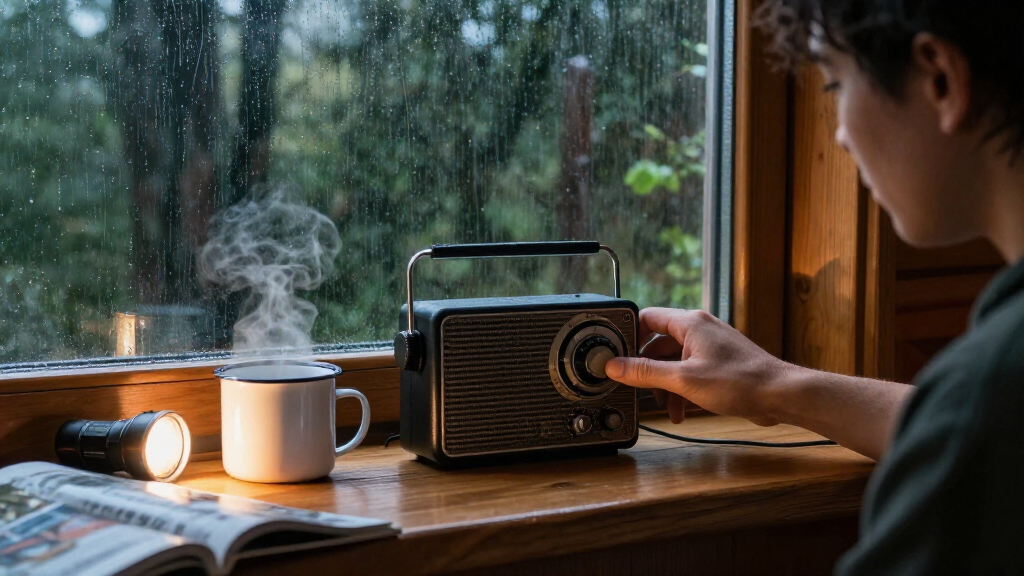
I ranked these radios by how well their stated features serve portable shortwave listening, not by the length of their feature lists. I gave more weight to useful band coverage, SSB availability for listeners who want to tune single-sideband signals, and practical portability than to extras such as music playback or a flashlight. Ease of operating the controls, power options, and the likely fit for travel, casual listening, emergency use, or more involved reception also shaped each product’s role.
The ranking favors radios with a stronger balance of shortwave capability and everyday usability. Feature-rich worldband models lead for listeners who want room to grow; compact or simpler models rank well for a more specific audience, but not as universal picks. Radios centered on playback, weather alerts, or basic listening are included for those needs, while their narrower shortwave focus keeps them below the leading receivers. Where two listings appear closely related, I treat model details as something buyers should verify rather than infer.
Factors to Consider When Choosing Portable Shortwave Radios
Before choosing, decide what you expect the radio to do when you carry it: tune shortwave broadcasts, receive SSB, cover other bands, or serve as an all-purpose portable. A longer feature list is not automatically an advantage if it adds controls you will rarely use. These factors help clarify which compromises matter for your listening.
Decide Whether You Need SSB
For regular shortwave broadcast listening, a radio without SSB may be enough; SSB matters when you want to tune single-sideband signals, including some amateur and utility transmissions. It gives a listener more control, but can also make tuning less straightforward than selecting a station on a basic digital radio. Think about the signals you plan to hear before paying for that capability. If you are not sure, prioritize a radio with clear controls and useful coverage rather than treating SSB as an automatic requirement. A model that includes it can leave room to explore, but only if you are willing to learn its tuning behavior. Match the feature to your listening, not to a spec sheet.
Treat Antenna Setup as Part of the Radio
Shortwave reception depends on more than the receiver itself: the built-in antenna, where you listen, and interference in the surroundings all affect what you can hear. A telescopic antenna is convenient for carrying, while an external antenna connection or included loop can offer another setup to try. The tradeoff is added space and setup time, especially if your priority is a pocketable travel radio. Before buying, check what antenna equipment is actually included and whether a connection is provided for an external antenna. Do not assume that a more advanced receiver will overcome a noisy location by itself. A simple change in listening position can matter more than an extra playback feature.
Choose Portability That Fits Your Routine
Portable can mean pocket-sized, easy to pack, or simply usable away from a wall outlet. Decide whether you will carry the radio every day, keep it in luggage, or store it for emergencies; each use favors a different balance of size, controls, and accessories. A compact radio is easier to take along, but its smaller layout may involve more button presses or less room for a display. Larger feature sets can be more convenient at a desk or campsite, yet less appealing for a light travel kit. Check the listed dimensions and the kind of carry case or antenna setup you may need. Select for the places you will actually listen, not for portability as an abstract label.
Compare Power and Charging Before You Travel
Power details affect whether a radio is convenient on a long trip or useful during an outage. Some models list rechargeable batteries, while others may rely on replaceable cells or a particular charging arrangement; confirm the exact requirements for the version you plan to buy. A built-in rechargeable battery can simplify daily use, but it makes charging access and battery condition more important. Replaceable batteries can be easier to swap when outlets are unavailable, provided you keep spares. For emergency use, consider how you will replenish power after the initial charge and whether the radio’s other functions draw from the same battery. Do not infer runtimes from battery capacity alone unless the maker provides comparable usage figures.
Separate Reception Features From Convenience Extras
Bluetooth, MP3 playback, recording, alarms, and flashlights can make a radio more useful around the house or on a trip, but they do not tell you how well it tunes shortwave. Decide which extras solve a real problem for you: recording may help capture broadcasts, while Bluetooth or card playback may reduce the number of devices you pack. Each additional function can add controls and menus to learn. Weather alerts are a distinct use case from ordinary shortwave listening, so check which alert bands and functions a specific model supports rather than relying on the label alone. If reception is your main goal, spend attention on band coverage, SSB, and antenna options first. Choose extras only after the core receiver fits your needs.
Check the Exact Model and Intended Bands
Product names and listings can be similar even when the included functions differ. This roundup includes two XHDATA D-808 listings, one of which names RDS while the other emphasizes an external antenna, so verify the exact model identifier and supplied features before ordering. Also confirm that the radio covers the bands you plan to use; labels such as multiband or worldband do not spell out every band or operating detail. Read the manufacturer’s specification sheet for tuning range, antenna connections, and power requirements. This extra check is especially useful when a listing title combines several functions or when a retailer’s description is brief. Buying the right version matters more than choosing based on a similar-looking name.
Frequently Asked Questions
Do I need SSB for ordinary shortwave broadcasts?
No. Many listeners who mainly want international shortwave broadcasts can start with a radio that offers shortwave reception but not SSB. SSB becomes relevant if you want to tune single-sideband signals, such as some amateur or utility transmissions. In this lineup, the Tecsun PL-880, PL-330, and XHDATA D-808 models list SSB, giving them more scope for that use than basic AM/FM/SW options. If you are new to shortwave, weigh that extra flexibility against the time needed to learn the controls.
Which portable shortwave radio makes the most sense for travel?
For travel, start by comparing size, power arrangements, and how much setup you are willing to carry. The Tecsun PL-330 is a compact worldband option that still lists SSB, while the C. Crane CC Skywave 2 is positioned as a compact multiband radio. A larger feature set may be useful if you want more functions in one device, but can make packing and operation less simple. Check dimensions, charging needs, and antenna accessories for the exact model before choosing.
Are weather alerts a substitute for shortwave reception?
No. Weather alerts and shortwave listening serve different purposes, even when both appear in the same product title. A radio listing NOAA weather alerts may suit someone who wants a dedicated way to monitor supported alerts, while a shortwave receiver is selected for its shortwave coverage and tuning features. Check the specific alert functions and supported bands rather than assuming every radio with NOAA in its name offers the same capability. If you need both uses, verify that the model supports each one and decide which matters more when choosing.
Should I choose a radio with Bluetooth or MP3 playback?
Choose those features when they reduce the number of devices you need or fit a regular listening routine. The Tecsun PL-990 lists an MP3 player, while several other options advertise Bluetooth, USB, SD, or TF card playback. Those functions add convenience, but they do not establish shortwave reception quality or SSB capability. If you mainly want to tune broadcasts, compare bands, tuning controls, and antenna options first. If you also want one portable device for stored audio, playback features may justify a less focused receiver.
How should I choose between the two XHDATA D-808 listings?
Compare the exact model identifier and the manufacturer’s specifications rather than relying on the titles alone. One listing names RDS, while the other highlights an external antenna, and both describe an XHDATA D-808 portable multiband radio with SSB and an LCD display. Confirm which features are part of the version being sold, what accessories are included, and whether the seller’s description matches the product documentation. If the details remain unclear, contact the seller before ordering. Similar listing names are not enough to establish that the radios are identical.
Conclusion
For the best overall balance, I’d choose the Tecsun PL-880 for its broad coverage and SSB. For a more compact travel radio, the Tecsun PL-330 is a strong fit; for a multiband travel-focused option, consider the C. Crane CC Skywave 2. Buyers seeking a premium feature set should compare the Tecsun PL-990, particularly if its MP3 player suits their routine. For a simpler entry point, the XHDATA D220 or Retekess TR618 may be easier to match to basic listening needs than a feature-heavy receiver. If weather alerts, recording, Bluetooth, or stored-audio playback matter most, choose among the radios that list those functions and verify the exact specification. The right pick depends on whether you value SSB and tuning flexibility, compact carry, or everyday convenience.