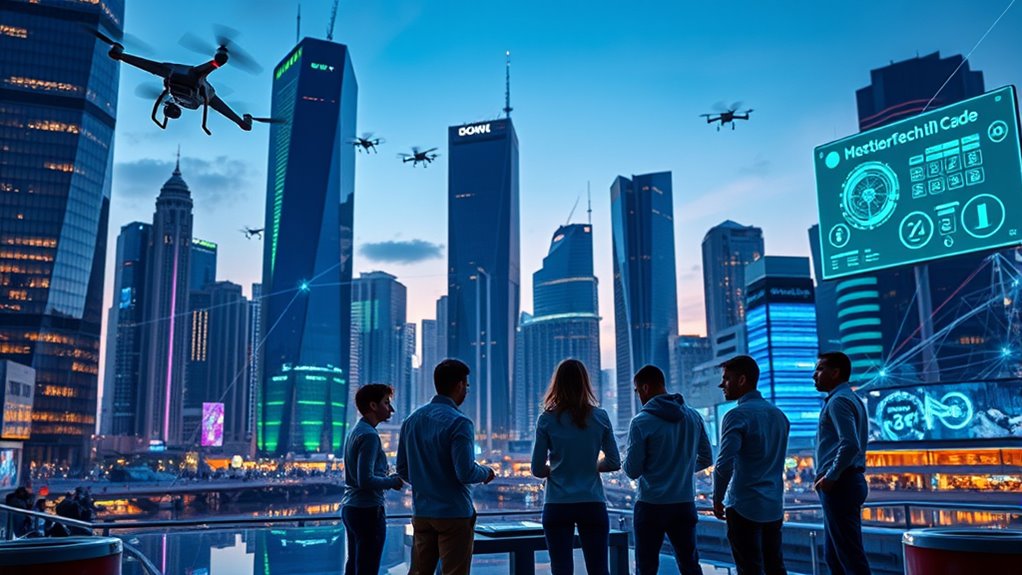

By 2026, you’ll see the global tech industry rapidly transform through advanced AI innovations, autonomous systems, and smarter cybersecurity. Expect industries to adopt more automated solutions and interconnected systems, but also face rising security threats and ethical concerns. Staying ahead means embracing continuous innovation while managing risks. If you keep exploring, you’ll uncover how these big moves shape the future and what challenges you’ll need to watch for.
Key Takeaways
- AI-driven industry transformation will accelerate, enabling smarter automation, faster decision-making, and deeper insights across sectors.
- Autonomous systems like self-driving vehicles and automated supply chains will become mainstream, requiring new infrastructure standards.
- Cybersecurity threats will grow more sophisticated, prompting widespread adoption of AI-powered security solutions and layered defense strategies.
- Regulatory frameworks for AI and data privacy will intensify, influencing industry practices and ethical considerations globally.
- Integration of AI into daily operations will pose ethical and trust challenges, emphasizing the need for robust security, transparency, and continuous training.
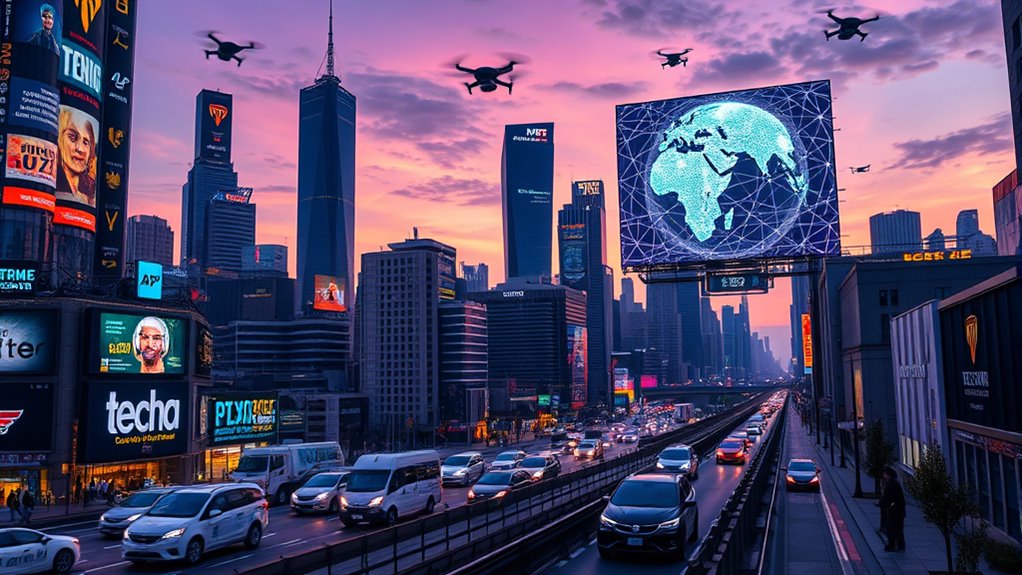
What will the global tech industry look like in 2026? If you’re staying ahead of the curve, you’ll notice that AI innovation continues to accelerate, transforming everything from healthcare to finance. You’ll see companies deploying smarter algorithms that not only automate tasks but also provide deeper insights, making decision-making faster and more accurate. AI’s growth means you’ll need to adapt quickly to new tools and platforms, as they become more integrated into daily operations. But with this rapid advancement comes increased concern over cybersecurity threats. As AI systems become more complex, so do the vulnerabilities that cybercriminals and malicious actors can exploit. You’ll need to stay vigilant, ensuring robust security measures are in place to protect sensitive data and maintain trust. This dual focus on AI innovation and cybersecurity threats will shape the industry’s trajectory, demanding innovation in both technology and defense strategies.
In 2026, you’ll see a shift toward more autonomous systems, powered heavily by AI. Self-driving vehicles, automated supply chains, and intelligent virtual assistants will be commonplace, pushing industries to rethink their infrastructure and workflows. However, these advancements won’t come without challenges. The more interconnected your systems become, the more attractive they are to cyberattacks. Threat actors will continuously evolve their tactics, aiming to breach defenses, disrupt services, or manipulate data. As a result, your organization must prioritize cybersecurity, investing in advanced threat detection and real-time response capabilities. You’ll also see a rise in regulations and compliance standards aimed at safeguarding AI systems and data privacy, which means you’ll need to stay informed and adaptable to new legal landscapes. Additionally, understanding personal finance management strategies can help organizations allocate resources effectively toward cybersecurity investments and innovation initiatives.
Moreover, the industry will likely witness a surge in AI-driven security solutions designed specifically to combat these evolving threats. You’ll have access to smarter, more automated cybersecurity tools that can predict and neutralize attacks before they cause damage. However, this technological arms race means you’ll need to be proactive rather than reactive. Training your teams on emerging risks, implementing layered security strategies, and embracing continuous innovation will be essential to stay protected. As AI becomes more embedded in daily operations, you’ll also face ethical dilemmas and questions about data use, bias, and transparency. Navigating these issues wisely will be key to maintaining your reputation and trustworthiness in the industry. Ultimately, the success of your organization in 2026 will depend on how well you leverage AI innovation while mitigating cybersecurity threats, balancing progress with protection in an increasingly complex digital landscape.

AI-Powered Cybersecurity: AI Tools for Enterprise Security | AI for Network Security | AI Risk Management | AI in Cyber Policies | Cyber Threat Management AI | ML in Fraud Prevention
As an affiliate, we earn on qualifying purchases.
As an affiliate, we earn on qualifying purchases.
Frequently Asked Questions
How Will Geopolitical Tensions Impact Global Tech Supply Chains?
Geopolitical tensions will likely disrupt your global tech supply chains through increased trade sanctions, making it harder to source components efficiently. You’ll need to strengthen cyber security measures to protect sensitive data amid potential cyber-attacks fueled by political conflicts. Expect delays and increased costs as sanctions limit access to key markets and materials. Staying adaptable and investing in resilient, diversified supply chains will be essential to navigate these unpredictable challenges.
What Emerging Markets Will Lead Tech Innovation by 2026?
You’ll find emerging markets becoming vibrant innovation hubs by 2026, leading tech advancements. Countries like India, Vietnam, and Nigeria are poised to shape the future with their dynamic startups and expanding digital infrastructure. These emerging markets aren’t just catching up; they’re setting new trends and driving breakthroughs. As you watch these regions grow, expect fresh ideas and technologies that could redefine the global tech landscape, making innovation more inclusive and exciting.
How Will Evolving Privacy Laws Shape Tech Product Development?
Evolving privacy laws will profoundly influence your tech product development by prioritizing data privacy and consumer rights. You’ll need to design features that protect user data, incorporate transparent privacy policies, and guarantee compliance with regulations like GDPR or CCPA. This shift encourages you to build trust with consumers, making privacy a core component of your innovation process. Staying proactive about legal changes will help you avoid penalties and enhance your brand reputation.
What Role Will Artificial Intelligence Play in Future Tech Industries?
AI will play a vital role in future tech industries by enhancing efficiency and innovation. You’ll see machine learning powering smarter products, while AI ethics become indispensable to guarantee responsible use. As you develop new solutions, prioritize transparency and fairness, integrating ethical considerations into your AI systems. This approach helps you build trust with users and navigate regulatory landscapes, guaranteeing your tech stays competitive and aligned with societal values.
How Can Startups Compete With Established Tech Giants in 2026?
You can compete with tech giants in 2026 by embracing disruptive innovation to stand out. Focus on niche markets where larger companies might overlook opportunities, allowing you to build a loyal customer base. Leverage agility and creativity to quickly adapt to trends and customer needs. Building strong relationships with your audience and continuously refining your offerings will help you carve a unique space in the competitive tech landscape.

Intelligent Sensors for Smart and Autonomous Vehicles
As an affiliate, we earn on qualifying purchases.
As an affiliate, we earn on qualifying purchases.
Conclusion
As you look ahead to 2026, remember that the tech industry’s landscape is always shifting. Staying adaptable and keeping your finger on the pulse will help you navigate the waves of change. Though challenges lie ahead, opportunities abound for those ready to seize them. Don’t forget, when the going gets tough, the tough get going—so stay proactive, embrace innovation, and you’ll be well-positioned to thrive in this ever-evolving world.

SMART LOGISTICS AND SUPPLY CHAIN AUTOMATION: Warehouse robotics tracking systems and operational analytics
As an affiliate, we earn on qualifying purchases.
As an affiliate, we earn on qualifying purchases.

Security Strategies in Linux Platforms and Applications: . (Jones & Bartlett Learning Information Systems Security & Assurance)
As an affiliate, we earn on qualifying purchases.
As an affiliate, we earn on qualifying purchases.

Elena’s passion for the arts and culture shines through in her vivid reporting. From film festivals to gallery openings, her coverage is an essential source for anyone interested in the latest cultural trends and artistic movements.