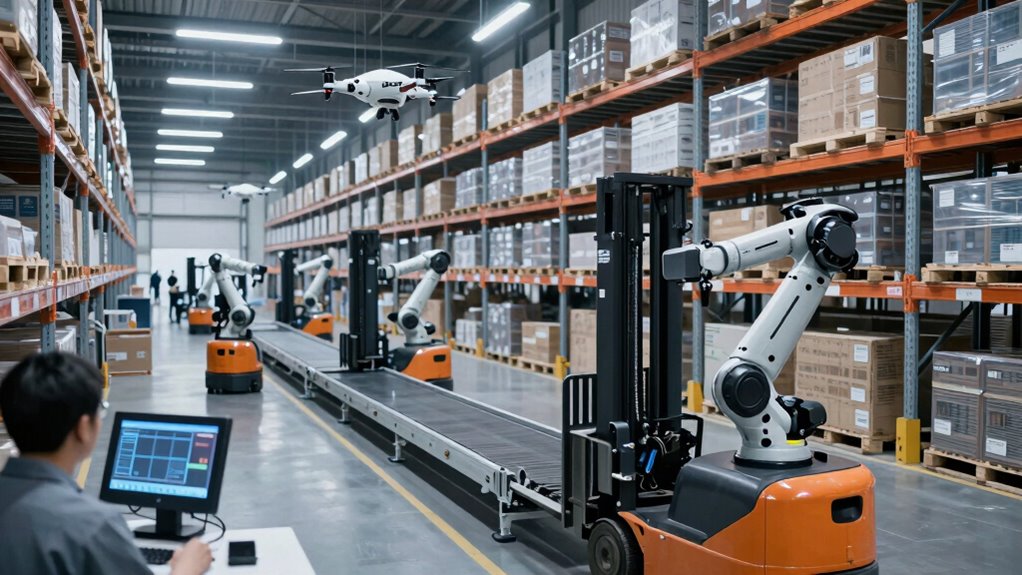

Robotics is transforming warehouses and delivery systems by enabling autonomous navigation, which helps robots move seamlessly, identify obstacles, and optimize routes to save time. Advanced sensors and AI allow machines to learn and adapt in real-time, boosting efficiency and safety. They perform repetitive tasks with high accuracy, freeing humans for more complex jobs and reducing hazards. Delivery robots navigate cities efficiently, analyzing traffic and weather for faster, cheaper routes. Keep exploring how these innovations are building smarter logistics networks.

Get everyday essentials delivered free — and shop member deals
- Fast, free delivery on millions of items
- Access to Prime Big Deal Days deals on October 6–7
- Prime Video, Amazon Music and more included
Key Takeaways
- Autonomous robots optimize warehouse navigation, reducing travel time, congestion, and accidents.
- AI-driven systems enable continuous learning and task prioritization for increased efficiency.
- Robots perform repetitive tasks accurately, freeing humans for strategic activities and enhancing safety.
- Smarter delivery vehicles analyze real-time data to select optimal routes, speeding up deliveries and reducing costs.
- Advances in sensor technology improve obstacle detection, environmental awareness, and system reliability across logistics networks.
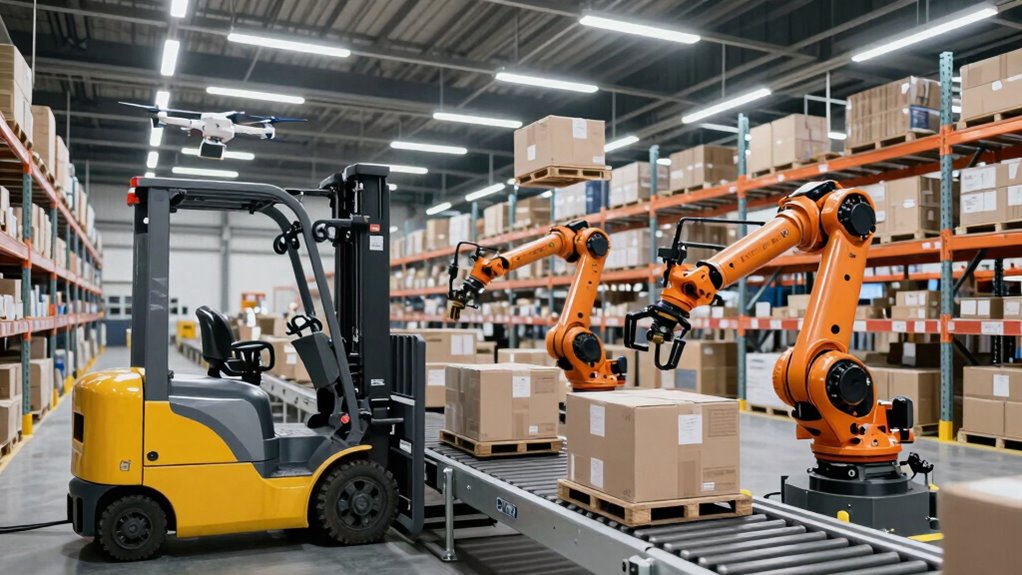
Robotics are revolutionizing how warehouses operate and how goods are delivered, making processes faster, safer, and more efficient. One of the key advancements driving this transformation is autonomous navigation. Instead of relying on human operators, robots now use sophisticated sensors, cameras, and LIDAR systems to move seamlessly through complex warehouse layouts. With autonomous navigation, robots can identify obstacles, reroute in real-time, and optimize their paths to minimize travel time. This capability reduces congestion, prevents accidents, and guarantees that deliveries stay on schedule. As a result, you experience smoother workflows and faster fulfillment cycles, even during peak seasons.
Robots use sensors, cameras, and LIDAR for autonomous navigation, reducing delays and improving warehouse efficiency.
Integral to this evolution is AI integration, which allows robots to learn from their environment and improve their performance continuously. AI-powered robots can interpret data from their sensors, make decisions on the fly, and adapt to changing conditions without human intervention. This means they’re not just following preset routes but actively analyzing warehouse layouts, inventory positions, and operational patterns to enhance efficiency. For example, AI allows robots to prioritize tasks based on urgency, identify the most efficient order picking routes, and coordinate with other machines to avoid conflicts. Such integration results in a highly synchronized system where every component works harmoniously, reducing downtime and increasing productivity.
You’ll find that AI and autonomous navigation together enable a level of precision and reliability that was impossible before. Robots can perform repetitive tasks like picking, packing, and sorting with high accuracy, freeing up human workers to focus on more complex or strategic activities. This not only boosts throughput but also improves safety by minimizing human exposure to hazardous environments or heavy lifting. Additionally, AI’s predictive capabilities help anticipate maintenance needs, preventing breakdowns before they occur, ensuring continuous operation. Technological advancements like these are making warehouses smarter and more adaptable than ever before.
The combination of autonomous navigation and AI integration also paves the way for smarter delivery systems. Delivery robots and autonomous vehicles can navigate city streets and delivery routes with minimal human oversight. They analyze traffic patterns, weather conditions, and delivery priorities in real-time, choosing the most efficient routes. As a result, you get faster deliveries, lower costs, and fewer delays. This integration ultimately creates a more resilient supply chain, capable of adapting swiftly to disruptions and fluctuating demands. Moreover, ongoing developments in sensor technology continue to enhance their environmental awareness, further improving safety and efficiency. These sensor improvements enable better obstacle detection and environmental sensing, making autonomous systems more reliable in diverse conditions.
In essence, robotics equipped with autonomous navigation and AI integration are transforming warehouses and delivery systems into intelligent, responsive networks. They streamline operations, enhance safety, and deliver faster results, changing the landscape of logistics and distribution for good.
As an affiliate, we earn on qualifying purchases.
Frequently Asked Questions
How Cost-Effective Are Robotic Systems for Small Warehouse Operations?
Robotic systems can be cost-effective for small warehouse operations by boosting operational efficiency and reducing labor costs. You’ll see significant cost savings over time as robots handle repetitive tasks, minimize errors, and optimize space utilization. While initial investments might seem high, the long-term benefits include faster processing times and lower operational expenses, making robotics a smart choice to enhance productivity without breaking the bank.
What Training Is Required for Staff to Operate New Robotics?
You’ll need to undergo staff certification to operate new robotics effectively. Training covers basic robot maintenance, troubleshooting, and safety procedures, ensuring smooth operation. Your team should also learn how to perform routine checks and minor repairs, reducing downtime. Ongoing training helps staff stay updated on software updates and new features, maintaining efficiency. Proper certification and training empower you to handle the robots confidently, maximizing productivity and safety in your warehouse.
How Do Robots Handle Fragile or Irregularly Shaped Items?
You know what they say: “Handle with care.” Robots are now equipped with advanced sensors and precision grippers that excel at fragile handling and managing irregular shapes. They use real-time data to adapt their grip, ensuring delicate items stay safe. This technology allows robots to identify and adjust to different sizes and shapes, improving efficiency and reducing damage. With these innovations, fragile and irregularly shaped items are in safe hands.
What Are the Cybersecurity Risks Associated With Warehouse Robotics?
You face cybersecurity threats that could compromise your warehouse robotics system, risking data breaches or operational disruptions. Hackers might target your network, gaining control over robots, which could lead to theft, sabotage, or safety hazards. To protect your operations, guarantee robust data protection measures like encryption, firewalls, and regular security updates. Staying vigilant helps you prevent cyberattacks, safeguarding both your inventory and your company’s reputation.
How Do Robots Impact Employment in Warehouse Industries?
Robots greatly impact employment in warehouse industries by increasing automation efficiency and causing labor displacement. You might find jobs changing or shrinking as robots handle tasks like picking, packing, and sorting more quickly and accurately. While some roles may decline, new opportunities emerge in robot maintenance, programming, and oversight. Overall, robots reshape the workforce landscape, requiring you to adapt skills and embrace ongoing training to stay relevant in this evolving industry.
delivery robot for city deliveries
As an affiliate, we earn on qualifying purchases.
As an affiliate, we earn on qualifying purchases.
Conclusion
Imagine a warehouse where robots dance seamlessly, each movement precise and purposeful, transforming chaos into harmony. Just like a well-orchestrated symphony, robotics streamlines your delivery system, making it faster, safer, and more efficient. As automation continues to evolve, you’ll find yourself steering a landscape where technology and human effort blend perfectly, turning what once seemed impossible into a reality where your logistics are as smooth as a well-conducted orchestra.
AI-powered warehouse automation system
As an affiliate, we earn on qualifying purchases.
As an affiliate, we earn on qualifying purchases.
As an affiliate, we earn on qualifying purchases.
Fall Picks
fall essentials
As an affiliate, we earn on qualifying purchases.