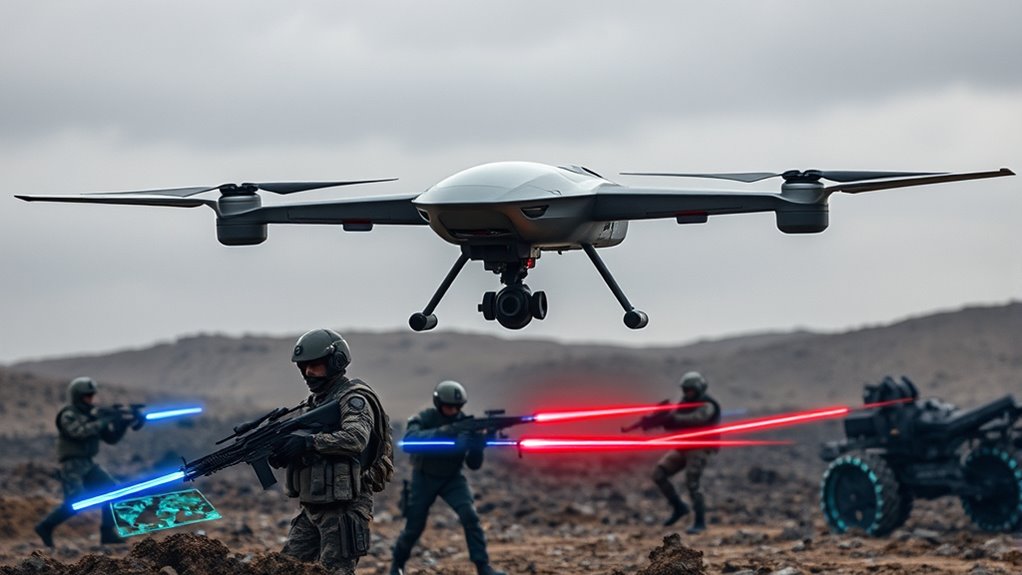

By 2025 and beyond, high-tech warfare will see autonomous drones powered by advanced AI and quantum computing playing a key role on the battlefield. These drones will operate independently, gathering intelligence, executing strikes, and adapting to complex environments in real time. Quantum computing will enhance data security, improve simulations, and analyze vast datasets quickly. As these technologies integrate further, warfare will become faster, smarter, and more precise—continue exploring to understand how these innovations will reshape security strategies.
Key Takeaways
- Integration of autonomous drone swarms for complex, coordinated military operations by 2025+.
- Enhanced use of quantum computing for real-time data analysis and secure military communications.
- Deployment of AI-powered autonomous drones capable of adaptive decision-making in contested environments.
- Increased reliance on quantum-enhanced AI for precise targeting and minimizing collateral damage.
- Digital battlefield ecosystems emphasizing speed, automation, and advanced intelligence for strategic advantage.

Ever wonder how modern militaries stay ahead of evolving threats? The answer lies in groundbreaking technological advancements that reshape warfare. One of the most significant shifts is the integration of autonomous drones. These unmanned aircraft can operate independently, making split-second decisions based on real-time data. They’re increasingly used for reconnaissance, surveillance, and even targeted strikes, reducing the risk to human soldiers. Autonomous drones can cover vast areas faster than traditional methods, providing commanders with crucial intelligence that’s both timely and accurate. As AI algorithms improve, these drones become more sophisticated, capable of steering through complex environments and identifying threats with minimal human intervention. This not only enhances battlefield efficiency but also minimizes casualties and collateral damage.
Autonomous drones enhance battlefield efficiency, provide real-time intelligence, and reduce risks to human soldiers.
Simultaneously, quantum computing is revolutionizing military capabilities in ways previously thought impossible. Unlike classical computers, quantum machines process information at speeds that can break through traditional encryption barriers. This means military communications and data storage become far more secure and resilient against cyber threats. Quantum computing also enables advanced simulations for training and strategic planning, offering predictive insights that can anticipate enemy moves before they happen. With such powerful processing, militaries can analyze vast datasets—from satellite imagery to cyber activity—more quickly and accurately than ever before. This leap forward means better decision-making, faster responses, and a significant edge over adversaries still relying on conventional technology.
The convergence of autonomous drones and quantum computing creates a new battlefield dynamic. Imagine a network of autonomous drones powered by quantum-enhanced AI, working seamlessly together to gather intelligence and execute missions with minimal human oversight. These systems can adapt on the fly, learning from each encounter and refining their tactics in real time. This level of automation and computational power increases the precision of strikes, reduces the chance of errors, and enables forces to operate in contested environments where traditional communication might be jammed or intercepted. Additionally, advancements in Kia Tuning have demonstrated the importance of integrating sophisticated technology and customization to optimize performance, which parallels how military systems are being tailored for maximum efficiency.
As we look toward 2025 and beyond, these technologies will become even more integrated into military strategies. Autonomous drones will evolve into swarms, coordinating complex operations, while quantum computing will continue to secure and analyze data faster than any adversary can counter. The battlefield will become increasingly digital, where speed, intelligence, and automation determine success. If you’re interested in modern warfare, understanding these advancements offers a glimpse into a future where technology defines the limits of what’s possible—and what’s necessary to stay safe.

Drone Wars
As an affiliate, we earn on qualifying purchases.
As an affiliate, we earn on qualifying purchases.
Frequently Asked Questions
How Will AI Impact Battlefield Decision-Making in 2025?
AI integration will transform battlefield decision-making by enabling faster, more accurate responses through battlefield automation. You’ll rely on AI-powered systems to analyze data rapidly, identify threats, and suggest ideal strategies in real time. This reduces human error, enhances coordination, and allows you to adapt quickly to changing conditions. As AI continues to evolve, your decision-making process becomes more efficient, giving you a decisive edge in complex, high-stakes situations.
What Ethical Concerns Arise With Autonomous Military Drones?
You should consider that autonomous weapons raise significant ethical concerns, especially around moral dilemmas and accountability. When drones operate without human oversight, you risk unintended harm and violations of international law. There’s also the challenge of ensuring these systems make morally sound decisions. These issues demand strict controls and transparency, so you can prevent misuse and uphold ethical standards in modern warfare.
Will Cyber Warfare Surpass Traditional Combat Methods?
Cyber warfare is like a shadow that grows larger; it’ll likely surpass traditional combat methods. You’ll face evolving cybersecurity threats that threaten information dominance, making digital battles more vital than ever. As nations prioritize hacking and data manipulation, you’ll need to stay vigilant in protecting critical systems. This shift means that winning wars may depend more on cyber capabilities than on conventional weapons, changing the face of future conflict.
How Will Quantum Computing Enhance Military Encryption?
Quantum computing will remarkably enhance your military encryption by enabling quantum security, which makes your data nearly impossible to crack with classical computers. You’ll benefit from encryption breakthroughs that leverage quantum mechanics, ensuring your communications stay secure against advanced cyber threats. This technology allows for unbreakable encryption methods, giving your military operations a critical edge in safeguarding sensitive information amidst evolving cyber warfare challenges.
What Role Will Biotechnology Play in Future Warfare?
Imagine a battlefield where biotech enhancements give soldiers superhuman abilities—sounds like science fiction, right? Biotechnology will play a vital role in future warfare by enabling biotech enhancements that boost physical and mental capabilities. It also raises concerns about genetic warfare, where genetic modifications could be weaponized against enemies. Will we harness these advances ethically, or will they create a new, more dangerous form of conflict?

Quantum Computing for Computer Scientists
Used Book in Good Condition
As an affiliate, we earn on qualifying purchases.
As an affiliate, we earn on qualifying purchases.
Conclusion
As you navigate the future battlefield, these emerging technologies are your compass, steering you through uncharted territory. With innovations like AI, drones, and cyber warfare, the landscape becomes a high-stakes chess game where every move counts. Stay adaptable, because the pace of change is faster than ever, and tomorrow’s warriors will need to think like masters of the digital jungle. Embrace these trends, and you’ll be ready to thrive in the ever-evolving arena of high-tech warfare.
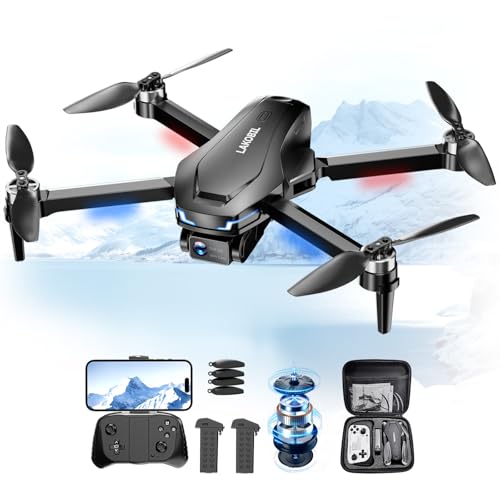
Drone with AI Optical Flow & AI Voice/Gesture Control, 1080P FHD FPV Camera for Kids Beginners Adults, Brushless Motor Foldable RC Drone, One-Key Start, 3D Flips, 2 Batteries 26 Min, Indoor/Outdoor
[AI-POWERED "NEVER-LOST" DRONE | 2-Step Flight for Kids & Beginners] Say goodbye to first-flight fear with this drone…
As an affiliate, we earn on qualifying purchases.
As an affiliate, we earn on qualifying purchases.
military-grade quantum encryption
As an affiliate, we earn on qualifying purchases.
As an affiliate, we earn on qualifying purchases.

Elena’s passion for the arts and culture shines through in her vivid reporting. From film festivals to gallery openings, her coverage is an essential source for anyone interested in the latest cultural trends and artistic movements.