
Biometric technology is moving well beyond smartphones and into many sectors like airports, banks, healthcare, and workplaces. You’ll find facial recognition used for border security, fingerprint scans for bank transactions, and iris or vein patterns for safe access. These advancements improve safety, speed, and user convenience across industries. As technology advances, more ways to use biometrics emerge. If you want to see how this growing trend impacts your daily life, there’s plenty more to uncover.

Get everyday essentials delivered free with Prime
- Fast, free delivery on millions of items
- Prime Video, Amazon Music and more included
- Member-only deals all year
Key Takeaways
- Biometric systems are now widely used in border control for fast and secure immigration processing.
- Financial institutions utilize biometrics for secure transactions and fraud prevention beyond mobile devices.
- Healthcare employs biometric identification for patient records, access control, and safety measures.
- Corporate environments implement biometric access systems to enhance building security and prevent unauthorized entry.
- Emerging applications include biometric authentication in wearable devices and smart home security systems.
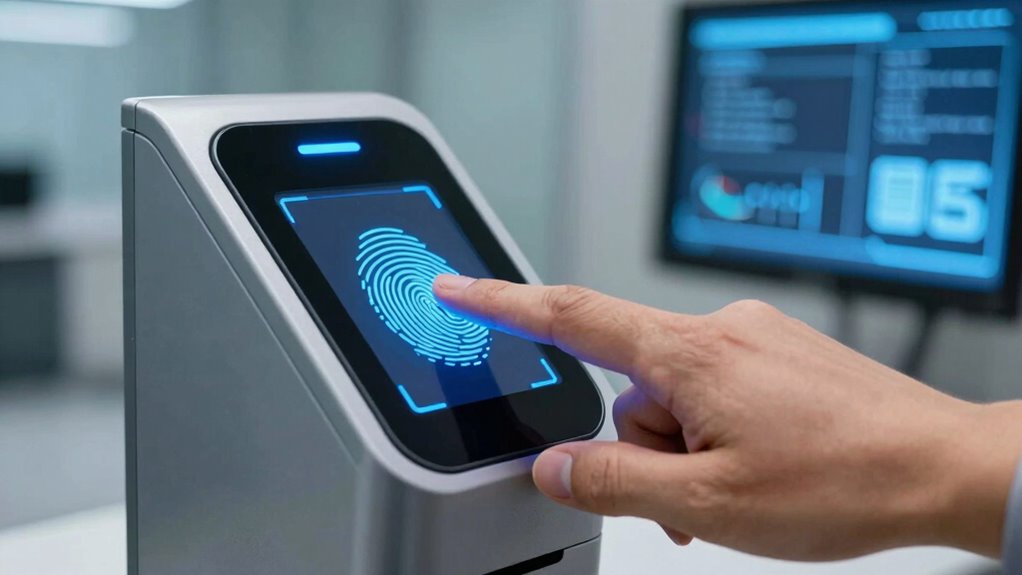
Biometric technology is no longer confined to opening smartphones; it’s rapidly expanding into diverse sectors that enhance security and convenience. To understand how far it’s come, you should consider its historical evolution. Initially, biometric systems were limited to basic fingerprint scans used in criminal investigations and secure facilities. Over time, advancements in imaging and data processing transformed these methods into reliable tools for broader applications. Today, biometric recognition systems utilize fingerprints, facial features, iris patterns, voice, and even vein patterns, reflecting a significant leap from their humble beginnings. This evolution wasn’t just about technological progress; it also involved refining accuracy, speed, and user-friendliness, making biometric methods viable for everyday use beyond personal devices, like in airports, banks, and workplaces. As biometric technology extends into new domains, ethical considerations come into sharp focus. You might wonder about the implications of collecting and storing such sensitive data. Privacy concerns are central to this debate: with biometric data being unique and immutable, a breach could have severe consequences. Companies and governments must guarantee they implement strict security measures and transparent policies to protect individuals’ information. There’s also the risk of misuse or discrimination—biometric data could be exploited for profiling, surveillance, or unfair treatment. As these systems become more integrated into daily life, you need to be aware of the importance of consent and data ownership, advocating for regulations that safeguard personal rights. Balancing the benefits of biometric security with these ethical challenges remains a complex task, requiring ongoing dialogue among technologists, policymakers, and the public. Understanding the technological evolution of biometric systems helps you appreciate the progress and challenges involved in their deployment. Beyond personal devices, biometric technology now plays a crucial role in areas like border control, where facial recognition speeds up immigration processes while maintaining security. Financial institutions use biometrics for secure transactions, reducing fraud and enhancing customer experience. Healthcare providers incorporate biometric identification to streamline patient records and improve safety. Meanwhile, biometric access control in corporate environments ensures only authorized personnel gain entry, reducing theft and unauthorized access. These applications showcase how biometric systems are designed to be more than convenience; they’re about creating safer, more efficient environments. As biometric technology continues to develop, its historical roots remind you of the importance of responsible innovation, especially as data privacy becomes a growing concern in the digital age. Ethical considerations aren’t just optional; they’re essential to ensuring these advancements serve society fairly and securely. Your awareness and engagement in these discussions help shape a future where biometric solutions are used ethically, respecting individual rights while promoting security and efficiency across many sectors. Additionally, ongoing research and development aim to improve the robustness of biometric systems against potential security threats, ensuring they remain reliable in critical applications. This ongoing pursuit of security enhancements underscores the importance of continuous innovation in safeguarding sensitive data and maintaining trust. Moreover, advances in data encryption play a vital role in protecting biometric information from cyber-attacks, further reinforcing the security framework surrounding these systems.
biometric fingerprint scanner for home security
As an affiliate, we earn on qualifying purchases.
As an affiliate, we earn on qualifying purchases.
Frequently Asked Questions
How Secure Is Biometric Data Outside Smartphones?
Biometric data outside smartphones can be quite secure if proper measures like data encryption are in place. You need to guarantee that your biometric information is stored and transmitted with strong encryption to prevent unauthorized access. When used for identity verification, biometric systems are generally reliable, but vulnerabilities exist if security protocols are weak. So, always verify that organizations handling your biometric data follow rigorous security standards.
What Industries Are Adopting Biometric Technology Most Rapidly?
Imagine walking into a hospital or bank where your fingerprint or face scan opens doors instantly. You’re right—these industries are adopting biometric technology most rapidly. Healthcare security now uses biometric data to protect patient records, while financial verification relies on fingerprint and facial recognition for quick, secure transactions. This shift enhances safety, reduces fraud, and streamlines access, making everyday interactions smoother and more secure than ever before.
Are There Privacy Concerns With Biometric Systems in Public Spaces?
Yes, you should be aware of privacy concerns with biometric systems in public spaces. Public surveillance using biometric data raises issues about data ownership and potential misuse. You might worry about who controls your biometric information and how it’s stored or shared. These systems can infringe on your privacy, leading to fears of constant monitoring. It is crucial to stay informed and advocate for regulations that protect your rights and data ownership.
How Accurate Are Biometric Authentication Methods Beyond Mobile Devices?
You might think biometric methods are foolproof, but their accuracy varies beyond smartphones. While user privacy is a concern, data encryption helps protect sensitive info. Yet, no system is perfect—false positives or negatives happen. Ironically, the more we rely on biometric authentication for security, the more we should worry about its flaws and privacy risks. Always question if convenience outweighs potential vulnerabilities in these expanding tech frontiers.
What Future Applications Could Biometric Technology Have Outside Smartphones?
You might see biometric technology used in healthcare for personalized treatment, with biometric wearables monitoring crucial signs continuously. Behavioral analytics could enhance security in workplaces by analyzing patterns of activity, while biometric authentication may streamline access to buildings and devices. As technology advances, you’ll experience more seamless integration of biometric wearables for fitness and health tracking, and behavioral analytics could predict and prevent security threats, making environments safer and more efficient.
As an affiliate, we earn on qualifying purchases.
Conclusion
As you see, biometric technology isn’t just about unlocking your phone anymore. It’s expanding into areas like security, healthcare, and even banking, promising increased safety and convenience. But as you embrace these innovations, consider the theory that technology should serve humanity, not replace it. By understanding its true potential and limitations, you can help shape a future where biometric tools enhance your life responsibly, reminding you that progress is best when guided by purpose and ethics.
As an affiliate, we earn on qualifying purchases.
As an affiliate, we earn on qualifying purchases.
Fall Picks
fall essentials
As an affiliate, we earn on qualifying purchases.