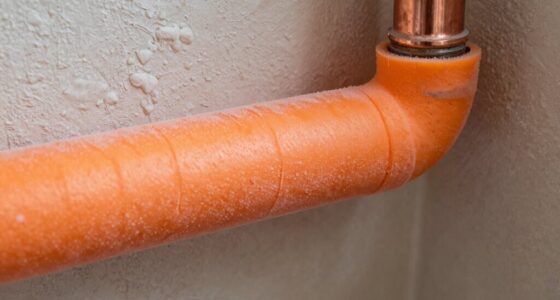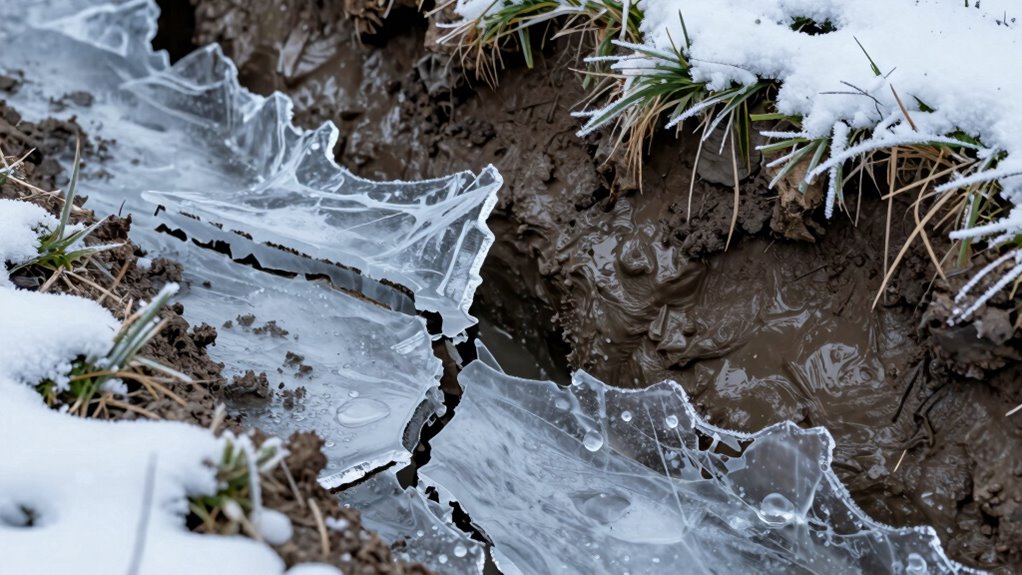

During freeze-thaw cycles, soil expands as it freezes, pressing against drainage pathways and causing clogs or narrowing. When temperatures rise, the soil shifts and loosens, creating debris that blocks water flow. This movement can damage underground pipes and create new infiltration routes. Ice formation inside pipes worsens blockages, trapping water and causing backups. If you want to understand how these processes combine to worsen drainage issues, keep exploring this topic further.

Get everyday essentials delivered free with Prime
- Fast, free delivery on millions of items
- Prime Video, Amazon Music and more included
- Member-only deals all year
Key Takeaways
- Freeze-thaw cycles cause soil expansion and shifting, which can block or damage drainage pathways.
- Melting ice can form blockages inside pipes, reducing drainage capacity and causing backups.
- Soil movement can dislodge or crack underground pipes, leading to leaks and infiltration issues.
- Repeated cycles loosen soil particles, increasing debris buildup and clogging drainage systems.
- Surface heaving from soil expansion can damage infrastructure and disrupt proper water flow.
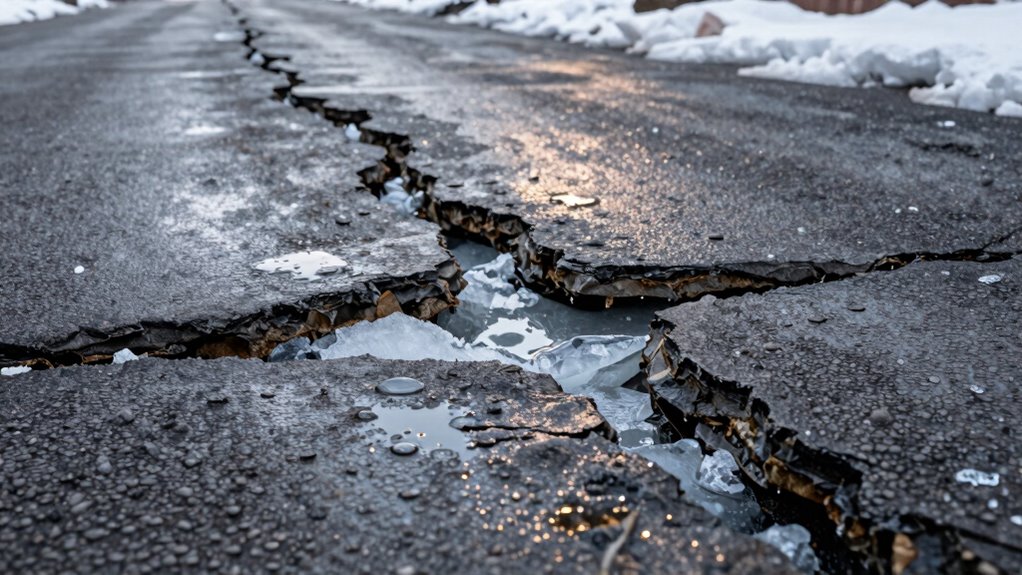
As temperatures fluctuate around freezing, drainage problems often become more pronounced, causing headaches for homeowners and property managers alike. During these cycles, the ground’s behavior changes dramatically, making drainage issues worse than during stable weather. One key reason is soil expansion. When the temperature drops, moisture in the soil freezes, causing the soil to expand. This expansion pushes against existing drainage pathways, clogging or narrowing them and impeding water flow. As the soil freezes and thaws repeatedly, the shifting ground can loosen soil particles, creating debris that further clogs drainage systems. This constant movement destabilizes the soil structure, making it harder for water to drain naturally. Additionally, soil expansion can lead to surface heaving, which may damage underground pipes and disrupt drainage systems further. Recognizing how soil behavior responds to temperature changes can help in planning effective drainage solutions. Recognizing the importance of soil stability can also help prevent long-term damage to drainage infrastructure.
Soil freezes and thaws, disrupting drainage and causing debris buildup, which worsens water flow during temperature fluctuations.
Another major factor is ice blockage. When water from melting snow or rain encounters frozen ground, it can form ice barriers within drainage pipes, culverts, or drains. These ice blockages act like dams, trapping water and causing backups. Once the ice refreezes, it becomes more solid and difficult to remove, prolonging the drainage problem. The presence of ice in these systems reduces their capacity to carry water away from your property, increasing the risk of surface flooding or pooling. This is especially problematic in areas with poor drainage design, where the flow of water is already limited. You might notice that after a winter thaw, flooding or damp patches become more common, and that’s often due to this cyclical process. The repeated freeze and thaw cause soil to heave upward, disrupting the landscape and sometimes damaging underground drainage infrastructure. The shifting soil doesn’t just block water; it can also dislodge pipes or create new pathways for water to seep into unwanted areas, worsening the problem. As the ground settles again during warmer days, the disturbed soil might settle unevenly, leaving gaps that allow water to collect or infiltrate where it shouldn’t. Understanding the soil expansion process can help you better understand and mitigate these issues.
Understanding these processes helps you anticipate and address drainage issues before they escalate. Regular maintenance, like clearing debris and inspecting underground pipes, becomes even more critical during freeze-thaw periods. You might also consider installing insulation or heating options to prevent ice formation within drainage systems. Recognizing the role of soil expansion and ice blockage allows you to take proactive steps, minimizing water damage and avoiding costly repairs. Being prepared for these cyclical challenges makes managing drainage during winter much easier, ensuring your property stays dry and stable despite the unpredictable weather.
As an affiliate, we earn on qualifying purchases.
Frequently Asked Questions
How Can I Prevent Drainage Issues Before Winter Begins?
To prevent drainage issues before winter, you should focus on proper winter preparation and drainage maintenance. Clear debris from gutters and drains to guarantee proper flow. Grade your yard to direct water away from your foundation, and consider installing or inspecting sump pumps. Additionally, add gravel or sand to areas prone to pooling. These steps help reduce ice buildup and prevent freeze-thaw damage, keeping your drainage system functional throughout winter.
What Tools Are Best for Inspecting Underground Drainage Systems?
If you wanna turn detective on your underground drainage system, grab a camera or a borescope—think of it as your secret agent tool. Video tutorials and expert interviews can guide you through the process, helping you spot clogs or cracks without digging up your yard. These tools make inspections easier and more precise, saving you time and money while ensuring your drainage stays smooth, even in winter’s worst moods.
Are Certain Soil Types More Prone to Freeze-Thaw Damage?
Yes, certain soil types are more prone to freeze-thaw damage. Soils with high organic content tend to retain moisture, making them susceptible as water expands when freezing. Conversely, compacted soils resist freeze-thaw cycles less effectively because dense soil limits drainage, trapping water that expands upon freezing. You should pay attention to soil compaction and organic levels, especially in colder climates, to prevent drainage issues caused by freeze-thaw cycles.
How Long Does It Take for Drainage Problems to Worsen After a Freeze?
Surprisingly, your drainage problems can worsen within days after a freeze. As soil expands during freeze-thaw cycles, it can trap water, leading to ice blockages that worsen drainage issues. The delay is ironic—what seems like a quick freeze can silently cause long-term damage. Soil expansion causes cracks and shifts, making drainage systems less effective almost immediately, especially if the ground repeatedly freezes and thaws, amplifying the problem over time.
Can Landscaping Help Mitigate Freeze-Thaw Drainage Issues?
Yes, landscaping can help mitigate freeze-thaw drainage issues. By designing your landscape thoughtfully, you can improve water flow and reduce ice buildup. Choose plants with deep roots and flexible stems to withstand freeze-thaw cycles, and incorporate strategic drainage features like rain gardens or permeable pavers. Proper landscaping design and plant selection work together to prevent water from pooling and causing further drainage problems during cold weather.
As an affiliate, we earn on qualifying purchases.
Conclusion
During freeze-thaw cycles, your drainage issues can worsen as water freezes and expands, breaking apart soil and pavement. Did you know that up to 70% of pavement damage occurs during these cycles? This constant shifting creates cracks and clogs that make drainage even harder. To prevent costly repairs, address drainage problems early and improve soil and surface resilience. Staying proactive helps you avoid serious damage and keeps your property safe and functional year-round.
As an affiliate, we earn on qualifying purchases.
As an affiliate, we earn on qualifying purchases.
Halloween Picks
halloween
As an affiliate, we earn on qualifying purchases.