

Choosing a small smart speaker is less about which one can answer a question and more about which ecosystem you want in the middle of your home. Apple HomePod mini and the fifth-generation Amazon Echo Dot both provide voice control, music playback, timers, and smart home commands in a compact form. Their real difference is fit: HomePod mini makes more sense for households using iPhone, Apple Music, and HomeKit, while Echo Dot offers a lower-cost entry point and wider Alexa compatibility.

Get everyday essentials delivered free with Prime
- Fast, free delivery on millions of items
- Prime Video, Amazon Music and more included
- Member-only deals all year
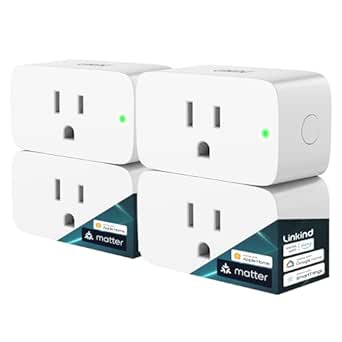
Linkind Matter Smart Plug – Works with Apple Home, Alexa, Siri, Google Home
- ✔ Plug type: Type A
- ✔ Current and power: 15 A; 1800 W
- ✔ Connectivity: Matter; 2.4 GHz Wi-Fi

Echo Show 5 (Charcoal) – Smart Display with Enhanced Bass
- ✔ Display: 5.5-inch touchscreen
- ✔ Camera: 2 MP with built-in privacy shutter
- ✔ Audio: 1.75-inch full-range speaker

Kasa Smart Plug HS103P4 – Wi-Fi Outlet, Touch Actuator, Works with Alexa & Google Home, No Hub Required, 15 A, UL Certified, 4-Pa…
- ✔ Pack size: 4 plugs
- ✔ Current and power: 15 A; 1800 W
- ✔ Operating voltage: 120 V AC
The Echo Dot is the easier recommendation for most first-time buyers, especially if price and third-party device support matter most. HomePod mini can justify its higher price for Apple households that value tighter integration, handoff between devices, and Apple’s approach to privacy. The criteria below compare what those differences mean in daily use, including sound, smart home support, setup, privacy, and value.
At a Glance
| Criteria | Apple HomePod mini | Amazon Echo Dot (5th generation) | Winner |
|---|---|---|---|
| Price and value | Typically costs more; stronger value for Apple households using its integrations. | Generally the less expensive option; offers useful Alexa features at a lower entry cost. | B |
| Smart home compatibility | Works with Apple Home and Matter-compatible devices; best fit for a HomeKit-centered setup. | Broad Alexa device support, including many brands and routines; Matter support varies by device and feature. | B |
| Phone and ecosystem integration | Deep integration with iPhone, Apple Music, AirPlay, and other Apple devices. | Works across iOS and Android through Alexa; less tightly integrated with Apple services. | A |
| Voice assistant and services | Siri handles common requests and Apple services; fewer third-party assistant integrations than Alexa. | Alexa supports a broad range of skills, services, and connected devices. | B |
| Sound and music | Good clarity for its size; supports stereo pairing with another HomePod mini. | Suitable for speech and casual listening; bass and room-filling sound are limited by its small size. | Depends |
| Privacy and data controls | Apple emphasizes limited data use and processing where possible on device; some requests still rely on Apple services. | Offers app controls and voice-history deletion; more Alexa interactions involve Amazon cloud services. | A |
| Setup and household access | Simple for Apple users, but household control is most convenient when people use Apple devices and Home sharing. | Straightforward for mixed-device households; Alexa app and Amazon account are required. | B |
Linkind Matter Smart Plug – Works with Apple Home, Alexa, Siri, Google Home
For a home that mixes phone platforms or voice assistants, the Linkind Matter Smart Plug is the most adaptable starting point in this group. Matter support is its defining advantage: it can work with Apple Home, Alexa, Google Home, and other compatible platforms, so we have more room to choose how we manage devices. That makes it a stronger fit for a changing or mixed-ecosystem setup than the Kasa HS103P4, which is presented for Alexa and Google Home.Its offline LAN control is another meaningful distinction. Local operation can keep a connected appliance controllable when internet access drops, which is useful for routines that should not depend entirely on cloud access. The 15 A, 1800 W rating also puts it on similar footing to Kasa for supported loads. It remains a plug for Type A outlets, however, and its broad platform reach depends on a Matter-certified hub or controller for integration with the named ecosystems.We should also plan around the 2.4 GHz Wi-Fi requirement. That is shared with Kasa, so it does not distinguish Linkind from the other plug; the meaningful difference is Matter and local control. Choose it when flexibility matters enough to handle the controller requirement. If we simply want several outlets working without a hub, Kasa is the more direct route.
Pros:
- Matter support spans several major smart home platforms.
- Offline LAN control can preserve local operation during internet outages.
- 15 A / 1800 W capacity suits a range of supported appliances.
- Voice commands and scheduling add hands-free and automated control.
Cons:
- A Matter-certified hub or controller is required for platform integration.
- Works only with 2.4 GHz Wi-Fi.
- Type A plug limits it to compatible U.S.-style outlets.
Best for: Households mixing Apple Home, Alexa, Google Home, or SmartThings that have or plan to add a compatible Matter controller.
Not ideal for: Buyers who need a hub-free setup, use non-Type A outlets, or have no 2.4 GHz Wi-Fi network available.
Bottom line: Choose Linkind when cross-platform flexibility and local control matter more than avoiding a hub.
“Choose Linkind when cross-platform flexibility and local control matter more than avoiding a hub.”
Echo Show 5 (Charcoal) – Smart Display with Enhanced Bass
The Echo Show 5 changes the decision from which outlet to automate to where we want a visible smart home control point. Its 5.5-inch touchscreen can show information and support video calls, while Alexa provides a way to control compatible devices. A plug like Linkind or Kasa can automate an appliance; this display gives us a small, shared surface for interacting with an Alexa-centered home.That screen and camera also come with tradeoffs. The built-in camera is 2 MP, so it is aimed at basic video calls rather than high-detail imaging, and the device is less ecosystem-neutral than the Matter plug. If our priority is controlling appliances from Apple Home or Google Home, Linkind has a clearer cross-platform role. If we need multiple outlets rather than a screen, the Kasa pack addresses that more directly.For a bedside table, kitchen counter, or desk, the compact footprint makes glanceable weather, news, photos, and calls convenient. The privacy shutter and mic/camera off button offer direct controls when the camera is not wanted. Its speaker is tuned for deeper bass and clearer vocals, but this remains a small display with a built-in 1.75-inch speaker, not a substitute for a dedicated home audio setup. We should pick it for visual Alexa interaction, not as the most flexible smart home controller.
Pros:
- 5.5-inch touchscreen adds visual controls and glanceable information.
- Alexa can control compatible smart home devices by voice.
- Privacy shutter and mic/camera off button offer physical controls.
- Compact design combines a display, camera, and speaker.
Cons:
- The 2 MP camera may not satisfy buyers who need high-detail video.
- Its strongest smart home fit is for Alexa users, unlike Matter-based cross-platform control.
- Some Bluetooth speakers requiring PIN codes may not pair.
Best for: Alexa households that want a compact screen for device control, glanceable updates, and video calls in a kitchen, bedroom, or desk area.
Not ideal for: Buyers seeking a platform-neutral hub, high-detail video calls, or a multi-outlet automation solution.
Bottom line: Pick Echo Show 5 when we want a small, visible Alexa control point alongside basic video calling and information.
“Pick Echo Show 5 when we want a small, visible Alexa control point alongside basic video calling and information.”
Kasa Smart Plug HS103P4 – Wi-Fi Outlet, Touch Actuator, Works with Alexa & Google Home, No Hub Required, 15 A, UL Certified, 4-Pa…
When the goal is to automate several lamps, fans, or humidifiers with minimal setup, the Kasa HS103P4 four-pack has the clearest job in this lineup. It connects directly to 2.4 GHz Wi-Fi, so we do not need a hub for its stated Alexa and Google Home integrations. The Kasa app adds remote control, schedules, timers, and countdowns. For a household equipping multiple rooms, the pack provides broader outlet coverage than buying around a single Linkind plug.That simplicity is also its boundary. Kasa is presented for Alexa and Google Assistant, while Linkind’s Matter support is the better match if we want Apple Home or broader platform choice. Both plug models have a 15 A / 1800 W rating and need 2.4 GHz Wi-Fi, but Linkind adds offline LAN control and asks us to provide a Matter controller. Kasa keeps setup direct and familiar, with no hub required.The push button gives us a manual way to switch the outlet, and UL certification is a useful safety detail. Still, these plugs are designed for indoor outlet use and should not be mistaken for a display or a wider automation controller. Choose the pack if we want several basic devices on schedules; skip it if we expect Matter compatibility, offline local operation, or support for other ecosystems.
Pros:
- Four-plug pack covers multiple outlets in one setup.
- Connects to 2.4 GHz Wi-Fi without a hub.
- Kasa app supports remote control, schedules, timers, and countdowns.
- UL certified and includes a physical push button.
Cons:
- Works with 2.4 GHz Wi-Fi only.
- Listed voice platform support centers on Alexa and Google Home.
- Does not offer the Matter compatibility and offline LAN control described for Linkind.
Best for: Buyers who want to automate several indoor lamps or small appliances through Alexa or Google Home without adding a hub.
Not ideal for: Households that need Apple Home or Matter support, offline LAN control, outdoor use, or outlets outside the Type A format.
Bottom line: Choose Kasa when straightforward, hub-free control of several Alexa or Google Home outlets is the priority.
“Choose Kasa when straightforward, hub-free control of several Alexa or Google Home outlets is the priority.”
As an Amazon Associate we earn from qualifying purchases.
Key Differences
The biggest practical difference is ecosystem reach. HomePod mini is designed to feel at home in Apple’s world: it pairs naturally with iPhones, can hand off audio from an iPhone, and works with Apple Home. Those advantages matter most when the people in the household already use Apple devices and compatible accessories. In a mixed-phone home, or one with a wide assortment of smart plugs, lights, and appliances, Alexa’s broader third-party support usually makes the Echo Dot simpler to fit into an existing setup.
That flexibility comes with a different tradeoff. Echo Dot is generally cheaper and offers more assistant services and device integrations, but Amazon’s assistant relies more heavily on cloud services and its app. HomePod mini costs more and offers a narrower assistant ecosystem, yet it provides a more cohesive experience for Apple users and stronger privacy positioning. Neither small speaker replaces a dedicated audio system: choose based on control and convenience first, then treat music quality as a secondary benefit.
Detailed Comparison
Price and value (Amazon Echo Dot (5th generation) wins — moderate)
The Echo Dot wins on upfront cost, which makes it easier to put one in several rooms or try voice control without committing much money. HomePod mini’s premium is easier to defend when its Apple integrations will be used daily, such as handing off audio or controlling a HomeKit setup. The difference is moderate: for a single speaker and casual commands, Echo Dot is better value; for an Apple-centered home, the extra spend can buy a smoother experience.
Smart home compatibility (Amazon Echo Dot (5th generation) wins — moderate)
Echo Dot generally wins for breadth because Alexa supports a large range of brands and device routines. HomePod mini works well with Apple Home and Matter-compatible products, but buyers should check that specific devices and features are supported by their chosen platform. The gap is moderate for a new, mixed-brand setup and minor when a home already uses compatible HomeKit accessories. Choose Echo Dot when fitting an existing assortment of devices is the priority.
Phone and ecosystem integration (Apple HomePod mini wins — major)
HomePod mini clearly wins for iPhone households. Audio handoff, AirPlay, and Apple Music support make it convenient to move between personal devices and the speaker, while Apple Home centralizes compatible accessories. Echo Dot works with both iOS and Android, but it does not provide the same depth of Apple-specific interaction. The gap is major if the household already relies on Apple services, and minor if the speaker will mainly answer questions or run timers.
Voice assistant and services (Amazon Echo Dot (5th generation) wins — moderate)
Alexa wins on the range of third-party skills, supported services, and device integrations. Siri covers common requests and works naturally with Apple services, but users who depend on specific Alexa skills may not find an equivalent on HomePod mini. The gap is moderate for people who use voice commands to operate many services or gadgets. For basic music, weather, alarms, and smart home commands, both can be adequate, so the difference shrinks.
Sound and music (minor difference)
There is no universal winner. HomePod mini is a compelling compact speaker for everyday listening and pairs with another unit for stereo sound. Echo Dot handles spoken audio and casual music, but its small enclosure limits bass and room-filling volume. The difference is minor to moderate depending on listening habits, and neither is the right buy for serious music playback across a large room. Compare supported music services and speaker pairing options alongside sound.
Privacy and data controls (Apple HomePod mini wins — moderate)
HomePod mini has the stronger privacy posture for buyers who prefer Apple’s approach to voice data and on-device processing where available. Echo Dot gives users app controls and options to review or delete voice history, but Alexa interactions more often use Amazon’s cloud services. The practical gap is moderate for privacy-conscious users and less important to those comfortable with cloud assistants. Both require microphone access for hands-free voice control, so check current settings before purchase.
Setup and household access (Amazon Echo Dot (5th generation) wins — moderate)
Echo Dot tends to fit mixed-device households more easily because Alexa works across iOS and Android and supports a wide device range. HomePod mini is straightforward to set up for an Apple user, but shared home control works best when household members use Apple’s Home features. This is a moderate difference in a family with varied phones and a minor one in an all-Apple home. Consider who will manage routines and settings, not only who buys the speaker.
Apple HomePod mini: Pros and Cons
Pros:
- Strong integration with iPhone, Apple Music, AirPlay, and Apple Home.
- Good compact-speaker sound for everyday listening.
- Privacy approach may suit people who want fewer cloud-dependent interactions.
Cons:
- Costs more than the Echo Dot.
- Siri and third-party service support are narrower than Alexa’s.
- Best experience depends on using Apple devices and compatible smart home products.
Amazon Echo Dot (5th generation): Pros and Cons
Pros:
- Lower purchase price makes it accessible and practical for multiple rooms.
- Broad Alexa skills and smart home device support.
- Works with both iOS and Android households.
Cons:
- Less tightly integrated with Apple’s services and devices.
- Small-speaker sound has limited bass and room-filling power.
- More Alexa features rely on Amazon cloud services.
Who Should Choose What
Choose Apple HomePod mini if:
- You use an iPhone and Apple Music and want convenient audio handoff.
- Your smart home already centers on Apple Home or compatible Matter accessories.
- You place a higher value on Apple’s privacy approach than on broad assistant integrations.
Choose Amazon Echo Dot (5th generation) if:
- You want the lower-cost way to add voice control or speakers to several rooms.
- Your home includes a mix of smart device brands or Android phones.
- You rely on Alexa skills, routines, or services that Siri may not support.
Skip both if: Skip both if your main goal is powerful music playback; choose a larger speaker or a dedicated audio system instead.
Value for Money
For most first-time buyers, Echo Dot offers better value because it covers everyday assistant tasks and supports a wide range of smart home devices at a lower price. That price advantage matters most when buying more than one speaker or when the smart home is still taking shape. HomePod mini is worth paying more for when Apple integration will be used often: an iPhone owner who regularly hands off audio, uses Apple Music, and manages HomeKit accessories may get more practical value from the tighter fit.
Do not pay the HomePod mini premium just for the word “smart” or the expectation of high-end sound. Both are small speakers, and neither is a substitute for a larger audio product. Pay extra for HomePod mini when its Apple-specific convenience and privacy approach matter; otherwise, Echo Dot is the more economical choice.
Final Verdict
Choose the Amazon Echo Dot (5th generation) if you want a capable, lower-cost smart speaker that can work across phone types and a broad mix of smart home devices. It is the better default recommendation for most households, particularly those building a setup from scratch or buying speakers for several rooms.
Choose Apple HomePod mini if your home already runs on iPhone, Apple Music, and Apple Home. Its stronger Apple integration is the deciding factor, and the higher price can make sense when those conveniences will be part of daily use. If neither ecosystem suits you, or sound quality is the main goal, skip both and choose a speaker designed for music first.
Frequently Asked Questions
Which is better for an iPhone user, HomePod mini or Echo Dot?
HomePod mini is usually the better fit if you use Apple Music, AirPlay, or Apple Home, because it connects more closely with those services. Echo Dot remains a sensible choice if you mainly want Alexa features or lower cost.
Does HomePod mini work with smart home devices?
Yes. It works with Apple Home accessories and supported Matter devices. Check the exact product and feature compatibility before buying, especially if you already own devices chosen for Alexa.
Is Echo Dot better for a mixed-brand smart home?
Usually. Alexa supports a broad range of device brands and routines, so it is often easier to bring different products together. Specific features can vary by device, so check compatibility for the functions you need.
Is HomePod mini worth the extra cost?
It can be for Apple households that will use its device integration, audio handoff, and Apple Home support. If you want basic voice control at the lowest cost, Echo Dot is generally the better value.
Which speaker sounds better?
HomePod mini is a strong option for compact everyday listening, while Echo Dot is suitable for speech and casual music. Both have size limits; choose a larger speaker if bass or room-filling sound is your priority.