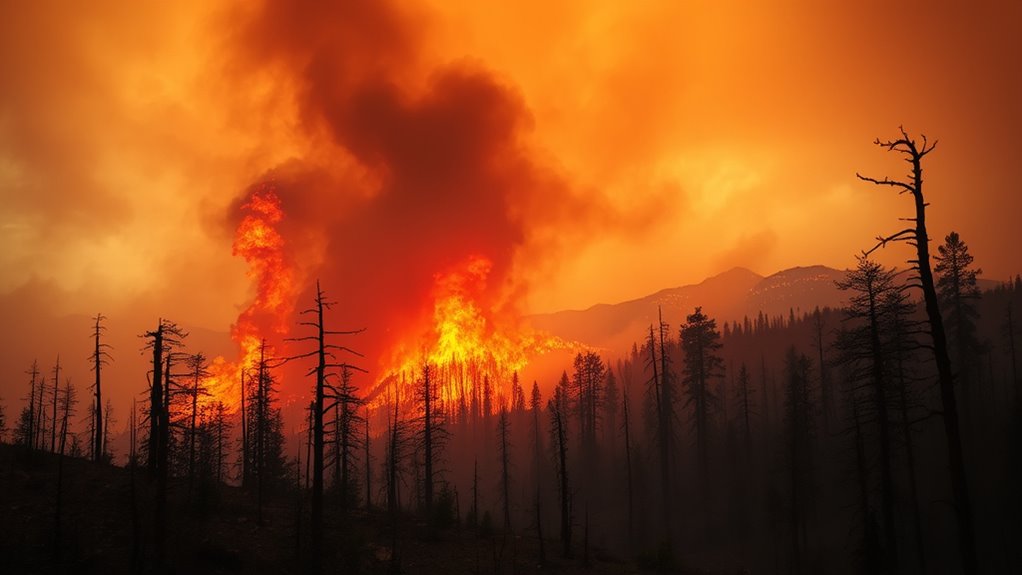

Climate change has made wildfire seasons more intense by creating hotter, drier conditions that turn vegetation into tinder. These prolonged droughts and shifting climate patterns fuel larger, faster-spreading fires that are harder to control. Traditional firefighting methods struggle against this new reality, and ecosystems face long-term damage. If you want to understand how efforts to manage these extreme fires are evolving, keep exploring the ways climate change continues to influence wildfire behavior.

Get everyday essentials delivered free with Prime
- Fast, free delivery on millions of items
- Prime Video, Amazon Music and more included
- Member-only deals all year
Key Takeaways
- Climate change has increased temperatures and prolonged droughts, creating ideal conditions for extreme wildfires.
- Rising drought levels dry out vegetation, making forests more combustible and accelerating fire spread.
- Higher temperatures and dry conditions weaken traditional firefighting methods, complicating fire suppression efforts.
- Intense fires lead to ecological damage, disrupting habitats and reducing biodiversity, which can fuel further environmental degradation.
- The feedback loop between climate change and fire regimes results in more frequent, severe wildfires, challenging future fire management.

As wildfire season 2025 approaches, experts warn that the risk of larger and more intense fires is increasing due to changing climate patterns and prolonged drought conditions. These factors create a perfect storm that amplifies the frequency and severity of wildfires, making them harder to control and more destructive. You might notice that firefighting agencies are facing unprecedented challenges, particularly when it comes to fire suppression efforts. Traditional methods, such as setting backfires or creating firebreaks, are less effective in the face of rapidly spreading flames fueled by dry, tinder-like vegetation. The scale of these fires often overwhelms resources, forcing agencies to make difficult decisions about where to focus their efforts.
But beyond immediate firefighting efforts, these extreme fires also have profound ecological impacts. When you see forests and grasslands burn at such intensities, it’s easy to overlook how these fires reshape ecosystems over the long term. Intense fires can destroy habitats for countless species, wipe out mature trees that provide shelter and food, and alter soil composition. These changes can lead to erosion, reduced plant diversity, and disrupted animal populations. In some cases, the ecological impacts hinder natural regeneration, leaving ecosystems vulnerable to invasive species or further degradation. As the climate continues to warm, these cycles of intense fires and ecological disruption become more entrenched, creating a feedback loop that exacerbates environmental degradation. Contrary to traditional beliefs, some ecosystems may actually benefit from fire regimes that restore natural balance, highlighting the importance of sustainable fire management practices.
You should also consider how fire suppression strategies, while essential, can sometimes contribute to these problems. Suppressing small fires might seem like the best way to protect communities and resources, but it often leads to an unnatural buildup of fuel in forests. When a large wildfire finally ignites, it’s typically more intense and harder to control because of the accumulated combustible material. This paradox highlights the importance of adopting more nuanced fire management practices that balance suppression with controlled burns, which can reduce excess fuels and restore natural fire regimes.
Ultimately, the combination of climate change-driven conditions and current fire suppression practices is transforming wildfire seasons into more frequent and catastrophic events. You’re witnessing a shift where fires are no longer just natural processes but are increasingly shaped by human influence and climate patterns. Recognizing these interconnected issues can help you understand why wildfire season 2025 might be one of the most challenging yet, emphasizing the urgent need for adaptive, sustainable strategies to protect both communities and ecosystems.
As an affiliate, we earn on qualifying purchases.
Frequently Asked Questions
How Did Specific Weather Patterns Contribute to Wildfire Severity in 2025?
In 2025, you saw wildfire severity spike because drought conditions dried out vegetation, making it highly flammable. Strong wind patterns spread fires rapidly, fueling their intensity and making containment difficult. These weather patterns created perfect conditions for wildfires to grow uncontrollably, especially when combined with rising temperatures. As a result, you experienced devastating fires that spread quickly, highlighting how specific weather patterns directly contributed to the severity of wildfires that year.
What Role Did Human Activities Play in Preventing or Exacerbating Fires?
You might not realize it, but your urban expansion and land management choices directly impact wildfire severity. Poor land management can leave fuels unchecked, making fires worse, while expanding urban areas into fire-prone regions increases risk. When you neglect proper planning or ignore fire prevention measures, you unintentionally exacerbate fires. Conversely, responsible land management and mindful expansion can help prevent fires and protect communities from devastating wildfires.
Are New Firefighting Technologies Being Developed for Future Wildfire Seasons?
Yes, new firefighting technologies like drones and AI prediction are being developed for future wildfire seasons. Drones extend your reach, allowing you to monitor fires in hard-to-access areas and assess damage quickly. AI prediction tools help you anticipate fire spread and optimize resource deployment. These innovations empower you to act faster, improve safety, and effectively manage wildfires, reducing their destructive impact on communities and ecosystems.
How Has Wildfire Smoke Affected Air Quality and Public Health in 2025?
You breathe in thick, acrid smoke that cloaks the sky in a hazy, orange glow, making every breath feel heavy and strained. Wildfire smoke has caused significant air quality deterioration in 2025, increasing health risks, especially for vulnerable populations. You’re advised to monitor air quality reports and limit outdoor activities. Public health officials conduct health risk assessments to understand long-term impacts, urging precautions to protect your respiratory health during these intense wildfire seasons.
What Long-Term Ecological Impacts Are Expected From the 2025 Wildfires?
You’ll see long-term ecological impacts from the 2025 wildfires, including soil degradation and biodiversity loss. The intense fires destroy plant life and disturb soil stability, making it harder for ecosystems to recover. As a result, native species may decline or disappear, reducing biodiversity. These changes can disrupt food chains and habitat availability, ultimately altering the health and resilience of ecosystems for years to come.
As an affiliate, we earn on qualifying purchases.
Conclusion
As you reflect on wildfire season 2025, it’s clear that climate change played a starring role, turning small sparks into raging infernos. Just like the roaring engines of a 21st-century fire truck, the fires spread faster and burn hotter than ever before. If you don’t act now, these extreme fires might become the new normal, echoing a future where nature’s fury is unstoppable. Remember, this isn’t just a story — it’s your reality in the making.
As an affiliate, we earn on qualifying purchases.
As an affiliate, we earn on qualifying purchases.
Columbus Day / Indigenous Peoples' Day Picks
long weekend sales
As an affiliate, we earn on qualifying purchases.