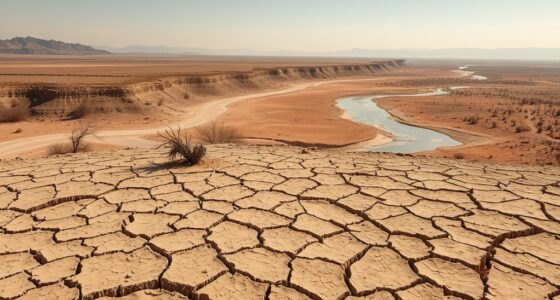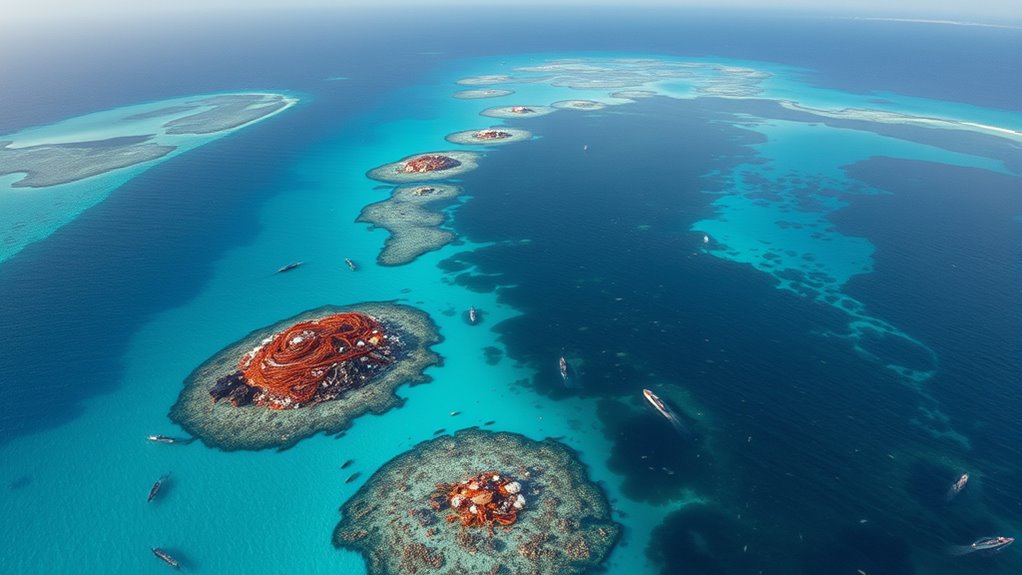

The oceans are in serious trouble due to pollution, habitat loss, and climate change, threatening marine biodiversity and coastal communities. Overfishing, habitat destruction like coral reef damage, and rising sea levels worsen the crisis. If you care about the planet’s health and your future, it’s vital to understand these issues and what can be done. Keep exploring to discover how you can help protect our oceans and secure a sustainable tomorrow.
Key Takeaways
- Ocean pollution from plastics, chemicals, and waste continues to threaten marine life and ecosystem health globally.
- Marine biodiversity decline persists due to habitat destruction, overfishing, and climate-related impacts like coral bleaching.
- Coastal erosion accelerates from rising sea levels and intensified storms, damaging habitats and human communities.
- Conservation efforts, including marine protected areas and sustainable practices, are expanding but face ongoing challenges.
- Climate change remains a critical driver, requiring global action to mitigate its effects on ocean health and shoreline stability.

Have you ever wondered what our oceans are truly facing today? The reality is that they’re under more threat than ever, and understanding these challenges is essential to making a difference. One of the most pressing issues involves the decline of marine biodiversity. Oceans are home to countless species, from tiny plankton to massive whales, and this rich diversity keeps our planet balanced. However, pollution, overfishing, and habitat destruction are drastically reducing these populations. When habitats are damaged or destroyed—such as coral reefs or seagrass beds—the complex web of life they support begins to unravel. This loss of marine biodiversity doesn’t just mean fewer colorful fish or playful dolphins; it upsets the entire ocean ecosystem, affecting food webs and the health of the planet itself. As a result, the resilience of our oceans diminishes, making them more vulnerable to climate change and other threats. Protecting marine biodiversity is also vital for maintaining the overall health of ocean ecosystems and supporting the services they provide to humanity.
Alongside the decline in marine biodiversity, coastal erosion has become an alarming issue. You might notice beaches shrinking or disappearing altogether, especially in areas where human activity and natural processes collide. Coastal erosion occurs when waves, storms, and rising sea levels wear away shorelines faster than they can naturally rebuild. This process threatens coastal communities, destroys habitats, and impacts local economies that rely on tourism and fishing. It’s worsened by climate change, which accelerates sea-level rise and intensifies storm activity. As coastlines retreat, essential nesting sites for sea turtles, breeding grounds for seabirds, and mangrove forests—natural buffers that protect inland areas—are lost. This erosion not only displaces communities but also damages ecosystems that are indispensable for maintaining marine health. Without concerted efforts to combat coastal erosion through sustainable practices and habitat restoration, these areas could face irreversible changes. Addressing climate change and sea-level rise is crucial for protecting these vulnerable coastlines and their associated habitats.
You may feel overwhelmed by the scope of these issues, but awareness is the first step. Protecting marine biodiversity requires reducing pollution, establishing marine protected areas, and supporting sustainable fishing practices. Tackling coastal erosion involves implementing better coastal management, restoring natural barriers like dunes and mangroves, and addressing climate change at its source. Every action counts, whether it’s supporting policies that prioritize ocean health or making choices that lessen your carbon footprint. The oceans are essential to our survival—regulating climate, providing food, and supporting countless species. Recognizing the interconnectedness of these problems helps you see your role in safeguarding this precious resource. By taking steps now, you can help ensure that future generations inherit oceans teeming with life and resilience, rather than facing a world where they’re all but lost.

Boat Interior Cleaning Kit, Marine Vinyl Protectant and Cleaner, Wipes, Microfiber Cloths, for Boat Seats, Pontoon Accessories, Jet Ski, Car, and RV Care Supplies
COMPLETE INTERIOR CLEANING KIT: Our Boat Cleaning Supplies set includes our boat Vinyl Cleaner, Vinyl Protectant, UV Boat…
As an affiliate, we earn on qualifying purchases.
As an affiliate, we earn on qualifying purchases.
Frequently Asked Questions
How Will Climate Change Further Impact Ocean Ecosystems by 2025?
By 2025, climate change will further harm ocean ecosystems, causing more coral bleaching and ocean acidification. You’ll see coral reefs lose their vibrant colors and struggle to survive, disrupting marine life. Rising temperatures and increased CO2 absorption weaken shells and skeletons of marine species, threatening biodiversity. You can help by supporting sustainable practices and reducing your carbon footprint to slow these damaging effects.
What Are the Most Effective Ocean Conservation Strategies Currently Being Implemented?
Think of ocean conservation like tending a garden—you need to protect and nurture it. You can do this with marine protected areas that act as safe havens for marine life and by promoting sustainable fishing practices that prevent overharvesting. These strategies help restore ecosystems, safeguard biodiversity, and guarantee fisheries thrive for generations. Implementing these measures now is vital for a healthier, more resilient ocean future.
How Does Ocean Pollution Affect Human Health and Local Economies?
Ocean pollution harms your health and local economies by increasing marine debris and plastic ingestion. When plastics break down, they contaminate seafood, risking your well-being. Coastal communities suffer economically as fishing and tourism decline due to polluted waters. You may also face higher healthcare costs from illnesses linked to contaminated seafood. Protecting oceans through conservation helps reduce marine debris, safeguarding both your health and the livelihoods of local populations.
What Role Do International Policies Play in Reducing Marine Pollution?
International policies, like treaties, play a vital role in reducing marine pollution by setting global standards and promoting cooperation. You can influence policy enforcement by supporting international agreements and advocating for stronger regulations. These treaties hold nations accountable for their actions, encouraging sustainable practices. When countries work together under these policies, they can effectively curb pollution sources, protect marine ecosystems, and guarantee healthier oceans for everyone.
How Can Individuals Contribute to Ocean Preservation Efforts Effectively?
You can contribute to ocean preservation by engaging in community activism and adopting a sustainable personal lifestyle. Join local cleanup events, advocate for stronger policies, and spread awareness about marine issues. Reduce plastic use, choose eco-friendly products, and avoid single-use items to lessen pollution. Your active participation and lifestyle changes make a difference, inspiring others and helping protect our oceans for future generations.
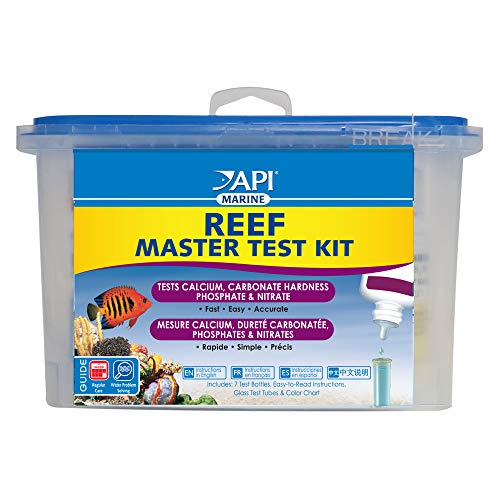
API REEF MASTER TEST KIT Reef Aquarium Water Test Kit 1-Count
Contains one (1) API REEF MASTER TEST KIT Reef Aquarium Water Test Kit 1-Count, including 7 bottle of…
As an affiliate, we earn on qualifying purchases.
As an affiliate, we earn on qualifying purchases.
Conclusion
Remember, a chain is only as strong as its weakest link. If you don’t act now to reduce pollution and protect our oceans, we risk losing their vibrant life and crucial resources forever. Every small step counts—from cutting plastic use to supporting conservation efforts. The future of our oceans depends on you. Don’t wait for someone else to make a difference. Together, we can turn the tide and guarantee healthier oceans for generations to come.

EZUVITA 7 Pcs Fishing Tool Kit, Fishing Gear – Rust Resistant Fishing Pliers with Lanyard & Sheaths, 7-inch Fillet Knife, Fishing Lip Gripper, Fishing Scissors & Tool Retractor, Gifts for Fishmen
【All-in-One Fishing Gear Tool Kit】 This combo packs 7pc essential fishing tools, including 1×Fish Lip Gripper, 1×7-inch fishing…
As an affiliate, we earn on qualifying purchases.
As an affiliate, we earn on qualifying purchases.

Sandbaggy Coir Mat | Erosion Control Product for Stopping Soil Erosion on Hillsides, Riverbanks & Oceanfront | Lasts 5X Longer Than Straw Blanket | Lasts 2-5 Yrs (Homeowner Size – 4 ft by 30 ft Roll)
LONG-LASTING EROSION CONTROL WITH COIR FIBERS: Made from dense coconut coir fibers, this erosion control mat offers 2–5…
As an affiliate, we earn on qualifying purchases.
As an affiliate, we earn on qualifying purchases.

Elena’s passion for the arts and culture shines through in her vivid reporting. From film festivals to gallery openings, her coverage is an essential source for anyone interested in the latest cultural trends and artistic movements.