
Climate change is intensifying droughts and disrupting crop yields, directly threatening your food security now and in 2025. Rising temperatures and erratic weather make traditional farming less reliable, so adopting adaptive practices like drought-resistant crops and efficient water management becomes essential. These strategies help sustain harvests amid climate shifts. If you keep exploring, you’ll discover more ways to strengthen resilience and protect your food supply against future challenges.
Key Takeaways
- Increasing drought frequency due to climate change threatens crop yields and food security worldwide by limiting water availability.
- Adoption of drought-resistant crops and diversified planting strategies can mitigate impacts on food production in 2025.
- Advanced water management techniques, such as drip irrigation and rainwater harvesting, are essential for sustaining agriculture during droughts.
- Soil health practices like cover cropping and organic matter management improve land resilience amid declining moisture levels.
- Collaboration with researchers and extension services is vital for implementing adaptive strategies to safeguard food supply chains.
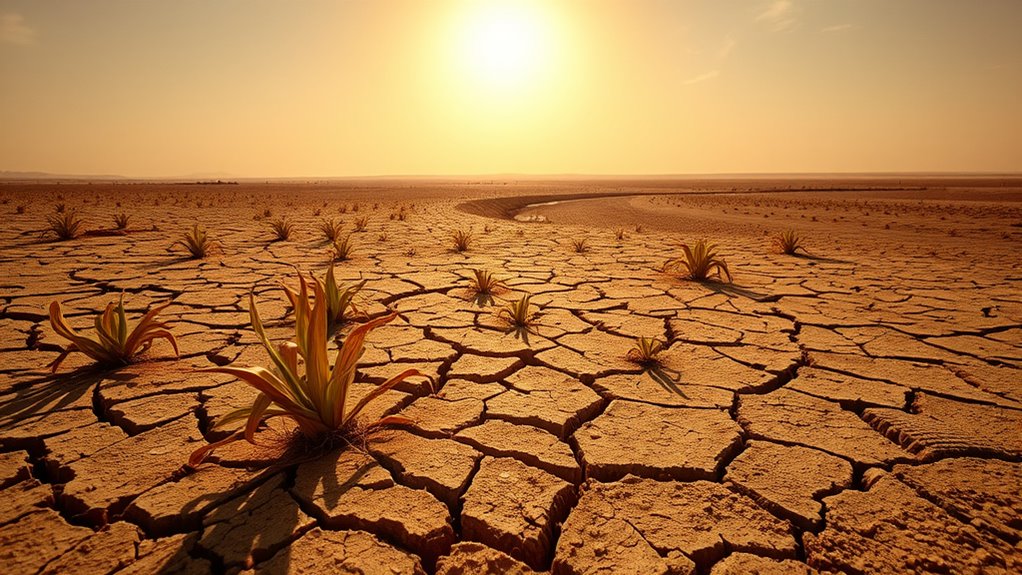
Climate change is increasingly threatening global food security by disrupting agricultural systems and reducing crop yields. As temperatures rise and weather patterns become more erratic, you’ll find that traditional farming methods might no longer be enough to sustain harvests. To combat these challenges, agricultural adaptation becomes essential. You need to adopt new practices that can withstand extreme weather, such as drought-resistant crops or diversified planting strategies. These adaptations help guarantee that your farm remains productive despite the changing climate.
Adapting farming practices to climate change ensures resilience and sustained productivity amid unpredictable weather patterns.
Water management plays a vital role in maintaining crop health and maximizing yields during these unpredictable times. With droughts becoming more frequent and severe, you have to be proactive in conserving and efficiently using water resources. Implementing advanced irrigation techniques, such as drip or precision irrigation, allows you to deliver water directly to plant roots, reducing waste and guaranteeing crops get the moisture they need. Rainwater harvesting can also supplement your water supply, especially in areas where rainfall is sporadic. These measures not only protect your crops during droughts but also build resilience against future climate shocks.
You’ll also need to take into account soil health, as droughts can deplete nutrients and degrade land quality. Organic matter management and cover cropping can improve soil moisture retention, making your land more resilient to dry spells. By adjusting planting schedules to align with water availability and climate forecasts, you optimize crop growth and minimize losses. Utilizing weather data and climate models, you can better plan your farming calendar, avoiding planting during predicted drought periods and choosing crop varieties suited to drier conditions. Recognizing the importance of conservation practices can further enhance your farm’s resilience and sustainability.
Incorporating agricultural adaptation strategies requires ongoing effort and learning. You might work with local extension services or agricultural researchers to stay updated on innovative practices and drought-tolerant crop varieties. These efforts help you stay ahead of the changing climate, safeguarding your livelihood and contributing to food security at a broader level. Efficient water management, combined with adaptive farming practices, becomes your frontline defense against the impacts of climate change. It’s about making your farm more resilient, reducing vulnerability, and guaranteeing that your crops can survive and thrive despite the increasing frequency of droughts.
Top picks for "climate change food"
Open Amazon search results for this keyword.
As an affiliate, we earn on qualifying purchases.
Frequently Asked Questions
How Will Climate Change Affect Global Fisheries by 2025?
By 2025, climate change will likely reduce global fisheries, impacting your access to seafood, as rising ocean temperatures and acidification threaten marine biodiversity. You’ll notice shifts in fish populations and migration patterns, challenging aquaculture sustainability. These changes may lead to decreased catches and increased pressure on wild stocks, making it essential to support sustainable practices that protect marine ecosystems and ensure future food security for everyone.
What Innovative Farming Techniques Can Mitigate Drought Impacts?
Think of your farm as a fortress against drought. You can use precision agriculture to target water efficiently and reduce waste, like a sniper hitting its mark. Plant drought-resistant crops that thrive despite dry conditions, strengthening your resilience. These innovative techniques act as shields, helping you maintain yields and adapt to changing climate patterns, ensuring your food production stays steady even in the face of increasing droughts.
How Do Changing Weather Patterns Influence Food Prices Worldwide?
Changing weather patterns cause significant price volatility worldwide, making food prices unpredictable. You’ll notice that supply chain disruptions become more frequent as droughts and floods impact crop yields, reducing food availability. These fluctuations hurt consumers and farmers alike, leading to higher costs and shortages. Staying aware of these trends can help you better prepare for inflation and supply issues, as the global food market becomes increasingly unstable due to unpredictable weather conditions.
Are There Specific Crops More Resilient to Drought Conditions?
Did you know that some drought-resistant crops can produce yields up to 50% higher in dry conditions? You’ll find resilient crop varieties like millet, sorghum, and certain beans excel during droughts, making them ideal choices for unpredictable weather. These drought-resistant crops help secure food supply and reduce vulnerability, ensuring you’re better prepared for future climate challenges. Choosing resilient crop varieties can make a significant difference in food security.
What Policies Are Most Effective in Ensuring Food Security Amid Climate Change?
You should support policy reforms that promote sustainable farming practices and strengthen community resilience. Effective policies include investing in drought-resistant crops, improving water management, and providing farmers with access to climate information. These initiatives help secure food supplies during climate shocks. By prioritizing community resilience and adaptive strategies, you can guarantee a more stable food system that withstands the impacts of climate change now and in the future.
Conclusion
As the droughts of 2025 threaten your fields like an unforgiving sun, remember that your choices today are the rain that can nourish tomorrow’s harvest. Climate change is a storm cloud looming overhead, but your actions are the lightning that can spark change. Stand resilient, plant hope, and steer the future away from barren wastelands. Together, you can turn this parched landscape into a thriving garden of abundance and resilience.

Elena’s passion for the arts and culture shines through in her vivid reporting. From film festivals to gallery openings, her coverage is an essential source for anyone interested in the latest cultural trends and artistic movements.