By 2025, manufacturing and trade are rebounding strongly, thanks to innovations in digital technologies, regional supply strategies, and increased automation. You’ll see supply chains becoming more resilient and efficient as companies adopt smarter logistics, localized manufacturing, and transparent tracking systems. Despite challenges like geopolitical risks and workforce shifts, these changes are boosting global trade. Keep exploring how these strategies are shaping a more robust supply chain landscape that works for you.
Key Takeaways
- Automation and digitization have increased supply chain resilience, enabling faster recovery and adaptability post-disruptions.
- Diversification of suppliers and regional hubs reduces reliance on global trade routes, supporting a rebound in manufacturing.
- Advances in technology, like blockchain, improve transparency and trust, facilitating smoother international trade flows.
- Companies are investing in sustainable practices and greener logistics, strengthening supply chain stability and consumer confidence.
- Workforce upskilling and emotional support strategies help manage transitions, maintaining productivity and recovery efforts.
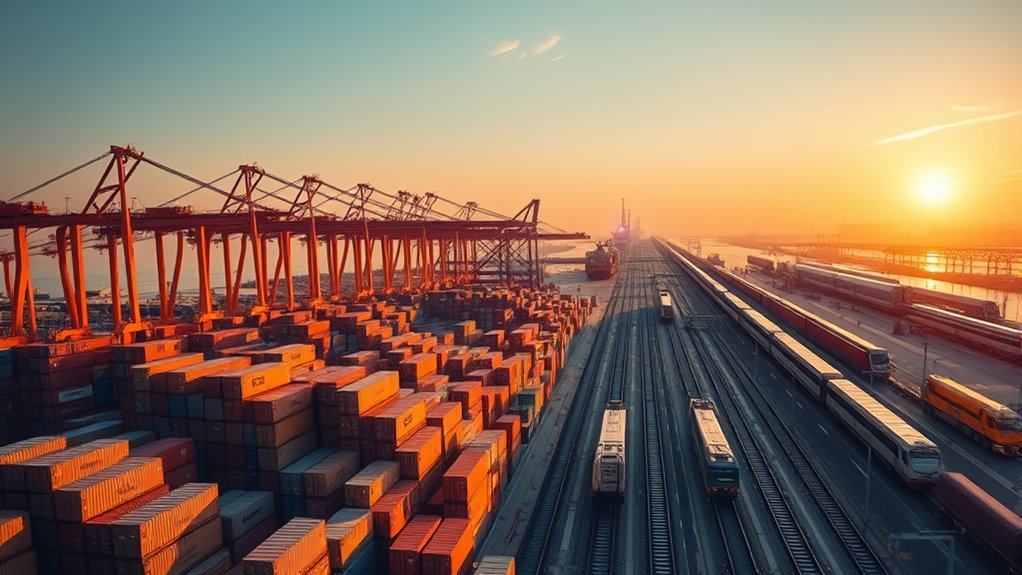
How will global supply chains look in 2025? That’s the question many industry leaders are asking as they navigate an evolving landscape marked by both opportunity and uncertainty. You’ll find that automation plays a pivotal role in shaping these supply chains, but it also presents significant challenges. Implementing advanced robotics, AI-driven logistics, and smart factories can boost efficiency and reduce costs, yet the shift isn’t seamless. You might encounter automation challenges such as integrating new technology with existing infrastructure, managing workforce shifts, and ensuring cybersecurity. These hurdles require careful planning and investment, but overcoming them promises a more resilient and responsive supply chain. Meanwhile, geopolitical risks continue to cast a shadow over global trade. Tensions between major nations, trade restrictions, and regional conflicts threaten to disrupt supply routes and sourcing strategies. As a decision-maker, you need to keep a close eye on international developments, adapt your sourcing and inventory policies, and diversify suppliers to mitigate potential disruptions. The interconnectedness of today’s supply chains means that geopolitical risks in one region can ripple across the entire network, causing delays and increased costs. You’ll also see a shift toward localized manufacturing and regional supply hubs as a way to reduce vulnerability to these risks. This strategy helps insulate your operations from global shocks but requires upfront investments and strategic planning. In addition, you’re likely to witness a push toward more transparent and digitized supply chains. Technologies like blockchain can enhance traceability, ensuring you know exactly where your products come from and how they’re handled at each stage. This increased transparency not only improves compliance but also builds trust with consumers and partners. However, adopting these technologies involves overcoming integration issues, data privacy concerns, and the need for new skill sets within your team. Additionally, the integration of emotional support strategies in supply chain management can help address workforce stress and adapt to rapid technological changes. On the sustainability front, companies are increasingly expected to demonstrate responsible sourcing and reduce their environmental impact. This shift influences supply chain design, pushing you to evaluate suppliers based on their environmental practices and to invest in greener logistics options. All these factors combined suggest that by 2025, your supply chain will be more digital, more localized, and more resilient—if you can successfully tackle automation challenges and navigate geopolitical risks. The landscape is complex, but your proactive strategies and technological investments will determine your ability to rebound and thrive in this new era. You have the opportunity to build a supply chain that’s not only efficient but also adaptable to the unpredictable forces shaping global trade.

Focus On: Supply Chain Management: Request for Quotation, Consignment, Warehouse management System, Inventory management Software, JDA Software, Request … Automated storage and retrieval Syste…
As an affiliate, we earn on qualifying purchases.
As an affiliate, we earn on qualifying purchases.
Frequently Asked Questions
How Will Geopolitical Tensions Affect Supply Chain Resilience?
Geopolitical tensions can weaken your supply chain resilience by increasing risks like trade sanctions and diplomatic conflicts. When countries impose sanctions or engage in conflicts, your access to critical materials and markets may get disrupted, causing delays and higher costs. To stay resilient, you should diversify suppliers, build strategic stockpiles, and monitor geopolitical developments closely, so you can adapt quickly and minimize vulnerabilities caused by these tensions.
What Role Will Emerging Technologies Play in Future Supply Chains?
Emerging technologies like blockchain innovation and AI integration will transform your future supply chains. Blockchain enhances transparency and security, making tracking and verifying goods seamless. Meanwhile, AI streamlines operations, predicts demand shifts, and optimizes logistics. By adopting these technologies, you can increase efficiency, reduce risks, and adapt swiftly to disruptions, ensuring your supply chain remains resilient and competitive in an ever-evolving global landscape.
How Might Climate Change Influence Global Manufacturing Hubs?
You should know that 60% of global manufacturing hubs could face climate-related disruptions by 2030. Climate change pushes you to prioritize climate adaptation strategies and eco-friendly manufacturing. Rising temperatures and extreme weather threaten supply chains, making it vital for you to invest in sustainable practices that reduce environmental impact. By doing so, you can help safeguard your operations and guarantee resilience against future climate challenges.
Will Automation Lead to Significant Job Displacement Worldwide?
Automation will likely cause some labor displacement, but it also drives workforce transformation. As machines handle routine tasks, you’ll see new roles emerge requiring advanced skills. Instead of widespread job losses, many industries will adapt, emphasizing reskilling and upskilling. Your ability to embrace continuous learning will be vital in steering through these changes. Overall, automation reshapes employment, creating opportunities while displacing certain jobs.
How Will Consumer Behavior Shifts Impact Supply Chain Strategies?
Think of your supply chain as a river, flowing with consumer preferences and retail innovations shaping its course. As your customers’ tastes shift, you need to adapt your strategies like a skilled navigator steering through changing currents. Embrace retail innovations and monitor consumer preferences closely, ensuring your supply chain remains resilient and responsive. This way, you’ll stay afloat and meet demand effectively, no matter how the waters of market trends change.

Blockchain-Powered Supply Chains: Driving Transparency, Efficiency, and Trust (Bussiness Collections)
As an affiliate, we earn on qualifying purchases.
As an affiliate, we earn on qualifying purchases.
Conclusion
By 2025, you’ll see global supply chains rebounding, but don’t mistake this as a return to the old normal. The resilience you’ve witnessed is like a phoenix rising from the ashes—adaptable and stronger than ever. While disruptions may still appear, your ability to navigate these changes will define success. Remember, in the world of supply chains, change isn’t just inevitable—it’s the spark that fuels innovation and growth.

SMART LOGISTICS AND SUPPLY CHAIN AUTOMATION: Warehouse robotics tracking systems and operational analytics
As an affiliate, we earn on qualifying purchases.
As an affiliate, we earn on qualifying purchases.

Green Logistics and Transportation: A Sustainable Supply Chain Perspective (Greening of Industry Networks Studies, 4)
As an affiliate, we earn on qualifying purchases.
As an affiliate, we earn on qualifying purchases.

Elena’s passion for the arts and culture shines through in her vivid reporting. From film festivals to gallery openings, her coverage is an essential source for anyone interested in the latest cultural trends and artistic movements.