TL;DR

Get everyday essentials delivered free with Prime
- Fast, free delivery on millions of items
- Prime Video, Amazon Music and more included
- Member-only deals all year
Bangladesh appointed a six-member garment wage board on Nov. 1, 2026, as protests over pay disrupted hundreds of factories across several industrial regions. Workers are demanding a monthly minimum of 30,000 taka, while the current floor is 12,500 taka. The board’s recommendations, the timing of a wage decision and how higher pay would be funded remain unclear.
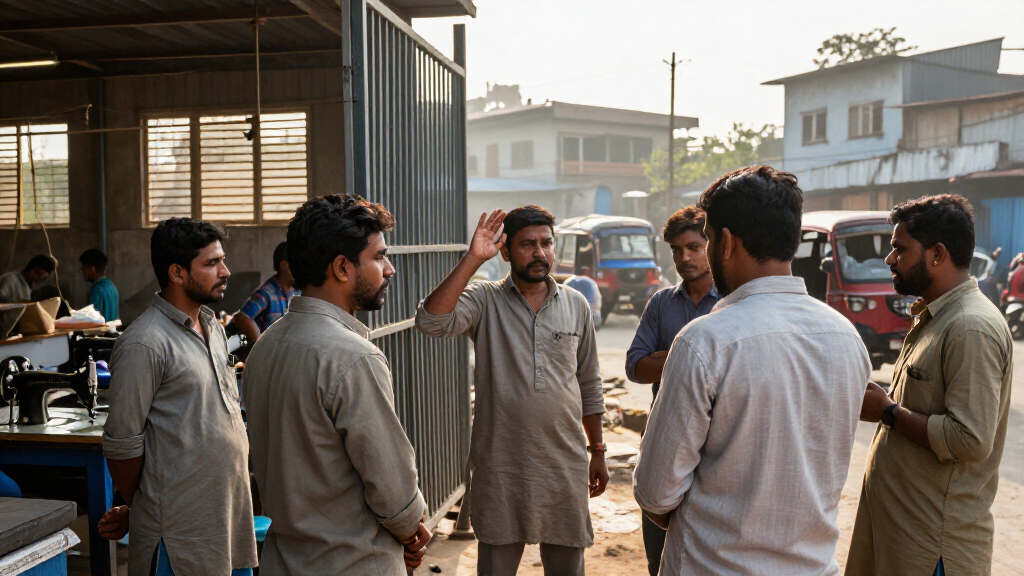
Bangladesh named a six-member garment wage board on Nov. 1 as workers demanding a higher minimum wage walked out of 529 factories across several industrial regions, according to the factory owners’ association. The board’s appointment puts negotiations over pay in motion, but the workers’ demand of 30,000 taka a month remains far above the current 12,500-taka minimum.
The Bangladesh Ministry of Labour and Employment issued notifications establishing the board under the Bangladesh Labour Act, as amended in 2026, according to the source report. Labour and Employment Minister Ariful Haque Choudhury said the move followed talks with workers’ representatives and industry leaders, Reuters reported. The source material does not give a timetable for the board’s recommendations or a date for a new wage decision.
The Bangladesh Garment Manufacturers and Exporters Association (BGMEA) reported disruptions at 529 of 2,134 factories it tracked across five industrial regions on Nov. 1, with 987,190 workers leaving their workplaces. Its figures, reported by The Daily Star, put 276 affected factories and 645,360 workers in Gazipur and Mymensingh; 185 factories and 290,205 workers in Savar, Ashulia and Jirani; and 68 factories and 51,625 workers in the Dhaka Metropolitan Police area, all in Mirpur. No disruptions were reported in the association’s counts for Narayanganj or Chattogram.
The count describes workers walking out and factory operations being disrupted; it does not say that owners locked the factories. Reuters reported that factories reopened on Monday, Nov. 2, while owners remained concerned about further unrest. Reuters also reported road blockades, tear gas and water cannon on Sunday after bricks were thrown at police, a police vehicle and a police box were set alight, and Border Guard Bangladesh personnel were deployed. Police said clashes in Ashulia on Oct. 31 injured several people, including officers.
Garment wage talks reach beyond Dhaka
A new wage board follows factory walkouts across several industrial regions. Its decision could shape workers’ pay, factory operations and export supply chains.
Walkouts spread across regions
BGMEA reported workers leaving factories across several industrial centers on Nov. 1.
Gazipur and Mymensingh
276 factories and 645,360 workers were affected, the largest reported regional count.
Savar, Ashulia and Jirani
185 factories and 290,205 workers were affected.
Mirpur
68 factories and 51,625 workers were affected in the Dhaka Metropolitan Police area.
How the wage gap frames talks
Workers and factory owners hold opposing positions as the board begins consultations.
- Seek a monthly minimum of 30,000 taka.
- Say the current wage is not enough to live on.
- Say the 30,000-taka demand has no logical or mathematical basis.
- Warn prolonged disruptions could affect shipments and buyer payments.
What the board process means
The government has opened negotiations, but key decisions remain unsettled.
The six-member board was named on Nov. 1 after talks with workers’ representatives and industry leaders.
The available information gives no meeting schedule or deadline for a recommendation.
The government has not stated whether it will adopt the workers’ demand or how a wage rise would be funded.
Why export buyers matter
Higher pay raises a question about who absorbs the added costs across the supply chain.
Wage Talks Reach Beyond Dhaka
The disruption extended beyond the capital’s industrial outskirts. BGMEA’s figures show the largest reported impact in Gazipur and Mymensingh, where workers leaving factories affected production across a major manufacturing area. The figures also record walkouts in Savar, Ashulia and Jirani, while the association reported none in Narayanganj or Chattogram that day. This regional spread matters because a wage settlement will affect workplaces and production across several centers, not only the roads around Dhaka.
The dispute also connects workers’ pay with export supply chains. Minister Ariful Haque Choudhury warned that prolonged disruptions could delay export shipments and payments from foreign buyers, Reuters reported. An economist cited by Reuters, along with workers and factory owners, pointed to international buyers’ pricing as part of the debate over who can absorb higher wages. That does not establish what any buyer will pay; it shows why the board’s decision may have consequences for workers, manufacturers and retailers.
A 2016 International Labour Organization survey cited in the source report found that 17 percent of Bangladeshi suppliers said their customers were willing to reflect minimum-wage increases in the prices they paid. The survey is historical and does not establish how buyers would respond to this round. It does, however, provide a relevant precedent for the question facing the industry: whether wage increases will be matched by changes to the prices paid to suppliers.
Popular right now

Ninja Foodi Air Fryer, 8 Qt DualZone, 6-in-1, Grey, DZ201

Dyson Car+Boat Cordless Handheld Vacuum

Apple AirPods Max 2 Wireless Over-Ear Headphones – Midnight
As an affiliate, we earn on qualifying purchases.
From Road Blocks to a Wage Board
The protests had been building for weeks. The Daily Star reported on Oct. 21 that workers had blocked roads since mid-October. It quoted protester Sharifa Begum saying, “Our only demand is either to lower the prices of essential commodities or raise our wages.” That account framed the dispute around workers’ purchasing power as well as the wage floor.
Protests escalated again on Saturday, Oct. 31, according to Reuters and Al Jazeera. Mohammad Mominul Islam Bhuiyan, superintendent of the Ashulia Industrial Police, said about 30 factories in the area declared holidays. Police reported injuries during clashes there. On Nov. 1, walkouts and blockades spread across more industrial zones, prompting the BGMEA tally and the government’s announcement of the wage board.
The current minimum wage of 12,500 taka has applied since December 2023, according to the source material. Workers are now seeking 30,000 taka per month, which Reuters converted to about $243 to $245. Factory owners have said the demand has “no logical or mathematical basis,” while workers say the current wage is not enough to live on. Those are opposing positions in the wage dispute, not an agreed assessment of household costs or factory finances.
“Our only demand is either to lower the prices of essential commodities or raise our wages.”
— Sharifa Begum, protester, quoted by The Daily Star on Oct. 21
The Size and Timing of a Settlement
The board’s membership is described as six people, but the source material does not identify its members, set out its terms of reference or state when it will make recommendations. It is also unclear whether the government will adopt the workers’ 30,000-taka demand, propose a different figure or set a timeline for negotiations.
The factory disruption count is a BGMEA report for Nov. 1, as reported by The Daily Star. It records walkouts and disruptions, and the available material does not show how many factories lost a full day of production or quantify resulting export delays. Factories reopened on Nov. 2, but Reuters reported that owners were still bracing for further unrest. The scale and duration of any renewed stoppages remain unknown.
The sources also do not establish whether international buyers will change the prices they pay suppliers or how any wage rise would affect factory costs and jobs. Research cited in the source report warns that automation could threaten up to 1.22 million garment jobs in Bangladesh. That is a projection, not evidence that those jobs have already been lost or that this wage dispute will cause automation.
Board Consultations and Factory Operations
The immediate next step is for the newly named board to carry forward consultations among workers, industry representatives and the government. The source material does not give a meeting schedule, a deadline for a recommendation or a date for implementation. Until those details emerge, the size and timing of any wage change remain open.
Factory operations and worker participation in protests will show whether the reopening reported on Nov. 2 holds. The government has urged workers to return, while owners have warned that extended disruptions could affect shipments and foreign-buyer payments. Further reporting will be needed to establish whether production interruptions recur, whether shipments are delayed and how buyers respond to negotiations.
Key Questions
Why did Bangladesh appoint a garment wage board?
The government named the six-member board on Nov. 1, 2026, amid protests over pay. Labour Minister Ariful Haque Choudhury said it followed talks with workers’ representatives and industry leaders, according to Reuters.
How much are garment workers demanding?
Workers are seeking a monthly minimum of 30,000 taka. The current minimum is 12,500 taka and has applied since December 2023, according to the source material.
How many factories were affected by the Nov. 1 walkouts?
BGMEA reported disruptions at 529 of 2,134 factories it tracked across five industrial regions, with 987,190 workers leaving their workplaces. The figures were reported by The Daily Star.
Did the factories remain closed?
Reuters reported that factories reopened on Nov. 2. Owners were still bracing for possible further unrest, and the sources do not establish whether disruptions resumed afterward.
When will workers learn whether wages will rise?
The source material gives no timetable for the board’s recommendations or a government decision. The outcome and timing of negotiations remain unclear.
Source: Thorsten Meyer AI