
TL;DR
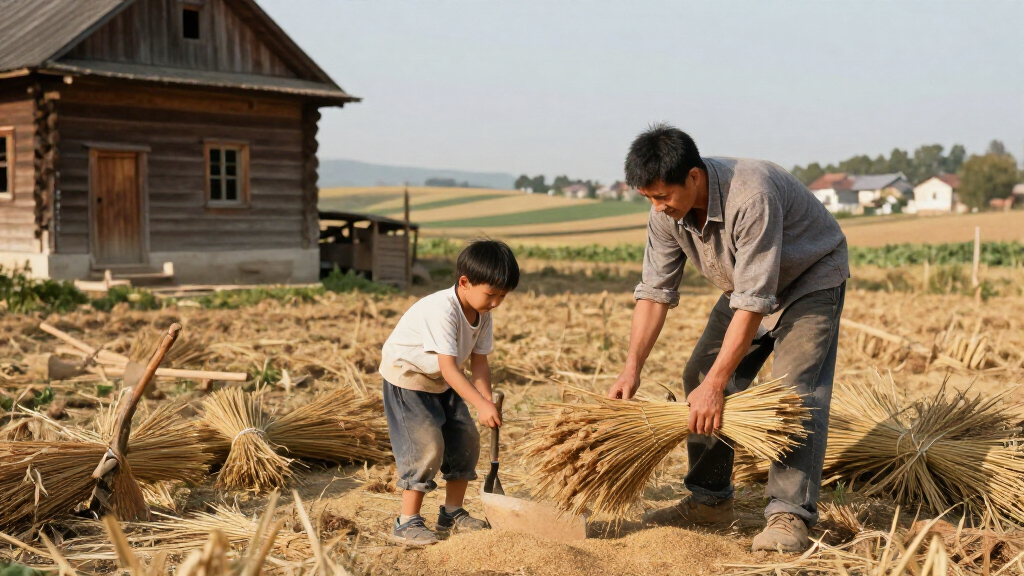
Thorsten Meyer’s Nov. 3, 2026, episode examines how farming’s share of U.S. employment fell from an estimated 73.7% in 1800 to about 1.5% today. It traces the change through tools, fertilizer and improved crops, while noting that agriculture still employs an estimated 928 million people worldwide.
Thorsten Meyer’s second “Work After Work” episode, published Nov. 3, examines how farming went from employing roughly three-quarters of U.S. workers around 1800 to about 1.5% today. The episode uses that long shift to discuss how tools, fertilizer and improved crop varieties raised farm output while fewer people worked the land; Meyer’s suggestion that other sectors could also lose most of their workers is presented as a thesis, not a measured forecast.

Get everyday essentials delivered free with Prime
- Fast, free delivery on millions of items
- Prime Video, Amazon Music and more included
- Member-only deals all year
The U.S. estimate for 1800 comes from economic historian Stanley Lebergott’s historical series, published by the Census Bureau. It counts about 1.4 million of 1.9 million workers aged 10 and older in agriculture, or 73.7%. The Census Bureau source notes that the figures before 1840 are estimates, not census counts, and that the 1810 estimate is higher. “About three in four” is therefore a rounded description of the period, not a precise count for every year. Lebergott’s 1800 labor force figure also includes about 530,000 enslaved people.
The episode describes agricultural change as a sequence rather than a single invention. It points to John Deere’s 1837 steel plough, which shed sticky Midwestern soil more effectively than earlier ploughs, and to later machinery. It also covers short-straw wheat developed in the 20th century: the Nobel Foundation says dwarf wheat associated with Norman Borlaug was brought to India and Pakistan in the mid-1960s. With fertilizer and irrigation, the sturdier plants could support more grain without falling over.
Indian official agricultural figures cited in the source show wheat production at 12.3 million tonnes in 1964–65 and 26.4 million tonnes in 1971–72. The same source gives a further estimate of 117.5 million tonnes for 2024–25. These figures describe wheat harvests over different years; they do not, by themselves, measure how much of the increase came from any one technology.
When Almost Everyone Farmed How work changed
Farming’s share of U.S. employment fell from an estimated 73.7% in 1800 to about 1.5% today. Tools, fertilizer and improved crops helped farms produce more with fewer workers.
What changed on farms
The shift came through successive improvements, not one invention.
John Deere’s 1837 steel plough shed sticky soil more effectively than earlier ploughs.
Short-straw wheat associated with Norman Borlaug spread to India and Pakistan in the mid-1960s.
Fertilizer and irrigation helped sturdier plants support more grain without falling over.
Harvests grew as work shifted
The figures show rising output, but do not isolate the effect of any single technology.
The transition varies by country
Agriculture’s share of workers differs widely; these estimates come from different years and sources.
About 43%
A much larger share of workers remains in agriculture than in the United States.
About 1.5%
The long historical shift shows how farm employment can fall as production rises.
About 1%
A low current share offers another broad comparison, not a synchronized measure.
What the history can tell us
Agriculture illustrates a major change in work, but does not set a timetable for other sectors.
- World cereal harvests grew 4.2-fold from 1961.
- Global population grew 2.7-fold over the same period.
- U.S. farm output in 2023 was nearly three times its 1948 level.
- How much each technology contributed to output growth.
- Where displaced farm workers moved in each country.
- Whether automation will reduce work at a similar pace elsewhere.
Fewer Farm Workers, More Food
The episode challenges the idea that a smaller agricultural workforce must mean less food. Its cited figures say world cereal harvests grew 4.2-fold from 1961, while the global population grew 2.7-fold over the same period. It also cites U.S. farm output in 2023 as nearly three times its 1948 level, with only a small rise in total inputs. The comparisons suggest that output and employment can move in different directions, though they do not isolate the causes of the change.
The shift remains uneven across countries. The episode cites an International Labour Organization estimate of 928 million people working in agriculture worldwide in 2025, about one in four workers. It puts agriculture’s share of workers at about 43% in India, compared with roughly 1.5% in the United States and 1% in Germany. For readers, that gap is a reminder that a historical pattern in the United States is not a timetable for every economy.
Meyer connects the history to a broader question about automation and work. He argues that agriculture shows a sector can operate with far fewer human workers than before, but the American transition took about two centuries. His idea that automation could affect up to 90% of a sector within a decade or a few decades is his own thesis. The episode does not establish that such a change is underway across other sectors or specify which jobs would be affected.
Popular right now

Roborock Qrevo S Pro Robot Vacuum and Mop with 18,500 Pa Suction

Dyson V11 Torque Drive Cordless Vacuum Cleaner

Vitamix 5200 Blender with 64 oz. Container, Black
As an affiliate, we earn on qualifying purchases.
How Farm Work Changed
The episode compares early employment estimates from several countries, while cautioning that their methods and dates differ. Japanese economic historians’ reconstruction puts about 85% of gainfully occupied people in the primary sector in 1872; that category includes farming, forestry and fishing. A German reconstruction puts the primary sector at 56.7% in 1849. The first official German count cited, from 1882, assigns 43.4% of workers to agriculture and forestry, though the source says women helping on family farms were undercounted.
For China, the cited national statistics series begins in 1952, when 83.5% of employed people worked in the primary sector. India’s 1951 census counted cultivators and agricultural laborers as 69.7% of workers. These snapshots use different definitions and sources, so they are not a uniform international ranking. They do show that large agricultural workforces persisted well beyond the early U.S. estimates.
The episode’s explanation begins with the limits of muscle-powered food production. Hand tools, animals and weather constrained how much a household could grow. As ploughs and other machinery improved, and as fertilizer and higher-yielding seeds spread, farms could produce more with different amounts of labor. The episode says the number of American farm workers continued to rise until about 1910, reaching 11.8 million, even as farming’s share of workers declined. In Germany, it cites a decline in agriculture’s employment share from 43% to 25% between 1882 and 1939 while the number of farm workers remained between 8 million and 10 million.
Limits of the Historical Comparisons
The figures do not form one consistent census series across countries. Some are historical reconstructions, some are estimates, and sector definitions vary. The U.S. figure for 1800 covers workers aged 10 and older and includes enslaved people; the Japanese figure covers the broader primary sector, not farming alone. The episode’s source also notes that women’s farm work was undercounted in the early German census.
The episode’s output comparisons establish changes in harvests and production, but the supplied material does not provide a full breakdown of the contributions from machinery, fertilizer, crop breeding, irrigation, land use or other factors. Nor does it give a detailed account of where displaced farm workers went in each country. Meyer’s prediction about automation reaching a sector-wide scale remains an argument, not an established projection.
The global employment estimate is dated to 2025, while national shares in the episode’s sources come from different years or are rounded. The supplied material does not specify the exact reference year or measurement method for every current country estimate. Readers should treat those numbers as broad comparisons rather than as a synchronized snapshot.
The Series Turns to Factories
The episode points to Episode 3 for its account of mechanical reapers, threshers and tractors, which it says followed earlier changes in farm tools. The supplied material does not give a release date for that episode. It frames the next installment as part of a series comparing the field, factory and office as places where work takes place.
For the broader argument, the next questions are how machinery and other changes affected farm employment in specific countries, and how workers moved into other kinds of work. The episode introduces those questions through agriculture’s long history, but the source material does not offer a complete account of those outcomes or a forecast for the pace of automation elsewhere.
Key Questions
What is the episode about?
It traces the long decline in agriculture’s share of employment, focusing on changes in U.S. work and comparing estimates from several other countries.
How many U.S. workers farmed around 1800?
Stanley Lebergott’s estimate puts the share at 73.7%, or about three in four workers aged 10 and older. The figure is a historical estimate, not a census count.
Does the episode say fewer farmers produced less food?
No. It cites growth in world cereal harvests and U.S. farm output alongside a much smaller agricultural workforce. The supplied figures do not identify how much each technology contributed to that growth.
How many people still work in agriculture worldwide?
The episode cites an International Labour Organization estimate of 928 million people in 2025, about one in four workers worldwide.
Is the prediction about automation a confirmed forecast?
No. The claim that automation could affect up to 90% of a sector within a decade or a few decades is Meyer’s thesis. The episode presents agriculture’s history as a comparison, not proof that another sector will follow the same path.
Source: Thorsten Meyer AI