TL;DR

Get everyday essentials delivered free with Prime
- Fast, free delivery on millions of items
- Prime Video, Amazon Music and more included
- Member-only deals all year
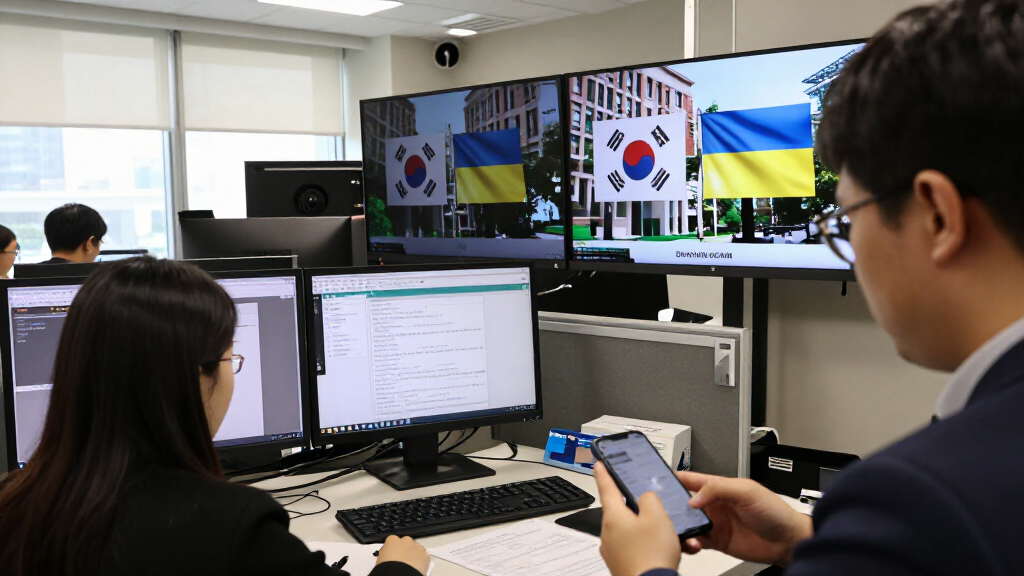
South Korea has recalled its ambassador from Ukraine following a diplomatic breach. The move was triggered by Ukrainian President Volodymyr Zelensky’s public announcement that Kyiv transferred two North Korean prisoners of war to Seoul. South Korea states the transfer was subject to a mutual non-disclosure agreement and deems Ukraine’s initial apology insufficient.
South Korea has recalled its ambassador from Ukraine following a significant diplomatic breach involving the public disclosure of a confidential prisoner transfer. The recall was triggered by Ukrainian President Volodymyr Zelensky’s statement that Kyiv had transferred two North Korean prisoners of war to Seoul, an event detailed in reports on Ukraine apologizing for revealing North Korean POWs’ transfer. The South Korean Foreign Ministry stated that the disclosure violated a mutual agreement between the two nations, prompting Seoul to demand a formal apology and withdraw its top diplomat from Kyiv.
The decision to recall the ambassador marks a sharp escalation in tensions between Seoul and Kyiv. According to the South Korean Foreign Ministry, the two countries had previously agreed that the transfer of the North Korean prisoners of war would remain confidential. South Korean officials insist that Ukraine was the party that initiated this non-disclosure agreement, making the subsequent public announcement by President Zelensky a direct violation of the established protocol. The ministry emphasized that the breach undermines the trust necessary for sensitive diplomatic and security cooperation.
In response to the leak, Seoul has demanded an official and sufficient apology from the Ukrainian government. While diplomatic consultations have taken place, South Korean officials noted that remarks by Ukrainian Foreign Minister Andrii Sybiha included an apology, but they judged the level of that expression to be inadequate. The South Korean government maintains that the current response does not meet the threshold required to restore diplomatic relations to their previous state. The recall of the ambassador serves as a strong signal of Seoul’s displeasure and its insistence on strict adherence to prior agreements.
The incident centers on the fate of two North Korean prisoners of war held by Ukraine. The transfer of these individuals to South Korea was intended to be a quiet diplomatic maneuver, likely to avoid escalating tensions with Pyongyang or complicating broader geopolitical dynamics. By making the transfer public, President Zelensky’s administration has exposed a sensitive operational detail that Seoul believed was protected under the agreed-upon terms. The South Korean government has stated that it hopes to resolve the issues smoothly but will continue consultations only if Ukraine addresses the breach appropriately.
Impact on Seoul-Kyiv Diplomatic Trust
This diplomatic rift matters because it disrupts the strategic alignment between South Korea and Ukraine, two nations that have increasingly coordinated on issues related to North Korea and global security. The breach of confidence over the prisoner transfer suggests a fundamental disconnect in how the two governments handle sensitive intelligence and diplomatic operations. For South Korea, maintaining strict control over information regarding North Korean defectors and prisoners is a matter of national security and domestic political stability. The public disclosure not only risks angering Pyongyang but also exposes Seoul’s internal handling of these cases to unwanted scrutiny.
Furthermore, the recall of an ambassador is a severe diplomatic signal short of breaking ties. It indicates that Seoul views this not as a minor oversight but as a serious violation of protocol that requires high-level corrective action. The demand for a more substantial apology underscores the political weight South Korea places on this incident. If unresolved, this friction could hamper future cooperation on sanctions enforcement against North Korea or other shared security interests, forcing both nations to recalibrate their bilateral relationship.
diplomatic security document holder
As an affiliate, we earn on qualifying purchases.
As an affiliate, we earn on qualifying purchases.
Background on North Korean POW Transfers
The transfer of North Korean prisoners of war is a highly sensitive issue in East Asian geopolitics. Historically, the repatriation of North Korean soldiers or defectors has been a source of intense diplomatic negotiation and secrecy. South Korea has traditionally handled such cases with extreme discretion to avoid provoking North Korea or complicating relations with other regional powers. The involvement of Ukraine in this specific transfer indicates a complex chain of custody, likely involving prisoners captured during the conflict in Ukraine who were identified as North Korean nationals.
South Korea’s insistence on the confidentiality of this transfer reflects its broader strategy of managing North Korean defectors quietly. Public disclosures can lead to retaliation against family members remaining in the North or create political backlash within South Korea. The agreement between Seoul and Kyiv was designed to navigate these risks. The current dispute highlights the challenges of maintaining such agreements when one party, in this case Ukraine, chooses to publicize the event for domestic or international political reasons, potentially to demonstrate the global reach of its conflict or its cooperation with allies.
confidential document folder for diplomats
As an affiliate, we earn on qualifying purchases.
As an affiliate, we earn on qualifying purchases.
Details of POW Identities and Transfer
It remains unclear who the two North Korean prisoners of war were and the specific circumstances of their capture in Ukraine. Neither South Korean nor Ukrainian officials have released detailed information about their identities or the timeline of their detention and transfer. Additionally, the exact date and method of the transfer have not been publicly confirmed, leaving gaps in the public understanding of the event.
There is also uncertainty regarding whether other confidential agreements between Seoul and Kyiv have been compromised. While the current dispute focuses on the POW transfer, the breach raises questions about the overall reliability of information sharing between the two governments. It is not yet known if this incident will lead to a broader suspension of intelligence or diplomatic cooperation beyond the recall of the ambassador.
As an affiliate, we earn on qualifying purchases.
Path to Restoring Diplomatic Relations
The immediate next step is for Ukraine to provide a more formal and substantial apology that meets South Korea’s diplomatic standards. Until this occurs, the South Korean ambassador is expected to remain in Seoul, limiting high-level communication between the two capitals. Officials from both sides are likely to engage in further back-channel consultations to determine the wording and format of the apology required to end the standoff.
If a satisfactory resolution is reached, the ambassador may return to Kyiv, signaling a restoration of normal diplomatic ties. However, if Ukraine refuses to escalate its apology or if further disagreements arise, the diplomatic freeze could persist, potentially affecting future joint statements or cooperative initiatives regarding North Korea. Observers will be watching for any official statement from President Zelensky’s office addressing the breach directly, as this would be a key indicator of Kyiv’s willingness to repair the relationship.
diplomatic communication equipment
As an affiliate, we earn on qualifying purchases.
As an affiliate, we earn on qualifying purchases.
Key Questions
Why did South Korea recall its ambassador from Ukraine?
South Korea recalled its ambassador because Ukrainian President Volodymyr Zelensky publicly disclosed the transfer of two North Korean prisoners of war to Seoul, violating a mutual agreement to keep the transfer confidential.
What is South Korea demanding from Ukraine?
Seoul is demanding an official and sufficient apology. While Ukrainian Foreign Minister Andrii Sybiha has offered an apology, South Korea considers it insufficient to address the breach of trust.
Who were the prisoners of war?
Details about the identities of the two North Korean prisoners of war have not been made public. Their capture and transfer remain subjects of diplomatic discretion.
How does this affect South Korea-Ukraine relations?
The incident has caused a significant diplomatic rift, leading to the withdrawal of the top diplomat. It may hinder future cooperation on security and sanctions issues until the dispute is resolved.
Source: rss
Halloween Picks
halloween
As an affiliate, we earn on qualifying purchases.