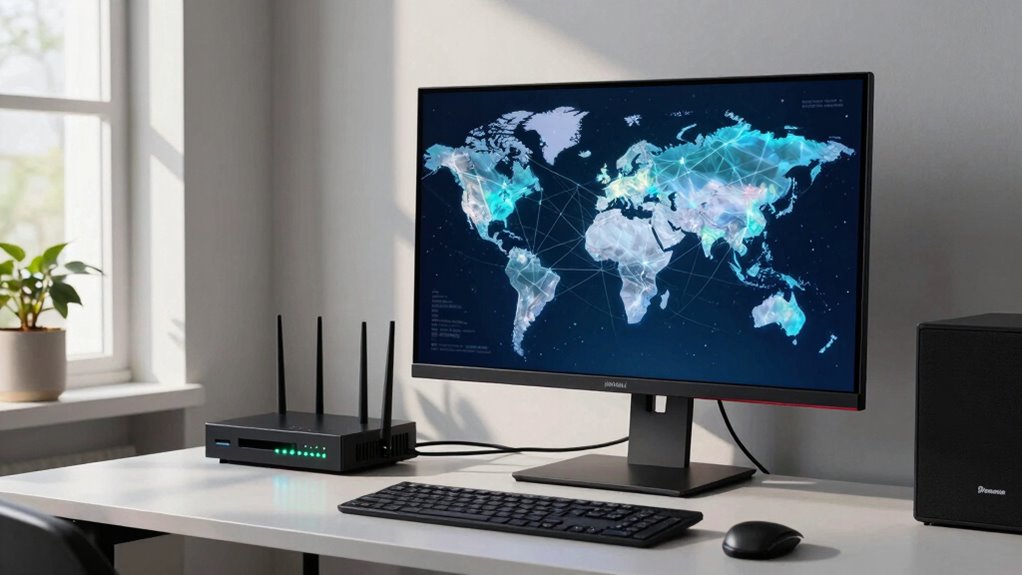

Your home internet infrastructure is essential for the modern economy, enabling you to work remotely, shop online, and connect smart devices effortlessly. It provides fast, stable connections to access cloud services, communicate smoothly, and share data instantly. Data centers process your information quickly and securely, supporting everything from streaming to business transactions. As the infrastructure expands and improves, it guarantees your digital activities stay reliable and efficient. Keep exploring to discover how these systems keep the world connected and thriving.
Key Takeaways
- Provides reliable and fast connectivity essential for remote work, digital commerce, and online services.
- Enables seamless communication and real-time data sharing across businesses and consumers.
- Supports cloud-based applications and smart devices, enhancing productivity and automation.
- Ensures data centers can process and deliver data efficiently, maintaining service stability.
- Facilitates economic growth by enabling e-commerce, digital innovation, and resilient digital infrastructure.
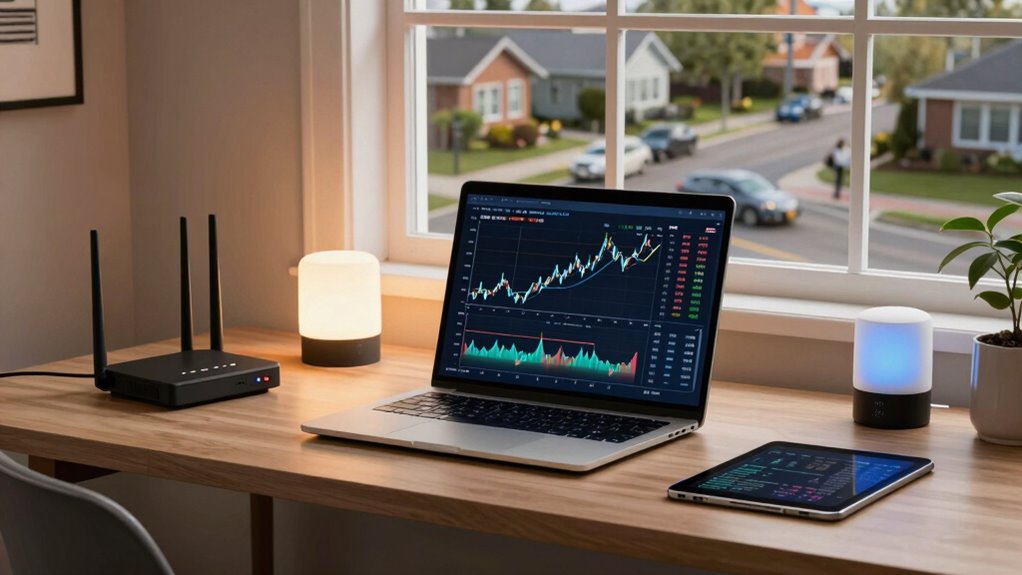
In today’s economy, reliable home internet infrastructure isn’t just a convenience—it’s an essential backbone supporting everything from remote work to digital commerce. You rely on fast, stable connections to stay productive, access cloud services, and communicate seamlessly. Wireless connectivity plays a vital role here, enabling you to connect your devices effortlessly without the clutter of cables. It provides the flexibility needed for home offices, streaming, and smart home devices, ensuring you’re always connected when you need it most. Behind the scenes, data centers serve as the critical hubs that process, store, and route the enormous volumes of data generated daily. These facilities are the nerve centers of the internet, supporting not just large corporations but also the countless small businesses and individuals who depend on cloud-based tools and services.
Your home internet experience is directly linked to the robustness of wireless connectivity and the efficiency of data centers. Wireless technology, such as Wi-Fi and cellular networks, has evolved rapidly, offering higher speeds and lower latency. This means you can participate in video conferences without lag, stream high-definition videos smoothly, and download large files swiftly. These advancements make remote work more feasible and productive, especially as more businesses adopt flexible working arrangements. Meanwhile, data centers underpin this entire ecosystem by providing the computational power and storage capacity needed to handle your online activities. They manage everything from email servers to complex enterprise applications, ensuring data is accessible, secure, and fast. The continuous expansion and modernization of this infrastructure are vital to support the growing demands of the digital economy, especially with cloud computing becoming even more integral.
Reliable wireless tech and efficient data centers ensure seamless, fast online experiences for remote work, streaming, and digital activities.
The seamless interaction between wireless connectivity and data centers ensures your online experiences are smooth and reliable. When you click a link or upload a file, data travels through networks to data centers, where it’s processed and sent back to your device. This process happens in seconds, enabling real-time collaboration and instant access to information. The infrastructure supporting this system is constantly expanding and improving, with new data centers being built closer to urban centers to reduce latency and enhance performance. At the same time, advances in wireless connectivity, such as 5G, promise even faster, more reliable connections, further strengthening the backbone of the modern economy. Additionally, investment in data center infrastructure is critical for keeping up with the increasing volume of data and ensuring future scalability.
Without this sophisticated infrastructure, remote work, e-commerce, and digital services would falter. You’d experience lag, outages, and frustration, hindering your productivity and online experiences. The ongoing development of wireless connectivity and data centers ensures that the modern economy remains resilient and adaptable. They’re not just technical components—they’re the foundation that keeps the digital world turning, supporting your daily activities and the broader economic landscape. Additionally, investments in data center infrastructure are crucial for maintaining the robustness and speed necessary for the future of the digital economy.

TP-Link BE6500 Dual-Band WiFi 7 Router (BE400) – Dual 2.5Gbps Ports, USB 3.0, Covers up to 2,400 sq. ft., 90 Devices, Quad-Core CPU, HomeShield, Private IoT, Free Expert Support
𝐅𝐮𝐭𝐮𝐫𝐞-𝐑𝐞𝐚𝐝𝐲 𝐖𝐢-𝐅𝐢 𝟕 – Designed with the latest Wi-Fi 7 technology, featuring Multi-Link Operation (MLO), Multi-RUs, and 4K-QAM….
As an affiliate, we earn on qualifying purchases.
As an affiliate, we earn on qualifying purchases.
Frequently Asked Questions
How Does Internet Infrastructure Impact Rural Economic Development?
You see, internet infrastructure greatly impacts rural economic development by bridging the digital divide and improving rural connectivity. When reliable, high-speed internet reaches these areas, you can access online markets, remote jobs, and essential services, boosting local businesses and attracting new investments. Without this infrastructure, rural communities risk falling behind, but with it, they can thrive, innovate, and participate fully in the modern economy.
What Are the Environmental Effects of Expanding Internet Infrastructure?
Expanding internet infrastructure can increase energy consumption, impacting the environment. You might find that more data centers and network equipment require renewable energy sources to reduce carbon footprints. However, the growth also leads to electronic waste as outdated devices are discarded. To minimize environmental harm, you should support initiatives that promote recycling and sustainable energy use, helping balance technological progress with ecological responsibility.
How Does Internet Speed Influence Small Business Growth?
A faster internet connection gives your small business a real boost. It enables seamless digital marketing and enhances customer engagement, making interactions more dynamic and responsive. With high-speed internet, you can upload content quickly, respond to inquiries promptly, and run online campaigns efficiently. This improved connectivity helps you reach more customers, build stronger relationships, and grow steadily in today’s competitive market. Ultimately, speed directly fuels your business’s success.
What Cybersecurity Challenges Are Linked to Increased Internet Reliance?
You face cybersecurity challenges like data breaches and phishing attacks as you rely more on the internet. Hackers often target unencrypted data, so implementing strong data encryption becomes essential to protect sensitive information. Phishing attacks trick you into revealing passwords or financial details, risking your security. Staying vigilant, updating your software, and using secure connections help guard against these threats and keep your online activities safe.
How Does Internet Infrastructure Affect Global Supply Chain Resilience?
Did you know that 70% of global trade relies on digital systems? Your internet infrastructure directly impacts supply chain resilience by enabling real-time data sharing and coordination. When you invest in digital redundancy and robust infrastructure, disruptions become less damaging, and recovery speeds up. Strong internet infrastructure guarantees that supply chains stay connected, flexible, and efficient, even amid unexpected challenges, keeping goods moving smoothly across borders and markets.

TP-Link Deco S4 Mesh AC1900 WiFi System – Up to 5,500 Sq.ft. Coverage, Replaces WiFi Router and Extender, Gigabit Ports, Works with Alexa, Deco S4(3-Pack)
A New Way to WiFi: Deco Mesh technology gives you a better WiFi experience in all directions with…
As an affiliate, we earn on qualifying purchases.
As an affiliate, we earn on qualifying purchases.
Conclusion
While some might argue that home internet infrastructure isn’t essential, it’s clear that reliable connectivity underpins today’s economy. It enables remote work, supports small businesses, and drives innovation. Without it, we risk falling behind in a competitive global landscape. Investing in robust infrastructure isn’t just about convenience; it’s about empowering economic growth and resilience. So, don’t underestimate its importance—your future success depends on it.

StarTech 25U Enterprise-Grade Server Rack Cabinet, 19in Enclosed 4-Post Rack with 33in (83cm) Mounting Depth and 1764lb (800kg) Weight Capacity
ADJUSTABLE DEPTH: 4- Post 25U 19" server rack enclosure with 4 vertical rails and adjustable mounting depth 5.7"…
As an affiliate, we earn on qualifying purchases.
As an affiliate, we earn on qualifying purchases.

Home Assistant Green | Smart Home hub with Advanced Automation | Official Home Assistant Hardware
💡 EASIEST WAY TO GET STARTED WITH HOME ASSISTANT – With Home Assistant already installed, it only requires…
As an affiliate, we earn on qualifying purchases.
As an affiliate, we earn on qualifying purchases.