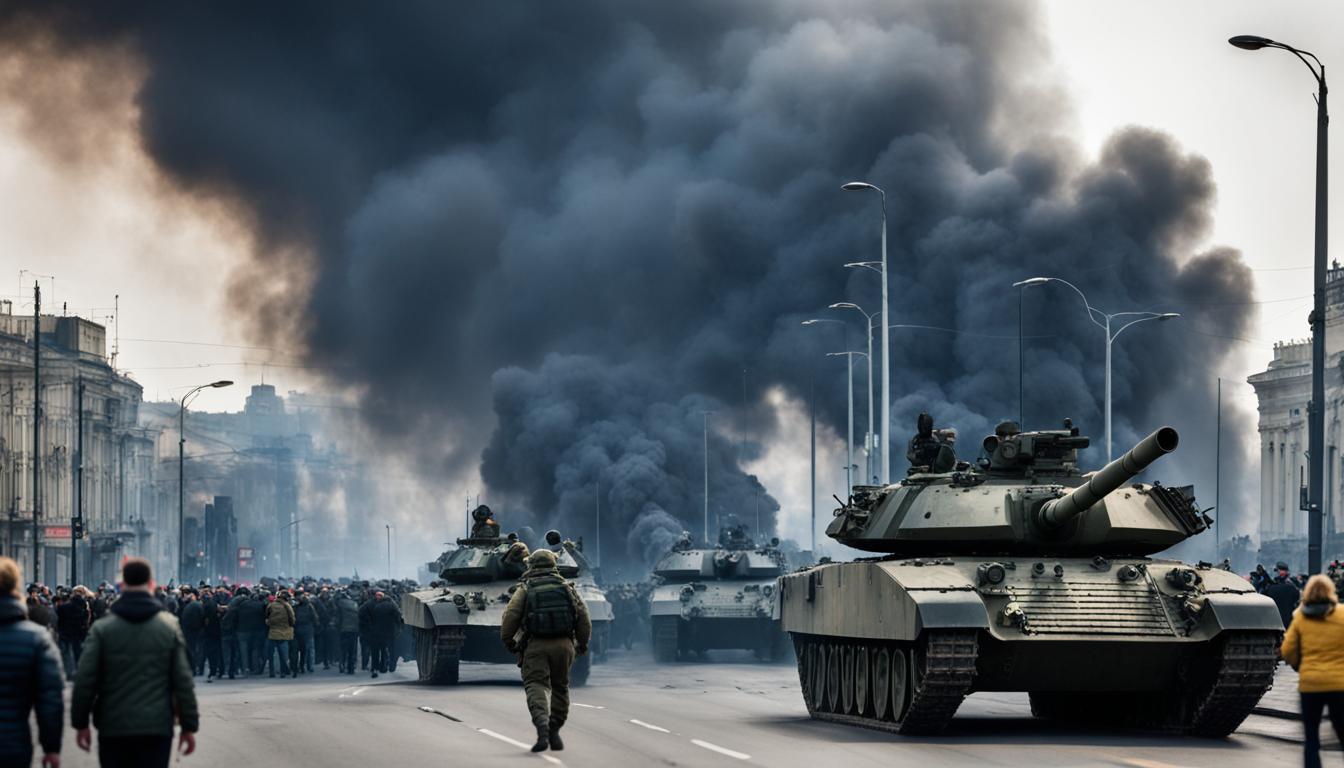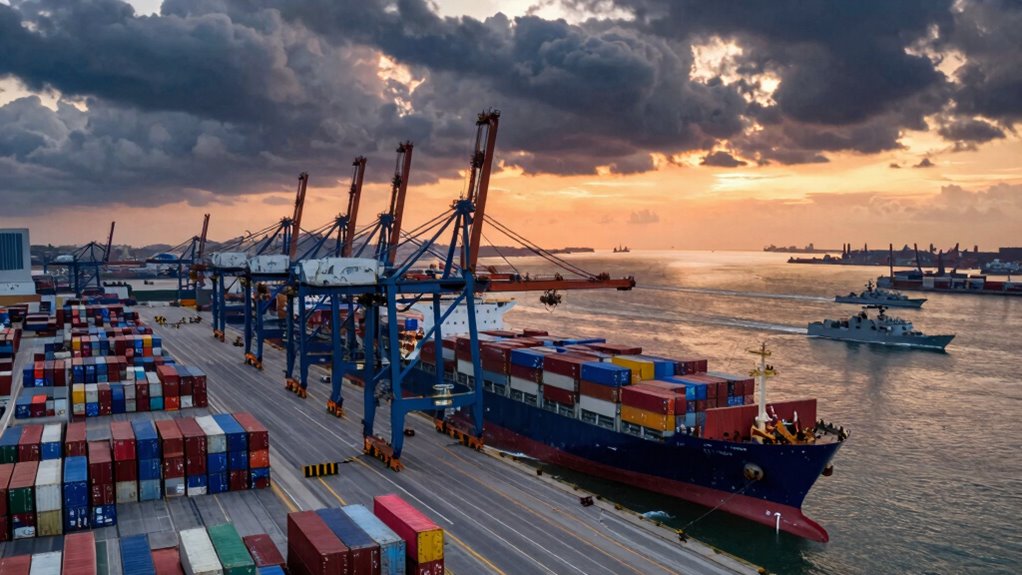

Rising geopolitical tensions threaten your access to crucial global trade routes, causing delays and higher costs. Disputes, military conflicts, or sanctions can block or reroute shipments, impacting supply chains and economic stability. Security threats like piracy and illegal activities also increase risks. Diplomacy and international laws aim to maintain open corridors, but tensions often escalate, risking disruptions. To understand how these tensions could affect you personally and industry-wide, keep exploring the implications further.
Key Takeaways
- Rising tensions can lead to increased military presence, threatening the security of vital maritime corridors.
- Geopolitical conflicts may result in blockades, disrupting the flow of international trade.
- Diplomatic disputes over territorial claims can close or restrict access to key trade routes.
- Trade rerouting and delays due to tensions elevate shipping costs and insurance premiums.
- Legal frameworks and international cooperation are essential to mitigate risks and maintain route stability.
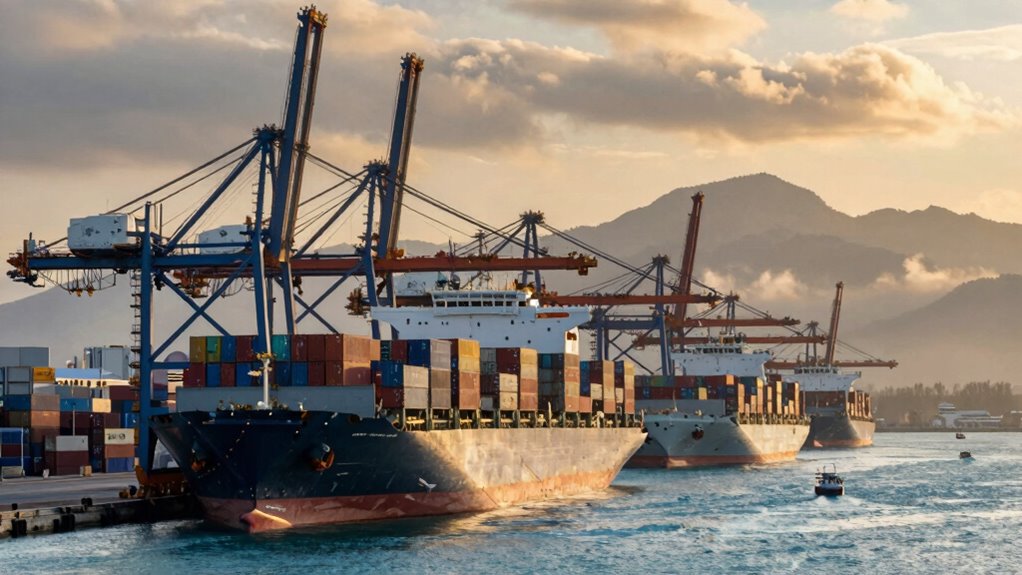
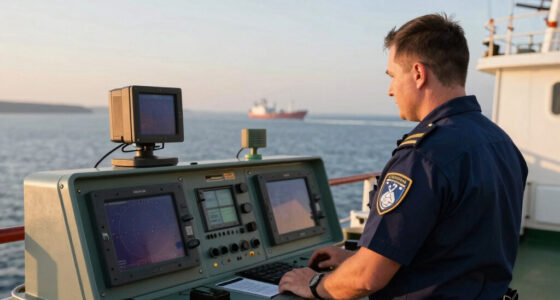
As global trade routes become increasingly essential to economic stability, they also draw the attention of geopolitical powers seeking influence and control. You’re likely aware that these routes, especially maritime corridors, serve as critical arteries for goods moving across continents. But as tensions rise, your focus must shift to how these geopolitical shifts impact maritime security and diplomacy. When nations prioritize their strategic interests, the risk of disruptions grows, making maritime security a top concern for anyone involved in international trade. Pirates, illegal fishing, and even state-sponsored disruptions threaten the smooth flow of goods. You need to stay informed about how countries are beefing up naval presence or conducting joint patrols to safeguard these routes. These security measures aren’t just about military strength—they’re part of broader efforts to guarantee trade continues unimpeded. Diplomatic negotiations become indispensable in this context, as countries seek to manage conflicts over territorial claims, access, and sovereignty. You’ll find that diplomatic talks often serve as the first line of defense against escalation, aiming to settle disputes diplomatically before they turn into open conflicts. Whether it’s negotiations over the South China Sea or the Strait of Hormuz, diplomacy is your best tool to maintain open trade routes while avoiding military confrontations. However, diplomacy isn’t always enough. Rising tensions can lead to economic sanctions, blockades, or even military skirmishes, which threaten to choke off critical trade flows. You must recognize that geopolitical tensions often translate into tangible risks—delays at ports, increased insurance premiums, or rerouted shipments—all of which inflate costs and disrupt supply chains. As a trader, shipping company, or policy-maker, understanding these dynamics means you’re better equipped to navigate the uncertainties. Keeping a close watch on maritime security developments and the deployment of military assets can help anticipate potential disruptions before they occur. Additionally, understanding the role of geopolitical tensions in influencing trade routes allows stakeholders to develop more proactive strategies for risk mitigation. It’s also crucial to understand how maritime law governs the conduct of nations and private actors in these sensitive regions, as legal frameworks can influence diplomatic and security actions. Staying informed about international legal frameworks can provide clarity on rights and obligations that impact security and negotiations. Recognizing the importance of multilateral agreements can also foster cooperation among nations, reducing the likelihood of conflicts spilling over into trade disputes. It’s important to keep an eye on diplomatic negotiations, as they have the power to de-escalate conflicts or, conversely, ignite new tensions. The interplay between maritime security measures and diplomatic efforts shapes the future of global trade routes. Rising tensions don’t automatically mean the end of free navigation, but they do demand heightened vigilance and strategic planning. You’ll need to adapt by strengthening security protocols and engaging in diplomatic dialogues, guaranteeing that trade continues smoothly despite geopolitical upheavals. Ultimately, your ability to understand and respond to these evolving tensions will determine whether global trade routes remain open or become battlegrounds for power struggles.
maritime security GPS tracker
As an affiliate, we earn on qualifying purchases.
As an affiliate, we earn on qualifying purchases.
Frequently Asked Questions
How Do Rising Tensions Impact Shipping Insurance Costs?
Rising tensions directly increase your shipping insurance premiums because maritime security risks grow. When geopolitical conflicts flare, insurers view routes as more dangerous, leading to higher coverage costs. You might notice increased premiums for vessels passing through conflict zones or unstable regions. These elevated costs reflect the added risk, encouraging you to evaluate routes carefully. Ultimately, heightened geopolitical tensions make maritime security a top priority, impacting your overall shipping expenses.
Are Alternative Trade Routes Being Developed Due to Geopolitical Risks?
As the geopolitical landscape shifts like a choppy sea, you’ll find new trade routes emerging, carved through calmer waters. Maritime security concerns push traders to explore alternative paths, making diplomatic negotiations vital to guarantee safe passage. These routes act as lifelines, bypassing trouble spots. While risks remain, your focus on diversifying routes helps safeguard your supply chain against unpredictable storms, anchoring your trade in steadier, more secure waters.
What Role Do International Organizations Play in Mediating Conflicts?
International organizations play a vital role in mediating conflicts through diplomatic negotiations and conflict resolution efforts. You benefit from their neutral stance, which helps facilitate dialogue between conflicting parties. They work to reduce tensions, promote peaceful resolutions, and establish agreements that uphold international laws. By providing platforms for discussion and mediating disputes, these organizations help maintain stability in global trade routes, ensuring economic continuity despite rising geopolitical tensions.
How Do Sanctions Influence Global Trade Flow Disruptions?
You might think economic sanctions and trade restrictions are simple tools, but they actually turn global trade into a game of chess. When these sanctions hit, they disrupt supply chains and reroute shipments, causing chaos for businesses relying on smooth routes. Ironically, while designed to pressure nations, they often create unexpected trade flow disruptions, fueling instability and making international commerce more unpredictable than ever.
What Cybersecurity Threats Arise From Increased Geopolitical Conflicts?
You face increased cybersecurity threats, including cyber espionage and digital sabotage, as geopolitical conflicts intensify. Hackers target sensitive information, stealing trade secrets and compromising infrastructure. Digital sabotage can disrupt supply chains, cause financial losses, and weaken national security. You need robust security measures, continuous monitoring, and international cooperation to protect your assets and maintain stability amid rising tensions, ensuring your trade operations stay resilient against these evolving cyber threats.
cargo ship insurance premium calculator
As an affiliate, we earn on qualifying purchases.
As an affiliate, we earn on qualifying purchases.
Conclusion
As tensions rise, you might notice the world’s trade routes becoming like fragile threads in a storm. Suddenly, what once seemed like smooth pathways now feel unpredictable, shaped by shifting alliances and conflicts. Just as a ripple spreads across a calm pond, these tensions ripple through global markets, reminding you that stability often hinges on unseen, delicate balances. In this unpredictable dance, your next move depends on how well you read the subtle currents beneath the surface.
piracy deterrent maritime equipment
As an affiliate, we earn on qualifying purchases.
As an affiliate, we earn on qualifying purchases.

Maritime Unmanned: From Global Hawk to Triton
As an affiliate, we earn on qualifying purchases.
As an affiliate, we earn on qualifying purchases.