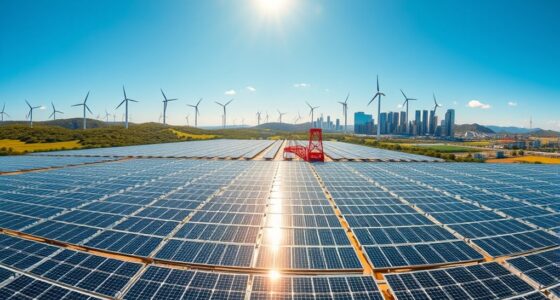

In 2025, you’ll see a cautious global recovery with some regions advancing faster than others. While innovation and sustainability drive growth, inflation remains a concern, prompting careful policy adjustments. Advanced economies push forward through tech and green investments, but emerging markets face barriers that slow progress. This divergence impacts job prospects and investment opportunities worldwide. If you want to understand how these trends could shape your future, there’s more to explore.

Get everyday essentials delivered free with Prime
- Fast, free delivery on millions of items
- Prime Video, Amazon Music and more included
- Member-only deals all year
Key Takeaways
- Global recovery is uneven, with advanced economies leading and emerging markets facing structural challenges.
- Sustainable investments in renewable energy and green infrastructure are central to economic growth strategies.
- Technological innovations like AI and green tech boost productivity, resilience, and long-term competitiveness.
- Inflation concerns prompt policy adjustments, with supply chain transparency helping manage rising prices.
- Divergent growth creates disparities in jobs and investments, favoring regions focusing on innovation and sustainability.
What will the global economy look like in 2025? If you’re paying attention to current trends, you’ll see a world still recovering from recent shocks, but with a clear drive toward sustainable development and technological innovation. These factors will shape economic growth patterns, influence policy decisions, and determine how countries steer inflation and divergence in recovery rates. By 2025, you can expect a landscape where green initiatives and cutting-edge tech play central roles in shaping prosperity. Governments and businesses are increasingly prioritizing sustainability, recognizing that long-term growth depends on balancing economic progress with environmental responsibility. This shift means you’ll see investments flowing into renewable energy, electric vehicles, and sustainable infrastructure, creating new opportunities for job creation and economic resilience. Technological innovation acts as a catalyst in this environment, enabling industries to operate more efficiently and sustainably. From AI-driven supply chains to advanced manufacturing processes, these innovations will boost productivity and support green development goals. As a result, economies that embrace these advancements will likely experience a more robust recovery, while those lagging behind risk falling further behind. Inflation remains a concern, but by 2025, you’ll notice central banks and policymakers adjusting strategies to manage rising prices without stifling growth. The integration of technology helps improve supply chain transparency, reduce costs, and increase competition, which can ease inflationary pressures. Additionally, solar energy technologies are becoming more cost-effective and widespread, further supporting sustainable economic growth. Still, disparities between countries remain, with some regions recovering faster than others. Advanced economies may lead the charge with robust tech sectors and strong investments in sustainable development, while emerging markets might face hurdles due to structural challenges or limited access to innovation. This divergence means that growth in 2025 will be uneven, with some nations experiencing rapid expansion driven by technological breakthroughs, and others struggling to keep pace. As a consumer or investor, you’ll find that these differences influence everything from job opportunities to market stability. The key to steering this evolving landscape is staying adaptable and informed. Countries that focus on fostering innovation ecosystems and integrating sustainability into their economic models will likely emerge stronger. For you, this could mean new career paths, investment opportunities in green tech, and a heightened awareness of how technological advancements sustain economic resilience. Overall, 2025 will be a year marked by resilience and transformation, where sustainable development and technological innovation are no longer just goals but central pillars of the global economy’s future. Your understanding of these trends will be vital in making informed decisions, whether in business, investment, or policy. The world’s economic trajectory hinges on how well you and others adapt to these ongoing changes and harness the opportunities they present.
AI-powered supply chain management tools
As an affiliate, we earn on qualifying purchases.
As an affiliate, we earn on qualifying purchases.
Frequently Asked Questions
How Will Technological Advancements Influence Global Economic Recovery?
Technological advancements will substantially boost your economic recovery by accelerating digital transformation and increasing automation adoption. These innovations streamline processes, reduce costs, and improve productivity, helping businesses recover faster. As you embrace new technologies, you’ll see growth in various sectors, leading to job creation and increased competitiveness. By staying adaptable and investing in digital tools, you position yourself to benefit from these technological shifts and contribute to a robust global economic rebound.
What Role Will Climate Change Play in Economic Divergence?
They say “what doesn’t kill you makes you stronger,” and climate change could widen economic gaps if you don’t prioritize climate adaptation and green finance. Countries investing in sustainable solutions will likely experience stronger growth, while those ignoring climate risks may face setbacks. Your role is to support policies that promote green finance and climate resilience, helping reduce divergence and ensuring a more equitable global economic recovery.
How Might Geopolitical Tensions Impact Global Growth Trajectories?
Geopolitical tensions can considerably slow your country’s growth by leading to trade sanctions and diplomatic conflicts. These actions disrupt supply chains, increase costs, and limit market access, making it harder for your economy to expand. You might see reduced investments and innovation, which hampers long-term growth. Staying vigilant and adaptable to these tensions helps you mitigate risks and navigate uncertainties in a complex global landscape.
Will Emerging Markets Outperform Developed Economies by 2025?
Emerging markets are likely to outperform developed economies by 2025 due to faster growth rates and demographic advantages. You might see these markets accelerating as they capitalize on technological advancements and infrastructure investments. While developed economies face inflation and recovery challenges, emerging markets can seize growth opportunities, making them more dynamic. This trend underscores the importance of staying informed about economic shifts to optimize your investments and strategic decisions.
What Are the Long-Term Effects of Inflation on Global Inequality?
Inflation widens wealth disparity, making it harder for lower-income groups to improve their social mobility. Over the long term, persistent inflation can erode savings and income for vulnerable populations, trapping them in poverty. This cycle deepens inequality, reducing opportunities for upward mobility. You might notice that without targeted policies, the gap between the rich and poor will continue to grow, impacting societal stability and economic growth globally.
As an affiliate, we earn on qualifying purchases.
Conclusion
So, here you are, witnessing a world enthusiastic to bounce back, yet still tangled in inflation’s grip. Growth is splintered—some thrive, others struggle—proving that recovery isn’t a straight line. Ironically, as we chase stability, divergence deepens, reminding you that in a global economy, progress often comes with unexpected twists. You might think we’re on the mend, but the real story is just beginning—and it’s far more unpredictable than you’d like to admit.
electric vehicle charging station
As an affiliate, we earn on qualifying purchases.
As an affiliate, we earn on qualifying purchases.
green infrastructure investment books
As an affiliate, we earn on qualifying purchases.
As an affiliate, we earn on qualifying purchases.
Halloween Picks
halloween
As an affiliate, we earn on qualifying purchases.