
TL;DR

Get everyday essentials delivered free with Prime
- Fast, free delivery on millions of items
- Prime Video, Amazon Music and more included
- Member-only deals all year
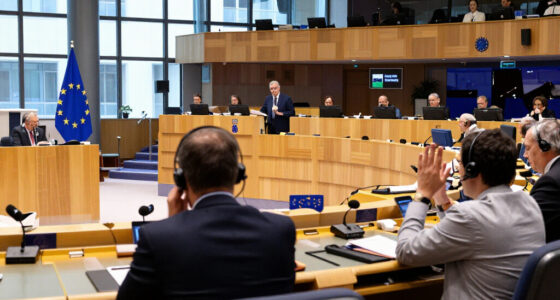
A State Duma committee recommended on November 9 that a bill introducing administrative fines for distributing material said to discredit Russia’s “traditional values” pass its first reading. The bill sets penalties for individuals, officials and legal entities, including for failing to comply with removal orders; a first-reading date has not been set.
A Russian State Duma committee recommended on November 9 that a bill introducing fines for distributing material said to “discredit traditional values” pass its first reading. The proposed penalties also cover failure to remove material after an order from the federal media regulator, Roskomnadzor; the bill has not yet been scheduled for a first reading.
The bill would create administrative penalties for violations of existing bans on distributing material that “discredit traditional spiritual and moral values or promote their rejection,” according to Meduza’s report on the legislation. The proposed fines vary by the type of responsible party and whether an offense is repeated. For distribution, individuals would face fines of 5,000 to 10,000 rubles, rising to as much as 150,000 rubles for repeat violations. Officials would face 50,000 to 100,000 rubles, or up to 400,000 rubles for repeat violations. Legal entities would face 500,000 to 700,000 rubles, rising to as much as 3 million rubles for repeat violations.
The proposal separately sets penalties for failing to comply with a Roskomnadzor removal order. Individuals could be fined 10,000 to 20,000 rubles, with repeat penalties of 200,000 to 300,000 rubles. The ranges for officials would be 100,000 to 200,000 rubles, rising to 600,000 to 800,000 rubles for repeat violations. Legal entities could face fines of 700,000 to 1 million rubles, or 3 million to 5 million rubles for repeat violations.
The bill provides an exception to liability if a service owner removes a work declared to discredit traditional values within 24 hours after its distribution certificate is revoked. Under the proposal, the Culture Ministry would open cases concerning distribution, while Roskomnadzor would handle cases involving noncompliance with removal orders.
Who Could Face the Proposed Fines
The proposed rules could expose individuals, officials and legal entities to administrative penalties, with the highest amounts applying to organizations and repeat violations. The bill also distinguishes between distributing material and leaving it available after an official removal order, creating separate routes to fines.
State Duma lawmaker and co-author Sergei Boyarsky said the bill’s reference to “individuals” meant owners of social networks, not their users. That interpretation is relevant to how the proposal might be applied, but the report does not establish that the bill’s wording has been amended to make that distinction explicit. The legislation’s practical reach will depend on its text and how the relevant authorities apply it if it becomes law.
Popular right now

Shark NV752 Rotator Powered Lift-Away TruePet Upright Vacuum, Bordeaux

Sony WH-1000XM5 Premium Noise Cancelling Wireless Headphones – Midnight Blue

Apple AirPods Pro 3 Wireless Earbuds with Active Noise Cancellation
As an affiliate, we earn on qualifying purchases.
The 2022 Values Decree
The definition at the center of the proposal comes from a decree signed by the Russian president in November 2022. It lists “traditional Russian spiritual and moral values” including life, dignity, human rights and freedoms, patriotism, civic duty, service to the Fatherland, a strong family, creative labor, humanism, mercy and justice. The list also includes collectivism, mutual assistance and respect, historical memory, continuity between generations and the unity of Russia’s peoples.
The bill would add administrative penalties tied to existing bans on distributing material that discredits those values or promotes their rejection. The committee’s November 9 recommendation is a step in the legislative process, not passage of the bill into law. The report does not give a date for the proposed first reading.
““Individuals” in the bill meant “social network owners, not users.””
— State Duma lawmaker Sergei Boyarsky, a co-author of the bill, as reported by Meduza
Reading Date and Enforcement Scope
No date has been set for the bill’s first reading, and the committee recommendation does not establish whether lawmakers will approve it or what changes could be made during consideration. The report also does not specify how authorities would determine that particular material discredits the listed values or promotes their rejection.
Boyarsky’s statement about social-network owners is an attributed explanation by a co-author, not a detailed account of how every case would be handled. The available report does not clarify the full scope of affected services, the procedures for challenging a removal order, or how the proposed 24-hour exception would work in practice.
The Bill’s First Reading
The next legislative milestone is a first reading in the State Duma, but it has not been scheduled as of the report. Lawmakers could consider the bill’s general approach at that stage; the committee recommendation alone does not mean the penalties are in force.
Further details will depend on the bill’s progress, any amendments and the final wording adopted by lawmakers. Until those steps occur, the proposed fines and agency responsibilities remain provisions of a bill rather than enacted penalties.
Key Questions
What did the State Duma committee recommend?
On November 9, the committee on criminal and administrative legislation recommended that the bill pass its first reading. The bill still requires further consideration.
What conduct would the bill penalize?
It would introduce administrative fines for distributing material said to discredit traditional spiritual and moral values or promote their rejection, as well as for failing to comply with Roskomnadzor removal orders.
How large could the fines be?
For distribution, proposed repeat-offense fines reach up to 150,000 rubles for individuals, 400,000 for officials and 3 million for legal entities. For repeat failures to remove material, the proposed maximums are 300,000, 800,000 and 5 million rubles, respectively.
Are social media users covered by the bill?
Co-author Sergei Boyarsky said “individuals” referred to social network owners, not users. The report does not provide further detail on how that interpretation would be reflected in enforcement or the final bill.
When could the bill take effect?
A first-reading date has not been set. The committee’s recommendation is not passage into law, and the report gives no timetable for later readings or entry into force.
Source: meduza.io