
TL;DR

Get everyday essentials delivered free with Prime
- Fast, free delivery on millions of items
- Prime Video, Amazon Music and more included
- Member-only deals all year
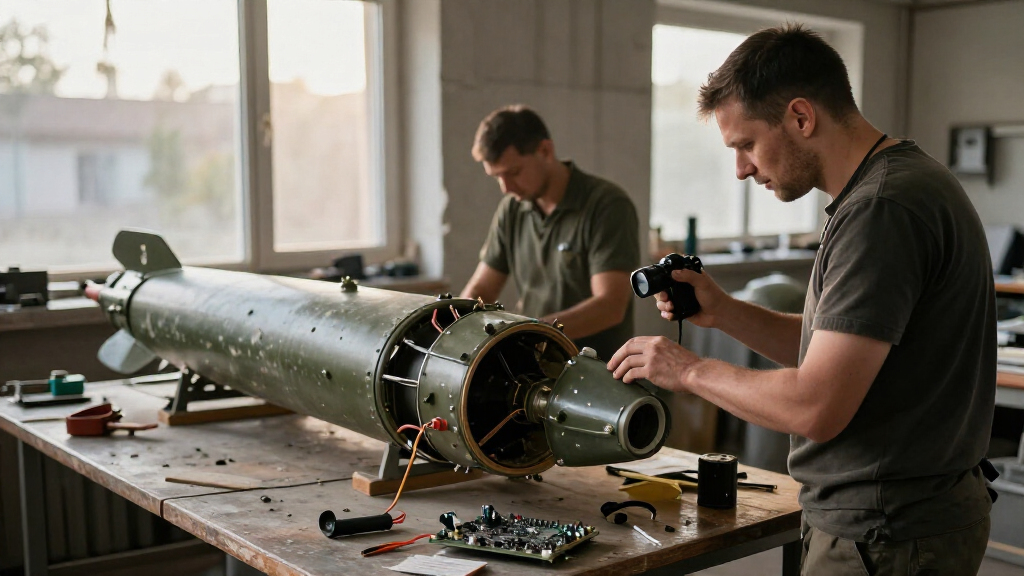
Ukraine’s military intelligence agency says Russia deployed a 3D-printed cruise missile called Filin around September and October. The missile is reported to reach 500 mph and travel about 745 miles, but its cost, operational performance and use in larger attacks have not been independently established in the information available.
Ukraine’s military intelligence agency, GUR, has reported that Russia deployed a 3D-printed cruise missile called Filin around September and October. The weapon is reported to fly at up to 500 mph and travel about 745 miles, raising concern that a relatively inexpensive missile could add pressure to Ukraine’s air defenses.
The reported specifications distinguish Filin from slower, one-way attack drones, but they do not establish how reliably it performs in combat. The account describes a top speed of 500 mph and a range of 745 miles. Those figures are attributed to reporting on the missile, rather than to independently verified test data. The supplied information does not detail how many Filin missiles have been launched or what targets they have struck.
Business Insider, as cited in the report, says Filin is less expensive than the Kh-101, a Russian cruise missile whose cost is given as more than $2 million per launch. No price for Filin is provided, so the size of any cost difference cannot be calculated from the available details. The account also says the missile uses US electronics, but does not identify specific components, suppliers or how they were obtained.
The reported deployment period is September and October, though the year is not stated in the supplied account. That leaves a key timing detail unresolved. The information provided also does not say whether the missile was used in a single strike, in repeated attacks, or as part of a broader Russian effort to increase the number of weapons sent toward Ukrainian targets.
Ukraine · Reported weapon profile
Filin: Russia’s Reported 3D-Printed Cruise Missile
Ukraine’s military intelligence agency says Russia deployed the missile around September and October. Its reported speed, range and electronics raise questions about air defense and supply chains, but key details remain unverified.
Described as 3D-printed
Year not specified
Kh-101 cost per launch, as reported
Components and supply route unknown
What the report says
Ukraine’s GUR says Russia deployed Filin around September and October. The account describes a relatively affordable weapon with US electronics, but gives no Filin price, launch count, strike record or year for the reported deployment.
Speed and reach
Reported figures are up to 500 mph and roughly 745 miles. No independent test results or technical flight data are provided.
Lower cost is not quantified
Business Insider, as cited in the report, says Filin is less expensive than Kh-101. Filin’s price is not given, so the difference cannot be calculated.
Supply chain remains unclear
The account refers to US electronics but names no components, suppliers or route into the missile program.
Reported speed in context
The report compares Filin with the Geran-5. These figures offer a limited speed comparison; they do not establish detection, interception or combat effectiveness.
*Reported maximum speeds. The account says Filin remains slower than an F-16 Fighting Falcon; aircraft speed alone does not determine whether an interception is possible.
Why defenders may be concerned
If Filin can be produced and deployed at lower cost, it could add pressure to Ukraine’s air defenses by requiring interceptors and other resources. That is a stated concern about possible use at scale, not confirmation that Russia has used Filin in missile-spam attacks. Its flight profile, altitude, radar visibility, accuracy and survivability are not described.
Known claims, unanswered questions
“GUR released details of a new 3D-printed Russian cruise missile called Filin.”
Ukraine’s military intelligence agency, GUR
How many have been launched?
The supplied account gives no launch count, confirmed targets or evidence of repeated use.
Has Ukraine intercepted one?
The account does not establish whether Filin has been intercepted.
What does “US electronics” mean?
No parts, suppliers or procurement pathway are identified, so the claim cannot be assessed in detail.
Is production happening at scale?
Cost, manufacturing capacity, reliability and the year of deployment are all unresolved.
What evidence could clarify the picture
Independent confirmation would help distinguish reported capability from established battlefield performance.
Dated deployment record
Establish when and how often Filin was used.
Documented components
Examine recovered parts and identify electronics.
Independent analysis
Assess speed, range, accuracy and reliability.
Cost and production data
Determine whether output could grow at scale.
A Potential New Strain on Air Defenses
If Filin can be manufactured and deployed at a lower cost than established cruise missiles, Russia could have another option for sustaining attacks during a war that has become a prolonged contest of military resources. The concern raised in the report is that lower unit costs could make it easier to send more missiles, potentially forcing Ukraine to spend scarce interceptor missiles and other resources defending against them. That possibility is described as a fear, not as a confirmed Russian tactic involving Filin.
Speed and range could also matter to defenders. A weapon reported to fly at 500 mph may give air-defense crews less time to respond than slower drones, while a range of roughly 745 miles could allow it to threaten targets far from launch areas. Those figures alone do not establish how difficult the missile is to detect or intercept: the supplied reporting gives no information about its flight profile, altitude, radar visibility, accuracy or ability to evade defenses.
The potential use of US-made electronics has a separate implication. If confirmed in specific components, such findings could prompt questions about access to commercial technology and export controls. But without component details or information about the supply chain, the report does not establish how the electronics reached the missile program or whether any restrictions were breached.
military history books cruise missiles and modern warfare
As an affiliate, we earn on qualifying purchases.
As an affiliate, we earn on qualifying purchases.
Missiles and Drones in a Prolonged War
The account places Filin in a conflict where both sides are seeking ways to sustain military operations at lower cost. Russia’s invasion, initially expected to last weeks according to the supplied account, has continued for years, turning the fighting into a war of attrition in which personnel, weapons and production capacity all matter. That context helps explain the interest in a missile described as cheaper than a Kh-101, but it does not confirm how much Filin costs or how quickly it can be produced.
Drones have been used widely in the war, but the report characterizes them as relatively slow and easier to shoot down than faster weapons. It compares Filin with the Geran-5, which is reported to reach a maximum speed of about 270 mph and has been described as prone to breaking up in flight. These comparisons offer a rough picture of the claimed performance difference; they are not a full assessment of either weapon’s combat effectiveness.
The account says Filin remains slower than an F-16 Fighting Falcon. A comparison with a fighter aircraft’s speed does not, by itself, determine whether a missile can be intercepted. The outcome depends on the missile’s route, detection, available defenses and engagement conditions, none of which are described in the supplied details.
“GUR released details of a new 3D-printed Russian cruise missile called Filin.”
— Ukraine’s military intelligence agency, GUR
air defense systems military technology reference book
As an affiliate, we earn on qualifying purchases.
As an affiliate, we earn on qualifying purchases.
Filin’s Cost and Combat Record
The available account does not independently verify Filin’s reported speed, range or deployment, and it gives no launch count, strike record or assessment of reliability. The year of the reported September–October deployment is also missing. Those gaps make it difficult to determine whether the missile represents a limited test, an operational weapon used repeatedly, or a production effort at scale.
Other unanswered questions include Filin’s actual production cost, how many can be manufactured, the accuracy and survivability of the design, and which US electronics it contains. The claim that it could support missile-spam tactics is a concern about possible future use, not evidence that Russia has already used Filin in such attacks. The supplied reporting does not establish whether Ukraine has intercepted one.
3D printing in aerospace and defense engineering book
As an affiliate, we earn on qualifying purchases.
As an affiliate, we earn on qualifying purchases.
Evidence Needed on Deployment Scale
Further details from Ukrainian intelligence, including a dated account of the deployment and technical evidence about recovered missile components, could clarify Filin’s design and use. Independent analysis would also be needed to assess the reported performance figures and the claim about US electronics. The available information does not give a date for a follow-up assessment or identify a next scheduled announcement.
For now, the key developments to watch are whether additional Filin launches are reported, whether its components or wreckage are documented, and whether credible information emerges about production volume and cost. Until those details are available, the missile’s reported capabilities should be treated as claims rather than a complete, independently confirmed picture of its battlefield role.
Source: Tom’s Hardware
electronics supply chain export controls reference book
As an affiliate, we earn on qualifying purchases.
As an affiliate, we earn on qualifying purchases.
Key Questions
What is the Filin missile?
Filin is described in the report as a Russian 3D-printed cruise missile. Ukraine’s GUR says Russia deployed it around September and October, but the year is not specified in the supplied account.
How fast and how far can Filin travel?
The reported figures are a top speed of about 500 mph and a range of roughly 745 miles. The supplied information does not include independent test results confirming those specifications.
How much does a Filin missile cost?
No Filin price is given. Business Insider, as cited in the report, says it is more affordable than the Kh-101, which is reported to cost more than $2 million per launch.
Has Russia used Filin in missile-spam attacks?
The account raises the possibility that a cheaper missile could be used in larger attacks to strain Ukrainian air defenses. It does not confirm that Russia has used Filin in a missile-spam tactic.
What is known about the missile’s US electronics?
The report refers to Filin as containing US electronics, but the available details do not name the components, suppliers or route by which they may have reached the missile program.
Source: Tom’s Hardware
Halloween Picks
halloween
As an affiliate, we earn on qualifying purchases.