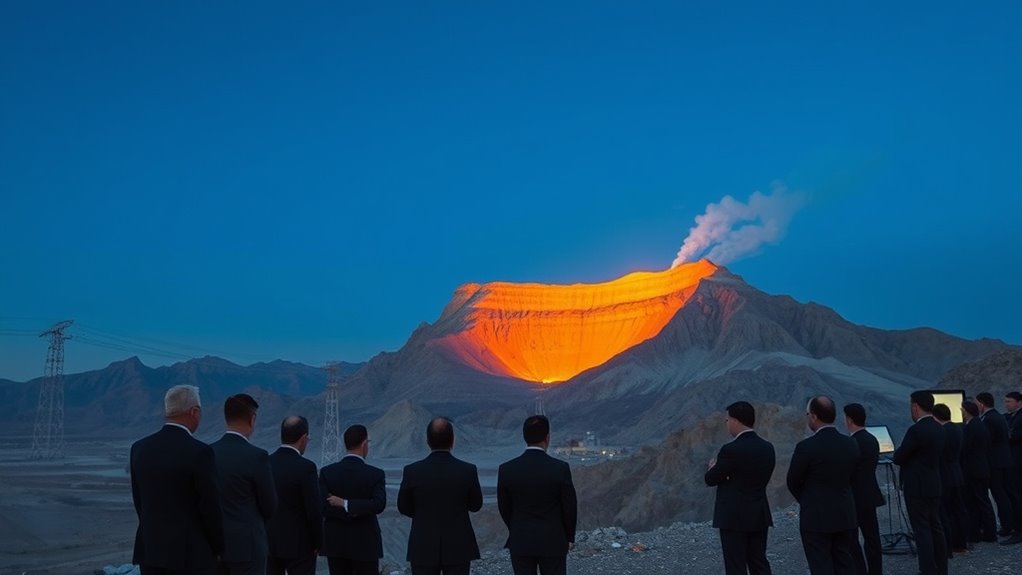

In 2025, North Korea continues advancing its nuclear program despite increasing international sanctions and diplomatic efforts. They conduct missile tests and military drills, signaling their willingness to escalate and maintain regional dominance. The global response remains mixed, with some countries pushing for stricter sanctions while others urge negotiations. If you want to understand how these actions impact global stability and what’s next for North Korea’s nuclear ambitions, there’s more to uncover below.
Key Takeaways
- North Korea has advanced its nuclear arsenal, conducting new missile tests and claiming progress toward miniaturized warheads in 2025.
- The international community, including the U.S., China, and South Korea, react with increased sanctions, diplomatic efforts, and military readiness.
- North Korea’s military drills and missile launches in 2025 heighten regional tensions and challenge ongoing denuclearization negotiations.
- Despite sanctions, North Korea continues illicit trade and clandestine activities to fund nuclear development.
- Global responses remain divided between calls for intensified pressure and efforts to restart diplomatic talks.
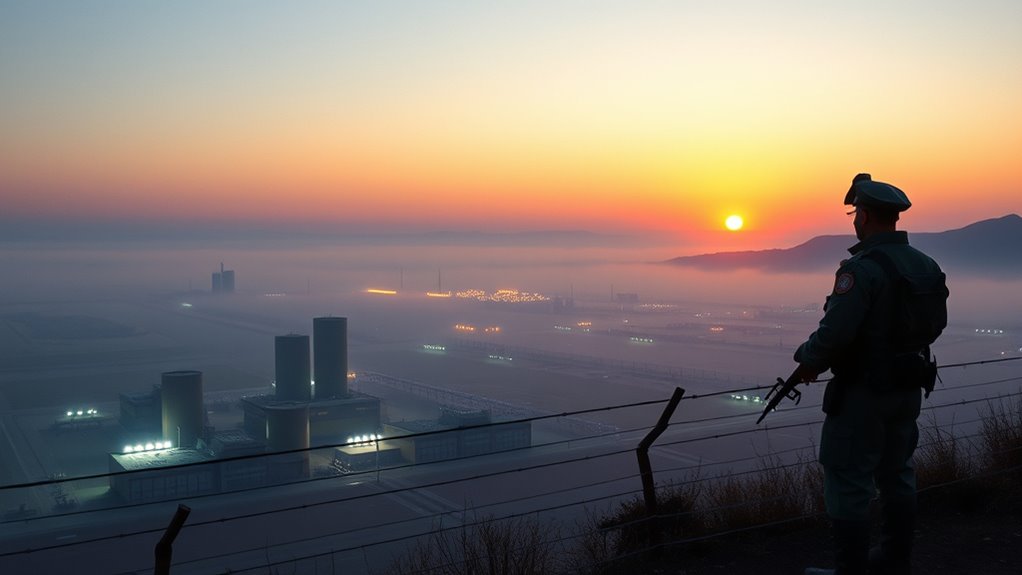
Have you ever wondered why North Korea’s nuclear program remains such a pressing global concern? The answer lies partly in how the country uses military drills and diplomatic sanctions to assert its power and defy international pressure. North Korea often stages large-scale military drills, showcasing its missile capabilities and demonstrating its readiness to use nuclear weapons if necessary. These drills serve as both a show of strength and a warning to other nations, especially the United States and South Korea. They also signal North Korea’s unwillingness to back down, which keeps tensions high in the region. The international community responds with a mix of condemnation and attempts at diplomacy, but North Korea’s consistent display of military might complicates efforts to achieve denuclearization. Diplomatic sanctions are a key tool used by countries to pressure North Korea into halting its nuclear development. These sanctions target the country’s economy, cutting off access to international markets, restricting financial transactions, and freezing assets. However, North Korea often finds ways around these restrictions, such as using clandestine networks or illicit trade routes. Despite the sanctions, North Korea continues to conduct missile tests and claim advancements in its nuclear capabilities, which only fuels global concern. The international response is mixed; some nations call for more aggressive sanctions, while others push for renewed diplomatic talks. The U.S., for example, maintains a policy of maximum pressure, combining sanctions with military preparedness. Meanwhile, countries like China and Russia advocate for dialogue and negotiations, fearing escalation into conflict. North Korea’s persistent development of nuclear weapons, coupled with provocative military drills, keeps the world on edge. It’s clear that diplomatic sanctions alone haven’t been enough to curb its ambitions, and military drills serve to remind the world that North Korea remains a formidable, unpredictable actor. This ongoing cycle of tension, sanctions, and military displays creates a fragile stability in the region and threatens global security. As North Korea continues to prioritize its nuclear program, the international community faces the challenge of balancing pressure with diplomacy—an intricate dance that’s unlikely to end soon. You can see how each action, whether it’s a missile test or a new round of sanctions, influences negotiations and the broader geopolitical landscape. For now, North Korea’s nuclear ambitions remain a thorn in the side of global peace, with military drills and diplomatic sanctions at the center of the ongoing struggle. Additionally, the importance of cruise ports and destinations in regional stability and international relations highlights how interconnected global security issues can be.

New GQ GMC-320 Plus Geiger Counter Nuclear Radiation Detector Data Recorder Beta Gamma x-Ray Test Equipment
Newly designed digital Geiger Counter/Data recorder,Record the radiation data. Play it back later
As an affiliate, we earn on qualifying purchases.
As an affiliate, we earn on qualifying purchases.
Frequently Asked Questions
What Are North Korea’s Long-Term Nuclear Development Goals?
You should understand that North Korea aims to achieve nuclear proliferation to secure its regime and negotiate from a position of strength. Its long-term goals include advancing missile technology to develop reliable delivery systems for nuclear weapons, ensuring deterrence against potential threats. By expanding its nuclear arsenal and perfecting missile technology, North Korea seeks regional influence and aims to establish itself as a nuclear power, challenging global security dynamics.
How Does North Korea Finance Its Nuclear Program?
You might not realize it, but North Korea funds its nuclear program through a mix of illicit trade and foreign aid. They engage in illegal activities like arms smuggling, counterfeiting, and drug trafficking to generate revenue. Additionally, they sometimes receive clandestine foreign aid from sympathetic countries or organizations that support their strategic interests. These methods help sustain their nuclear ambitions despite international sanctions and economic hardships.
What Are the Internal Political Views on Nuclear Weapons?
You see, inside North Korea, nuclear weapons are the heart of their political ideology, like a mighty fortress. Public opinion strongly supports this stance, viewing nuclear arms as essential for security and national pride. The regime uses this unity to justify its policies, making nuclear weapons a symbol of strength. The internal political views are deeply rooted, with leaders emphasizing that these weapons safeguard their sovereignty and future.
How Do Neighboring Countries Perceive North Korea’s Nuclear Advancements?
You see neighboring countries perceive North Korea’s nuclear advancements as a serious threat to regional security, prompting fears of escalation and instability. They worry about diplomatic tensions rising, which could lead to military confrontations or increased arms buildup. These nations often call for stronger international sanctions and diplomatic efforts to curb North Korea’s progress, aiming to maintain peace and stability in the region while balancing their security interests.
What Are the Potential Diplomatic Strategies to De-Nuclearize North Korea?
You can pursue diplomatic negotiations that emphasize mutual security and economic benefits, encouraging North Korea to step back from nuclear pursuits. Strengthening sanctions enforcement while offering incentives for denuclearization creates a balanced approach. Building trust through consistent communication and confidence-building measures helps ease tensions. These strategies foster hope and cooperation, guiding North Korea toward peaceful denuclearization by demonstrating that diplomacy and engagement, rather than isolation, can lead to a more stable future.

Lytekatty C128 Scout Drone with 1080P Camera, Military Remote Control Helicopter for Adults, 2.4G 4CH Aerial Vehicle Reconnaissance, Take Off/Landing, 6-Axis Gyro RC Aircraft Helicopter
🚁C128 RC Helicopter Innovative Design: With a high degree of recognition, this crash-resistant model with high efficiency adopts…
As an affiliate, we earn on qualifying purchases.
As an affiliate, we earn on qualifying purchases.
Conclusion
As you watch North Korea’s nuclear ambitions unfold, remember the world’s fragile balance hangs in the same way a house of cards does—ready to fall with one false move. Like Pandora’s box, once opened, the dangers can’t be contained. Stay vigilant, for history warns us that ignoring the signs can lead to chaos. The future hinges on diplomacy’s wisdom, lest we repeat the mistakes that brought the world to the brink before.

Estes 2240 PS II Launch Controller, Flying-Rocket-Model Launch Controller, Rocket Model Kit Accessories for Ages 10+
MODEL-ROCKET LAUNCH CONTROLLER: Estes rocket model kits require the right launch pad system for any single-engine or 2-engine-cluster…
As an affiliate, we earn on qualifying purchases.
As an affiliate, we earn on qualifying purchases.

NQUO Rental Billing Software (Unit Pos)
FOR Small Facility, Complex, Housing, Arcade
As an affiliate, we earn on qualifying purchases.
As an affiliate, we earn on qualifying purchases.