
TL;DR

Get everyday essentials delivered free — and shop member deals
- Fast, free delivery on millions of items
- Access to Prime Big Deal Days deals on October 6–7
- Prime Video, Amazon Music and more included
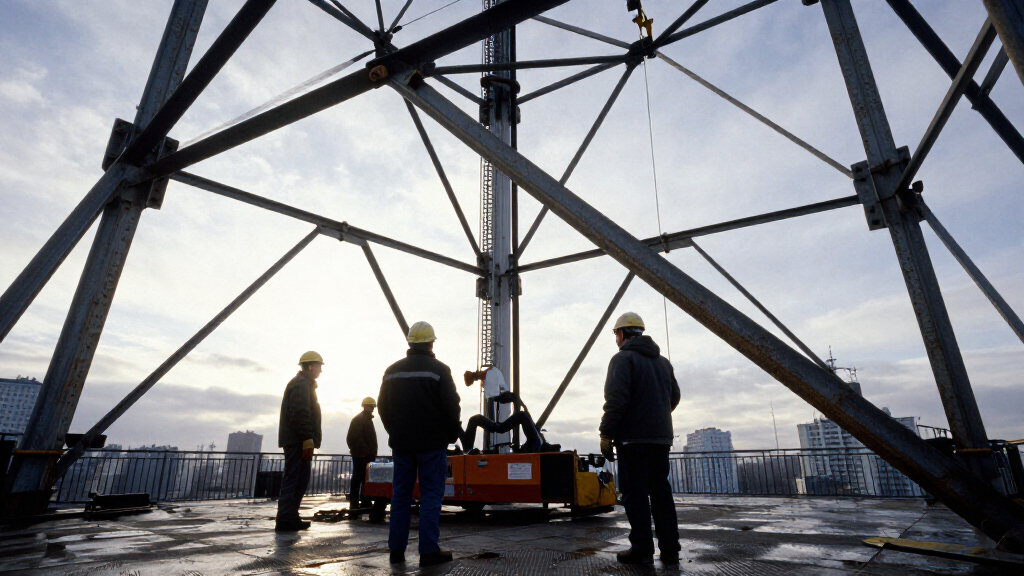
Russia’s television and radio network RTRS plans to dismantle almost all of Moscow’s 1922 Shukhov Tower this fall and replace it with a replica by 2028. Preservation specialists argue that replacing the original steel would destroy a central part of engineer Vladimir Shukhov’s work; the full project plan and response to those objections remain unclear.
The proposed overhaul would remove nearly all of the tower’s original steel, Meduza reported. The source material does not give a detailed construction schedule, explain how much original material would remain, or set out RTRS’s technical case for the work. The plan has prompted a dispute over whether rebuilding the structure in its familiar form would preserve the landmark.
Shukhov built the 144-meter tower between 1919 and 1922 using a lattice of angled steel rods arranged in hyperboloid sections. The structure was designed to be strong while using relatively little metal. Its open lattice also allows wind to pass through. The tower became a defining Moscow landmark and a major broadcasting site.
Meduza’s report says preservation specialists regard the steel itself as part of the tower’s significance, alongside its outline and engineering design. Their objection is that a replica could retain the visible form while losing much of the historic material. The report identifies RTRS as the owner and says it plans the dismantling, but the material provided does not include a direct statement from the network.
Original Steel at the Center of the Dispute
The dispute turns on what it means to preserve an engineering landmark. A replica could reproduce the tower’s silhouette and lattice design, but replacing nearly all the steel would change the physical fabric that has stood since the early Soviet period. Specialists quoted by Meduza say that loss would be equivalent to destroying Shukhov’s work.
The case also matters beyond Moscow. Shukhov’s lattice hyperboloid structures were admired as a way to build tall, strong structures with comparatively little metal. The tower offers a surviving example of that approach. The planned work therefore raises questions about how owners balance structural intervention with retaining original materials at historic sites.
A Tower Built for Radio
The project began amid the scarcity of the Civil War. The source report says Soviet leader Vladimir Lenin backed construction and in 1919 ordered a powerful Moscow radio station built with urgency. Lenin described radio in 1920 as a “newspaper without paper and without distance.” The tower opened in 1922 as the Comintern Radio Tower.
At 144 meters, it was Moscow’s tallest structure until Moscow State University’s main building was completed in 1953. It transmitted a television signal in 1937, and regular broadcasts began on March 10, 1939. Shukhov had originally planned a 350-meter tower, but, according to the report, a shortage of metal prevented construction at that height.
Shukhov’s design used straight rods set at angles and secured by rings. The 48 supports distributed the tower’s weight, while the lattice reduced wind resistance. Its sections were assembled at ground level and raised one after another. These features help explain why the structure is regarded as an engineering achievement as well as a broadcasting landmark.
““newspaper without paper and without distance””
— Vladimir Lenin, as quoted in Meduza’s report
Project Details Still Missing
The report does not specify how the dismantling would proceed, which parts would be kept, or how much replacement steel would be used. It also does not provide RTRS’s explanation of the tower’s condition or the engineering reasons for the proposed scope of work. The network’s direct response to preservation concerns is not included in the material available here.
It remains unclear whether the fall timetable is final, what approvals have been obtained, and whether specialists or heritage authorities can alter the plan. Meduza reports that the replica is intended to be completed by 2028; it does not establish that this deadline is guaranteed.
Fall Dismantling Plan and 2028 Target
RTRS is expected to begin dismantling work this fall, according to Meduza, with a replica targeted for 2028. Further details about the schedule, the replacement structure, and the treatment of original components would clarify how much of Shukhov’s tower could remain.
The next significant developments are whether the owner publishes its technical and conservation plans and whether preservation specialists or relevant authorities respond to them. Until those details emerge, the precise extent of the work and the fate of the original steel remain unsettled.
Key Questions
What is planned for the Shukhov Tower?
According to Meduza, owner RTRS plans to dismantle almost all of the 1922 tower this fall and replace it with a replica by 2028.
Why do specialists object to the plan?
Specialists cited in the report say the tower’s original steel is part of its historic value. Reproducing its shape while replacing almost all the material, they argue, would not preserve Shukhov’s work.
Who was Vladimir Shukhov?
Shukhov was a Russian and Soviet engineer known for inventions and structures including the tower’s lattice hyperboloid design.
When was the tower built and used for broadcasting?
It was built from 1919 to 1922, opened as the Comintern Radio Tower, transmitted television in 1937, and began regular television broadcasts in 1939.
What remains unknown about the overhaul?
The available report does not detail the technical justification, exact dismantling schedule, amount of steel to be retained, or RTRS’s response to preservation objections.
Source: rss
Fall Picks
fall essentials
As an affiliate, we earn on qualifying purchases.