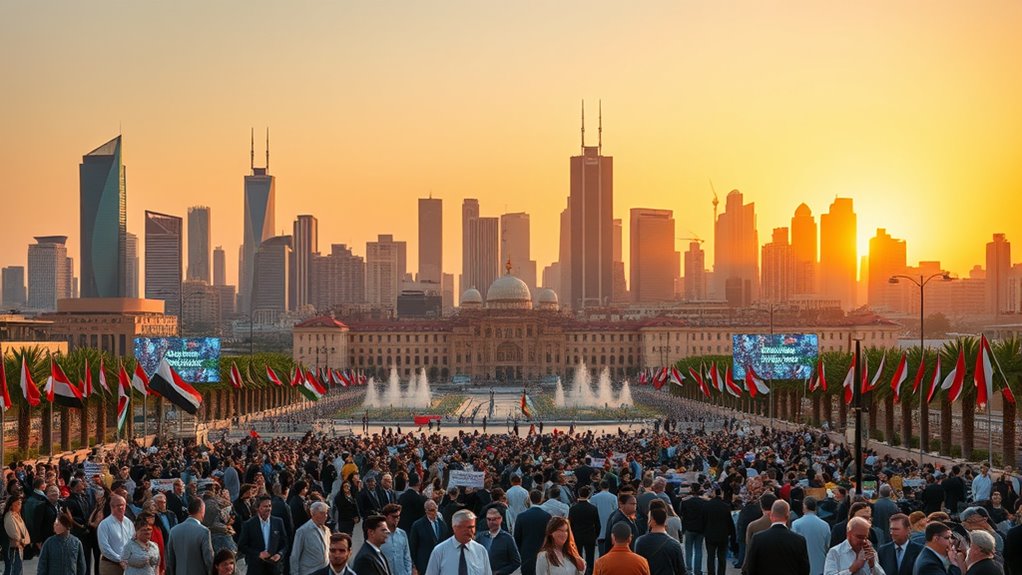
By 2026, the Middle East is becoming more stable and prosperous through economic diversification, technological innovation, and regional cooperation. Countries are shifting away from oil dependence and adopting new industries like renewable energy and digital tech. This progress fosters jobs, reduces unrest, and promotes peace. Increased collaboration helps address tensions, though challenges remain. Staying informed reveals how these developments are shaping a more hopeful future for the region.
Key Takeaways
- Technological advancements promote regional cooperation, fostering trust and reducing tensions among Middle Eastern nations.
- Economic diversification efforts create new industries, decreasing youth unemployment and alleviating socio-economic frustrations fueling conflicts.
- Digital infrastructure and innovation enhance social inclusion, addressing disparities that often underlie regional unrest.
- Political stability improves as countries leverage technology and economic reforms to strengthen governance and reduce unrest.
- Persistent challenges remain, but ongoing modernization and collaboration increase prospects for peace by 2026.
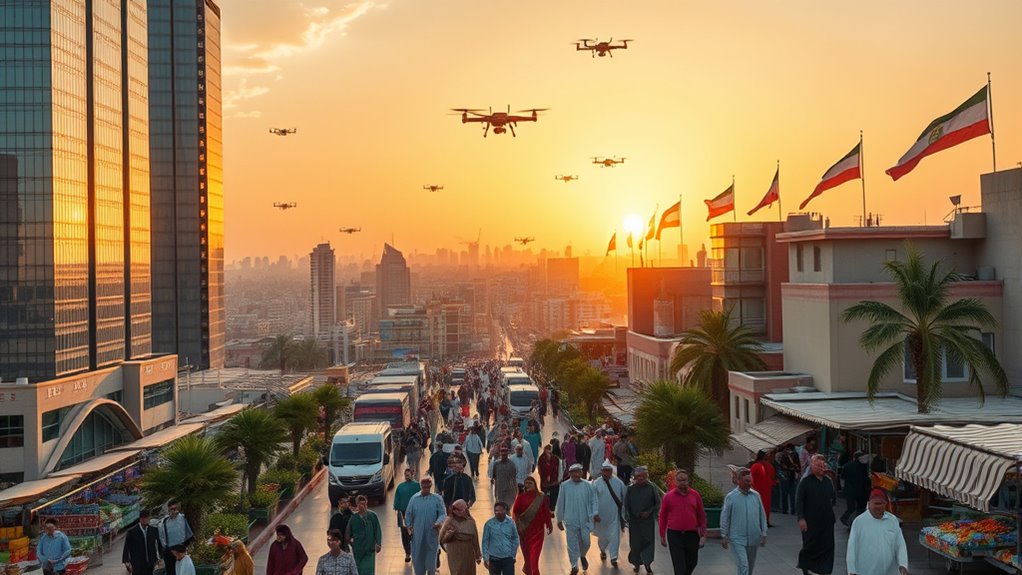
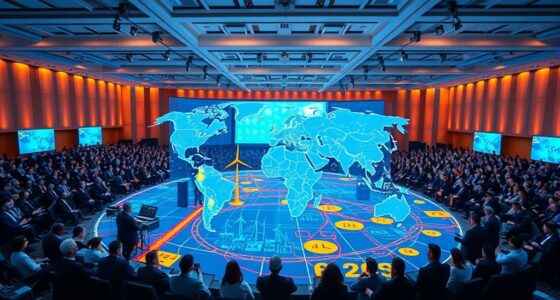
What does the Middle East look like in 2026? If you’re following the region’s trajectory, you’ll notice significant shifts driven by deliberate economic reforms and rapid technological advancements. Countries across the Middle East have taken bold steps to diversify their economies beyond oil dependence, recognizing that sustainable growth depends on modernizing industries and creating new opportunities. These reforms aim to attract foreign investment, streamline regulations, and foster entrepreneurship, transforming the region into a hub of innovation. You’ll see governments actively promoting sectors like renewable energy, digital infrastructure, and smart city development, which not only boost economic resilience but also create jobs and improve living standards.
By 2026, Middle East economies are diversifying through innovation, renewable energy, and digital infrastructure projects.
Technological advancements are at the heart of this transformation. You might observe the proliferation of smart technologies in everyday life—urban centers equipped with IoT devices, AI-driven services, and enhanced connectivity that make daily routines more efficient. Countries are investing heavily in digital infrastructure, recognizing that technological progress can bridge gaps in education, healthcare, and commerce. For instance, you could witness widespread adoption of blockchain for secure transactions or AI applications in healthcare diagnostics, making essential services more accessible and affordable. These innovations foster a more inclusive society, helping to address longstanding disparities and social tensions. Furthermore, the integration of these technologies into economic sectors accelerates the pace of development and modernization across the region.
The impact of these reforms and advancements extends beyond economics. They contribute to regional stability by creating economic opportunities that can reduce unrest and conflict. You may see a shift in diplomatic relations, with nations collaborating more closely on technological projects and shared infrastructure initiatives. This cooperation helps build mutual trust and signals a move toward peaceful coexistence. Additionally, the influx of new industries and investments can help absorb youth unemployment, a persistent challenge in the region, reducing the likelihood of unrest fueled by economic frustrations.
However, you should also be aware that progress isn’t uniform across the Middle East. Some countries may still grapple with political instability or resistance to change, which could slow down or complicate these advancements. Nonetheless, the overarching trend suggests that economic reforms paired with technological progress are setting the stage for a more stable and prosperous future. You’ll find that, by 2026, the Middle East is evolving into a region where innovation and economic resilience go hand in hand, offering new prospects for peace and collaboration. The region’s future depends on how effectively these reforms are implemented and how well nations harness technology to address their unique challenges. Embracing digital transformation will be crucial for achieving sustained progress.

IoT and Smart Cities: Your smart city planning guide (English Edition)
As an affiliate, we earn on qualifying purchases.
As an affiliate, we earn on qualifying purchases.
Frequently Asked Questions
How Will Climate Change Impact Regional Stability in 2026?
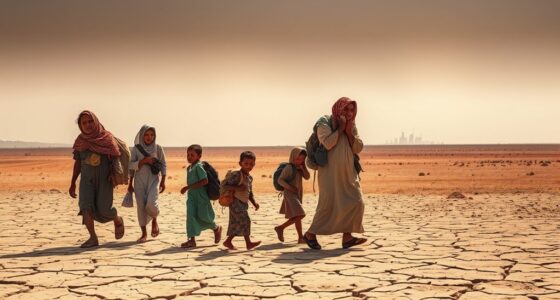
Climate change will likely increase regional instability in 2026 by exacerbating water scarcity and fueling climate migration. You’ll see more people displaced as water sources dwindle, leading to heightened tensions over resources. As communities struggle to adapt, conflicts may intensify, making cooperation difficult. Climate migration can also strain neighboring countries, pushing the region further toward unrest. Being proactive now can help you address these challenges before they escalate.
What Role Will Non-State Actors Play in Future Conflicts?
Non-state actors will play a pivotal role in future conflicts, often fueling proxy conflicts that escalate regional tensions. You might think they’re just pawns, but they often operate with strategic goals, influencing diplomacy and military actions. These groups could gain more power as states weaken or become embroiled in internal struggles. Expect their involvement to complicate peace efforts, making negotiations more unpredictable and prolonged, challenging traditional conflict resolution methods.
How Might Technological Advancements Influence Peace Negotiations?
Technological advancements like artificial intelligence and blockchain technology could substantially influence peace negotiations by increasing transparency and efficiency. You might leverage AI to analyze complex data and predict outcomes, helping both sides find common ground. Blockchain can secure agreements and ensure trust by providing tamper-proof records. These tools make negotiations more transparent, fostering confidence and encouraging cooperation, ultimately paving the way for more sustainable peace agreements in the Middle East.
What Are the Prospects for Economic Diversification in Conflict Zones?
You see a 35% rise in new industries in conflict zones, signaling hope for economic diversification. Resource diversification and industry transformation are gaining momentum, attracting investment and creating jobs. While instability persists, these shifts improve resilience and reduce reliance on traditional sectors. Your efforts can support sustainable growth, fostering peace through economic opportunities that empower communities and inspire long-term stability in these challenging regions.
How Will International Diplomacy Evolve Amid Regional Tensions?
You’ll see international diplomacy evolve through adaptive diplomatic strategies that emphasize dialogue and cooperation. Regional tensions push global powers to strengthen regional alliances, aiming to balance influence and promote stability. Diplomatic efforts will focus more on multilateral negotiations, leveraging economic incentives and security guarantees. As tensions persist, expect diplomacy to become more nuanced, with countries working collaboratively to manage conflicts, prevent escalation, and foster long-term peace in the region.

AI in Healthcare Technology: Diagnostic Tools for the Digital Age
As an affiliate, we earn on qualifying purchases.
As an affiliate, we earn on qualifying purchases.
Conclusion
By 2026, the Middle East stands at a crossroads, its future a delicate tapestry woven with threads of hope and tension. Like a fragile glass ornament, peace can shatter with a single misstep or be carefully restored through patience and dialogue. Your choices and actions will determine whether this region’s story ends in harmony or chaos. Remember, even the smallest spark of understanding can ignite a brighter, more peaceful tomorrow.

Blockchain Science: Distributed Ledger Technology
As an affiliate, we earn on qualifying purchases.
As an affiliate, we earn on qualifying purchases.

Lwuey 40W Foldable Solar Panel Charger, Portable Power Emergency Renewable Energy Charger Photovoltaic Efficiency IP67 Waterproof with 5V USB for Outdoor Phones Pads Camping Banks Hiking Backpacking
Easy to Carry: The portable solar charger and portable solar panel are specially designed to provide green power…
As an affiliate, we earn on qualifying purchases.
As an affiliate, we earn on qualifying purchases.

Elena’s passion for the arts and culture shines through in her vivid reporting. From film festivals to gallery openings, her coverage is an essential source for anyone interested in the latest cultural trends and artistic movements.