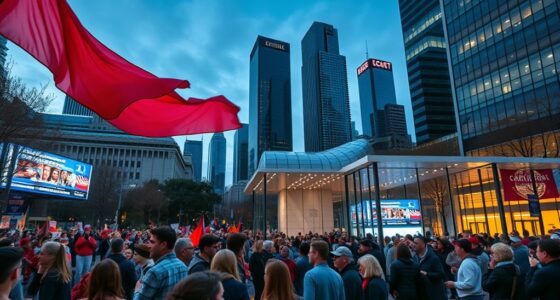
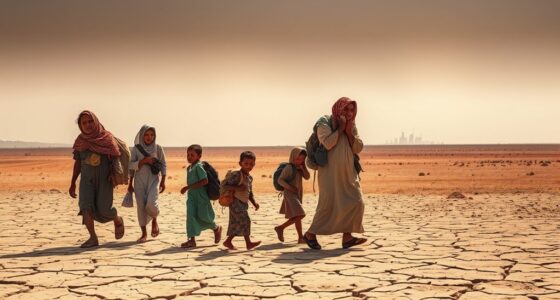
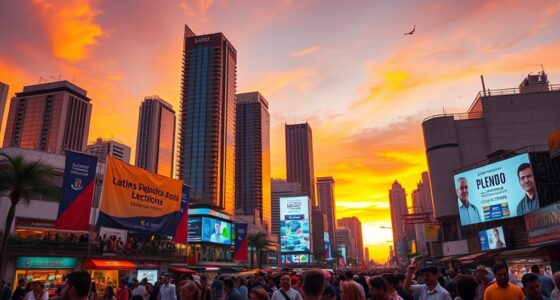
By 2025, climate change, economic shifts, and political unrest are causing unprecedented migration and refugee crises worldwide. You’ll see increased movement from vulnerable regions to urban centers, straining infrastructure and social systems. International responses focus on cooperation and resilient solutions, but challenges remain. Understanding how policymakers adapt to these pressures and the future of global migration will help you grasp the full picture of this complex issue—continue to explore for deeper insights.
Key Takeaways
- Climate change and environmental stress are major drivers of refugee crises in 2025, prompting increased displacement globally.
- Urban areas face overcrowding and strained social services due to migration, impacting infrastructure and community integration.
- International cooperation is essential for sharing resources, expertise, and funding to support climate adaptation and refugee assistance.
- Policies promoting inclusive integration and climate-resilient infrastructure are critical for managing migration and preventing social unrest.
- Resilient city planning and sustainable development strategies are vital for addressing migration challenges and fostering stability.
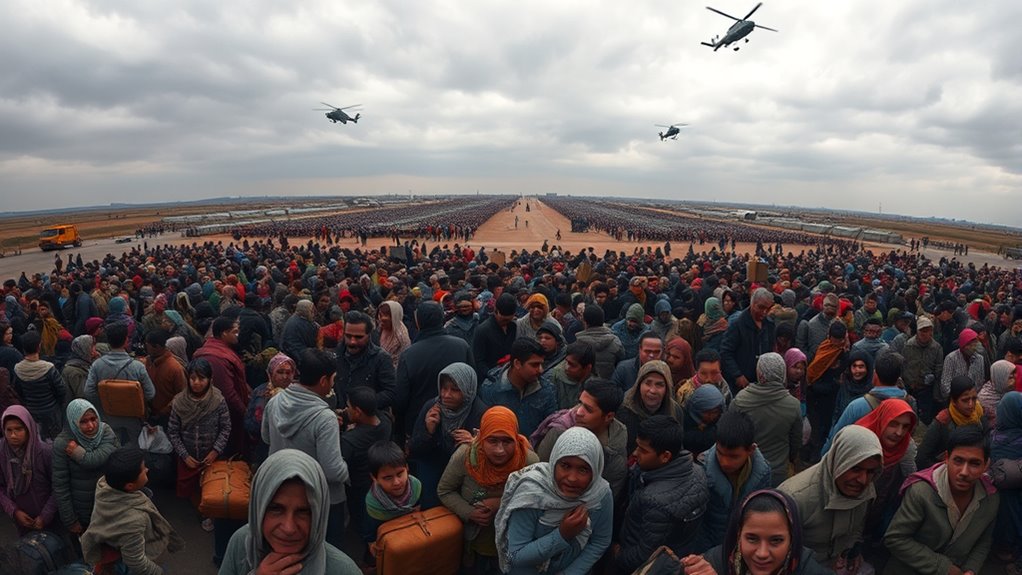
By 2025, global migration patterns will have shifted substantially, driven by economic opportunities, climate change, and political instability. As more people seek better lives, you’ll notice how climate adaptation becomes a central concern for many regions experiencing environmental stress. Coastal cities and low-lying areas face rising sea levels and unpredictable weather patterns, forcing residents to relocate. This shift results in increased urban overcrowding in already densely populated areas, straining infrastructure and social services. You might see cities struggling to accommodate newcomers, leading to overcrowded housing, overwhelmed public transport, and stretched healthcare systems. Governments and urban planners will need to develop innovative solutions for climate adaptation—building resilient infrastructure, expanding green spaces, and implementing policies that ease the pressure on urban centers.
By 2025, climate-driven migration will intensify urban overcrowding and challenge cities to adopt resilient, inclusive solutions.
At the same time, urban overcrowding won’t just be a matter of convenience; it will influence migration decisions. People will weigh the risks of living in overcrowded cities against the dangers posed by climate change elsewhere. Some may choose to migrate to rural or less populated areas, but these regions might lack the resources or infrastructure to support an influx of new residents. Consequently, you’ll observe a redistribution of populations, which could either alleviate or exacerbate urban overcrowding depending on how effectively regions adapt to these shifts. This dynamic will push policymakers to rethink urban development strategies, emphasizing sustainable growth and climate resilience to prevent social unrest and economic downturns.
Furthermore, migration driven by climate change will intensify the challenge of climate adaptation itself. Regions hosting large migrant populations will need to enhance their resilience, not only to environmental threats but also to social tensions that arise from rapid demographic changes. You’ll see efforts to integrate migrants into local communities, promote inclusive policies, and improve access to resources. International cooperation will become more indispensable, with countries sharing expertise and funding to address climate adaptation strategies that help both long-term residents and newcomers. The increasing adoption of sustainable materials and eco-friendly practices will be crucial in building resilient infrastructure that can withstand climate impacts while minimizing environmental footprint. The goal will be to create adaptable urban environments that can withstand climate impacts while providing safe, livable spaces for all.
Ultimately, the combination of climate adaptation and urban overcrowding will shape migration in 2025 in profound ways. You’ll witness a world where migration is no longer just about economic opportunity but also about survival amid environmental crises. How effectively nations respond—by designing resilient cities and inclusive policies—will determine whether migration becomes a pathway to opportunity or a source of conflict. Staying ahead of these challenges will require innovative solutions, international collaboration, and a commitment to building sustainable, adaptable communities.

Advances in Sustainable Materials and Resilient Infrastructure (Springer Transactions in Civil and Environmental Engineering)
As an affiliate, we earn on qualifying purchases.
As an affiliate, we earn on qualifying purchases.
Frequently Asked Questions
What New Technologies Are Aiding Refugee Tracking and Aid Distribution?
You use satellite monitoring and biometric identification to improve refugee tracking and aid distribution. Satellite monitoring provides real-time data on movement patterns, helping coordinate resources efficiently. Biometric identification, like fingerprint or iris scans, guarantees accurate identification of refugees, preventing fraud and streamlining aid delivery. These technologies make tracking more precise and aid more targeted, ultimately helping you respond faster and more effectively to crises, saving lives and reducing suffering.
How Will Climate Change Impact Migration Patterns in 2025?
Like a river swelling with rain, climate change will drive environmental migration, causing more people to become climate-displaced. You’ll see increased climate displacement as rising sea levels, droughts, and storms force communities to move, often to urban areas or neighboring countries. This shift will reshape migration patterns markedly, creating new challenges for international response and requiring adaptive policies to manage the growing wave of environmental migration effectively.
What Role Will Private Sector Partnerships Play in Refugee Assistance?
Private sector collaboration will be vital in refugee assistance, as it brings innovative solutions and additional resources. You’ll see these partnerships foster funding diversification, reducing reliance on traditional aid and increasing sustainable support. By engaging businesses, you help expand employment opportunities, improve infrastructure, and enhance integration programs. Your involvement accelerates efforts to address refugee needs effectively, making aid more adaptable and resilient in the face of ongoing crises.
How Are Mental Health Services Being Integrated Into Refugee Support Programs?
You’ll find that mental health services are now integrated into refugee support programs through providing accessible psychological support and fostering community integration. These programs prioritize mental well-being by offering counseling, support groups, and trauma-informed care. They aim to help refugees rebuild trust and connections within their new communities, ensuring emotional resilience. This holistic approach recognizes mental health as essential for successful adaptation and long-term stability for refugees.
What Legal Reforms Are Proposed to Improve Refugee Asylum Processes?
You’re about to see a shift in asylum procedures—new legal frameworks aim to streamline processes and reduce backlog. Proposed reforms include clearer criteria for eligibility, faster decision timelines, and enhanced protections for vulnerable refugees. These changes could transform the asylum landscape, making it more efficient and fair. As these reforms unfold, they promise to balance national security with humanitarian needs, ensuring refugees receive timely support without lengthy delays.

Plastic Redemption: Turning Trash into Products
As an affiliate, we earn on qualifying purchases.
As an affiliate, we earn on qualifying purchases.
Conclusion
As you witness the ongoing migration trends of 2025, remember that today’s refugee crises demand swift international action, much like the urgency of a 21st-century rescue mission. While the world navigates these challenges, staying informed and compassionate remains vital—lest we find ourselves in a future where borders are just lines on a map, and humanity’s resilience is tested. So, stay engaged, because tomorrow’s history is being written today.

Climate Change and Water Scarcity in the Middle East (Earthscan Studies in Water Resource Management)
As an affiliate, we earn on qualifying purchases.
As an affiliate, we earn on qualifying purchases.

Park characteristics: A tool for classifying and designing urban green spaces
Used Book in Good Condition
As an affiliate, we earn on qualifying purchases.
As an affiliate, we earn on qualifying purchases.

Elena’s passion for the arts and culture shines through in her vivid reporting. From film festivals to gallery openings, her coverage is an essential source for anyone interested in the latest cultural trends and artistic movements.