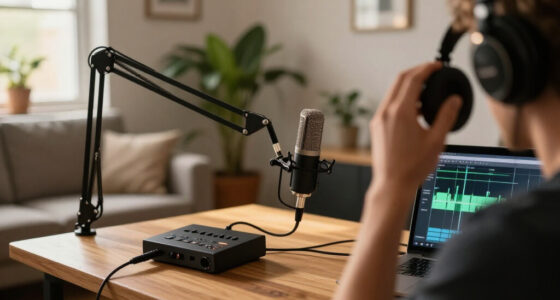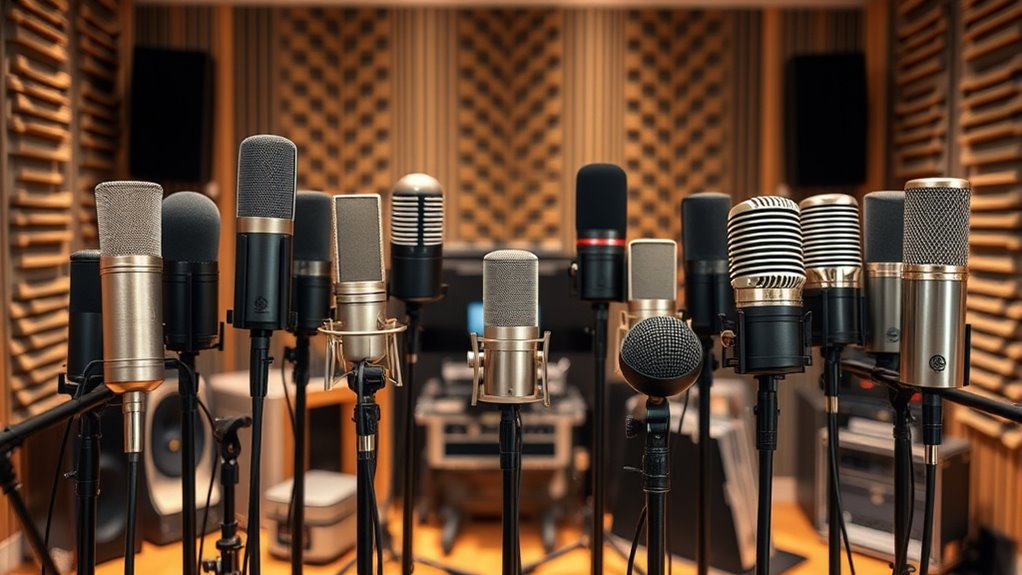

If you’re searching for the best studio microphones, you’re likely balancing performance, versatility, and budget. The Audio-Technica AT2020 stands out as an excellent all-rounder for its clarity and affordability, making it ideal for beginners and hobbyists. For more professional setups, the RØDE NT1 5th Gen offers exceptional low-noise performance, while the Shure SM7B remains a favorite for vocal recordings and podcasting. Each microphone has its tradeoffs: some excel in sound quality but come at a higher cost, while others emphasize ease of use or versatility. Read on to see how these options compare to help you choose the right studio microphone for your needs.

Get everyday essentials delivered free with Prime
- Fast, free delivery on millions of items
- Prime Video, Amazon Music and more included
- Member-only deals all year
Complete the kit

Key Takeaways
- The top-tier microphones like the RØDE NT1 5th Gen and Shure SM7B deliver exceptional sound quality but come with higher price tags and setup complexity.
- Condenser microphones generally offer better clarity for vocals and studio recording, but dynamic mics like the Shure SM7B excel in handling loud sources and background noise.
- Budget-friendly options such as the AKG P120 still provide decent performance for beginners or casual use, though they may lack some professional features.
- Many high-end microphones include USB-C or XLR options, emphasizing the importance of compatibility with your existing setup.
- Choosing between condenser and dynamic microphones depends heavily on your recording environment and intended use—condensers require a controlled space, while dynamics are more forgiving.
| Maono PM320S Condenser PC Microphone with XLR Cable, Boom Arm, Pop Filter |  | Best Overall for Versatile Studio Setups | Power Requirement: 48V phantom power | Capsule Size: 16mm | Polar Pattern: Cardioid | VIEW ON AMAZON | See Our Full Breakdown |
| Audio-Technica AT2020 Cardioid Condenser Studio Microphone |  | Best Value for Home Studio Beginners | Output connector: 3 pin XLRM | Polar pattern: Cardioid | Application: Studio recording | VIEW ON AMAZON | See Our Full Breakdown |
| RØDE NT1 5th Gen Studio Condenser Microphone, XLR + USB-C, Silver |  | Best Versatile Microphone with Digital and Analog Options | Connectivity: XLR and USB-C | Color: Silver | Sample Rate: up to 192kHz | VIEW ON AMAZON | See Our Full Breakdown |
| Shure SM7B Dynamic Vocal Microphone for Podcasting & Streaming |  | Best for Vocal Clarity in Podcasts and Streaming | Type: Dynamic Microphone | Frequency Response: 50Hz – 20kHz | Pickup Pattern: Cardioid | VIEW ON AMAZON | See Our Full Breakdown |
| Shure SM4 XLR Studio Condenser Microphone Kit for Recording |  | Best for Professional Studio and Stage Versatility | Type: Condenser Microphone | Polar Pattern: Cardioid | Diaphragm: Dual-diaphragm | VIEW ON AMAZON | See Our Full Breakdown |
| RØDE NT1 Signature Series Studio Condenser Microphone, Black |  | Best Overall for Professional Vocal Recordings | Type: Condenser Microphone | Color: Black | Included: Shock mount, pop filter, XLR cable, dust cover | VIEW ON AMAZON | See Our Full Breakdown |
| Audio-Technica AT2035 Cardioid Condenser Microphone |  | Best for Versatile Studio and Streaming Applications | Polar Pattern: Cardioid | Diaphragm: Large | High Pass Filter: Switchable 80 Hz | VIEW ON AMAZON | See Our Full Breakdown |
| AKG Pro Audio P120 – Affordable 2/3-Inch Diaphragm Condenser Microphone for Clear Vocals & Instruments |  | Best Budget-Friendly Choice for Clear Vocals & Instruments | Polar Pattern: Cardioid | Frequency Bandwidth: 20 – 20000 Hz | Equivalent Noise Level: 19 dB-A | VIEW ON AMAZON | See Our Full Breakdown |
| studio microphone | Polar Pattern |
|---|---|
| Maono PM320S Condenser PC Micr | Cardioid |
| Audio-Technica AT2020 Cardioid | Cardioid |
| RØDE NT1 5th Gen Studio Conden | — |
| Shure SM7B Dynamic Vocal Micro | — |
| Shure SM4 XLR Studio Condenser | Cardioid |
| RØDE NT1 Signature Series Stud | — |
| Audio-Technica AT2035 Cardioid | Cardioid |
| AKG Pro Audio P120 | Cardioid |
More Details on Our Top Picks
Maono PM320S Condenser PC Microphone with XLR Cable, Boom Arm, Pop Filter
The Maono PM320S stands out for its comprehensive package, including a large condenser capsule, boom arm, pop filter, and shock mount, making it an excellent choice for those seeking a complete studio solution. Its studio-grade sound quality and effective noise rejection are comparable to higher-end options like the Shure SM7B, but it requires 48V phantom power, which adds complexity for beginners. The all-in-one kit appeals to content creators who want a plug-and-play setup, yet the bulkiness and accessory management might be challenging for minimalists or those with limited space. Compared to the Audio-Technica AT2020, it offers a more complete package but at a higher setup complexity and price. Tradeoffs include needing external power and handling a larger footprint, but for those willing to manage the setup, this model delivers professional sound quality in a versatile package.Pros:- Complete package with boom arm, pop filter, and shock mount
- Large condenser capsule delivers rich, detailed sound
- Effective noise rejection and low-noise design
Cons:- Requires external 48V phantom power, adding complexity
- Bulkier setup may be cumbersome in small spaces
Best for: Content creators and streamers who want a ready-to-use, professional-grade setup with accessories included.
Not ideal for: Beginners unfamiliar with XLR equipment or those looking for a simple USB microphone solution.
- Power Requirement:48V phantom power
- Capsule Size:16mm
- Polar Pattern:Cardioid
- Includes:XLR cable, boom arm, shock mount, pop filter, windscreen, user manual
Our verdict“This microphone suits users who prioritize a professional, all-in-one studio setup despite the larger footprint and setup complexity.”
Audio-Technica AT2020 Cardioid Condenser Studio Microphone
The Audio-Technica AT2020 offers a straightforward, high-quality solution for those starting in home recording, with high SPL handling and excellent transient response that rival pricier models like the Maono PM320S. Its compact, simple design makes it ideal for desktop use, but it’s reliant on an external audio interface, which can add to the overall cost and complexity. Unlike the Maono, it lacks included accessories, meaning you’ll need to purchase a stand and pop filter separately, and it’s not suited for outdoor or live environments. Compared to the RØDE NT1 5th Gen, it’s more affordable but also less versatile in connectivity options. Tradeoffs include limited included accessories and dependency on additional equipment for optimal use, but it remains an excellent choice for budget-conscious users seeking solid, professional sound quality.Pros:- Affordable price point for beginners
- High SPL handling and wide dynamic range
- Good transient response for clear recordings
Cons:- Requires external audio interface with XLR connection
- No included accessories like boom arm or pop filter
Best for: Beginners and hobbyists setting up a home studio on a budget who already own or plan to purchase an audio interface.
Not ideal for: Users seeking an all-in-one microphone package or those who need USB connectivity without additional gear.
- Output connector:3 pin XLRM
- Polar pattern:Cardioid
- Application:Studio recording
- Color:Black
Our verdict“Ideal for newcomers wanting a quality condenser mic within a tight budget and already invested in audio interface gear.”
RØDE NT1 5th Gen Studio Condenser Microphone, XLR + USB-C, Silver
The RØDE NT1 5th Gen excels through its dual connectivity options, allowing use via XLR or USB-C, making it suitable for a wide range of setups from professional studios to home use. It offers extremely low self-noise and high-resolution recording up to 192kHz, surpassing the Audio-Technica AT2020 in digital fidelity. Its durable construction and premium materials ensure longevity, but its higher price and potential USB-C compatibility issues can be barriers for budget-conscious users. Compared with the Maono PM320S, it’s less equipped for complete setups but provides superior digital audio quality and flexibility. Tradeoffs include cost and USB compatibility considerations, but for those seeking a versatile, high-fidelity microphone, the NT1 5th Gen delivers professional-grade results across multiple recording environments.Pros:- Dual XLR and USB-C connectivity for maximum flexibility
- Low self-noise ideal for pristine recordings
- High-resolution 192kHz digital conversion
Cons:- Higher price point may be prohibitive for beginners
- USB-C compatibility not universal across all devices
Best for: Professional musicians, content creators, or podcasters who need flexible, high-quality digital and analog recording options.
Not ideal for: Beginners or those on a tight budget who don’t require dual connectivity or high-end digital specs.
- Connectivity:XLR and USB-C
- Color:Silver
- Sample Rate:up to 192kHz
- Self-Noise:Extremely low
Our verdict“This microphone is best suited for users who need versatile high-fidelity recording with both digital and analog options despite its higher cost.”
Shure SM7B Dynamic Vocal Microphone for Podcasting & Streaming
The Shure SM7B is a staple for podcasting and streaming, delivering rich, warm vocal tones with a broad frequency response that rivals condenser microphones like the AT2020. Its dynamic design effectively reduces background noise and vibrations, making it suitable for less controlled environments. The all-metal build and integrated pop filter add to its durability and ease of use, but it’s a more expensive investment and requires an external audio interface for XLR connection. Compared to the condenser options, it’s less sensitive to high frequencies but excels in environments where background noise is an issue. Tradeoffs include needing additional gear and a higher price, but for voice-focused recordings, it provides a polished, professional sound that many other microphones can’t match in noisy settings.Pros:- Excellent vocal clarity with broad frequency response
- Effective background noise and vibration reduction
- Durable, all-metal construction
Cons:- Requires additional audio interface or mixer
- Higher price point for entry-level users
- Needs a pop filter or windscreen for optimal use
Best for: Podcasters, streamers, and vocalists who prioritize clarity and noise rejection in less-than-ideal acoustic environments.
Not ideal for: Beginners or users looking for a USB microphone or a more affordable starter model.
- Type:Dynamic Microphone
- Frequency Response:50Hz – 20kHz
- Pickup Pattern:Cardioid
- Connectivity:XLR
Our verdict“This mic is ideal for voice professionals seeking a durable, noise-rejecting solution for studio-quality vocals in streaming or podcasting.”
Shure SM4 XLR Studio Condenser Microphone Kit for Recording
The Shure SM4 combines dual-diaphragm technology and superior noise rejection, making it a flexible choice for capturing vocals and instruments with natural sound and minimal proximity effect. Its large sweet spot ensures consistent results, whether in a studio or on stage, and the included accessories like a pop filter and shock mount make it ready for serious recording. Compared with the NT1 5th Gen, the SM4 offers more rugged durability and better handling of high SPLs, but it comes at a higher cost and lacks USB connectivity. Its all-metal construction and interference shielding provide resilience in demanding environments, though it demands additional investment in XLR gear. Tradeoffs involve price and the need for extra equipment, but it remains a robust, professional-grade option for demanding recording scenarios.Pros:- Excellent noise rejection and interference shielding
- Dual-diaphragm capsule for natural, balanced sound
- Includes essential accessories for immediate use
Cons:- Requires XLR connection and additional gear
- Higher cost than entry-level microphones
- No USB connectivity for easy plug-and-play use
Best for: Professional recording engineers and musicians who need a durable, versatile condenser microphone for studio and live use.
Not ideal for: Beginners or users seeking a plug-and-play USB microphone or budget-friendly options.
- Type:Condenser Microphone
- Polar Pattern:Cardioid
- Diaphragm:Dual-diaphragm
- Maximum SPL:140dB
- Included Accessories:Pop filter, Shock mount, Mic stand adapter, Carrying case
Our verdict“This microphone is well-suited for professionals needing a durable, high-performance condenser with versatile application potential despite its premium price.”
RØDE NT1 Signature Series Studio Condenser Microphone, Black
The RØDE NT1 Signature stands out for its renowned sound quality and comprehensive package, making it ideal for serious vocalists and streamers who want a ready-to-use setup. Its very low self-noise allows for capturing subtle nuances without background hiss, and the included shock mount and pop filter streamline the recording process. Compared with the AKG P120, this microphone offers a more refined sound profile but comes at a higher price and requires an external audio interface, which could be a drawback for beginners. This model is perfect for those who prioritize quality and are willing to invest in a full setup, but less suited for casual users or those on a tight budget who may find it over-specified.
Pros:- Exceptional sound clarity with a legendary reputation
- Complete package with shock mount, pop filter, and dust cover
- Very low self-noise for pristine recordings
- Focused cardioid pattern reduces ambient room noise
Cons:- Requires an external audio interface, adding complexity and cost
- Overkill for casual or beginner use
Best for: Professional vocalists, podcasters, or streamers needing high-quality, ready-to-go vocal recording equipment.
Not ideal for: Casual hobbyists or users seeking a simple plug-and-play USB microphone, as it requires an XLR interface and additional setup.
- Type:Condenser Microphone
- Color:Black
- Included:Shock mount, pop filter, XLR cable, dust cover
- Pattern:Cardioid
- Self-noise:Very low
Our verdict“This microphone is best suited for professionals or serious enthusiasts who need top-tier vocal recordings in a complete package.”
Audio-Technica AT2035 Cardioid Condenser Microphone
The Audio-Technica AT2035 offers a natural sound with high SPL handling, making it a versatile choice for both studio recordings and streaming. Its large diaphragm captures detailed vocals and instruments with a smooth, natural tone that can rival pricier models like the RØDE NT1. Unlike the NT1, it does not include accessories like a shock mount or pop filter, which might be a consideration for those seeking a ready-to-use setup. The switchable high-pass filter and pad add flexibility, making it suitable for recording loud sources or reducing background noise. However, its reliance on an XLR connection means it’s less convenient for beginners who prefer USB options, and it might be overkill for casual podcasting.
Pros:- Natural, detailed sound quality
- High SPL handling and versatile filters
- Large diaphragm for rich vocal and instrument capture
- Includes a custom shock mount for better isolation
Cons:- Requires XLR connection and external interface
- No included accessories, adding to initial setup cost
Best for: Intermediate to advanced users needing a flexible, high-quality microphone for multiple recording scenarios, including vocals, instruments, and streaming.
Not ideal for: Beginners or casual users who prefer USB microphones with minimal setup, as this requires an external audio interface and additional accessories.
- Polar Pattern:Cardioid
- Diaphragm:Large
- High Pass Filter:Switchable 80 Hz
- Pad:10 dB
- Output:XLR
Our verdict“This microphone makes the most sense for dedicated users who want a versatile, professional-grade condenser for various studio and streaming needs.”
AKG Pro Audio P120 – Affordable 2/3-Inch Diaphragm Condenser Microphone for Clear Vocals & Instruments
The AKG P120 delivers professional sound at an accessible price, making it ideal for home studios and beginner setups. Its 2/3-inch diaphragm provides clear, detailed audio for vocals and instruments, comparable to more expensive models like the Audio-Technica AT2035 but with some limitations. The cardioid pattern keeps unwanted room noise at bay, though it cannot be switched to other polar patterns, which limits flexibility. It lacks included accessories such as a shock mount or pop filter, so users must factor in additional purchases. While durable and capable of handling high SPL, its lower price point means it may not capture the same subtle nuances as premium microphones, and it requires a compatible audio interface for operation.
Pros:- Affordable price with professional-quality sound
- Clear and detailed audio reproduction
- Durable build suitable for home and project studios
- High SPL handling for loud sources
Cons:- Limited to cardioid polar pattern only
- No included accessories such as shock mount or pop filter
- Requires an external interface for use
Best for: Entry-level producers and home studio owners seeking a straightforward, affordable microphone with reliable performance.
Not ideal for: Advanced professionals or those needing multi-pattern versatility, as the P120 only offers cardioid and lacks accessories for optimal use.
- Polar Pattern:Cardioid
- Frequency Bandwidth:20 – 20000 Hz
- Equivalent Noise Level:19 dB-A
- Sensitivity:24 mV/Pa
- Recommended Load Impedance:>= 1000 Ohms
Our verdict“This microphone is a strong choice for beginners and budget-conscious users who want decent, studio-quality sound without extra frills.”

How We Picked
These microphones were selected based on a combination of sound quality, build durability, versatility, and value for different user needs. We prioritized products that perform well in typical studio environments and considered their ease of setup and compatibility with various recording systems. Price was also a factor, balancing high-end options with budget-friendly choices for beginners. The ranking reflects how well each microphone balances these factors, with an emphasis on overall performance and user relevance.Factors to Consider When Choosing Studio Microphones
When choosing a studio microphone, it’s important to consider several factors that impact both sound quality and usability. Your choice should align with your recording environment, budget, and the type of content you produce. Understanding these key considerations can help you avoid common pitfalls and make a more informed purchase.Type of Microphone: Condenser vs. Dynamic
Condenser microphones are praised for their detailed and transparent sound, making them ideal for vocals and studio instruments. However, they are more sensitive and require a controlled environment free of ambient noise. Dynamic microphones, like the Shure SM7B, are more robust and handle loud sources well, making them suitable for both vocals and live settings. Your choice here depends on your recording space and the type of sound you aim to capture.
Connectivity: USB vs. XLR
USB microphones offer plug-and-play simplicity, making them accessible for beginners or those who want an all-in-one setup. XLR microphones, on the other hand, require an audio interface but typically provide higher audio fidelity and expandability for professional-level recordings. Consider your current equipment, future upgrade plans, and technical comfort when selecting between these options.
Sound Quality and Frequency Response
Pay attention to the microphone’s frequency response—wide and flat responses capture more natural sounds, especially for vocals and instruments. Microphones with a tailored response may emphasize certain frequencies, which can be beneficial for specific styles but limiting for others. Listening to audio samples or reviews can help determine if a microphone suits your recording style.
Build Quality and Durability
Studio microphones are an investment, so durability matters. Metal construction and quality components ensure longevity, especially if you move your setup or record frequently. Cheaper models may be more fragile, which could lead to issues over time or during transportation. Balance your need for durability with your budget.
Price and Value
While it’s tempting to go for the most expensive microphone, a higher price doesn’t always mean better sound for your specific needs. Assess what features you truly need—such as low noise, high SPL handling, or multiple connectivity options—and choose a model that offers the best value within your budget. Sometimes, a mid-range microphone delivers performance that exceeds expectations at a lower cost.
Frequently Asked Questions
Is a condenser microphone better than a dynamic microphone for vocals?
Condenser microphones are generally preferred for vocals because they capture a broader frequency range and more detail, making vocals sound richer and more natural. However, they are more sensitive and require a treated recording environment to avoid capturing background noise. Dynamic microphones, like the Shure SM7B, handle loud sounds better and are less sensitive to environmental noise, making them a good choice for less controlled spaces or live recording scenarios.
Do I need an audio interface if I choose a USB microphone?
Not necessarily. USB microphones are designed to connect directly to a computer via a USB port, eliminating the need for an external audio interface. This simplifies setup and reduces cost, making USB mics ideal for beginners or casual users. However, if you plan to expand your setup or require higher audio fidelity, investing in an audio interface for XLR microphones might be beneficial in the long run.
What should I consider when choosing a microphone for streaming?
For streaming, clear and consistent audio is key. A condenser microphone with a cardioid pattern, like the Audio-Technica AT2035, can provide excellent vocal clarity while rejecting background noise. USB microphones are often more convenient for streaming setups, but dynamic mics like the Shure SM7B are also popular for their noise rejection and professional sound. Consider your environment, budget, and whether you want a plug-and-play or expandable system.
Are more expensive microphones worth the investment?
Higher-priced microphones often deliver better sound quality, lower noise, and greater durability, which can be worth it if you need professional results or plan to record frequently. However, for casual or beginner use, mid-range options can provide excellent performance without the hefty price tag. It’s important to match the microphone’s features to your specific needs rather than simply opting for the most expensive model.
How important is the polar pattern of a microphone?
The polar pattern determines how a microphone picks up sound from different directions. Cardioid patterns are most common in studio settings because they focus on sound sources in front of the mic and reject noise from the sides and rear. Omnidirectional mics pick up sound equally from all directions, which can be useful in certain recording scenarios but often introduces unwanted background noise. Selecting the right pattern depends on your recording environment and application.
Conclusion
The best overall pick for most users remains the Audio-Technica AT2020 due to its balanced performance and affordability. For those seeking top-tier sound quality and low noise, the RØDE NT1 5th Gen is ideal. Beginners or casual users will find the AKG P120 a practical choice, offering decent results without breaking the bank. Professionals and content creators focusing on vocals and podcasting should consider the Shure SM7B for its renowned performance. Ultimately, your choice depends on your budget, environment, and specific recording needs—this guide aims to clarify that decision-making process.
As an affiliate, we earn on qualifying purchases.Fall Picks
fall essentials