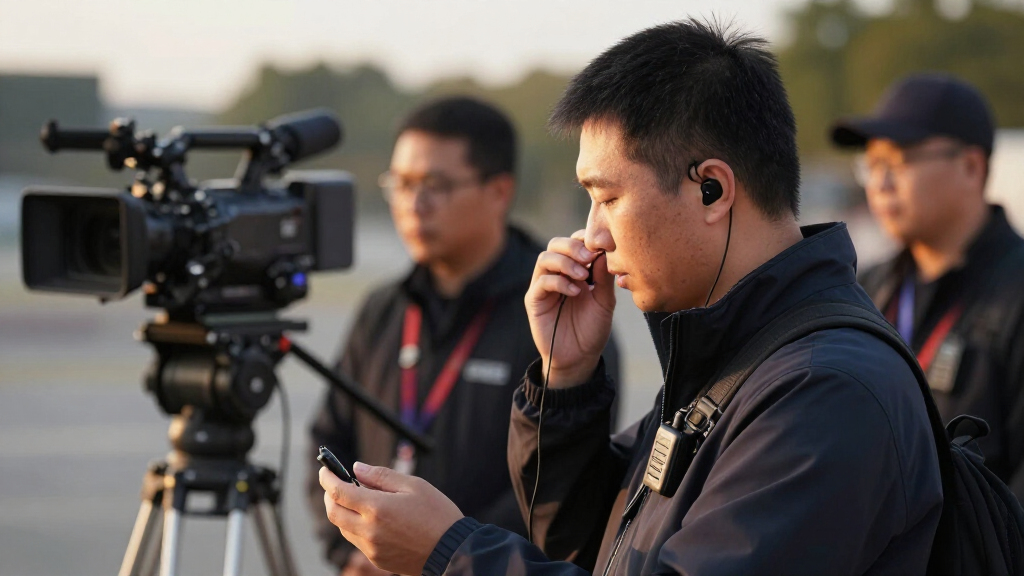
For broadcasters who need a dependable personal audio feed, I’d put the Sennheiser ew IEM G4-Twin first for its established professional system and two-receiver bundle. The Phenyx Pro PTM-33-4B stands out when several people need separate UHF receivers, while the Xvive U45 is a compact 5.8 GHz option for simpler setups. The main tradeoffs are coordination in crowded RF environments, the number of listeners each transmitter can serve, and how much setup control a production needs. A system suited to a small interview crew may not work as well for a multi-person studio or live event. Read on for the full breakdown and guidance on matching a system to your broadcast workflow.

Get everyday essentials delivered free with Prime
- Fast, free delivery on millions of items
- Prime Video, Amazon Music and more included
- Member-only deals all year
Key Takeaways
- The Sennheiser ew IEM G4-Twin leads this lineup for buyers seeking a professional UHF system bundled with two receivers; its frequency variant still needs to match local rules and available spectrum.
- The Phenyx Pro PTM-33-4B is the clearer fit for four-channel monitoring needs, while receiver count and channel count should not be treated as the same capability.
- The LMBGM AR2090 with 10 receivers targets larger crews that can share a monitor mix; extra receivers do not create independent mixes.
- The Xvive U45 models trade UHF coordination for compact 5.8 GHz operation, making them easier to place in a small rig but potentially less suitable in congested 2.4/5 GHz venues.
- The Sennheiser XSW IEM and Phenyx Pro PTM-10 offer contrasting paths for buyers prioritizing a known wireless ecosystem or stereo UHF monitoring, respectively.
| SGPRO SG-40NA Mono Wireless In-Ear Monitor System |  | Best for Flexible RF Setup | System: Mono wireless in-ear monitor | Transmission: UHF | Selectable frequencies: 85 | VIEW LATEST PRICE | See Our Full Breakdown |
| Sennheiser ew IEM G4-Twin Wireless In-Ear Monitor System Bundle with Case and Charger (516–558 MHz) |  | Best for Two-Person Stereo Monitoring | System capacity: Two-person | Frequency range: 516–558 MHz | Transmitter: 1 SR IEM G4 stereo transmitter | VIEW LATEST PRICE | See Our Full Breakdown |
| Phenyx Pro PTM-33-4B 4-Channel UHF Mono Wireless In-Ear Monitor System |  | Best for Four Separate Mixes | Channels: 4 | Monitoring: Mono | Wireless frequency: UHF | VIEW LATEST PRICE | See Our Full Breakdown |
| LMBGM AR2090 Dual-Channel UHF Wireless In-Ear Monitor System |  | Best for Low-Latency Four-Receiver Coverage | Frequency range: 550–580 MHz | Selectable frequencies: 16 | Channels: 2 | VIEW LATEST PRICE | See Our Full Breakdown |
| MIZISNR IME-4000 Wireless Mono In-Ear Monitor System with 4 Receivers |  | Best for Long Open-Space Runs | Monitoring type: Mono | Frequency range: 520–580 MHz | Frequency options: 2 × 40 preset frequencies | VIEW LATEST PRICE | See Our Full Breakdown |
| Phenyx Pro PTM-11-2B Wireless In-Ear Monitor System with Two Bodypack Receivers |  | Best for Two-Person Broadcast Teams | Monitoring: Mono | Frequency band: UHF 900 MHz | Selectable frequencies: 50 | VIEW LATEST PRICE | See Our Full Breakdown |
| LMBGM AR2090 Dual-Channel UHF Wireless In-Ear Monitor System with 10 Receivers |  | Best for Large Broadcast Crews | Channels: 2 | Monitoring: Mono | Frequency range: 550–580 MHz | VIEW LATEST PRICE | See Our Full Breakdown |
| LEKATO MS-02 Wireless In-Ear Monitor System |  | Best for Flexible Mono or Stereo Monitoring | Wireless frequency: 2.4 GHz | Modes: Mono and stereo | Latency: Less than 4.5 ms in mono mode | VIEW LATEST PRICE | See Our Full Breakdown |
| Xvive U45 Wireless In-Ear Monitor System, 5.8 GHz, Black |  | Best Compact Digital Pick | Wireless frequency: 5.8 GHz | Latency: Less than 5 ms | Wireless range: Up to 100 ft | VIEW LATEST PRICE | See Our Full Breakdown |
| HHLPRO F10P UHF Wireless In-Ear Monitor System, 902–927 MHz |  | Best for Long-Range Single-Listener Monitoring | Frequency range: 902–927 MHz | Wireless range: Up to 300 ft | Channels: 50 | VIEW LATEST PRICE | See Our Full Breakdown |
| Phenyx Pro PTM-22 Dual Wireless In-Ear Monitor System |  | Best for Two-Person Teams | System: Dual-channel UHF wireless in-ear monitor | Selectable frequencies: 100 (2 × 50) | Audio: Mono | VIEW LATEST PRICE | See Our Full Breakdown |
| Xvive U45 5.8 GHz Wireless In-Ear Monitor System |  | Best for Quick Mobile Setups | Wireless frequency: 5.8 GHz | Wireless range: Up to 100 ft / 30.5 m | Audio resolution: 24-bit/48 kHz | VIEW LATEST PRICE | See Our Full Breakdown |
| Phenyx Pro PTM-10 UHF Stereo Wireless In-Ear Monitor System |  | Best for Flexible Studio Monitoring | Frequency band: 900 MHz | Selectable frequencies: 89 | Operating range: Up to 160 ft / 50 m | VIEW LATEST PRICE | See Our Full Breakdown |
| Xvive U45 5.8 GHz Wireless In-Ear Monitor System |  | Best Compact Digital Pick | Wireless frequency: 5.8 GHz | Audio resolution: 24-bit/48 kHz | Latency: Less than 5 ms | VIEW LATEST PRICE | See Our Full Breakdown |
| Sennheiser XSW IEM Wireless In-Ear Monitoring System, A Band |  | Best Feature-Rich Starter Set | Frequency range: 476–500 MHz (A band) | Included receiver: 1 | Headphones: IE 4 in-ear headphones | VIEW LATEST PRICE | See Our Full Breakdown |
More Details on Our Top Picks
SGPRO SG-40NA Mono Wireless In-Ear Monitor System
I’d choose the SGPRO SG-40NA when a broadcaster needs several ways to connect a mixer and room to adjust frequencies around other wireless gear. Its 85 selectable UHF frequencies, antenna diversity, and three audio inputs give it more setup flexibility than the LMBGM AR2090, which lists 16 frequencies. The stated range of up to 262 feet may suit many studio or event spaces, and one transmitter can connect to multiple receivers. The tradeoff is mono monitoring, so it won’t provide separate left and right audio, and the receiver’s listed six-hour battery life calls for careful power planning on longer shifts. I’d also favor it for controlled indoor work: it is not water resistant, and the range is a stated maximum rather than a guarantee through obstacles.
Pros:- 85 selectable UHF frequencies offer flexibility when coordinating with other wireless equipment
- Antenna diversity is intended to help reduce reception dead spots
- Three audio inputs, including XLR and 1/4-inch jacks, accommodate different mixer outputs
- One transmitter can connect to multiple receivers
Cons:- Mono monitoring does not provide separate left and right audio
- Listed receiver battery life is six hours, which may require a battery change during extended shifts
- Not water resistant
Best for: Broadcasters who need flexible mixer connections and frequency choices for indoor productions
Not ideal for: Teams needing stereo monitoring, water resistance, or receiver battery life beyond the listed six hours
- System:Mono wireless in-ear monitor
- Transmission:UHF
- Selectable frequencies:85
- Range:Up to 262 ft (80 m)
- Audio inputs:Three, including XLR and 1/4-inch jacks
- Headphone jack:3.5 mm
- Receiver battery life:6 hours
- Included components:Metal transmitter, bodypack receiver, monitor earphones
Our verdict“Choose the SGPRO if flexible connections and frequency selection matter more than stereo sound or long receiver runtimes.”
Sennheiser ew IEM G4-Twin Wireless In-Ear Monitor System Bundle with Case and Charger (516–558 MHz)
For a two-person broadcast crew that needs stereo monitoring, I’d put the Sennheiser ew IEM G4-Twin ahead of the mono SGPRO SG-40NA and the four-receiver Phenyx Pro PTM-33. It pairs one stereo transmitter with two stereo receivers, so two people can monitor without assembling separate receiver bundles. The included IE 4 earphones, rapid charger, rechargeable AA batteries, and protective case make the package suited to crews moving between venues or keeping a ready-to-go kit. Its frequency range is specifically 516–558 MHz, so buyers need to confirm it fits their local RF environment and existing equipment. It also serves two people rather than four; the Phenyx Pro is the more direct fit when a larger crew needs receivers and separate mixes.
Pros:- Two stereo receivers let two people monitor the same system
- Includes a stereo transmitter, two receiver earphones, and a rackmount kit
- Rapid charger and four rechargeable AA batteries support repeat use
- Protective waterproof case suits crews transporting equipment between locations
Cons:- Frequency range is limited to the specified 516–558 MHz band
- Bundle supports two receivers, fewer than the four included with the Phenyx Pro PTM-33
- Wireless monitoring requires the transmitter and receivers to be paired
Best for: Two-person broadcast crews that need stereo monitoring and a portable transmitter, receiver, charging, and case bundle
Not ideal for: Larger crews needing four receivers, or buyers whose local RF coordination cannot accommodate 516–558 MHz
- System capacity:Two-person
- Frequency range:516–558 MHz
- Transmitter:1 SR IEM G4 stereo transmitter
- Receivers:2 EK IEM G4 stereo receivers
- Earphones:2 pairs of IE 4 earphones
- Batteries:4 rechargeable 1.2 V, 2500 mAh NiMH AA batteries
- Charger:Watson Rapid Charger
- Case:SKB iSeries waterproof case
Our verdict“Pick the G4-Twin for a two-person crew that values stereo monitoring and a transport-ready bundle.”
Phenyx Pro PTM-33-4B 4-Channel UHF Mono Wireless In-Ear Monitor System
The Phenyx Pro PTM-33 stands out for productions where four people need separate mixes from one rack-mountable system. Its four groups of left/right inputs and loop outputs give an engineer room to route distinct feeds, while four included bodypacks and earphones make it crew-ready. That’s a more mix-focused setup than the LMBGM AR2090, whose listing specifies two channels and four receivers. The PTM-33 uses mono monitoring, though, so it won’t provide stereo in-ear feeds like the Sennheiser ew IEM G4-Twin. Its stated line-of-sight range is 140–164 feet, and walls, glass, or metal may reduce it. I’d shortlist it for a fixed production position where independent cue mixes matter more than stereo sound or coverage across obstructed spaces.
Pros:- Supports four performers with up to four standalone mixes
- Includes four UHF bodypack receivers and four earphones
- IR sync supports receiver setup
- Rack-mount kit and two antennas are included
Cons:- Mono monitoring does not provide stereo feeds
- Stated range is 140–164 feet line of sight and can fall with obstacles
- Uses 1/4-inch TS connectors for its listed inputs and outputs
Best for: Broadcast engineers routing up to four distinct mono cue mixes to presenters or crew
Not ideal for: Teams that require stereo monitoring or need reliable coverage through walls and other obstacles
- Channels:4
- Monitoring:Mono
- Wireless frequency:UHF
- Frequency groups:4 groups of 25 frequencies
- Range:140–164 ft line of sight
- Inputs and outputs:4 groups of left/right inputs and loop outputs
- Connector:1/4-inch TS jack
- Receivers:4 UHF bodypack receivers
Our verdict“Choose the PTM-33 when four independent mono mixes matter more than stereo monitoring or obstacle-resistant coverage.”
LMBGM AR2090 Dual-Channel UHF Wireless In-Ear Monitor System
The LMBGM AR2090 pairs four bodypack receivers with a stated latency under 5 ms, making it a candidate when several broadcast crew members need to hear timing-sensitive cues. Its listed range reaches up to 300 feet, and the metal enclosure and built-in limiter add practical features for a studio or stage setup. Compared with the Phenyx Pro PTM-33, it lists two channels rather than four separate mixes; compared with the MIZISNR IME-4000, it offers fewer selectable frequencies. That leaves a narrower role: a multi-receiver system for teams whose routing needs fit its two-channel design. The system is mono, and its frequency response is listed inconsistently as 50 Hz–20 kHz and 15 kHz, so I’d confirm that specification before relying on it for a particular monitoring mix.
Pros:- Includes four bodypack receivers with earphones
- Listed latency is less than 5 ms
- Metal enclosure and built-in limiter are suited to studio or stage use
- Stated wireless range is up to 300 feet
Cons:- Mono monitoring does not provide stereo feeds
- Two channels may not meet the needs of crews requiring four separate mixes
- Frequency response data is inconsistent in the product listing
Best for: Broadcast crews sharing a two-channel feed across four receivers where low stated latency matters
Not ideal for: Teams needing four independent mixes, stereo monitoring, or an unambiguous frequency-response specification
- Frequency range:550–580 MHz
- Selectable frequencies:16
- Channels:2
- Receivers:4 bodypack receivers with earphones
- Latency:Less than 5 ms
- Wireless range:Up to 300 ft
- Enclosure material:Metal
- Frequency response:Listed as both 50 Hz–20 kHz and 15 kHz
Our verdict“Consider the AR2090 if four receivers and low stated latency fit a two-channel mono workflow.”
MIZISNR IME-4000 Wireless Mono In-Ear Monitor System with 4 Receivers
For an outdoor or open-floor production where the transmitter and crew have a clear path, the MIZISNR IME-4000 has the longest stated range in this group: up to 330 feet in open spaces. It includes four receivers and earphones, plus PLL frequency stabilization, IR syncing, and a limiter. That makes the setup more ready for a small crew than the SGPRO SG-40NA, which lists one bodypack receiver, while its two sets of 40 preset frequencies offer more options than the LMBGM AR2090’s 16 selectable frequencies. Those advantages have limits: the IME-4000 is mono, and its maximum range can shrink around walls, glass, and metal. I’d choose it when the crew works within clear sightlines; for obstructed rooms, the range figure alone is not a reason to prefer it.
Pros:- Includes four bodypack receivers and four earphones
- Stated open-space range reaches up to 330 feet
- PLL frequency stabilization and a limiter are included
- IR syncing supports receiver setup
Cons:- Mono monitoring does not provide stereo feeds
- Walls, glass, and metal can reduce the stated range
- Receivers use ABS plastic rather than the transmitter’s metal construction
Best for: Small broadcast crews working in open spaces who need four receivers and a longer stated line-of-sight range
Not ideal for: Stereo users or crews working across rooms where walls, glass, or metal interrupt the signal path
- Monitoring type:Mono
- Frequency range:520–580 MHz
- Frequency options:2 × 40 preset frequencies
- Wireless range:Up to 330 ft in open spaces
- Receivers:4 bodypack receivers
- Included earphones:4
- Transmitter material:Metal
- Warranty:2 years
Our verdict“Pick the IME-4000 for a four-person mono setup across open sightlines, not for stereo or obstacle-heavy rooms.”
Phenyx Pro PTM-11-2B Wireless In-Ear Monitor System with Two Bodypack Receivers
The PTM-11-2B suits a small broadcast crew that needs two listeners on one monitor feed without building a larger system. Its two included bodypacks and mono signal make it straightforward to share a cue mix, while 50 selectable UHF frequencies give crews options when coordinating wireless gear. Compared with the HHLPRO F10P, it arrives ready for two receivers rather than one, and its half-rack metal transmitter includes left and right inputs plus line outputs for integration with a mixer. The tradeoff is that both listeners share mono monitoring, so it cannot provide separate stereo mixes. The stated 164-foot range is also more modest than the longer claims for the HHLPRO and LMBGM systems, and obstacles can reduce it further.
Pros:- Includes two bodypack receivers and two earphones
- 50 selectable UHF frequencies and support for multiple receivers
- Half-rack metal transmitter has left and right inputs and line outputs
- Rack kit and carrying case are included
Cons:- Mono monitoring does not provide stereo placement
- Stated range is up to 164 feet and can fall with obstacles
- Two receivers share the system rather than offering separately described mixes
Best for: Two-person broadcast crews that need to hear the same cue mix from a rack-mounted UHF transmitter.
Not ideal for: Broadcasters who need stereo monitoring, independent mixes for each listener, or long-range coverage across obstructed spaces.
- Monitoring:Mono
- Frequency band:UHF 900 MHz
- Selectable frequencies:50
- Operating range:Up to 164 ft
- Included receivers:2 UHF bodypack receivers
- Transmitter design:Half-rack metal
- Inputs and outputs:Left and right inputs; left and right line outputs
Our verdict“Choose the PTM-11-2B when two broadcast crew members need a shared mono cue feed from a rack-ready UHF system.”
LMBGM AR2090 Dual-Channel UHF Wireless In-Ear Monitor System with 10 Receivers
When a production needs to distribute one monitoring setup across many people, the AR2090-10’s ten bodypacks make it the clearest fit in this group. That bundled receiver count can simplify equipping a large studio or live broadcast crew compared with the Phenyx Pro PTM-11-2B, which includes two. It operates in the 550–580 MHz UHF band, offers 16 selectable frequencies, and lists latency under 5 ms, useful details for coordinating a shared cue system. Its stated range reaches 300 feet, though real coverage depends on the venue and wireless environment. The limitations matter: monitoring is mono, and the supplied frequency-response information conflicts between the description and product details. I would favor a model with clearer published audio specifications when sound requirements are tightly defined.
Pros:- Includes ten bodypack receivers with earphones
- 16 selectable frequencies in the 550–580 MHz UHF band
- Latency is listed as less than 5 ms
- Metal enclosure and built-in limiter circuit
Cons:- Mono monitoring does not provide stereo imaging
- Published frequency-response details conflict
- The stated 300-foot range may vary with venue conditions
Best for: Large broadcast or studio crews that need to equip many listeners with bodypacks from one system.
Not ideal for: Broadcasters who need stereo monitoring or rely on consistent, clearly documented frequency-response specifications.
- Channels:2
- Monitoring:Mono
- Frequency range:550–580 MHz
- Selectable frequencies:16
- Latency:Less than 5 ms
- Wireless range:Up to 300 ft
- Included receivers:10 bodypack receivers with earphones
Our verdict“Pick the AR2090-10 for a large team that values ten included listeners more than stereo sound or fully consistent audio documentation.”
LEKATO MS-02 Wireless In-Ear Monitor System
The LEKATO MS-02 gives broadcasters a choice between mono and stereo modes, a useful distinction when a cue feed needs more separation than the mono-only Phenyx Pro PTM-11-2B or LMBGM AR2090-10 can provide. Its 2.4 GHz transmitter can support up to four receivers, and the stated latency is under 4.5 ms in mono mode. A one-key mute can help when a crew member needs to silence their feed quickly. This is a more compact, battery-powered approach than the half-rack UHF units, with up to 6–8 hours of listed battery life. The tradeoffs are practical for broadcasters: its 100-foot range is specified for open areas, and earbuds are not included. Buyers also need to account for the 2.4 GHz band in their venue’s wireless environment.
Pros:- Offers both mono and stereo modes
- Supports up to four receivers per transmitter
- Latency listed under 4.5 ms in mono mode
- One-key mute and up to 6–8 hours of battery life
Cons:- Earbuds must be supplied separately
- The stated 100-foot range applies to open areas
- 2.4 GHz performance depends on the venue’s wireless environment
Best for: Small broadcast teams wanting mono or stereo cue monitoring with up to four receivers and a portable setup.
Not ideal for: Crews that need included earbuds, longer venue coverage, or a rack-based UHF installation.
- Wireless frequency:2.4 GHz
- Modes:Mono and stereo
- Latency:Less than 4.5 ms in mono mode
- Audio sampling rate:24-bit/48 kHz
- Wireless range:Up to 100 ft in open areas
- Battery life:Up to 6–8 hours
- Receiver support:Up to 4 receivers per transmitter
- Earbuds:Not included
Our verdict“Choose the MS-02 if your smaller crew needs stereo flexibility and can provide its own earbuds.”
Xvive U45 Wireless In-Ear Monitor System, 5.8 GHz, Black
The Xvive U45 is the compact choice for a broadcaster who needs a single transmitter-and-receiver link rather than a fleet of beltpacks. Its automatic channel scanning can help it find a usable connection, and latency is listed under 5 ms. Compared with the UHF HHLPRO F10P, the U45 uses 5.8 GHz transmission and has a shorter stated range of up to 100 feet; that makes it better suited to a nearby presenter or operator than coverage across a large venue. The included XLR-to-quarter-inch adapter and bag help keep a minimal kit together. Its main constraint is runtime: up to five hours may not cover a long broadcast day without access to charging, and the listed package contains one receiver.
Pros:- Automatic channel scanning
- Latency listed under 5 ms
- Includes an XLR-to-quarter-inch adapter and carrying bag
- Compact transmitter and receiver set
Cons:- Battery life is listed at up to 5 hours
- Stated range is up to 100 ft
- Package includes one receiver, limiting its fit for larger teams
Best for: A presenter or operator needing a compact, single-listener wireless cue link for a nearby broadcast position.
Not ideal for: Large crews needing multiple bodypacks, long-range coverage, or runtime beyond a five-hour session.
- Wireless frequency:5.8 GHz
- Latency:Less than 5 ms
- Wireless range:Up to 100 ft
- Battery life:Up to 5 hours
- Driver type:Balanced Armature
- Included items:Transmitter, receiver, Type-C charging cable, XLR male to 1/4-inch TS male adapter, bag
- Color:Black
Our verdict“The U45 suits a single nearby listener who values a compact 5.8 GHz link and can plan around its five-hour battery limit.”
HHLPRO F10P UHF Wireless In-Ear Monitor System, 902–927 MHz
For a broadcaster who needs one beltpack to cover a larger stage or studio floor, the HHLPRO F10P pairs a stated range of up to 300 feet with 50 channels, auto-scan, and one-touch syncing. Those controls make setup more adaptable than the single-link Xvive U45, whose stated reach is 100 feet, while the F10P remains a one-receiver system rather than matching the ten-pack LMBGM AR2090-10. Independent volume controls on the transmitter and receiver give the operator and listener separate level adjustments. Its mono design keeps the feed simple, but it does not offer stereo monitoring. The rechargeable battery is listed for 5–8 hours, so long broadcast shifts may require charging plans; actual range will also depend on the space and interference.
Pros:- 50 channels with auto-scan and one-touch syncing
- Stated wireless range up to 300 ft
- Independent transmitter and receiver volume controls
- Includes hard case and accessories
Cons:- Mono monitoring only
- Battery life is listed at 5–8 hours
- Only one beltpack receiver is included
Best for: A broadcaster or presenter using one bodypack who needs flexible UHF channel selection and a long stated operating range.
Not ideal for: Crews needing multiple receivers, stereo monitoring, or battery runtime that comfortably covers an extended shift.
- Frequency range:902–927 MHz
- Wireless range:Up to 300 ft
- Channels:50
- Latency:Under 5 ms
- Design:Mono
- Battery capacity:1200 mAh
- Battery life:5–8 hours
- Warranty:1 year
Our verdict“Choose the F10P for a single listener who needs a feature-rich UHF link with a longer stated range than the compact Xvive U45.”
Phenyx Pro PTM-22 Dual Wireless In-Ear Monitor System
Two included receivers make the PTM-22 a practical choice when a broadcaster and a producer or co-presenter need to monitor the same feed. Its 100 selectable UHF frequencies offer room to find a workable channel in changing RF conditions, while the metal transmitter, LCD, rack kit, and carry case suit a fixed control area that also travels. Compared with the Phenyx Pro PTM-10, it supplies a second bodypack out of the box, but gives up stereo monitoring and the PTM-10’s EQ and balance controls. That mono feed can be sufficient for cueing and program confidence checks, though it is less flexible for detailed mix decisions. UHF performance depends on the venue’s RF environment, so frequency selection still takes care.
Pros:- Includes two bodypack receivers and two sets of earphones
- 100 selectable UHF frequencies provide channel options
- Metal transmitter has an LCD display
- Rackmount kit and carry case support studio and mobile setups
Cons:- Mono monitoring offers less mix detail than the stereo-capable Phenyx Pro PTM-10
- Wireless performance can vary with local RF conditions
Best for: Small broadcast crews where two people need the same mono monitor feed from one transmitter.
Not ideal for: Broadcasters who need stereo monitoring, individual mixes, or detailed on-pack EQ and balance controls.
- System:Dual-channel UHF wireless in-ear monitor
- Selectable frequencies:100 (2 × 50)
- Audio:Mono
- Included receivers:2 UHF bodypack receivers
- Transmitter material:Metal
- Included earphones:2
- Warranty:12 months
Our verdict“Choose the PTM-22 when two crew members need a ready-to-use shared mono feed and stereo control is not a priority.”
Xvive U45 5.8 GHz Wireless In-Ear Monitor System
The compact 5.8 GHz system suits a presenter or camera-side operator who wants a simple wireless link without a rack transmitter. Channel scanning can help locate a usable channel, and 24-bit/48 kHz audio with 5 ms latency supports clear, timely monitoring for spoken-word work. The stated range reaches up to 100 feet, though actual coverage depends on the space and interference. Compared with the Sennheiser XSW IEM, the U45 charges over USB-C and has a stated 5.8 GHz connection, while the Sennheiser includes headphones and tools such as focus mode and infrared syncing. The U45’s up to five-hour battery life calls for a charging plan on longer production days, and scanning still requires manually matching the transmitter channel to the receiver.
Pros:- Channel scan helps find a suitable wireless channel
- 24-bit/48 kHz audio and 20 Hz–20 kHz frequency response
- USB-C charging
- Stated wireless range up to 100 feet
Cons:- Battery life is limited to up to five hours
- Transmitter channel must be set manually to match the receiver after scanning
Best for: Solo field reporters and mobile presenters who need a compact monitor link for shorter shoots.
Not ideal for: Broadcast crews on long shifts or productions that need included headphones, receiver syncing, or advanced monitor controls.
- Wireless frequency:5.8 GHz
- Wireless range:Up to 100 ft / 30.5 m
- Audio resolution:24-bit/48 kHz
- Frequency response:20 Hz–20 kHz
- Audio latency:5 ms
- Battery life:Up to 5 hours
- Charging port:USB-C
- Headphone jack:3.5 mm
Our verdict“Pick this U45 for short mobile assignments where compact operation and USB-C charging matter more than all-day battery life.”
Phenyx Pro PTM-10 UHF Stereo Wireless In-Ear Monitor System
Stereo and mono modes give the PTM-10 more control over how a broadcaster hears a program feed than the mono-only Phenyx Pro PTM-22. Its EQ, balance, limiter, and lock functions help tailor and protect a single receiver’s monitor mix, while 89 selectable frequencies and support for multiple systems suit small production environments. The listed range is up to 160 feet, which is shorter than the Xvive U45’s stated 100-foot figure only on paper? Actually it is longer; for comparison, the Xvive U45 uses 5.8 GHz and a more compact mobile format, while the PTM-10 provides a rack-ready UHF transmitter and analog inputs. The key limitation is that only one bodypack is included, so a second listener requires another receiver. Its feature set favors hands-on monitoring over a minimal grab-and-go setup.
Pros:- Switches between stereo and mono monitoring
- EQ, balance, limiter, and settings lock support monitor control
- 89 selectable frequencies and support for up to five systems simultaneously
- Rack-mount kit and carrying case included
Cons:- Only one bodypack receiver is included
- UHF performance depends on local RF conditions
Best for: Small studio operators who need stereo monitoring controls and a rack-mounted transmitter for one primary listener.
Not ideal for: Two-person teams seeking multiple bodypacks in one package or reporters who prioritize compact battery-powered gear.
- Frequency band:900 MHz
- Selectable frequencies:89
- Operating range:Up to 160 ft / 50 m
- Monitoring modes:Stereo and mono
- Inputs:XLR and 6.3 mm hybrid
- Included receivers:1 bodypack receiver
- Simultaneous systems:Up to 5
- Warranty:12 months
Our verdict“Choose the PTM-10 for a studio monitor station that needs stereo control and channel flexibility for one listener.”
Xvive U45 5.8 GHz Wireless In-Ear Monitor System
True Diversity reception with a dual-antenna receiver is the standout here: it is designed to help maintain a stable link as a presenter moves around a set. The U45 also offers less than 5 ms latency, channel scanning, and support for up to six channels, making it better suited to a small multi-person production than a one-channel portable system. Compared with the Phenyx Pro PTM-10, it trades rack-based UHF operation and stereo/mono controls for a compact 5.8 GHz digital setup with six-channel capacity. Balanced XLR or 1/4-inch TS inputs make it easier to connect to common broadcast outputs, but the receiver’s battery lasts only just over five hours. Crews planning long studio days should account for charging breaks, and there is no built-in media playback.
Pros:- True Diversity reception with dual antennas
- Less than 5 ms latency and 24-bit/48 kHz audio
- Channel scan helps locate an available RF channel
- Supports up to six channels with balanced XLR or 1/4-inch TS inputs
Cons:- Battery life is just over five hours
- No built-in media playback
Best for: Compact production teams running several 5.8 GHz monitor channels and needing balanced transmitter inputs.
Not ideal for: Broadcasters who need long runtimes, built-in playback, or the adjustable stereo and mono functions of the Phenyx Pro PTM-10.
- Wireless frequency:5.8 GHz
- Audio resolution:24-bit/48 kHz
- Latency:Less than 5 ms
- Maximum channels:6
- Battery life:Over 5 hours
- Inputs:Balanced XLR or 1/4-inch TS
- Headphone jack:3.5 mm
- Warranty:1 year
Our verdict“Choose this U45 for compact multi-channel productions that value low latency and connection stability over extended battery runtime.”
Sennheiser XSW IEM Wireless In-Ear Monitoring System, A Band
The XSW IEM stands out as a ready-to-configure starter set: it includes IE 4 headphones, a rack kit, power supply, and receiver, along with focus mode, EQ, a limiter, and frequency presets. Infrared syncing can simplify linking additional receivers, which is useful when a broadcast team grows beyond one presenter. Compared with the Phenyx Pro PTM-22, this package provides more monitoring controls and syncing features, but the PTM-22 includes two bodypacks while this set lists one. Its 476–500 MHz A-band range also makes frequency compatibility with the venue and other wireless equipment a practical part of choosing it. The listed kit is not water resistant, so it fits studio desks and controlled field setups better than exposed, wet locations.
Pros:- Starter set includes transmitter, receiver, IE 4 headphones, and rack kit
- Focus mode, EQ, and limiter provide useful monitor controls
- Frequency presets and manual control support channel setup
- Infrared syncing helps connect multiple receivers
Cons:- Only one receiver is included
- Not water resistant
Best for: Broadcasters building a first rack-based monitor setup who want headphones and monitor controls in the package.
Not ideal for: Teams needing two included bodypacks or crews working in wet or exposed locations.
- Frequency range:476–500 MHz (A band)
- Included receiver:1
- Headphones:IE 4 in-ear headphones
- Audio controls:Focus mode, EQ, limiter
- Syncing:Infrared receiver syncing
- Audio impedance:6 ohm
- Water resistance:Not water resistant
- Warranty:2 years
Our verdict“Pick the XSW IEM as a complete first system when monitor controls and receiver syncing matter more than multiple included bodypacks.”

How We Picked
I ranked these systems around broadcast use: stable monitoring, practical RF choices, usable receiver capacity, setup demands, and the ability to fit a real production workflow. A broadcaster needs intelligible cue audio and predictable operation around cameras, lights, Wi-Fi, and other wireless equipment. I gave more weight to systems that offer useful coordination or channel flexibility for recurring productions, while compact plug-and-play designs remain strong candidates for small crews.
The order also reflects what each product configuration appears to support, rather than treating every model with a similar name as interchangeable. Bundled receivers and charging accessories can simplify deployment, but multiple receivers may still share one mix. Several listings identify frequency ranges or receiver counts without enough detail to establish local compatibility, independent mixes, or exact coordination features, so I treat those as points buyers should verify before purchase. This is why professional UHF flexibility ranks ahead of convenience alone, while value and beginner picks depend on matching the system to the size and RF demands of the job.
Factors to Consider When Choosing Wireless In-ear Monitor Systems For Broadcasters
Choosing a broadcaster monitor system starts with the production, not the spec sheet. I’d first map who needs to hear what, where the system will operate, and how much time the crew can spend coordinating wireless gear. These broader checks can prevent a seemingly capable setup from becoming a source of interruptions on air.
Map mixes separately from receiver count
Write down how many distinct audio mixes the crew needs before counting bodypacks. A director, host, and camera operator may all need different cue content even if a kit includes several receivers. A transmitter that sends one mix to many receivers can suit a crew sharing the same program feed, but it will not replace independently controlled mixes. This distinction can matter more than the maximum receiver count in a product listing. Ask whether each transmitter supports the required mix and whether the console has enough outputs to feed it. Planning this first also helps avoid buying duplicate transmitters or receivers that cannot solve the actual routing need.
Check frequency rules and the full RF environment
Wireless bands are not universally available, and permitted frequencies can vary by country and change over time. Confirm the exact band and tuning range against local regulations before ordering, especially for a system specified for a narrow range. Then consider the venue: broadcast studios may have Wi-Fi, wireless microphones, camera links, and nearby networks competing for spectrum. UHF and 5.8 GHz systems face different interference conditions, so neither band is automatically reliable everywhere. Ask the venue or RF coordinator about existing equipment and perform a scan where possible before the production. Leaving room to retune can be more useful than choosing a system based on a frequency label alone.
Decide how much setup control the crew can manage
Fast setup is valuable when a crew moves between locations, but fewer controls can limit what you can do when conditions change. A compact system may be straightforward for a single host and a fixed feed, while a recurring studio production may benefit from more tuning options and coordination tools. Think about who will configure the rig, how often channels change, and whether a technical operator is present. A quick start guide is not a substitute for knowing how to select a clear channel and recover from interference. For remote shoots, include setup time in the schedule rather than assuming the wireless link will work immediately. The right level of control is the one your crew can use consistently under deadline.
Match stereo monitoring to the content
Stereo can help a listener distinguish spatial cues or preserve a stereo program mix, but it can also complicate routing and consume more attention during setup. Many spoken-word broadcasts work well with a clear mono cue mix, particularly when the priority is hearing directions and dialogue. Music-heavy productions, stereo effects, or detailed playback checks may justify stereo monitoring. Check whether the transmitter accepts the desired input format and whether each receiver can select mono or stereo behavior. Also consider whether the mix will remain intelligible when the listener moves or one earbud is removed. Choose the format that serves the job rather than assuming more channels always improve a broadcast feed.
Plan for fit, power, and handoffs
Bodypacks need to stay secure through a full shift, and earbuds need to remain comfortable for the people wearing them. Broadcasters may share equipment across hosts, so plan for cleaning, spare tips, labeled packs, and a clear charging routine. Included chargers and cases can make a multi-person kit easier to manage, but check whether they support every pack in the bundle. Battery runtime should cover setup, the live segment, and delays, rather than only the expected airtime. Keep a wired fallback or spare charged receiver available for productions where a lost cue would interrupt work. These small operating habits can matter more to day-to-day reliability than a feature that is rarely used.
Frequently Asked Questions
Can several presenters use one transmitter at the same time?
Often, several receivers can listen to one transmitter, but they will generally hear the same mix unless the system supports separate transmitter channels and the console feeds them independently. This works well when a host, director, and camera operator all need the same program or cue feed. It falls short when each person needs different instructions or levels. Check the system’s supported receiver count and the number of independent mixes separately. Also confirm that the console has enough outputs for the planned feeds.
Should I choose UHF or 5.8 GHz for a studio?
There is no single band that suits every studio. UHF systems can offer useful tuning choices, but their usable frequencies depend on local rules and the equipment already operating nearby. A 5.8 GHz system can be compact and convenient, though nearby wireless networks or other devices may affect performance. Check the venue’s RF conditions and the exact product frequency range before deciding. If the studio runs several wireless systems, have an operator coordinate channels rather than selecting by band name alone.
Is mono monitoring enough for a spoken-word broadcast?
For many interviews, news segments, and presenter cues, a well-balanced mono mix is enough to hear speech and directions clearly. Mono can also make the routing simpler when multiple people share a feed. Stereo is more useful when the production depends on stereo playback, spatial effects, or monitoring a finished music mix. Think about what the listener must identify while on air, not just the recording format. A clear, uncluttered cue mix can be easier to use than a wider mix with unnecessary detail.
What should I verify before buying a system with many receivers?
Confirm whether the listed receivers can all tune to the same transmitter and whether they share one mix. Then check how many independent channels the system actually provides, since more bodypacks do not mean more mixes. Look for a charging solution that can handle the full crew and a practical way to label packs by role. For a larger production, check whether the system can operate alongside your microphones and other wireless gear. If the listing leaves these details unclear, get the configuration confirmed before relying on it for a live show.
When does a broadcaster need to pay for a more capable system?
More capability is useful when the production needs several different monitor mixes, frequent frequency changes, or predictable coordination across recurring locations. It can also make sense when multiple operators depend on clear cues and a failure would interrupt a live segment. A small crew with one shared feed may gain little from controls and channels it never uses. Compare the added features with the crew’s actual routing, RF, and support needs. Prioritize the system the team can configure and maintain reliably.
Conclusion
For the best overall fit, I recommend the Sennheiser ew IEM G4-Twin for broadcasters who want a professional UHF setup with two receivers and are prepared to verify the frequency band. For value and larger shared-feed crews, consider the Phenyx Pro PTM-33-4B or LMBGM AR2090 with 10 receivers, choosing based on the number of channels and listeners you actually need. For beginners and compact rigs, the Xvive U45 offers a simpler 5.8 GHz route when the venue’s RF environment suits it. For premium brand continuity, the Sennheiser XSW IEM is a sensible option to compare with the G4 bundle; for stereo UHF monitoring, the Phenyx Pro PTM-10 is the more targeted choice. Match the final pick to your local frequency rules, mix plan, and crew workflow before taking it on air.
Halloween Picks
halloween
As an affiliate, we earn on qualifying purchases.