For most interviews, I would start with the DJI Mic 3: its two-transmitter kit and receiver give interviewers a more flexible setup for recording both sides of a conversation. The DJI Mic Mini kits are simpler, lighter alternatives, while the Mini Mic Pro with Charging Case suits phone-first creators who want a compact kit. The main tradeoffs are how many people you need to record, which devices you use, and whether you value a full receiver-based system or a small plug-in microphone. I also weigh setup effort, portability, and room to grow beyond a single phone. Read on for the full comparison and recommendations by interview style.

Get everyday essentials delivered free with Prime
- Fast, free delivery on millions of items
- Prime Video, Amazon Music and more included
- Member-only deals all year
Complete the kit


Key Takeaways
- The DJI Mic 3 leads for flexible two-person interviews: its two transmitters and receiver make it a stronger fit for planned conversations than the phone-focused mini kits.
- DJI’s Mic Mini appears in three configurations: choose between the full receiver kit and mobile receiver kit based on how you connect and record, rather than treating the names as interchangeable.
- The Mini Mic Pro is represented by two different bundles: the charging-case version favors a self-contained kit, while the iPhone and Android version is aimed at direct phone use.
- Phone compatibility is a deciding factor across the compact picks: NEEWER KM19, BOYA mini 2, MAYBESTA, and the generic wireless lavalier are positioned around phone or computer use, so check connector fit before buying.
- Two-person coverage changes the shortlist: DJI’s two-transmitter kits and the Ecomxia WM300, PowerDeWise, and KUKIHO dual sets are more relevant when interviewer and guest both need microphones.
| Mini Mic Pro Wireless Lavalier Microphone with Charging Case |  | Best for Flexible Phone Compatibility | Connectivity: USB-C and Lightning | Microphone type: Wireless lavalier | Polar pattern: Omnidirectional | VIEW LATEST PRICE | See Our Full Breakdown |
| DJI Mic 3 Wireless Microphone Kit (2 Transmitters, 1 Receiver, Charging Case) |  | Best for Post-Production Flexibility | Transmitters: 2 | Receiver: 1 | Channels: 4 | VIEW LATEST PRICE | See Our Full Breakdown |
| NEEWER KM19 Mini Wireless Lavalier Microphone for iPhone, Android, and PC |  | Best for Android App Control | Connectivity: 2.4 GHz wireless | Audio sampling: 48 kHz/24-bit | Frequency response: 20 Hz–20 kHz | VIEW LATEST PRICE | See Our Full Breakdown |
| Wireless Lavalier Microphone for iPhone, Android, and PC |  | Best for Simple, Short Interviews | Connector compatibility: USB-C and Lightning | Microphones: 2 | Polar pattern: Omnidirectional | VIEW LATEST PRICE | See Our Full Breakdown |
| DJI Mic Mini Wireless Microphone Kit (2 Transmitters, 1 Receiver, Charging Case) | 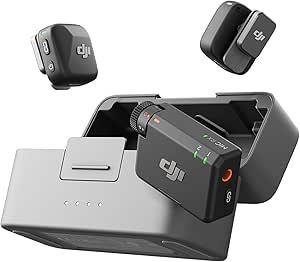 | Best for Long-Range Field Interviews | Transmitters: 2 | Receiver: 1 | Transmitter weight: 10 g | VIEW LATEST PRICE | See Our Full Breakdown |
| PowerDeWise Dual Lavalier Microphone Set |  | Best Wired Two-Person Interview Pick | Microphone type: Lavalier | Microphones: 2 | Connectivity: 3.5 mm auxiliary jack | VIEW LATEST PRICE | See Our Full Breakdown |
| BOYA mini 2 Wireless Lavalier Microphone for iPhone and Android |  | Best Compact Wireless Pick | Connectivity: Wireless | Connector: USB Type-C | Weight: 5 g | VIEW LATEST PRICE | See Our Full Breakdown |
| MAYBESTA Wireless Mini Lavalier Microphone for iPhone and Android |  | Best Simple Plug-and-Play Pick | Connectivity: Wireless | Connectors: Lightning, USB Type-C | Microphone type: Mini lavalier | VIEW LATEST PRICE | See Our Full Breakdown |
| Ecomxia WM300 Wireless Lavalier Microphones with Charging Case, 2-Pack |  | Best for Two-Person Phone Interviews | Connectivity: Wireless | Connector: Lightning | Microphones: 2 | VIEW LATEST PRICE | See Our Full Breakdown |
| Mini Mic Pro Wireless Lavalier Microphone for iPhone and Android | 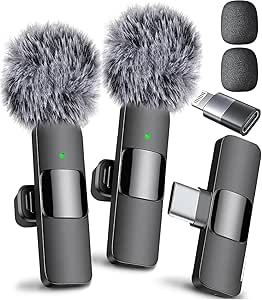 | Best for Cross-Device Portability | Connectivity: Wireless | Connectors: Lightning, USB Type-C | Microphone pattern: Omnidirectional | VIEW LATEST PRICE | See Our Full Breakdown |
| DJI Mic Mini Wireless Microphone Kit (2 Transmitters, Mobile Receiver) |  | Best Compact Pick | Transmitters included: 2 | Receiver: Mobile receiver | Transmitter weight: 10 g | VIEW LATEST PRICE | See Our Full Breakdown |
| DJI Mic 2 Wireless Microphone System (2 Transmitters, Receiver, Charging Case) |  | Best for Recording Backup | Transmitters included: 2 | Receiver: 1 | Internal storage: 8 GB per transmitter | VIEW LATEST PRICE | See Our Full Breakdown |
| KUKIHO 2-Pack Wireless Lavalier Microphones for iPhone, iPad, and Android |  | Best Plug-and-Play Pick | Microphones included: 2 | Wireless connection: 2.4 GHz | Connector: USB Type-C | VIEW LATEST PRICE | See Our Full Breakdown |
| wireless lavalier microphones for interview | Connectivity | Battery life |
|---|---|---|
| Mini Mic Pro Wireless Lavalier | USB-C and Lightning | — |
| DJI Mic 3 Wireless Microphone | — | Up to 28 hours |
| NEEWER KM19 Mini Wireless Lava | 2.4 GHz wireless | Up to 6 hours per transmitter; up to 30 hours with charging case |
| Wireless Lavalier Microphone f | — | Up to 6 hours per microphone |
| DJI Mic Mini Wireless Micropho | — | — |
| PowerDeWise Dual Lavalier Micr | 3.5 mm auxiliary jack | — |
| BOYA mini 2 Wireless Lavalier | Wireless | Up to 30 hours with charging case |
| MAYBESTA Wireless Mini Lavalie | Wireless | — |
| Ecomxia WM300 Wireless Lavalie | Wireless | Up to 8 hours in product details; title states 7 hours |
| Mini Mic Pro Wireless Lavalier | Wireless | Up to 6 hours |
| DJI Mic Mini Wireless Micropho | — | — |
| DJI Mic 2 Wireless Microphone | Bluetooth | — |
| KUKIHO 2-Pack Wireless Lavalie | — | Up to 4 hours |
More Details on Our Top Picks
Mini Mic Pro Wireless Lavalier Microphone with Charging Case
The Mini Mic Pro is a practical fit for interviewers who switch between Lightning and USB-C devices: both adapters are included, so a phone change need not mean replacing the receiver. Its two microphones let you capture an interviewer and guest, while the case, foam tips, and deadcat covers support a compact grab-and-go setup. Compared with the Wireless Lavalier Microphone for iPhone, Android, and PC, this set has a stated longer range only if the other model’s 20 m limit matters; no range is provided here, so I would not choose it for distant subjects. Six hours per charge is also shorter than the DJI kits’ stated case-assisted runtimes. Noise reduction and charging during use add convenience, though the supplied performance data does not establish how well it handles a challenging interview space.
Pros:- Includes Lightning and USB-C adapters for compatible devices
- Two microphones support interviewer-and-guest recording
- Foam and deadcat tips offer options for indoor and windy settings
- Device can be charged while the microphone is in use
Cons:- Up to six hours per charge is less than the stated case-assisted runtimes of the DJI kits
- No wireless range is specified, making distance planning difficult
- The supplied performance data does not clarify real-world noise reduction
Best for: Mobile interviewers who need one two-person microphone set to work with both Lightning and USB-C devices
Not ideal for: Field crews who need a documented long wireless range or extended recording beyond six hours per charge
- Connectivity:USB-C and Lightning
- Microphone type:Wireless lavalier
- Polar pattern:Omnidirectional
- Recording time:Up to 6 hours per charge
- Noise reduction:Yes
- Included microphones:2
- Included wind protection:2 foam tips and 2 deadcat tips
Our verdict“Choose the Mini Mic Pro if broad phone compatibility and a simple two-person kit matter more than documented range or long recording sessions.”
DJI Mic 3 Wireless Microphone Kit (2 Transmitters, 1 Receiver, Charging Case)
For interviewers who expect to adjust audio after recording, the DJI Mic 3 brings a useful safeguard: 32-bit float internal recording can preserve detail when levels vary, reducing the risk that a sudden louder answer ruins a take. Its two transmitters cover a standard interviewer-and-guest setup, while four-channel support and adaptive gain control give a more involved crew extra routing options. Compared with the DJI Mic Mini, this kit’s distinguishing strength is the internal recording format and channel support, rather than the Mini’s stated 400 m transmission range and longer case-assisted battery life. That added flexibility comes with more setup choices to manage, and the listed specifications include an inconsistent frequency-response figure, so I would avoid relying on that number. It best suits people who will actually use the recording safeguards and routing options.
Pros:- 32-bit float internal recording provides extra latitude when speaker levels change
- Two transmitters support interviews with a host and guest
- Four-channel support offers flexible routing for more involved recording setups
- Adaptive gain control and two noise-cancellation levels support changing environments
Cons:- The listed frequency-response specification appears inconsistent, so it is not a dependable comparison point
- Four-channel support and multiple controls may be unnecessary complexity for basic phone interviews
- Up to 28 hours of use is below the DJI Mic Mini’s stated up to 48 hours with its case
Best for: Interview producers who record two speakers and want internal audio files for recovery during editing
Not ideal for: Casual phone interviewers who want the simplest setup or prioritize the DJI Mic Mini’s stated long range and runtime
- Transmitters:2
- Receiver:1
- Channels:4
- Recording:32-bit float internal recording
- Battery life:Up to 28 hours
- Connectors:3.5 mm jack and USB Type-C
- Included phone adapter:USB-C
- Noise cancellation:Two levels
Our verdict“Pick the DJI Mic 3 if internal recording and channel flexibility matter more to your interview workflow than maximum stated runtime or range.”
NEEWER KM19 Mini Wireless Lavalier Microphone for iPhone, Android, and PC
The NEEWER KM19 gives interviewers hands-on control over a two-speaker setup: it offers three noise-cancellation levels, mute control, and stereo or mono output. The companion app adds interactive controls on Android, a meaningful advantage for an Android user who wants adjustments without handling the receiver. Compared with the Mini Mic Pro, the KM19 specifies up to 100 m of wireless range and up to 30 hours with its case, making its field and session limits easier to plan. Its iOS support is more restricted: iPhone users can record, but the app controls are unavailable there. The stated 48 kHz/24-bit audio and 20 Hz–20 kHz frequency response describe the format, but the set’s main interview advantage is control rather than a promise of superior sound. GoPro users should skip it because it is not compatible.
Pros:- Three noise-cancellation levels allow adjustment for different interview environments
- Mute control and stereo or mono output offer useful session flexibility
- Up to 30 hours with the case and a stated range up to 100 m support longer field days
- Includes two transmitters, a USB-C receiver, adapters, and a charging case
Cons:- Interactive app control is available on Android, while iOS supports recording only
- Not compatible with GoPro
- Up to six hours per transmitter means longer sessions depend on recharging from the case
Best for: Android-based interviewers who want app adjustments, mute control, and stereo or mono recording options
Not ideal for: iPhone users who expect app-based control, or crews recording with GoPro cameras
- Connectivity:2.4 GHz wireless
- Audio sampling:48 kHz/24-bit
- Frequency response:20 Hz–20 kHz
- Battery life:Up to 6 hours per transmitter; up to 30 hours with charging case
- Wireless range:Up to 100 m (328 ft)
- Output modes:Stereo and mono
- Noise cancellation:Three levels
- Warranty:1 year manufacturer warranty
Our verdict“Choose the KM19 for Android interviews where app control and configurable output matter more than broad iOS control.”
Wireless Lavalier Microphone for iPhone, Android, and PC
This two-microphone set is aimed at interviewers who want a straightforward phone connection and a short, nearby recording setup. Automatic pairing reduces setup steps, and the included USB-C and Lightning adapters cover common phone ports. Its stated 20 m range is enough to define a modest working distance, but it is far below the 100 m listed for the NEEWER KM19 and the 400 m listed for the DJI Mic Mini. That makes this a better fit for seated conversations or online meetings than interviews where the subject moves away from the camera. Each microphone runs up to six hours, and noise reduction is included, though the listing gives little detail on controlling it. Buyers should also check whether USB-C OTG needs enabling on their device and charge the set before its first use.
Pros:- Two clip-on microphones support a host and guest
- USB-C and Lightning adapters cover compatible phones and tablets
- Automatic pairing keeps setup simple
- Up to six hours of operation per microphone
Cons:- Stated range of up to 20 m is shorter than the NEEWER KM19 and DJI Mic Mini
- USB-C devices may require OTG to be enabled
- Requires charging before first use
Best for: Phone-based interviewers recording two people nearby who value automatic pairing and included Lightning and USB-C adapters
Not ideal for: Mobile crews working across larger spaces or users who need a specified runtime beyond six hours per microphone
- Connector compatibility:USB-C and Lightning
- Microphones:2
- Polar pattern:Omnidirectional
- Wireless range:Up to 20 m
- Battery life:Up to 6 hours per microphone
- Signal-to-noise ratio:65 dB
- Number of channels:1
Our verdict“This set suits nearby two-person phone interviews where quick pairing matters more than long range or advanced recording controls.”
DJI Mic Mini Wireless Microphone Kit (2 Transmitters, 1 Receiver, Charging Case)
The DJI Mic Mini is the long-range choice here, with a stated transmission distance of up to 400 m and up to 48 hours of battery life with its case. For interviews where a camera operator and subject may spread out, that range offers far more room than the Wireless Lavalier Microphone for iPhone, Android, and PC, which is specified for up to 20 m. Two lightweight 10 g transmitters keep the mics discreet on clothing, while basic and strong noise-cancellation modes let the interviewer choose how aggressively to reduce surrounding sound. The tradeoff is a more compact feature set than the DJI Mic 3: no 32-bit float internal recording or four-channel support is listed. The Mini is also not waterproof, and connecting it to Osmo Mobile series products requires a first-generation DJI OM Multifunctional Module.
Pros:- Stated transmission range reaches up to 400 m
- Charging case supports up to 48 hours of battery life
- Two 10 g transmitters are lightweight and discreet
- Two noise-cancellation levels and automatic volume limiting are included
Cons:- Not waterproof
- Osmo Mobile series connection requires the first-generation DJI OM Multifunctional Module
- Does not list the DJI Mic 3’s 32-bit float internal recording or four-channel support
Best for: Field interviewers who need a discreet two-person kit with substantial stated range and long case-assisted runtime
Not ideal for: Interviewers who need waterproof gear, internal 32-bit float recording, or DJI Osmo Mobile compatibility without the specified module
- Transmitters:2
- Receiver:1
- Transmitter weight:10 g
- Maximum transmission range:Up to 400 m
- Sampling rate:48 kHz
- Battery life with charging case:Up to 48 hours
- Noise cancellation:Basic and Strong levels
- Water resistance:Not waterproof
Our verdict“Choose the DJI Mic Mini for mobile two-person interviews where range and case-assisted runtime outweigh internal recording features.”
PowerDeWise Dual Lavalier Microphone Set
For sit-down interviews where both speakers can stay near the recorder, I’d choose this two-microphone wired set over the wireless Ecomxia WM300 when uninterrupted connection matters more than freedom to move. Both omnidirectional mics work without batteries, and the included extension cables and TRS adapter make it easier to place speakers and connect to compatible cameras or computers. That simplicity also means there’s no charging case or wireless pairing to manage. The tradeoff is in the cable: it can restrict movement and add clutter, especially for walk-and-talk interviews. Phone users should check their connector needs; iPhones with Lightning ports require an appropriate adapter. This set suits controlled interviews better than mobile reporting, where the BOYA mini 2’s wireless design gives the speaker more room to move.
Pros:- Two microphones capture two speakers at once
- Corded operation needs no batteries or charging
- Extension cables and TRS adapter support flexible placement and compatible recording gear
- Includes foam windscreens and a carrying pouch
Cons:- Cables restrict movement and can clutter a recording setup
- Lightning iPhones need a separate compatible adapter
Best for: Interviewers recording two seated speakers to a camera, laptop, or recorder who want a battery-free setup.
Not ideal for: Mobile journalists or roaming interviewers who need speakers to move freely, or iPhone users without the required Lightning adapter.
- Microphone type:Lavalier
- Microphones:2
- Connectivity:3.5 mm auxiliary jack
- Polar pattern:Omnidirectional
- Frequency range:20 Hz–20 kHz
- Signal-to-noise ratio:75 dB
- Power source:Corded electric
- Included accessories:2 extension cables, TRS adapter, 2 foam windscreens, carrying pouch
Our verdict“Choose this set for stationary two-person interviews where a simple wired connection matters more than mobility.”
BOYA mini 2 Wireless Lavalier Microphone for iPhone and Android
The BOYA mini 2 is the compact choice for interviewers who want a small transmitter and more control over recorded speech. At 5 g, it adds little weight to clothing, while its 48 kHz/24-bit recording, limiter, and safety track offer tools for handling variable speaking levels. Its two AI noise-cancellation settings let the user choose between lighter and stronger processing, a useful option when the room changes. Compared with the plug-and-play MAYBESTA, this model adds app controls and specified audio safeguards; in return, setup is less bare-bones. The USB-C connector and device compatibility limits also matter: it is not a universal phone or camera system, and walls can interrupt its wireless signal. Its single channel makes it a better fit for one-on-one interviews where one person wears the mic.
Pros:- Very light 5 g transmitter
- 48 kHz/24-bit audio with limiter and safety track
- Two adjustable AI noise-cancellation levels
- Up to 30 hours of battery life with the charging case
Cons:- Single channel is suited to one mic at a time
- USB-C and listed device support exclude some phones and cameras
- Wireless signal can be interrupted by walls or other obstacles
Best for: Solo interviewers and mobile creators using compatible USB-C phones who want a very light mic with adjustable processing.
Not ideal for: Two-person interviews, users who need Bluetooth, or owners of unsupported GoPro, Insta360, Akaso, or OnePlus devices.
- Connectivity:Wireless
- Connector:USB Type-C
- Weight:5 g
- Audio resolution:48 kHz / 24-bit
- Noise cancellation:AI, two levels: -15 dB and -40 dB
- Wireless range:Up to 328 ft
- Battery life:Up to 30 hours with charging case
- Channels:1
Our verdict“Pick the BOYA mini 2 for a lightweight, feature-rich single-speaker setup on a compatible USB-C device.”
MAYBESTA Wireless Mini Lavalier Microphone for iPhone and Android
For interviewers who want a quick phone setup, the MAYBESTA’s Lightning and USB-C receiver connectors make it more adaptable across compatible iPhones and Android devices than the Lightning-only Ecomxia WM300. Automatic plug-and-play pairing and a mute function keep the basic workflow straightforward, while the kit includes two lavalier microphones and clips. That makes it appealing for a small, portable recording kit, though the listed single channel leaves the two-mic package’s simultaneous recording capabilities unclear. Unlike the BOYA mini 2, the product data gives no stated wireless range or battery runtime, so I’d be cautious about relying on it for long interviews or locations where the receiver may be far from the speaker. Its listed 2.4 GHz figure describes frequency, not an audio frequency response.
Pros:- Lightning and USB-C connectors support compatible phones
- Automatic plug-and-play pairing
- Mute function allows quick silencing
- Includes two lavalier microphones, clips, and sponge tips
Cons:- Battery runtime and wireless range are not specified
- Single-channel specification leaves simultaneous two-mic recording unclear
- The listed 2.4 GHz figure does not clarify audio frequency response
Best for: Phone-based interviewers who want a simple receiver that can connect to compatible Lightning or USB-C devices.
Not ideal for: People planning long or distant interviews who need confirmed battery runtime, wireless range, or clearly specified two-speaker recording.
- Connectivity:Wireless
- Connectors:Lightning, USB Type-C
- Microphone type:Mini lavalier
- Polar pattern:Omnidirectional
- Signal-to-noise ratio:80 dB
- Channels:1
- Power source:Battery powered
- Included items:1 receiver, USB charging cable, 2 sponge tips, 2 lavalier microphones, 3 clips
Our verdict“Choose MAYBESTA for straightforward phone interviews when connector flexibility matters more than detailed range and runtime information.”
Ecomxia WM300 Wireless Lavalier Microphones with Charging Case, 2-Pack
The Ecomxia WM300 is the most direct fit here for a two-person wireless phone interview: it includes two microphones, three noise-reduction modes, and a charging case for carrying and storage. Compared with the wired PowerDeWise set, it gives both speakers more freedom to move, and its stated range reaches up to 70 feet. That mobility comes with more dependence on battery life and a Lightning connection, so it’s less flexible across devices than the USB-C and Lightning MAYBESTA. The supplied information also gives conflicting runtime figures—seven hours in the title and up to eight in the details—so I wouldn’t plan a session around the higher number without checking. Its Lightning-only receiver is a clear limitation for newer USB-C phones and other recording gear.
Pros:- Two microphones support interviews with two speakers
- Three noise-reduction modes offer a choice of processing
- Charging case includes battery indicator lights
- Stated wireless range is up to 70 feet
Cons:- Lightning connector limits compatibility with devices lacking that port
- Battery life is listed as both seven and up to eight hours
- Plastic enclosure may be less suited to rough handling
Best for: Two-person interviewers recording on compatible Lightning iPhones or iPads who need both speakers to move freely.
Not ideal for: Android or USB-C phone users, and interviewers who need a single, consistent battery-runtime specification.
- Connectivity:Wireless
- Connector:Lightning
- Microphones:2
- Noise reduction modes:3
- Battery life:Up to 8 hours in product details; title states 7 hours
- Charging time:2 hours
- Wireless range:Up to 70 feet
- Polar pattern:Omnidirectional
Our verdict“Choose the WM300 for two-person interviews on Lightning devices when wireless mobility outweighs connector flexibility.”
Mini Mic Pro Wireless Lavalier Microphone for iPhone and Android
The Mini Mic Pro is a practical pick for interviewers who switch between phone types: its Lightning and USB-C adapters support a broader mix of compatible devices than the Lightning-only Ecomxia WM300. The kit also includes foam and deadcat wind protection, which gives buyers options for reducing handling and outdoor wind noise, and plug-and-play operation avoids an app-based setup. Its stated battery life of up to six hours is more limited than the BOYA mini 2’s case-supported runtime, so it suits shorter interviews or sessions where recharging is manageable. The product data lists two lavalier microphones but does not specify channel count or whether both record simultaneously; I’d confirm that before choosing it for a two-person interview. The listed 80 g weight also makes it less featherlight than BOYA’s 5 g mic.
Pros:- Includes Lightning and USB-C adapters
- Plug-and-play setup requires no app
- Foam and deadcat tips provide different wind-protection options
- Includes two lavalier microphones and clips
Cons:- Up to six hours of battery life may not cover long recording days
- Simultaneous two-mic recording and channel count are not specified
- Listed weight of 80 g is heavier than the 5 g BOYA mini 2
Best for: Interviewers who alternate between compatible Lightning and USB-C phones and want a simple kit with wind covers.
Not ideal for: People needing a confirmed two-speaker wireless setup, extended sessions, or the lightest possible transmitter.
- Connectivity:Wireless
- Connectors:Lightning, USB Type-C
- Microphone pattern:Omnidirectional
- Frequency:2.4 GHz
- Battery life:Up to 6 hours
- Weight:80 g
- Dimensions:3 x 0.5 x 0.25 inches
- Included items:2 lavalier microphones, receiver, USB charging cable, 2 clips, 2 foam tips, 2 deadcat tips
Our verdict“Pick the Mini Mic Pro for short interviews across compatible phone types when included wind protection is useful.”
DJI Mic Mini Wireless Microphone Kit (2 Transmitters, Mobile Receiver)
For interviewers who want two discreet microphones without carrying a receiver and charging case, the DJI Mic Mini is the most compact fit in this group: each transmitter weighs 10 g, and the kit includes a mobile receiver. Its stated 300 m range and up to 11.5 hours of operation suit longer shoots where speakers may move around, while two noise-cancellation levels let you choose between lighter processing and stronger background reduction. Automatic limiting also helps guard against clipped audio when a speaker suddenly gets louder. Compared with the DJI Mic 2, this kit is lighter and simpler, but it lacks the listed internal recording and 32-bit float safety net. Its transmitters are not waterproof, and some Osmo Mobile connections need a specific Multifunctional Module.
Pros:- Two lightweight 10 g transmitters are discreet on interview subjects
- Stated range of up to 300 m supports interviews with moving speakers
- Two noise-cancellation levels offer a choice of processing strength
- Automatic limiting helps reduce clipping from sudden loud speech
Cons:- No internal recording is listed as a fallback if the wireless link drops
- Transmitters are not waterproof
- Some Osmo Mobile connections require a first-generation DJI OM Multifunctional Module
Best for: Mobile interviewers who prioritize lightweight two-person audio, long wireless reach, and direct phone or tablet connectivity.
Not ideal for: Reporters who need transmitter backups for difficult recording conditions or waterproof gear; the listed kit has no internal recording and is not waterproof.
- Transmitters included:2
- Receiver:Mobile receiver
- Transmitter weight:10 g
- Maximum transmission range:Up to 300 m
- Maximum operating time:Up to 11.5 hours
- Noise cancellation:2 levels: Basic and Strong
- Microphone:Omnidirectional lavalier
- Audio format:48 kHz, 24-bit via supported OsmoAudio devices
Our verdict“Choose the DJI Mic Mini if you want a lightweight, long-range two-person kit for mobile interviews and can work without internal recording.”
DJI Mic 2 Wireless Microphone System (2 Transmitters, Receiver, Charging Case)
The DJI Mic 2 is the strongest fit here for interviewers who want a safety copy on each speaker, with 8 GB of internal storage per transmitter and 32-bit float recording support. That backup matters when a wireless link is interrupted or a speaker’s volume changes sharply; the system can also record up to 14 hours of uncompressed audio per transmitter. Its two transmitters and included receiver are ready for multi-speaker work, and the charging case helps keep the set together between interviews. Against the DJI Mic Mini, the Mic 2 trades a lighter, simpler mobile setup for more recording protection and up to 18 hours of stated operating time. There are limits: noise cancelling and internal recording are unavailable when a transmitter connects to a smartphone via Bluetooth, and its stated 250 m range depends on FCC conditions.
Pros:- 32-bit float internal recording helps accommodate sudden changes in speech level
- 8 GB of storage per transmitter provides a local recording backup
- Two transmitters support interviews with two speakers
- Charging case and pre-linked components simplify setup and transport
Cons:- Noise cancelling and internal recording are unavailable with smartphone Bluetooth connections
- The stated 250 m range applies under specified FCC conditions and varies with the environment
Best for: Documentary and field interviewers who record two people and want each transmitter to retain an internal audio backup.
Not ideal for: Phone-first users who plan to connect transmitters over Bluetooth while relying on noise cancelling or internal recording, since those features are unavailable in that setup.
- Transmitters included:2
- Receiver:1
- Internal storage:8 GB per transmitter
- Internal recording:Up to 14 hours of uncompressed 48 kHz, 24-bit audio per transmitter
- Wireless range:Up to 250 m under FCC conditions
- Operating time:Up to 18 hours
- Connectivity:Bluetooth
- Included:2 transmitters, 1 receiver, charging case
Our verdict“Pick the DJI Mic 2 when local backup recordings and two-speaker coverage matter more than the simpler phone-focused setup of the DJI Mic Mini.”
KUKIHO 2-Pack Wireless Lavalier Microphones for iPhone, iPad, and Android
The KUKIHO set is aimed at interviewers who want to clip on two microphones and start recording with little setup. Its receiver pairs automatically without Bluetooth or an app, which makes it a more straightforward phone accessory than the DJI Mic 2 system, with its internal recording and more involved controls. Omnidirectional pickup suits conversational interviews where speakers may turn their heads, and the receiver can charge a connected phone during a session. The tradeoff is limited endurance: up to 4 hours per charge leaves less room for long days than the DJI Mic Mini’s stated 11.5 hours. Its 66 ft range is specified for unobstructed conditions, so it better suits close, controlled setups than interviews where subjects move far from the camera. Device compatibility may also require adapters.
Pros:- Automatic pairing avoids Bluetooth setup and app installation
- Two microphones cover an interviewer and guest
- Omnidirectional pickup accommodates natural head movement
- Receiver supports charging a connected phone while recording
Cons:- Up to 4 hours of operation per charge may not cover extended interview days
- The stated 66 ft range assumes an unobstructed environment
- Some phones and computers may need adapters
Best for: New interviewers recording two people directly to a compatible phone or tablet who value quick pairing over extended battery life.
Not ideal for: Field crews covering long sessions or interviews with speakers moving beyond a short, clear path; battery life is up to 4 hours and the stated range assumes no obstructions.
- Microphones included:2
- Wireless connection:2.4 GHz
- Connector:USB Type-C
- Pickup pattern:Omnidirectional
- Transmission range:Up to 66 ft in unobstructed environments
- Battery life:Up to 4 hours
- Charging time:1.5 hours
- Phone charging while recording:Supported by receiver
- Compatibility:iPhone, iPad, Android phones, Windows and Mac computers; adapters may be required
Our verdict“Choose KUKIHO for simple, short two-person phone interviews, but look to the DJI Mic Mini for longer sessions and greater stated range.”

How We Picked
I ranked these microphones for interview usefulness, prioritizing the ability to capture a host and guest, straightforward connection to common recording devices, and a kit that can be set up without adding friction to a conversation. I also weighed portability, included receiver or charging case, and whether the product description points to a complete two-person workflow or a more limited phone-first setup. For interviews, reliable pairing and a clear recording plan matter more than a long feature list.
The DJI Mic 3 ranks first because its two-transmitter, receiver-based kit is the most adaptable starting point in this lineup. The DJI Mic Mini kits follow for buyers who want a smaller, less elaborate system, while the Mini Mic Pro options and phone-oriented compact models suit simpler recording setups. Dual sets from PowerDeWise, Ecomxia, and KUKIHO remain relevant for two speakers, but their best fit depends on the devices and workflow a buyer needs. I treat similarly named kits as distinct products and recommend checking the exact bundle and connector before choosing.
Factors to Consider When Choosing Wireless Lavalier Microphones For Interviews
Before choosing a kit, I would map the interview setup from speakers to final recording device. A microphone that suits a quick phone interview may be awkward in a camera-based workflow, and a two-person kit does not help if its receiver cannot connect to your recorder. These factors help narrow the options without getting distracted by features that will not change your recording routine.
Count the speakers you need to mic
For a host-and-guest interview, plan on two microphones or transmitters, even if you expect to sit close together. One mic placed between two people can make voices uneven as speakers turn or shift in their seats. A dual set gives each person a dedicated mic, but check whether the package includes the receiver and connectors needed to record both channels on your device. If you usually interview one person alone, a compact single-mic setup can be easier to manage. Avoid buying a two-transmitter bundle solely for its flexibility if your recording app or camera cannot accept its output in the way you need. Decide whether you want separate voice tracks or a single mixed recording before comparing kits.
Match the receiver to your recording device
Phone, computer, and camera connections are not interchangeable just because a listing names several device types. Check the exact plug, adapter, and receiver included in the bundle, then confirm that your recording app can use an external microphone. A direct phone receiver can make quick interviews convenient, while a separate receiver can fit a broader camera or recorder setup. This choice can matter more than a microphone’s size because an incompatible connection can stop a session before it starts. If you rotate between devices, account for the adapters you will need and how you will carry them. Verify the specific kit contents, since related product names may refer to different receiver configurations.
Plan for room noise and interview movement
Wireless lavaliers work best when the mic stays close to the speaker and the wireless path remains usable. Air conditioning, traffic, clothing rustle, and nearby electronics can affect a recording even when the wireless link is stable. For interviews in a quiet office, simple placement and a short test recording may be enough. For a street interview or a room where speakers move around, check the system’s stated operating range and plan a backup recording if your workflow allows one. A longer advertised range cannot compensate for a blocked receiver or a poorly clipped mic. Think about where the interviewer and guest will sit, and keep the receiver in a clear position during the conversation.
Choose between a case and a simpler kit
A charging case can keep transmitters and accessories together between interviews, which helps when the kit travels in a bag or moves between locations. It also adds another item to keep charged and can increase the amount of gear you bring. A smaller direct-to-phone set may suit occasional interviews when fast setup matters more than having a centralized kit. If you record several sessions in a day, think about how you will recharge the system and whether the included case supports your routine. Do not assume that a case alone makes a kit ready for a full recording day; check the stated battery details for each component. The better choice depends on how often you record and how reliably you can recharge between sessions.
Decide whether you need separate voice tracks
Two mics can feed a recorder as separate channels or as a combined mix, depending on the system and recording setup. Separate tracks give you more control if one speaker is much louder or a sound needs editing later. A combined recording can make setup simpler, especially for a short interview that will be published with little post-production. Check how the receiver outputs audio and whether your app, camera, or computer supports the channel arrangement you expect. A common mistake is to focus on the number of transmitters without checking how the voices are recorded. If editing time is limited, favor a setup that produces a usable recording with minimal routing choices.
Spend more for the workflow you will use
A more elaborate kit makes sense when its receiver options, two-person coverage, or broader recording flexibility solve a real problem in your workflow. It adds little value if you only record one speaker on a compatible phone and want the smallest setup you can clip on. At the same time, choosing the simplest option can create extra work if you later need two mics, camera input, or a case that keeps components together. List your regular interview situations first, then pay for the capabilities that cover those situations. For occasional recordings, familiarity and quick connection may matter more than expansion options. For recurring interviews across several devices, a receiver-based system may be worth the extra setup.
Frequently Asked Questions
Should I choose the DJI Mic 3 or a DJI Mic Mini kit for interviews?
I would choose the DJI Mic 3 if you want the more adaptable two-transmitter kit with a receiver as the center of your setup. The Mic Mini kits make more sense when a smaller, simpler system matches your recording routine. The two Mic Mini bundles listed here differ in receiver configuration, so compare the exact kit rather than relying on the family name. Check the device you record to and the connections you need before deciding. If your interviews are phone-only, the more compact configuration may be sufficient.
Do I need two transmitters to record an interview?
If both interviewer and guest speak on the recording, two microphones usually make it easier to capture each voice consistently. One mic can work when only the guest needs to be heard or when a fixed setup keeps both speakers close, but voices may sound uneven as people turn. A two-transmitter kit is useful only if the receiver and recording device handle both inputs the way you expect. Check whether the result is one mixed track or separate channels. That distinction affects editing and may shape which kit fits your workflow.
Can I use any of these microphones with both an iPhone and Android phone?
Do not assume that a wireless kit works with every iPhone and Android model because its title names both platforms. Phone generations use different ports, and the included receiver or adapter determines whether it connects directly. The product names for NEEWER KM19, BOYA mini 2, and the Mini Mic Pro phone version indicate broad phone intent, but the exact connector still matters. Check your phone model, port, and recording app before ordering. If you also record on a computer or camera, confirm those connections separately.
Is a charging case worth choosing for interview recording?
A case is useful when you travel with the kit, record repeatedly, or want transmitters and accessories stored together between sessions. It can reduce the chance of leaving a small component behind, but it does not replace checking each device’s battery needs. A direct-to-phone kit may be simpler if you record occasionally and already have a way to carry and charge it. Compare the included components as well as the case: a case does not tell you which receiver or adapters are in the bundle. Choose it when it supports your regular packing and recharging routine.
What should I check before using a wireless lavalier for a two-person remote interview?
First, confirm that both people will be recorded on the same device or whether each person needs a separate local recording. A wireless kit is designed to carry audio from nearby transmitters to its receiver, so it does not by itself connect a remote guest over a call. For an in-person interview, check two-mic support, receiver compatibility, and how the voices are routed. For a remote interview, plan the guest’s microphone and the call or recording software as part of the setup. Make a short test recording with both speakers before the scheduled session.
Conclusion
For the best overall interview setup, I would choose the DJI Mic 3 for its two transmitters and receiver-based flexibility. Buyers looking for a best value fit should compare the DJI Mic Mini bundles and select the configuration that matches their device, while the DJI Mic 2 is the lineup’s premium-oriented alternative for buyers who want that system’s two-transmitter kit. For beginners recording mainly on a phone, I would start with the Mini Mic Pro phone version or a compact phone-focused option such as the NEEWER KM19 after checking the connector. If two people need microphones and a simple dual set suits your device, look at PowerDeWise, Ecomxia WM300, or KUKIHO. The right pick comes down to speaker count, connection type, and how much receiver flexibility your interviews actually need.
Evergreen bestsellers Picks

Apple AirPods Pro with Wireless Charging Case

Vitamix Nano Personal Blender with SmoothiePilot, Black

De'Longhi Classic Signature Espresso Machine with Adjustable Milk Frother
As an affiliate, we earn on qualifying purchases.