Searching for an espresso machine automatic means balancing convenience with quality. The best models deliver quick, consistent coffee with minimal effort, but they vary widely in features and price. The Philips 3300 Series stands out as the overall top pick for its ease of use and milk system, while the De’Longhi Magnifica Duo offers a solid mix of performance and affordability. For those willing to invest more, the Philips 5500 Series provides advanced customization and build quality. The main tradeoffs involve price versus features, and simplicity versus versatility. Keep reading for a detailed breakdown of these options to find your perfect match.

Get everyday essentials delivered free with Prime
- Fast, free delivery on millions of items
- Prime Video, Amazon Music and more included
- Member-only deals all year
Complete the kit


Key Takeaways
- Top picks differentiate mainly on milk system quality and customization options.
- Higher-priced models generally offer more precise control and durability.
- Ease of use remains a priority, with many models featuring one-touch operation and self-cleaning.
- Compact designs are available but may sacrifice some features or capacity.
- Price often correlates with the breadth of features—budget options focus on core brewing.




More Details on Our Top Picks
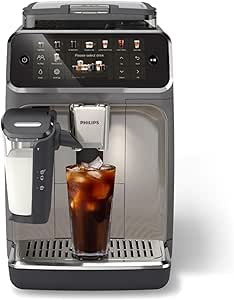
Philips 3300 Series Fully Automatic Espresso Machine with LatteGo Milk System
This model stands out for its balanced combination of convenience, customization, and maintenance ease. Its six preset beverages, including iced coffee and latte macchiato, make it highly versatile compared to the Philips 2200 Series, which offers only three presets. The LatteGo milk system delivers silky froth quickly and is effortless to clean, but it limits milk customization options compared to machines with manual frothers. While the AquaClean filter minimizes descaling, it adds ongoing filter costs, and the higher price reflects its all-in-one convenience. This pick suits those seeking a wide range of drinks without manual fuss.
Pros:- Automated brewing with six customizable presets
- Fast, easy milk frothing via LatteGo system
- Low maintenance with long-lasting AquaClean filter
- Quiet operation with SilentBrew technology
Cons:- Higher price compared to manual or simpler machines
- Limited to six preset drinks, restricting customization
Best for: Home baristas who value variety, quick cleanup, and quiet operation
Not ideal for: Budget-conscious buyers or those wanting more manual control over milk frothing
- Presets:6
- Milk System:LatteGo
- Display:Full color
- Filter:AquaClean
- Descaling:Up to 5,000 cups
- Technology:SilentBrew
Our verdict“This machine is ideal for users wanting variety and convenience in a single, quiet package with minimal fuss.”
Fully Automatic Espresso Machine with Milk Frother & Grinder
This option makes a strong case for those who want personalized coffee with a built-in grinder and touchscreen interface. Compared to the Philips 2200 Series, it offers more adjustable settings, including 15 grind levels, but its larger size and complex features may overwhelm beginners. The automatic milk frother produces creamy drinks, yet its numerous controls can require a learning curve. The self-cleaning system is a plus for maintenance, but the machine’s bulk could be a drawback for small kitchens. This pick is suited for coffee enthusiasts eager for full control and customization.
Pros:- One-touch operation with customizable settings
- Built-in grinder with 15 adjustable levels
- Automatic milk frother for creamy drinks
- Self-cleaning system simplifies maintenance
Cons:- Complex interface may challenge beginners
- Large footprint may not suit small kitchens
Best for: Experienced home baristas or gadget lovers who appreciate detailed customization
Not ideal for: Casual users or those with limited counter space looking for simplicity
- Grind Settings:15
- Pressure:20 bar
- Water Tank Capacity:1.5 L
- Bean Hopper Capacity:200 g
Our verdict“Perfect for coffee lovers who want control over every detail, accepting the tradeoff of size and complexity.”
Automatic Espresso Machine with 20 Bar Pressure – One-Touch Coffee Maker, Built-in Grinder & Milk Frother
This machine’s strength lies in its high 20 Bar pressure, delivering espresso that rivals professional standards, similar to the Bosch 300 Series. Its built-in grinder and milk frother make it a convenient all-in-one, but the noise level during operation can be noticeable, and the water tank size limits multiple drinks without refilling. The auto self-cleaning feature reduces hassle, yet the overall complexity might be daunting for new users. This pick is ideal for those who prioritize espresso quality and don’t mind a bit of noise or learning curve.
Pros:- Brews barista-quality espresso with 20 Bar pressure
- Built-in grinder with adjustable settings
- Automatic milk frother for lattes and cappuccinos
- Auto self-cleaning for ease of maintenance
Cons:- Can be noisy during operation
- Limited water tank capacity for multiple drinks
Best for: Home users seeking high-pressure espresso with minimal manual steps
Not ideal for: Beginners or those with small kitchens due to noise and complexity
- Pressure:20 Bar
- Water Tank Capacity:1.5L
- Power:1350W
- Voltage:120V
- Number of Recipes:6
Our verdict“Aimed at espresso enthusiasts who prioritize high pressure and convenience, accepting some noise and complexity.”
Philips 2200 Series Fully Automatic Espresso Machine with Milk Frother
This model appeals to those who want straightforward operation and reliable performance, similar to the Philips 2300 Series but with fewer presets. Its intuitive touch display makes customization simple, and the ceramic grinder ensures fresh grounds. While it offers good value for the features, it doesn’t match the variety or advanced features of the Philips 3300 Series. The need for regular filter replacements is a minor inconvenience but keeps maintenance straightforward. This is a solid choice for casual users who prioritize ease of use over extensive customization.
Pros:- Easy to operate with intuitive touch display
- Built-in ceramic grinder for fresh grounds
- Milk frother for cappuccinos and lattes
- Low maintenance with AquaClean filter
Cons:- Limited preset options (only 3)
- Price might be high relative to simpler manual machines
Best for: Home users who want a reliable, low-maintenance machine with decent customization
Not ideal for: Coffee aficionados seeking many preset options or extensive customization
- Presets:3
- Coffee Varieties:Espresso, Coffee, Hot Water
- Milk Frother:Classic
- Display:Intuitive touch
- Grinder:100% ceramic
- Filter:AquaClean
Our verdict“Ideal for users wanting straightforward, reliable espresso with minimal upkeep and basic customization.”
Philips 2300 Series Fully Automatic Espresso Machine with LatteGo Milk System
This machine excels for tech-savvy users who enjoy personalized brewing via app control, similar to the Philips 3300 Series but with added digital customization. Its LatteGo milk system ensures smooth froth, and the preset options include espresso, coffee, latte, and hot water. While the app integration adds a layer of convenience, it also introduces an additional maintenance requirement for filters and app updates. The machine’s automatic processes make brewing effortless, but it comes at a higher price point. This pick makes sense for those seeking advanced personalization and smart features.
Pros:- Automatic grinding, tamping, and brewing
- Easy-to-clean LatteGo milk system
- App compatibility for personalized recipes
- Preset selections for variety
Cons:- Potentially high price point
- Requires regular filter and app updates
Best for: Home baristas who want automated, customizable drinks with smart app control
Not ideal for: Users without smartphone access or who prefer manual control over brewing
Our verdict“Perfect for tech-oriented users craving convenience, customization, and smart integration in their espresso routine.”
De’Longhi Magnifica Duo Automatic Espresso Machine, Milk Frother, Silver
This model stands out for its impressive range of 20 preset recipes, including espresso, drip coffee, and cold brew, making it ideal for households that enjoy variety. Its integrated milk frother delivers both hot and cold foam, elevating beverage options, and the built-in conical burr grinder ensures freshness in every cup. Compared with the Bosch 300 Series, the Magnifica Duo offers more drink options but involves a more complex setup, which could be intimidating for some users. The tradeoff here is between the extensive features and the learning curve involved. If you want a highly capable, all-in-one machine and are willing to learn its functions, this pick offers significant value, though it may come at a higher price due to its technological sophistication.
Pros:- Offers a wide range of 20 preset recipes for diverse drinks
- Includes advanced hot and cold milk frothing technology
- Quick cold brew preparation in under 3 minutes
- Built-in conical burr grinder for maximum freshness
Cons:- Complex setup with multiple advanced technologies may require a learning curve
- Higher price point reflecting its premium features
Best for: Coffee lovers who crave variety and are comfortable with a more complex setup
Not ideal for: Casual users or those seeking a straightforward, easy-to-use machine without many preset options
- Color:Silver
- Number of Recipes:20
- Brewing Technologies:Espresso, drip coffee, cold brew
- Milk Frothing:Yes, hot and cold foam
- Additional Features:Cold Extraction Technology, conical burr grinder
Our verdict“This machine is best suited for dedicated coffee enthusiasts who value variety and technological depth despite a steeper learning curve.”
Ninja Luxe Café Premier 3-in-1 Espresso Machine, Drip Coffee & Cold Brew
The Ninja Luxe Café Premier earns its spot by combining espresso, drip coffee, and cold brew in a single machine, making it perfect for those who want a multi-functional device without purchasing multiple appliances. Its built-in grinder with 25 settings allows precise tailoring of grind size, and the automatic steamer ensures consistent microfoam, similar to what the Bosch 300 Series offers but with more flexibility across different brewing styles. The complication here is the many accessories and setup steps, which might overwhelm beginners. Also, price and size could be considerations, especially for smaller kitchens. If you value true versatility and automated guides for consistency, this machine offers a compelling package, though it sacrifices simplicity for breadth of function.
Pros:- Versatile 3-in-1 brewing for espresso, drip, and cold brew
- Built-in conical burr grinder with 25 settings for precision
- Hands-free frothing with automatic steamer for microfoam
- Smart technology guides for consistent results
Cons:- Complex setup with numerous accessories may be daunting for beginners
- Potentially high cost and size for small kitchens
Best for: Home baristas who want multi-functionality and guided brewing without multiple devices
Not ideal for: Users seeking a simple, minimal setup machine or with limited space
- Machine Types:Espresso, Drip Coffee, Cold Brew
- Espresso Styles:Double shot, Quad shot
- Drip Coffee Styles:Classic, Rich, Over ice
- Cold Brew Styles:Cold pressed espresso, Cold brew coffee
- Grinder Settings:25
- Frothing System:Dual, automatic steamer and spinning whisk
Our verdict“Ideal for those seeking a versatile, guided, multi-drink machine willing to navigate a more complex setup process.”
Bosch 300 Series Fully Automatic Espresso Machine with Grinder and Steam Wand
The Bosch 300 Series offers a high level of control with one-touch brewing, adjustable milk frother, and a dedicated grinder, making it a strong choice for serious coffee fans. Its customizable strength and foam options rival more manual machines but with the convenience of automation. Compared to the Philips 5500, the Bosch is more flexible in beverage customization, yet the larger footprint and more complex features might not suit smaller kitchens or casual users. Its user interface may require some learning, but once mastered, it produces consistently high-quality drinks. Its price, though not specified, is likely higher, reflecting its professional-grade capabilities. This machine fits those who want a semi-automated experience with the option to fine-tune every element of their coffee.
Pros:- One-touch brewing with extensive customization options
- Freshly ground beans preserve aroma and flavor
- Easy to clean with removable parts and cleaning guides
- Adjustable milk frother for professional foam
Cons:- Large size may be challenging for small kitchens
- Complex features could have a learning curve for new users
Best for: Coffee enthusiasts who want barista-quality drinks with customization at home
Not ideal for: Users with limited counter space or those preferring a more straightforward, plug-and-play machine
- Dimensions:14.8 in x 9.7 in x 16.5 in
- Features:Bean to cup, one-touch brewing, adjustable milk frother
- Removable Parts:Yes
- Cleaning Features:Calc’n Clean
- Strength Levels:3
Our verdict“This machine is best for dedicated coffee lovers who appreciate customizable, barista-quality drinks and don’t mind a larger footprint.”
Philips 5500 Series Fully Automatic Espresso Machine with LatteGo Milk System
The Philips 5500 Series stands out with its 20 preset beverages and the innovative LatteGo milk system, making it ideal for those who want quick, quiet operation and minimal fuss. Its fast brew time—just 3 seconds to ready—and quiet operation (40% quieter than earlier models) make it suitable for busy mornings. The LatteGo system simplifies cleaning and delivers smooth microfoam, comparable to more manual frothers like those on the Bosch or De’Longhi models. However, the upfront cost can be high, and regular cleaning is needed to maintain performance. Compared with the De’Longhi Magnifica Duo, it offers quicker operation and quieter performance, but lacks the same breadth of preset recipes. This machine appeals most to users prioritizing ease and speed in daily use.
Pros:- 20 preset hot and iced drinks for variety
- Quick 3-second brew readiness
- Quiet operation reduces noise during mornings
- Easy-to-clean LatteGo milk system
Cons:- High initial cost may be a barrier
- Requires regular cleaning for consistent performance
Best for: Home users who want quick, quiet operation with easy milk frothing and multiple preset drinks
Not ideal for: Coffee purists seeking extensive customization or those on a tighter budget
- Presets:20
- Milk System:LatteGo
- Brewing Time:3 seconds to ready
- Noise Level:40% quieter than earlier models
- Profiles:4
Our verdict“Perfect for busy households seeking fast, quiet, and versatile coffee options with minimal maintenance.”
De’Longhi Magnifica Start Automatic Espresso Machine with Milk Frother, Black
This entry offers a straightforward option for those who want one-touch recipes for espresso, coffee, and Americano, with an adjustable conical burr grinder. Its manual milk frother allows for textured foam, making it suitable for lattes and cappuccinos, though it requires some manual effort. Compared with the Philips 5500, this model provides fewer preset options but at a more accessible price point, making it ideal for casual users or beginners. Its three functions are simple to operate, but the limited customization and manual frothing may be a drawback for those seeking barista-quality drinks or automation beyond basic recipes. If simplicity and affordability matter most, this machine hits the mark, even if it sacrifices advanced features.
Pros:- One-touch operation for espresso, coffee, and Americano
- 13 grind settings for bean customization
- Manual frother provides textured milk foam
- Easy to clean with dishwasher-safe parts
Cons:- Limited to basic recipes with manual frothing
- Frothing requires manual effort, which may be tricky for some
Best for: Beginners or budget-conscious users who want basic espresso and coffee options with manual milk frothing
Not ideal for: Seasoned coffee enthusiasts seeking extensive automation or preset variety
- Color:Black
- Grind Settings:13
- Frother Type:Manual
- Functions:Espresso, Coffee, Americano
Our verdict“A solid choice for newcomers or those on a budget who want simple, manual espresso and coffee functions without fuss.”
SHARDOR 20 Bar Espresso Machine with Milk Frother and Touchscreen
This SHARDOR 20 Bar Espresso Machine stands out for its powerful 20-bar pressure system, which delivers rich, full-bodied espresso comparable to higher-end models like the Philips 3300 Series. The inclusion of a touchscreen interface makes operation intuitive, allowing users to easily dial in settings, unlike more basic machines that rely on manual knobs. Its professional steam wand supports milk frothing for latte art, offering a level of versatility not always available in compact models. The large 45 oz water tank minimizes refilling, ideal for frequent use. However, the need for regular descaling can be a hassle, especially for those unfamiliar with espresso maintenance. Its relatively bulky footprint might be a drawback in smaller kitchens, and some may find the touchscreen features initially overwhelming. Compared to fully automatic options like the Philips 2200 Series, it requires more user input but rewards with greater control over the brew process.
Pros:- Powerful 20-bar pressure system for rich flavor
- Touchscreen interface for simple customization
- Includes professional steam wand for milk frothing
- Large 45 oz water tank reduces frequent refills
Cons:- Requires regular descaling to maintain performance
- Size may be inconvenient in small kitchens
- Touchscreen features can be complex initially
Best for: Home baristas who want hands-on control and customization, and don’t mind occasional maintenance.
Not ideal for: Small kitchens with limited space or users seeking a ‘set it and forget it’ experience.
- Wattage:1350 watts
- Voltage:120 volts
- Pressure:20 bar
- Water Tank Capacity:45 oz
- Item Dimensions:8.14″D x 5.12″W x 15.27″H
- Item Weight:8.5 pounds
- Coffee Input Type:Ground
- Filter Type:Reusable
- Operation Mode:Semi-Automatic
Our verdict“This machine is perfect for enthusiasts who value control and are comfortable with occasional upkeep, rather than those seeking ultimate simplicity.”

How We Picked
I evaluated these espresso machines based on key factors that matter most to buyers: performance consistency, ease of operation, build quality, maintenance requirements, and overall value. I prioritized models with reliable brewing pressure, user-friendly interfaces, and durable components. The ranking also considers versatility, such as milk frothing and customization options, as well as price-to-feature ratio. These criteria help identify the most balanced options for different user needs, from beginners to seasoned enthusiasts. The final list aims to highlight both the best overall performers and those offering exceptional value or premium features.Factors to Consider When Choosing Espresso Machine Automatic
Choosing the right automatic espresso machine involves understanding several important factors. Beyond basic brewing, it’s vital to consider how the machine fits your lifestyle, budget, and coffee preferences. A well-chosen model can improve your daily routine, but common pitfalls include overpaying for unnecessary features or selecting a machine that’s too complicated for regular use. The following factors will help clarify what to look for and how to avoid typical mistakes.Ease of Use and Interface
Look for machines with intuitive controls, clear displays, and one-touch brewing options if convenience is your priority. Some models feature touchscreen interfaces or customizable profiles, which can be great but might add complexity. Consider whether you prefer manual adjustments or preset functions, especially if you plan to make coffee quickly in the mornings. Bear in mind that overly complicated interfaces can lead to frustration, especially for beginners. Simpler models often excel at consistency, making them a smart choice for most home users.
Milk Frothing and Beverage Customization
If you enjoy milk-based drinks like lattes or cappuccinos, check the quality of the milk system. Machines with integrated milk frothers or LatteGo systems tend to produce smoother, creamier froth. However, more advanced systems can be harder to clean and maintain, adding to the long-term effort. Budget models might offer manual frothing or basic steam wands, which require some skill but can be more flexible. Consider how much you value customization versus straightforward operation to choose the right fit.
Build Quality and Durability
Investing in a machine with high-quality materials—like stainless steel components—can extend its lifespan and reduce the need for repairs. Cheaper models often use plastic parts that might wear out faster, especially with frequent use. Look for brands with good reputations for durability, and check warranty terms. While premium models cost more upfront, they typically offer better longevity and more consistent performance over time. Consider your long-term needs and whether a slightly higher initial investment is justified for durability.
Size, Capacity, and Maintenance
Measure your available counter space carefully, as some machines can be quite bulky. Also, consider the water reservoir size—larger tanks reduce the frequency of refills but take up more space. Maintenance tasks like descaling, cleaning milk systems, and replacing filters can be time-consuming; choose a model with accessible parts and clear instructions. Self-cleaning features can save effort but may add to the price. Think about how much effort you’re willing to put into upkeep versus convenience.
Price and Value
Balance your budget with the features you need most. Entry-level models are suitable for casual drinkers who want decent espresso without fuss, but they often lack customization and durability. Mid-range options typically offer better build quality, more control, and milk systems. Premium machines justify their higher cost with advanced features, durability, and finer control. Avoid paying for bells and whistles you won’t use, but be cautious of choosing a model with limited features just to save money, as it might not meet your needs long-term.
Frequently Asked Questions
Can I use pre-ground coffee with an automatic espresso machine?
Most automatic espresso machines are designed primarily for use with beans and have built-in grinders. Some models do accept pre-ground coffee as an option, but this feature is less common. Using pre-ground coffee can be convenient if you prefer different blends or want to skip grinding, but it might compromise freshness and consistency. Always check if the machine has a bypass chute or a dedicated port for pre-ground coffee before making a purchase. Relying on beans with a good grinder generally yields better flavor and aroma.
How often do I need to descale an automatic espresso machine?
Descaling frequency depends on the hardness of your water and how often you use the machine. Typically, descaling every 2-3 months is recommended for regular use, but in areas with very hard water, more frequent descaling may be necessary. Many machines include alerts or automatic programs to help with this process, simplifying maintenance. Ignoring descaling can lead to clogged internal parts and poor performance, so following manufacturer guidelines helps prolong the lifespan of your machine and maintain optimal coffee quality.
Are automatic espresso machines suitable for multiple users?
Yes, many models feature multiple user profiles or customizable settings, making them suitable for households with different preferences. Some machines allow saving preferred beverage settings for each user, which speeds up the process. However, if your household includes several coffee drinkers with diverse tastes, opting for a model with extensive customization options will be more convenient. Be aware that more complex machines might require a learning curve for new users, so consider the tech familiarity of all users involved.
Is it worth investing in a high-end automatic espresso machine?
Higher-end machines often offer superior build quality, more precise temperature and pressure control, and advanced features like extensive customization or integrated grinders. If you drink espresso daily or value cafe-quality drinks at home, the investment can be worthwhile. However, for casual occasional use, a mid-range or even budget model might suffice. Consider your coffee habits and whether the additional features justify the higher price—sometimes, simpler machines deliver the same quality for less effort and cost.
What should I consider if I want a compact automatic espresso machine?
Compact models are ideal for small kitchens or limited counter space, but they often have smaller water reservoirs and fewer features. Look for a machine that still offers essential functions like good pressure and milk frothing if needed. Be prepared for more frequent refilling and cleaning, as smaller tanks require more attention. Also, check how accessible the components are for maintenance, since compact designs can sometimes complicate cleaning. Prioritize models that balance size with performance to avoid sacrificing too much functionality.
Conclusion
For most home users, the Philips 3300 Series makes an excellent all-around choice, offering simplicity, consistent results, and a good milk system. If you’re seeking the best value without sacrificing quality, the De’Longhi Magnifica Duo offers a reliable, budget-friendly option. Those who want a premium experience with maximum customization should consider the Philips 5500 Series, especially if they enjoy experimenting with different drinks. Beginners or casual drinkers will find models with one-touch operation easiest, while coffee connoisseurs may prefer high-end machines with advanced controls. Ultimately, your choice depends on your budget, usage frequency, and desired features, but this roundup provides a clear starting point for each buyer type.
As an affiliate, we earn on qualifying purchases.Halloween Picks
halloween