
TL;DR

Get everyday essentials delivered free with Prime
- Fast, free delivery on millions of items
- Prime Video, Amazon Music and more included
- Member-only deals all year
A July 1, 2026 ISR Briefing article describes Ukraine’s Delta system as a leading example of software-defined warfare: a cloud-based platform that fuses battlefield data into a live map available through ordinary devices. The report says Delta’s reach, speed and resilience matter for modern militaries, while cyber risk, jamming, data poisoning and unverified performance claims remain open issues.
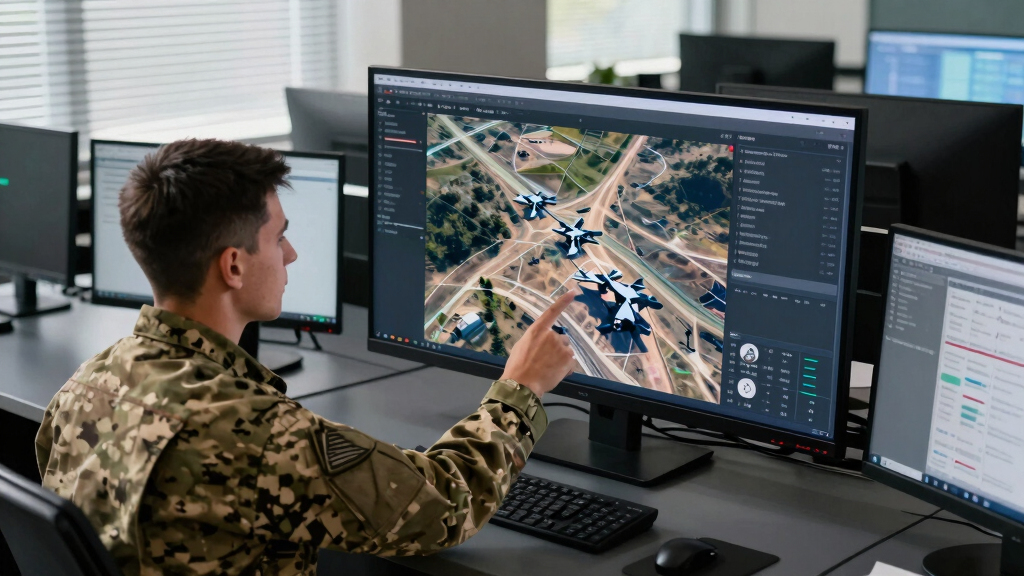
A new ISR Briefing analysis published July 1, 2026 argues that Ukraine’s Delta battlefield-management system has become one of the clearest working examples of software-defined warfare, using cloud infrastructure, browser-based access and fused battlefield data to give troops a shared operating picture.
Delta is described in the briefing as a situational-awareness and battlefield-management system built through an unusual wartime partnership involving Aerorozvidka, Ukraine’s Defense Ministry and the Ministry of Digital Transformation. The system brings together drone feeds, satellite imagery, sensor reports, partner intelligence and vetted field reports into a geolocated live map used for planning, coordination and sharing enemy positions.
The report’s central confirmed point is technical: Delta does not depend on a special terminal. Its backend is cloud-native, and its client can run on phones, laptops, tablets and standard PCs through a browser. According to the briefing, Ukraine deliberately hosted key cloud infrastructure outside the country to reduce the risk that missile strikes or cyberattacks on Ukrainian territory could take the platform offline.
The briefing frames that design as a break from older defense technology models built around bespoke hardware, siloed systems and slow procurement. That broader interpretation is the author’s analysis, not an official finding. The underlying facts cited in the source material draw on public reporting and analysis from outlets and organizations including CSIS, The New York Times, The Washington Post, Militarnyi, BleepingComputer and Ukrainska Pravda.
Software-defined warfare: how Ukraine’s Delta turned the battlefield into a shared, real-time map
A soldier opens a browser and sees the fused war — drones, satellites, sensors and vetted reports on one live map. The backend is a cloud deliberately hosted abroad so a missile can’t take it down. The clearest case yet of treating warfare as software.
Optical sensors go blind in cloud & dark; an all-weather SAR radar layer — the kind VigilSAR produces — slots into a picture like this as one resilient, sovereign input. vigilsar.com · And note the paradox: to survive missiles & cyberattack, Ukraine hosted its crown-jewel cloud outside its own borders — trading physical sovereignty for operational survivability. Resilience through distribution.
Delta’s lasting lesson isn’t a piece of software — it’s a model of how to build: commodity clients, cloud backend, open standards, relentless iteration, fusion over hardware, and resilience through distribution. It’s why a wartime NGO out-shipped procurement bureaucracies on a fraction of the budget. The platform mattered less than the picture — and the picture is software. Own the fusion layer, own the sovereign feeds into it, and get it to the edge.
Battlefield Software Gains Weight
The report matters because it points to a shift in military advantage from individual platforms toward data fusion, software speed and the ability to push a trusted picture to frontline users. In that model, drones, satellites and sensors matter less on their own than the system that combines their outputs quickly enough for commanders and soldiers to act.
For readers outside Ukraine, the Delta case is relevant because many militaries are trying to connect sensors, weapons and command systems without trapping information in separate networks. The briefing argues that Delta’s wartime build path — commodity clients, open standards, a distributed cloud backend and fast iteration — challenges slower procurement cultures in larger defense establishments.
The system also highlights a sovereignty tradeoff. Hosting core infrastructure abroad may reduce physical vulnerability to strikes inside Ukraine, but it also means a wartime command-and-control asset depends on cross-border cloud infrastructure, connectivity and foreign-hosted technical resilience.
browser-based battlefield management software
As an affiliate, we earn on qualifying purchases.
As an affiliate, we earn on qualifying purchases.
How Delta Reached Front Lines
Delta’s roots are tied to efforts after 2017 to move Ukrainian command systems closer to NATO-style information sharing and away from Soviet-era habits of vertical information control, according to the source material. Russia’s full-scale invasion in 2022 accelerated the demand for systems that could make fast use of drones, civilian reports, commercial imagery and allied intelligence.
The July 2026 briefing describes Delta as the product of both state and nonstate wartime engineering. Aerorozvidka, a Ukrainian volunteer technology and reconnaissance group, is cited alongside defense and digital ministry actors as part of the system’s development ecosystem. That mix helped the system move at what the source characterizes as startup tempo, though the exact development timeline and budget are not fully detailed in the briefing.
Cybersecurity has been a known concern. The source material cites BleepingComputer reporting on a December 2022 phishing and malware campaign targeting Delta users. That episode supports the report’s warning that any widely used battlefield data platform becomes an attractive target for intelligence collection, disruption and deception.
cloud-enabled military drone feeds
As an affiliate, we earn on qualifying purchases.
As an affiliate, we earn on qualifying purchases.
Claims Still Need Verification
Several points remain uncertain. The source material states that a Ukrainian Defense Ministry figure of 1,500 targets per day is not independently verified. It is also not clear from the briefing how often Delta directly leads to strikes, how the system performs under sustained jamming, or how consistently units can maintain access in degraded connectivity conditions.
The report also identifies risks that are real but hard to measure publicly: phishing, malware, data poisoning, false field reports and adversary attempts to infer Ukrainian operations from platform use. The existence of those risks is supported by past reporting, but the current scale of the threat to Delta is not fully visible from open sources.
As an affiliate, we earn on qualifying purchases.
Allies Watch Ukraine’s Model
The next issue is whether Ukraine and its partners can keep improving Delta while protecting it from cyberattack, jamming and corrupted inputs. Militaries studying Ukraine’s experience are likely to focus on cloud resilience, common operating pictures, secure battlefield connectivity and faster software cycles.
The briefing suggests the larger test will be whether allied defense systems can adopt Delta’s lessons without losing accountability, security or command discipline. For now, Delta remains both a working wartime system and a public case study in how software can reshape battlefield command.
real-time geolocation mapping software
As an affiliate, we earn on qualifying purchases.
As an affiliate, we earn on qualifying purchases.
Key Questions
What is Ukraine’s Delta system?
Delta is a Ukrainian situational-awareness and battlefield-management platform that fuses sources such as drones, satellite imagery, sensors and vetted reports into a live battlefield map.
Why is Delta described as software-defined warfare?
The July 2026 briefing uses that term because Delta’s advantage is described as coming from software, data fusion and rapid updates, rather than from a single weapon platform or dedicated hardware terminal.
Is Delta confirmed to run on ordinary devices?
Yes. The source material says Delta’s client runs through a browser on standard phones, laptops, tablets and PCs, while the backend runs in a cloud environment.
Are all performance claims about Delta verified?
No. The cited 1,500-targets-per-day figure is identified as a Ukrainian Defense Ministry claim and is not independently verified in the source material.
What are Delta’s main risks?
The main risks identified are cyberattacks, phishing, malware, jamming, connectivity loss and data poisoning through false or corrupted battlefield inputs.
Source: Thorsten Meyer AI
Halloween Picks
halloween
As an affiliate, we earn on qualifying purchases.