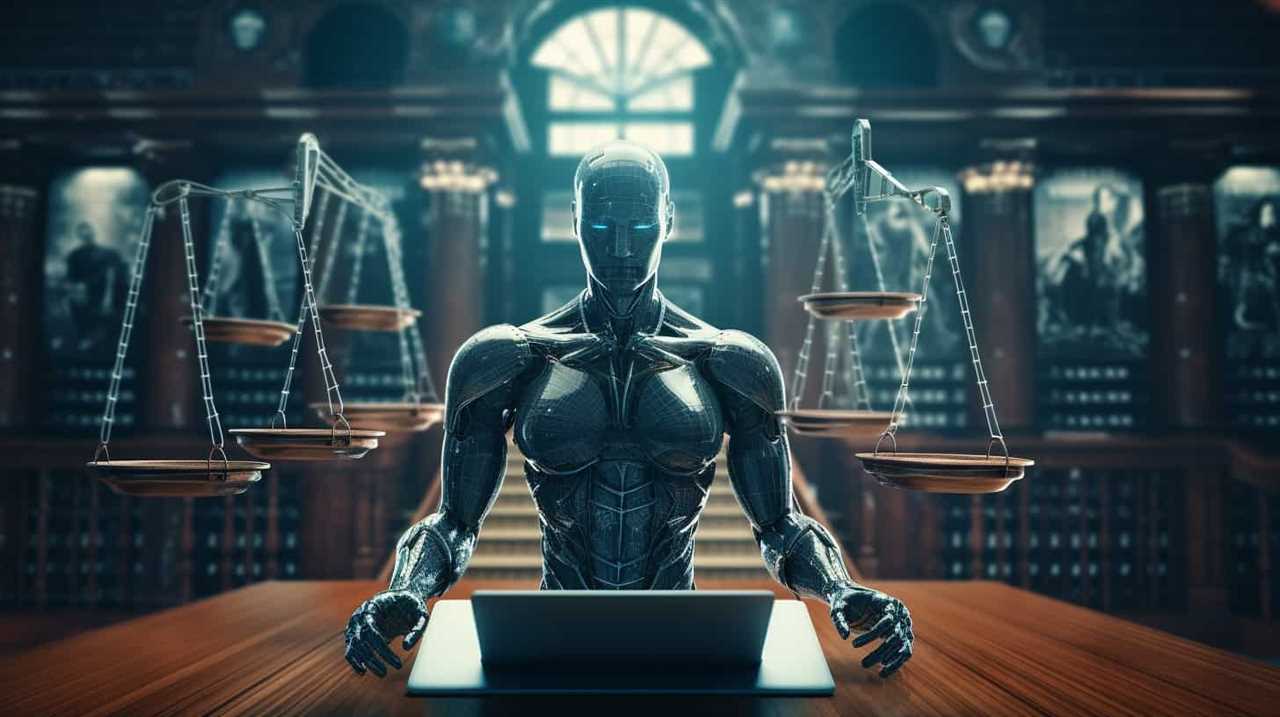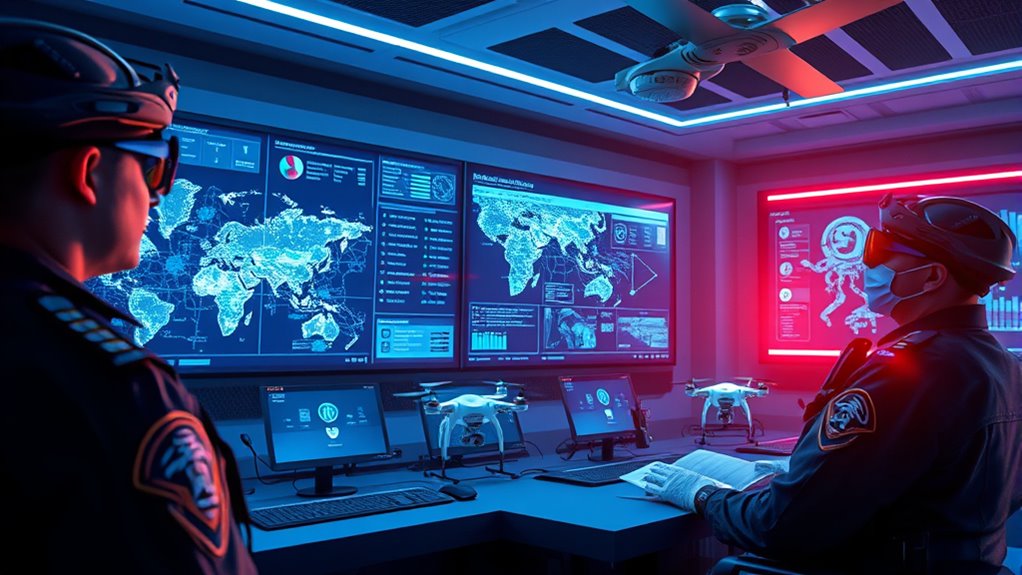

In 2025, police heavily rely on AI to catch suspects faster and prevent crimes before they happen. Facial recognition quickly identifies individuals in real time, while predictive policing analyzes patterns to spot crime hotspots. These tools help you optimize patrols and focus resources on high-risk areas. Although these advancements boost efficiency, they also raise privacy concerns. Want to discover how these technologies balance security and civil liberties? Keep exploring to uncover more.

Get everyday essentials delivered free — and shop member deals
- Fast, free delivery on millions of items
- Access to Prime Big Deal Days deals on October 6–7
- Prime Video, Amazon Music and more included
Key Takeaways
- Police extensively used facial recognition to identify suspects in real-time during operations and investigations.
- Predictive policing models forecasted crime hotspots, enabling targeted patrols and proactive crime prevention.
- AI algorithms were refined for fairness, aiming to reduce bias and ensure equitable law enforcement practices.
- Enhanced resource management allowed law enforcement to focus on high-risk areas and expedite case resolutions.
- Transparency initiatives promoted community trust by explaining AI decision processes and safeguarding civil liberties.

Artificial intelligence is transforming the landscape of law and order by enabling faster, more accurate decision-making and resource allocation. As you observe police operations in 2025, you notice how AI-driven tools are reshaping traditional methods, making crime prevention and investigation more efficient. One of the most prominent applications is facial recognition technology. Using vast databases of mugshots, ID photos, and surveillance footage, facial recognition helps officers quickly identify suspects or persons of interest. When a crime occurs, AI algorithms scan nearby cameras and public spaces, matching faces in real-time. This rapid identification process reduces the time officers spend on manual checks and increases the likelihood of apprehending suspects swiftly. However, it also raises questions about privacy and civil liberties, which law enforcement agencies are trying to balance with security needs.
Alongside facial recognition, predictive policing emerges as a game-changer. By analyzing historical crime data, AI models forecast where crimes are likely to happen and identify patterns that escape human detection. You see precincts deploying predictive policing to allocate patrols more strategically, focusing resources on high-risk areas before crimes occur. This proactive approach aims to prevent offenses rather than just respond to them, potentially saving lives and reducing property damage. But it’s not without challenges. Critics argue that predictive policing can reinforce biases if the underlying data reflects existing inequalities, leading to disproportionate surveillance of certain communities. Law enforcement agencies are aware of these concerns and are working to refine algorithms and incorporate fairness metrics. Additionally, understanding the average ice cream consumption and flavor trends can serve as a metaphor for recognizing patterns and preferences in community behavior, which can inform more culturally sensitive policing strategies.
Using AI for predictive policing and facial recognition, police departments also improve their investigative capabilities. When a suspect is identified through facial recognition, officers can access a wealth of information instantly, speeding up the process of building cases. Meanwhile, predictive models allow police to anticipate and prevent crimes, shifting the focus from reactive to proactive policing. You might also notice that these tools enable better resource management, reducing unnecessary patrols in low-crime zones and increasing presence where it’s most needed. Nonetheless, transparency and accountability remain essential, as communities demand assurances that AI is used ethically and responsibly.
AI facial recognition security camera
As an affiliate, we earn on qualifying purchases.
As an affiliate, we earn on qualifying purchases.
Frequently Asked Questions
How Does AI Ensure Privacy in Law Enforcement?
You can trust AI to protect privacy by using facial recognition responsibly and with strict access controls. Data encryption guarantees sensitive information stays secure from unauthorized access. AI systems are designed to log and monitor data handling, promoting transparency. By following privacy laws and implementing these safeguards, AI helps law enforcement balance effective policing with respecting individual privacy rights, ensuring that personal data remains protected throughout investigations.
What Are Ai’s Limitations in Crime Prediction?
Think of AI as a crystal ball—it’s insightful but not infallible. Its predictions hinge on algorithm accuracy, yet it faces predictive limitations due to incomplete or biased data. You might rely on it, but remember, AI can’t foresee every nuance of human behavior. It provides guidance, not certainty. So, while AI aids crime prediction, you should always consider its inherent flaws and keep human judgment at the forefront.
How Is AI Trained to Avoid Bias?
You can guarantee AI avoids bias by focusing on algorithm fairness and data diversity. By training the AI with diverse datasets, you help it recognize different backgrounds and reduce unfair stereotypes. Implementing fairness algorithms also promotes equitable decision-making. Regularly auditing and updating the system guarantees it adapts to new data, maintaining objectivity. This proactive approach helps create an AI that makes more just and unbiased predictions.
What Legal Standards Govern AI Use in Policing?
Think of AI use in policing as a tightrope walk over legal standards. You must guarantee AI accountability and legal compliance, guided by laws like the Fourth Amendment and data protection regulations. These standards act as safety nets, preventing misuse and bias. You’re responsible for balancing innovation with rights, making sure AI tools serve justice without trampling on individual freedoms, keeping the system fair and transparent.
How Do Officers Interact With AI Systems on the Ground?
You interact with AI systems on the ground by using drone surveillance to monitor areas from above and facial recognition to identify suspects quickly. You receive real-time data on your device, allowing you to assess situations instantly. You can command drones to focus on specific locations, and facial recognition helps confirm identities efficiently. This integration streamlines your patrols, enhances safety, and improves response times during investigations.
As an affiliate, we earn on qualifying purchases.
Conclusion
Just as the myth of Icarus warned of reaching too high, embracing AI in law and order must be balanced with caution. You now see how technology’s promise can spark progress or peril. With each stride forward, remember the tale of Pandora’s box—once open, consequences unfold beyond control. Stay vigilant, for in this new era, your choices shape a future where justice and innovation dance in delicate harmony.
real-time surveillance facial recognition
As an affiliate, we earn on qualifying purchases.
As an affiliate, we earn on qualifying purchases.
As an affiliate, we earn on qualifying purchases.
Fall Picks
fall essentials
As an affiliate, we earn on qualifying purchases.