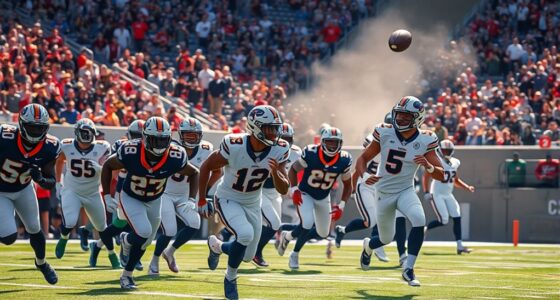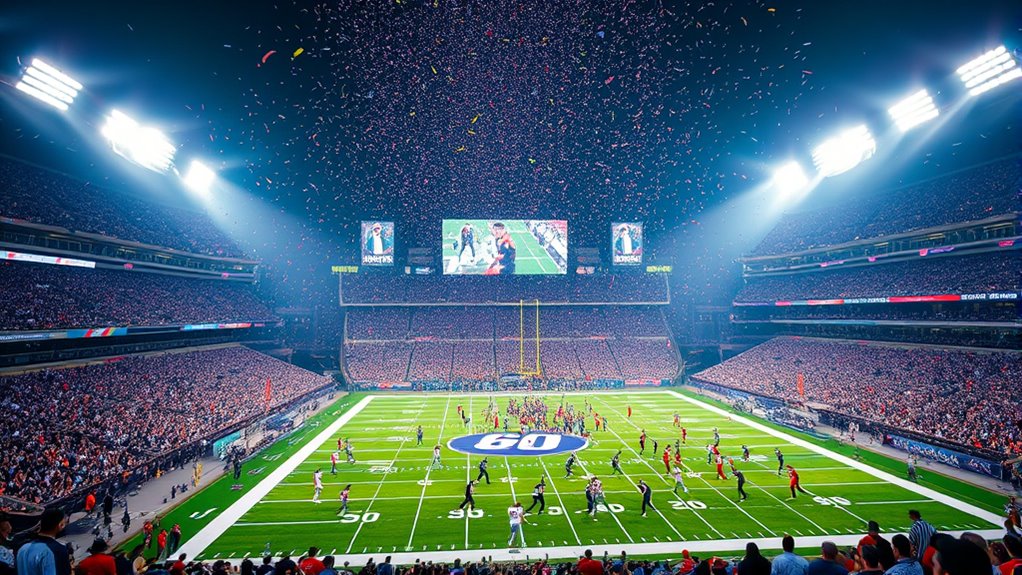

The Super Bowl has evolved over 60 years from a simple football game into a beloved American tradition. It combines sports, entertainment, and cultural moments that unite millions of viewers each year. The commercials, halftime shows, and unforgettable plays create shared experiences that go beyond the game itself. This event reflects American values, innovation, and social shifts, turning it into more than just a sport—it’s a nationwide celebration. Keep exploring to see how it became a national icon.
Key Takeaways
- The Super Bowl evolved from a simple football game to a nationwide cultural celebration over six decades.
- Commercials and halftime shows transformed it into a multimedia entertainment event beyond sports.
- The event reflects societal shifts, incorporating social issues, celebrity appearances, and technological innovation.
- Its advertising investments and iconic ads made it a platform for creativity and cultural reflection.
- The Super Bowl’s combination of sports, entertainment, and shared experience has cemented it as an enduring American tradition.
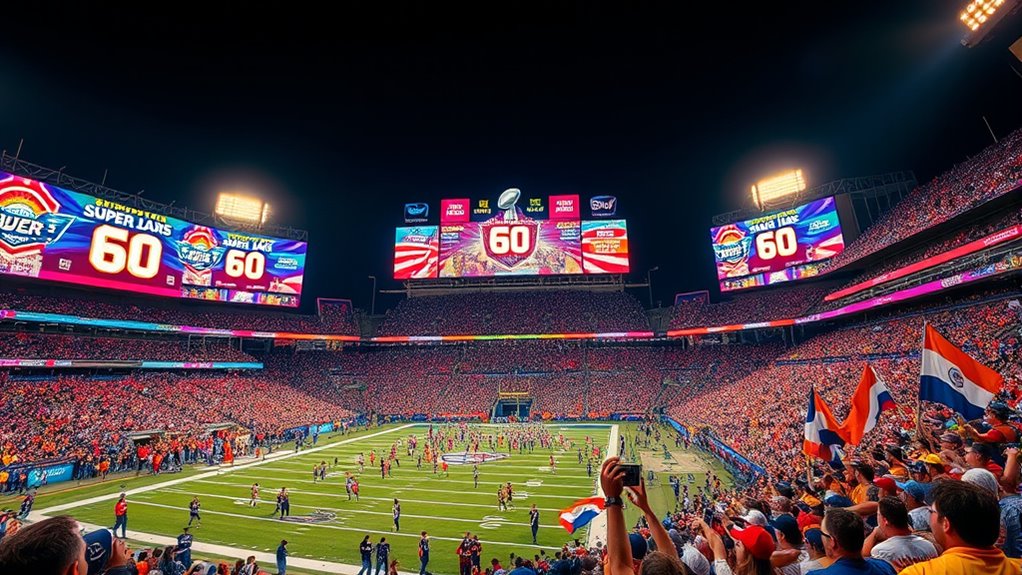
As the Super Bowl reaches its 60th anniversary, it’s clear that this iconic sporting event has evolved into more than just a championship game — it’s a cultural phenomenon that brings millions together each year. Over the decades, the Super Bowl history has transformed from a simple matchup between football teams into a nationwide celebration filled with tradition, spectacle, and entertainment. You’ve probably noticed how people plan their entire Sundays around the game, but what truly sets the Super Bowl apart are the moments that extend beyond the field. From unforgettable plays to the spectacle of halftime shows, it’s become a day where sports, music, and pop culture intertwine seamlessly.
One of the most significant aspects of the Super Bowl is its commercials, which have become almost as anticipated as the game itself. The commercials’ significance stems from their ability to connect brands with the massive audience watching worldwide. Companies spend millions on these ads, knowing they’re not just promoting products but also creating shared moments of humor, nostalgia, and innovation. You might remember classic ads like the Budweiser Clydesdales or the iconic Apple Macintosh debut. These commercials often spark conversations long after the game ends, making them an integral part of the Super Bowl experience. They’re a chance for brands to showcase creativity, humor, and emotional storytelling, knowing they’re reaching a captive audience that spans generations.
Super Bowl commercials connect brands with a global audience through humor, nostalgia, and innovation, sparking conversations long after the game.
Throughout the years, the commercials have reflected cultural shifts, from humorous and light-hearted to deeply emotional or socially conscious messages. You may have noticed how today’s ads often feature celebrities, cutting-edge technology, or social issues, all designed to resonate with viewers on a deeper level. This commercial tradition has helped elevate the Super Bowl beyond just sports; it’s a platform where advertising artistry is showcased on a grand scale. The investment in these commercials underscores their importance, and for many viewers, they’re as memorable as the game-winning touchdown or the halftime spectacle. Interestingly, the evolution of these ads also demonstrates the influence of animated movies and their ability to evoke emotional responses from a broad audience. Over six decades, the Super Bowl’s commercial significance has solidified its role as a cultural touchstone, capturing the spirit of the nation and reflecting its ever-changing values and priorities.
In essence, the Super Bowl’s history and its commercials’ significance reveal how this event has grown into a uniquely American tradition—one that combines athletic prowess with entertainment, innovation, and shared cultural moments. As you watch the game this year, remember that it’s not just about football; it’s about celebrating a long-standing tradition that continues to evolve and unite us all.
Frequently Asked Questions
How Has Super Bowl Viewership Evolved Over the Decades?
You’ve seen how Super Bowl viewership trends have shifted over the decades, with audiences steadily growing and evolving. Initially attracting mainly sports fans, today’s viewership includes diverse demographics, from young to older audiences. While some years see record-breaking numbers, others experience slight dips, but overall, the Super Bowl remains a cultural phenomenon that continues to captivate millions across generations, adapting to changing media consumption habits.
What Are the Economic Impacts of the Super Bowl on Host Cities?
You’ll notice the Super Bowl brings significant economic boosts to host cities, boosting local businesses and tourism. It fuels urban development by improving infrastructure and facilities, attracting future events. The influx of visitors means more spending on hotels, restaurants, and entertainment, which benefits the economy long-term. Hosting the Super Bowl transforms cities into bustling hubs, showcasing their growth and potential, and creating a lasting economic legacy that extends well beyond game day.
How Do Halftime Show Selections Reflect American Culture?
You see that halftime show selections often reflect American culture through cultural symbolism and entertainment trends. By featuring diverse artists, iconic performers, or current musical styles, the show highlights the nation’s evolving identity and values. This entertainment spectacle serves as a reflection of societal shifts, celebrating cultural diversity and innovation, while also appealing to broad audiences, making it a unique showcase of America’s cultural landscape during one of its biggest sporting events.
What Role Do Commercials Play in Super Bowl Traditions?
Commercials play a vital role in Super Bowl traditions because they’re more than ads; they’re cultural events. You’ll notice that the commercial impact is significant, often shaping public conversation and brand awareness. Advertising strategies are carefully crafted to entertain and engage viewers, making these commercials a highlight of the game. They reflect American values, humor, and innovation, turning every commercial break into an anticipated moment that adds to the game’s festive atmosphere.
How Has Super Bowl Fandom Changed With Digital Media?
You’ve seen how digital media has transformed Super Bowl fandom by increasing social media engagement and fan interaction. Now, you can share your thoughts, reactions, and memes instantly, creating a more communal experience. Fans actively participate online, discussing plays, celebrating wins, and connecting with fellow enthusiasts worldwide. This shift amplifies the excitement, making the game not just a sporting event but a digital cultural phenomenon that brings everyone closer together.
Conclusion
As you watch the glowing screens flood with vibrant colors and hear the roar of the crowd, you realize the Super Bowl isn’t just a game—it’s a shared moment of excitement and tradition. The crackle of snacks, the thrill of the final minutes, and the cheers echoing through living rooms create a tapestry of American life. At 60, this iconic event continues to bring us together, celebrating passion, unity, and unforgettable memories.

Elena’s passion for the arts and culture shines through in her vivid reporting. From film festivals to gallery openings, her coverage is an essential source for anyone interested in the latest cultural trends and artistic movements.