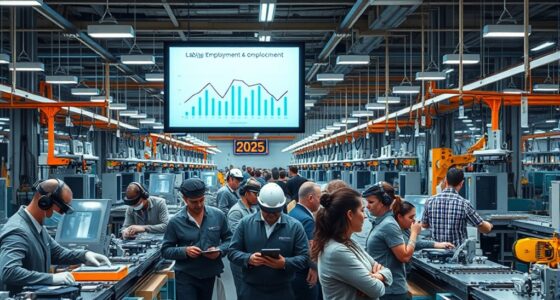
By 2025, higher education becomes more affordable and accessible through widespread online and hybrid learning options. You benefit from lower tuition costs, flexible schedules, and digital credentials that enhance your job prospects. Governments and institutions are implementing policies to reduce financial barriers, making college more inclusive for non-traditional students. As the landscape evolves toward greater equity, staying informed will help you navigate these exciting changes and find the best opportunities available.
Key Takeaways
- Online and hybrid learning models will dominate, increasing accessibility and reducing costs for students.
- Tuition fees will decrease due to digital efficiencies, making higher education more affordable.
- Governments and institutions will expand financial aid, grants, and policy support for online learners.
- Accreditation and digital credentials will gain recognition, broadening employment opportunities for graduates.
- The higher education landscape will become more inclusive, flexible, and adaptable to diverse student needs.
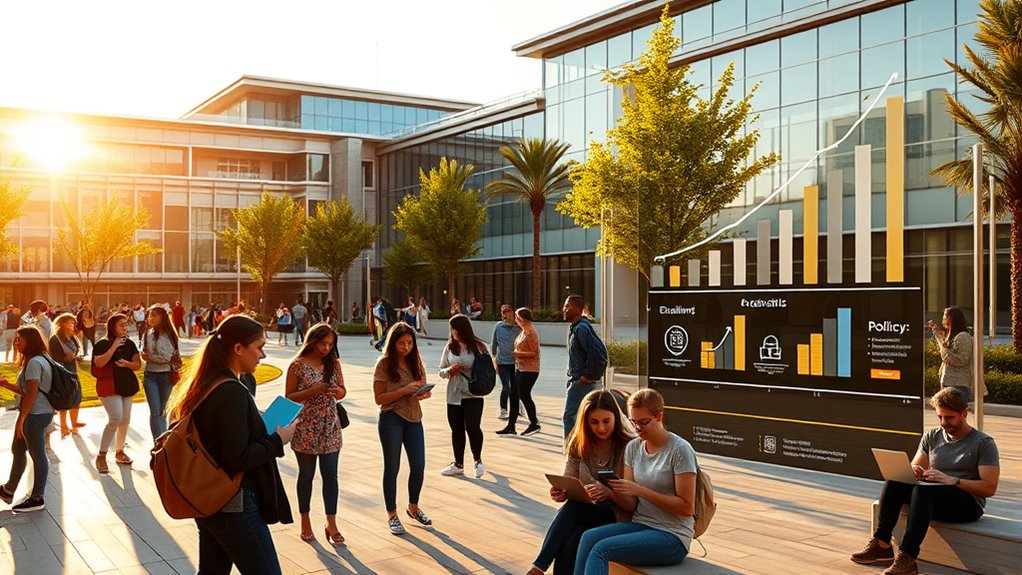
How will higher education look in 2025? If you’re wondering about the future of college and university experiences, the landscape is set to change considerably, especially when it comes to affordability and accessibility. Tuition costs have long been a barrier for many students, but by 2025, new models are emerging to help reduce these expenses. Online learning will play a central role in this shift, offering more affordable, flexible options that make higher education accessible to a broader range of people. You might find yourself attending virtual classes from anywhere in the world, saving both money and time. Many institutions are investing heavily in digital platforms, which means that you could access high-quality courses without the hefty price tag traditionally associated with in-person education.
By 2025, online learning will make higher education more affordable, flexible, and accessible worldwide.
Online learning’s expansion isn’t just about convenience; it’s also a response to economic pressures and changing student needs. As universities adopt hybrid models that combine online and in-person instruction, you’ll benefit from lower tuition costs because institutions can cut expenses related to physical infrastructure and campus maintenance. This cost-saving is often passed on to students, meaning you might pay less for the same, if not better, education. Additionally, online programs tend to be more flexible, allowing you to study at your own pace and juggle work or family obligations more easily. This flexibility could make higher education more attainable for non-traditional students or those balancing multiple responsibilities.
Policy shifts are also shaping the future of higher education, aiming to make it more inclusive and affordable. Governments and institutions are exploring ways to incentivize online learning and reduce student debt. By 2025, you could see more grants, scholarships, and loan forgiveness programs tailored to online students, removing financial barriers. These policy changes are likely to encourage more people to pursue higher education, especially those who previously couldn’t afford it. Furthermore, accreditation processes are evolving to better recognize online credentials, which means that your digital degree could hold the same weight as traditional ones, opening up more job opportunities.
In this evolving landscape, your experience as a student will be increasingly flexible and affordable. The combination of lower tuition costs, innovative online learning options, and supportive policy shifts suggests that higher education in 2025 will be more inclusive and accessible than ever before. While challenges remain, the trajectory points toward a system that prioritizes affordability, flexibility, and broad access, making your educational journey more adaptable to your life and financial situation.
Frequently Asked Questions
How Will Online Learning Evolve by 2025?
By 2025, online learning will evolve with more immersive virtual campuses that feel like real classrooms, making remote education more engaging. You’ll benefit from adaptive learning technologies that personalize lessons to your pace and style, enhancing your understanding. Expect seamless integration of virtual reality tools and interactive platforms, giving you a dynamic, flexible learning experience that adapts to your needs and prepares you better for future careers.
What New Policies Will Address Student Debt?
You’ll see new policies focusing on student loan reforms and debt forgiveness programs that aim to ease your financial burden. These initiatives will likely include expanded debt forgiveness options, streamlined repayment plans, and stricter regulations on loan practices. Such policies are designed to make higher education more accessible and manageable, giving you more control over your debt and reducing the long-term financial stress associated with student loans.
Will There Be Increased Funding for Community Colleges?
Sure, there’s likely to be increased funding for community colleges, right? Don’t count on it. While policymakers claim to prioritize higher education investment, actual community college funding often lags behind. Yet, many see these institutions as essential, so expect some targeted support—though not enough to meet the soaring demand. You’ll probably notice more efforts on paper, but real change might still be just out of reach.
How Will International Student Enrollment Change?
You’ll likely see international student enrollment fluctuate due to evolving visa regulations and cultural adaptation challenges. Stricter visa rules may deter some students, while institutions that prioritize cultural support can attract more. If policies become more welcoming, you might notice increased diversity on campuses. Staying informed about visa requirements and engaging in cultural adaptation programs will help you navigate these changes and maximize your international education experience.
What Role Will Technology Play in Personalized Education?
Technology will play a vital role in personalized education by enabling adaptive learning and leveraging data analytics. You’ll experience tailored coursework that adjusts to your pace and understanding, making learning more effective. Data analytics will help educators identify your strengths and weaknesses, allowing for targeted support. This personalized approach guarantees you stay engaged and motivated, ultimately improving your educational outcomes and preparing you better for future careers.
Conclusion
As you look ahead to 2025, higher education will be a balancing act—affordable yet innovative, accessible yet competitive. While advancements promise greater opportunities, rising costs and policy shifts may challenge your pursuit of knowledge. The landscape will be a mix of promise and uncertainty, pushing you to adapt and find new pathways. Remember, in this evolving world, your resilience and flexibility will be your greatest assets to thrive amid change.

Elena’s passion for the arts and culture shines through in her vivid reporting. From film festivals to gallery openings, her coverage is an essential source for anyone interested in the latest cultural trends and artistic movements.